New or Used Luxury Car: Where the Money Actually Goes in the First Three Years
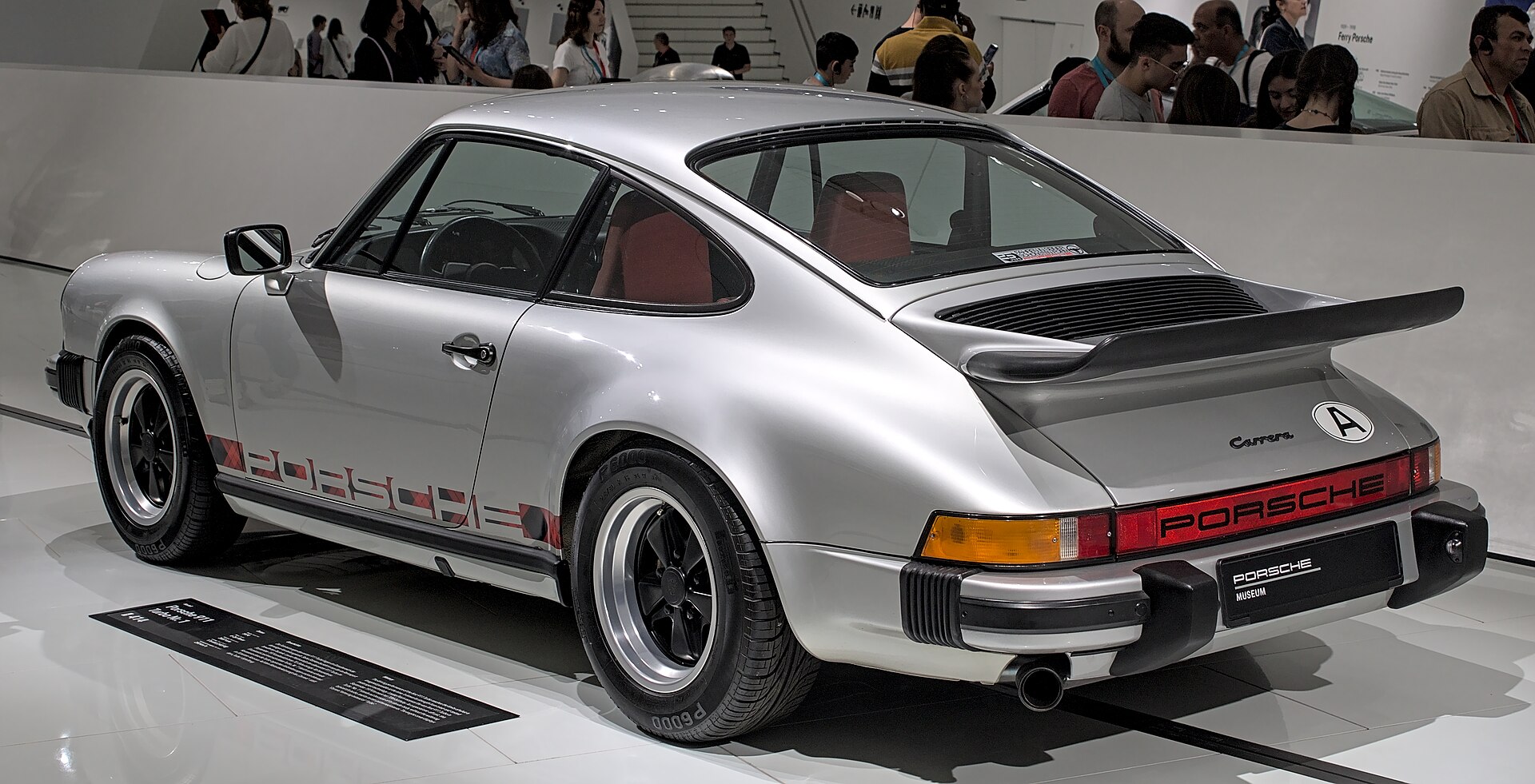
The advantage a used luxury car holds over a new one is almost entirely a single line item: the first owner already absorbed the steepest part of the depreciation curve. Everything else — warranty runway, service history, allocation standing, spec control — tilts the other way, and the whole decision comes down to whether those advantages are worth what the first three years cost.
That cost is not a mystery, and it is not uniform. iSeeCars' long-running depreciation study consistently places luxury marques among the fastest-depreciating vehicles in the US market, with several German luxury sedans and electric luxury models posting five-year losses well beyond the roughly 45% all-vehicle average. What follows is where that money goes, segment by segment, and what the new-car buyer receives for it.
Where the First Three Years Actually Go
Depreciation on a luxury car is front-loaded, and it is front-loaded unevenly. The drive-off loss is real but small; the damage accumulates across years one through three as the model cycles from current to superseded and as the original lease pool returns to auction.
That auction wave matters more than most buyers realize. Luxury marques lease at high rates, and a three-year lease cycle means a predictable supply of off-lease cars hitting the used market at roughly the same moment — which is exactly why the three-year mark is where buyers find the most inventory and the softest pricing.
The pattern is not the same across segments, though. A large luxury sedan and a limited-production mid-engine car can sit on the same dealer lot and be on opposite sides of the curve.
Luxury Sedans and SUVs: the Steepest Descent
Full-size German luxury sedans are the segment where the depreciation argument is most lopsided. iSeeCars has repeatedly flagged models in this class among the highest five-year depreciation in the market, and the three-year figure typically lands in the 45–60% range for a mainstream-optioned car.
The mechanism is straightforward: high MSRP, high option content that does not survive into resale value, high lease penetration, and a model cycle that refreshes technology visibly. A five-year-old infotainment system in a $140,000 sedan reads as dated in a way that a five-year-old naturally-aspirated V8 does not. Our luxury sedan comparison and luxury SUV comparison walk the segment-level differences in more detail.
Exotics and Limited-Production Cars: a Flatter Curve
The math inverts at the top of the market. Limited-production models — Special Series cars, manual-transmission variants, final-year examples of a beloved engine — decline more slowly and in some cases find a depreciation floor and hold it.
We've mapped this pattern across individual models in our used Ferrari depreciation sweet spot analysis and in the broader luxury depreciation leaders survey. The short version: production volume and drivetrain desirability do more to set the curve than badge prestige does.
What the New-Car Buyer Is Actually Buying
If depreciation were the only variable, nobody rational would buy new. The new-car premium buys four things that do not transfer cleanly to a second owner, and each has a defensible value.
Allocation Standing
For Ferrari, Porsche specials, and limited-run models from Lamborghini and Aston Martin, the ability to be offered a car is itself the scarce good. Allocation is granted by the dealer on the strength of a purchase history with that dealer — and buying a used example, even from the same showroom, generally does not build that history the way a new-car purchase does.
This is the single argument for new that a used buyer cannot replicate at any price. If the objective is a future Icona, a future GT3 RS, or any car whose waiting list is longer than its production run, the entry fee is a new car bought at MSRP from a dealer who will remember it.
Keep in mind that this door swings both ways. Many marques now attach anti-flip agreements to allocated cars, restricting resale for a defined period — so the allocation buyer is trading liquidity for access.
Spec Control
The second-hand market sells cars that someone else configured. On a mainstream luxury sedan that is a minor inconvenience; on a car where paint-to-sample, seat choice, and carbon options meaningfully change both the ownership experience and the resale position, it is not minor at all.
Buying used means accepting a spec and negotiating on it. The compensation is that mis-specified cars sit on the market longer and price accordingly — which is where a patient used buyer finds real leverage.
Warranty Runway
A new luxury car typically carries a four-year factory warranty from most German and British marques, with Ferrari and Lamborghini running their own multi-year programs and extension paths. A three-year-old car arrives with roughly one year of that remaining, which is the crux of the used-buyer risk calculation.
This is where CPO enters, and where the used case either holds or falls apart.
Depreciation Absorbed on Someone Else's Balance Sheet
The fourth item is the one the new buyer pays rather than receives. On a $200,000 car losing 50% across three years, that is roughly $100,000 transferred from the first owner to the second — the largest single line item in luxury ownership, larger than insurance, fuel, and routine service combined for most owners.
CPO: What the Coverage Actually Does
Certified pre-owned programs exist precisely to close the warranty gap, and they are the reason the three-year used car is a defensible purchase rather than a gamble.
The structure varies by marque, but the shape is consistent: a multi-point inspection, a factory-backed extension of coverage beyond the original term, and — critically — repairs performed at franchised dealers with factory parts. Ferrari's Approved program and Porsche's Approved Certified Pre-Owned coverage are the reference points at the top of the market; we cover the mechanics and the exclusions in our CPO exotic warranty guide.
What CPO does not do is cover everything. Wear items, consumables, and — for most programs — damage attributable to track use fall outside coverage, a boundary worth understanding before the first lapping day. Our track day warranty piece details where that line typically sits.
The Segment-Level Decision
The honest answer changes by what you are buying. Here is how the tradeoff resolves across the segments a $200K–$1M buyer is actually shopping.
| Segment | New-car case | Used-car case | Where we land | |---|---|---|---| | Full-size luxury sedan | Spec control, full warranty | Steepest depreciation curve in the market | Used at three years, CPO | | Luxury SUV | Allocation on limited variants | Strong off-lease supply at 3 years | Used unless the variant is allocated | | Luxury EV | Latest battery and software generation | Heaviest depreciation per iSeeCars; software updates often retrofit | Used, with battery-health verification | | Grand tourer | Configuration matters to resale | Mis-specified cars price down hard | Used, but be selective on spec | | Mid-engine exotic | Allocation standing for future cars | Flatter curve; less to gain by waiting | New if allocation is the goal | | Limited-production special | The only way to get one | Secondary-market premium above MSRP | New if offered; otherwise accept the premium |
Two patterns are worth pulling out of that table. First, the used case is strongest exactly where depreciation is steepest — which is also where CPO programs are most mature. Second, the new case is strongest where depreciation is shallowest, because the cost of buying new is lowest there.
The Sweet Spot, and How to Find It
The three-year mark is the default answer because it is where off-lease supply peaks and where the curve begins to flatten. But the sweet spot is model-specific, not calendar-specific, and the model-level work is where the money is.
We've done that work on individual cars — the best year for a used McLaren 720S, the 911 Turbo S, the Rolls-Royce Ghost, the Bentley Continental GT, the Lamborghini Urus, and the Porsche Taycan. The pattern that recurs: the best-value year is usually the one immediately following a mid-cycle update, where the car got the meaningful fixes but is priced as the outgoing generation.
What to Verify Before You Sign
A used luxury car is only a bargain if the deferred maintenance isn't priced into your first year instead of the purchase price. Before committing, work through the following:
- Pre-purchase inspection at a franchised dealer. Not the selling dealer, and not a general independent shop. A PPI on a complex modern exotic requires marque-specific diagnostic access.
- Complete service history with receipts. Gaps in the record are a price negotiation, not a dealbreaker — but only if you price the catch-up work correctly. Our Ferrari service costs by model breakdown is a starting point for what that catch-up looks like.
- Remaining factory warranty and CPO eligibility. Confirm both in writing. Eligibility windows are measured from original in-service date, not from your purchase.
- Time on market. A car that has sat is a car with a story or a spec problem. Either way it is leverage.
- Battery health report, for EVs. State-of-health documentation should come from the marque's own diagnostics, not a third-party app.
All of these are cheap relative to the cost of getting one of them wrong. The PPI in particular is the highest-return few hundred dollars in the entire transaction.
Financing Changes the Calculus
One more variable deserves naming, because it quietly reorders everything above: the cost of money. A used luxury car financed at a materially higher rate than a manufacturer-subsidized new-car program can erase a meaningful share of the depreciation advantage over a three- or four-year term.
Manufacturer captive-finance arms subsidize new-car rates precisely because it moves inventory; used rates rarely receive the same support. Run both deals to total cost of ownership rather than to purchase price — our exotic car financing guide covers the structures worth comparing.
Editorial Recommendation
For most buyers in the $200K–$400K band, the three-year-old CPO car is the correct purchase, and the reasoning is arithmetic rather than sentiment. The first owner paid the largest line item in luxury ownership, the CPO program restores most of the warranty protection that made the new car feel safe, and the remaining delta is spec compromise — which is negotiable.
Buy new in three situations, and only three. When allocation standing for a future limited-production car is the actual objective. When the model's depreciation curve is genuinely shallow, which shrinks the premium you're paying for first-ownership. And when spec is load-bearing — a paint-to-sample car, a manual transmission, a configuration you will not find on the used market at any patience level.
Everything else is a used car with a PPI in front of it.
If you're narrowing to a specific marque, the model-level guides above carry the year-by-year detail this overview can't. Start with the segment, then let the individual car's curve — not the calendar — set your entry point.