The Best Year to Buy a Used Porsche Taycan: J1 Model Years, Battery and Software Updates, and the 2025 Facelift Effect
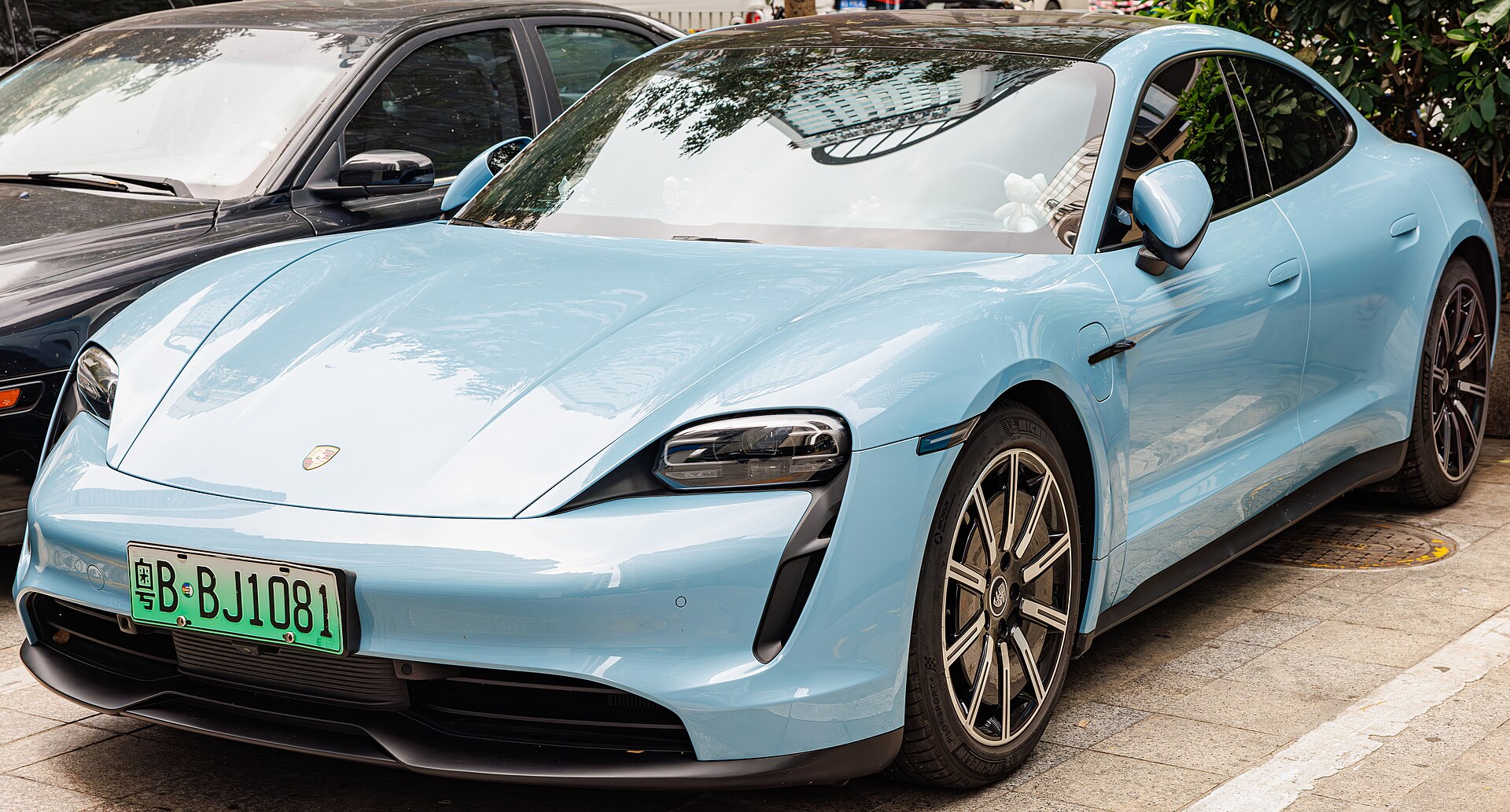
N
o car in Porsche's modern lineup has repriced as sharply on the used market as the Taycan. The engineering did not fail; the depreciation math simply behaved the way early-generation electric luxury sedans behave.iSeeCars' depreciation research has repeatedly placed the Taycan at or near the top of its fastest-depreciating vehicles list, with five-year value loss reported in the high-60% range — the steepest figure in its study set and far beyond what a 911 or a Cayenne gives up over the same period. For a buyer, that is not a warning. That is the entry ticket.
What follows is the model-year map, the effect of the 2025 facelift on everything built before it, and an honest read on which Taycan actually deserves your money.
The J1 Generation, Year by Year
The first-generation Taycan is internally designated J1, and it ran from the 2020 model year through 2024 before the heavily revised 2025 cars arrived. Treating all five of those years as one car is the most common mistake in this segment.
The 2020 launch cars were Turbo and Turbo S only, with the 4S arriving mid-cycle and the base rear-drive Taycan following. Those first cars are now the cheapest way into the marque's electric flagship, and they carry the most software and battery-management history.
2021 brought the base Taycan and the Cross Turismo body to the US, plus the first meaningful round of over-the-air improvements. 2022 added the GTS and the Sport Turismo, and it is the year most shoppers should start their search.
2023 and 2024 are the mature J1 years — same fundamental architecture, more standard equipment, better infotainment responsiveness out of the box. They also cost meaningfully more than a 2021 with the same options, which is where the value question gets interesting.
What the 2025 Facelift Actually Changed
Porsche's 2025 revision was not cosmetic housekeeping. The updated Taycan received a larger Performance Battery Plus pack — Porsche cites 105 kWh gross, up from the prior 93.4 kWh — along with higher peak DC charging, quicker charging at lower states of charge, and more power across nearly every variant.
Porsche also reworked the rear motor, the pulse inverter, and the thermal management, and it made a number of previously optional systems standard. Range figures improved substantially; charging behavior in cold weather improved more than the headline numbers suggest.
That is the mechanism behind the second leg down in pre-facelift pricing. A used-car listing now competes against a newer car with a bigger battery and a better charge curve, and the spec sheet gap is legible to any buyer with a browser.
The practical read: the facelift did real harm to J1 residuals and real good to J1 buyers. You are paying for someone else's timing.
Which Trims Hold Value Best
Not every Taycan has fallen at the same rate. Residual behavior in this range tracks desirability and rarity far more than it tracks original sticker.
The pattern below reflects broad market behavior in current listings rather than a fixed index — verify any specific car against KBB, Edmunds, and current Cars.com or Hagerty comps before you transact.
| Variant | Residual behavior | Why |
|---|---|---|
| Taycan GTS | Strongest of the J1 range | Late arrival, sharper chassis tune, enthusiast demand, lower production |
| Taycan 4S | Strong relative to price paid | The volume sweet spot; broadest buyer pool on the used market |
| Cross Turismo / Sport Turismo | Firmer than the sedan | Scarcity and a genuinely distinct body style |
| Taycan Turbo | Weaker | High original MSRP amplifies percentage loss |
| Taycan Turbo S | Weakest in percentage terms | Highest sticker, thinnest secondary demand, heaviest option loading |
| Base Taycan (RWD) | Mixed | Lowest entry price, but smallest standard battery limits the buyer pool |
The Turbo S is where the arithmetic gets genuinely punishing for the first owner. A car that stickered north of $190,000 new can now trade in the double-digit thousands, and that gap has nothing to do with how the car drives.
For context on how the Taycan sits against its rivals, our electric performance sedan comparison covers the cross-shop set directly.
The Performance Battery Plus Question
On pre-facelift cars, Porsche offered two packs: the standard Performance Battery at 79.2 kWh gross and the Performance Battery Plus at 93.4 kWh gross. The larger pack was standard on some variants and optional on others, notably the base rear-drive Taycan and the 4S.
The practical consequence is that two 2022 Taycan 4S cars with similar mileage can be materially different propositions. Check the build sheet or the window sticker rather than trusting a dealer listing's summary.
If you are buying a base rear-drive car without the larger pack, buy it for city and suburban duty and price it accordingly. If road trips are in the plan, the larger battery is not a luxury option — it is the difference between two charging stops and three.
Software History and What It Means for a Used Car
Early J1 cars shipped with an infotainment system that was slower than the hardware deserved, and Porsche addressed it through a series of updates, including a significant Porsche Communication Management revision rolled out through dealers and, later, over the air.
Those updates also touched charging behavior, battery preconditioning, and range estimation. A 2020 car that has been kept current will behave meaningfully better than one that has skipped several cycles.
This is a specific, answerable pre-purchase question. Ask the selling dealer for the service record showing the most recent software campaign, and ask a Porsche dealer to confirm no open campaigns remain.
There have also been recalls affecting certain Taycan model years, including a well-publicized battery-module action. Run the VIN through the NHTSA database and Porsche's own recall lookup before you write a check — this takes minutes and settles the question.
Battery Warranty: The Number That Changes the Math
Porsche warrants the Taycan's high-voltage battery for 8 years or 100,000 miles, whichever comes first, per Porsche's published US warranty terms. That coverage transfers with the car.
Run the calendar. A 2021 car delivered in spring 2021 carries battery coverage into 2029 — which is the single strongest argument for buying a used Taycan at today's prices rather than waiting.
A 2020 car is further along that clock, and the warranty runway is shorter. That is a real reason to favor 2021 and later even when a 2020 looks cheaper on the listing page.
Porsche Approved certified pre-owned coverage extends the broader vehicle warranty and is worth pricing into any comparison; our note on CPO and exotic warranty coverage walks through how these programs actually behave in practice.
Naming the Sweet Spot
The honest answer is narrower than most buyers want it to be.
2022–2023 Taycan 4S with Performance Battery Plus. Post-launch software maturity, the larger pack, the broadest resale pool, and enough remaining battery warranty to cover a normal ownership cycle. This is the recommendation for most buyers.
2022–2024 Taycan GTS if you intend to drive it hard. It holds value better than anything else in the J1 range and it is the best-resolved chassis of the generation.
2021 Taycan 4S if price is the governing constraint. You give up some equipment and some warranty runway, and you gain the steepest discount available on a car that is fundamentally the same machine.
2020 Turbo S only if you understand exactly what you are buying. The percentage discount is extraordinary, the driving experience is undiminished, and the warranty clock is the shortest in the range.
Editorial recommendation
- Target a 2022 or 2023 Taycan 4S with Performance Battery Plus documented on the window sticker.
- Insist on a pre-purchase inspection at a Porsche dealer, including a battery state-of-health report.
- Confirm all software campaigns are current and no recalls remain open.
- Verify the in-service date, not the model year, to calculate remaining battery warranty precisely.
- Price air suspension, rear-axle steering, and the larger battery as value-preserving; price cosmetic options as sunk cost.
Cross-shop the range before committing. Our Porsche 911 Turbo S used-market analysis is the internal-combustion counterweight, and the wider Marque journal carries the rest of the used-market work.
A Note on Condition and Mileage
Electric cars invert some of the usual used-car instincts. Low mileage matters less than charging habits, and a car that lived on a Level 2 home charger is generally healthier than an identical car that lived on DC fast chargers.
Ask for the state-of-health reading. Porsche dealers can pull it, and a seller who refuses is telling you something.
Also check the tires. Taycans are heavy and quick, and a set of correct N-rated tires is a four-figure line item that sellers routinely defer onto the buyer.
The Taycan's depreciation curve is unusually steep, but it is not a signal of a bad car. It is the market repricing an early-generation electric luxury sedan against newer hardware — and it has handed second owners the best value proposition currently available with a Porsche crest on the hood.