Porsche Taycan Turbo GT vs Lucid Air Sapphire: The Electric Performance Sedan Decision
For
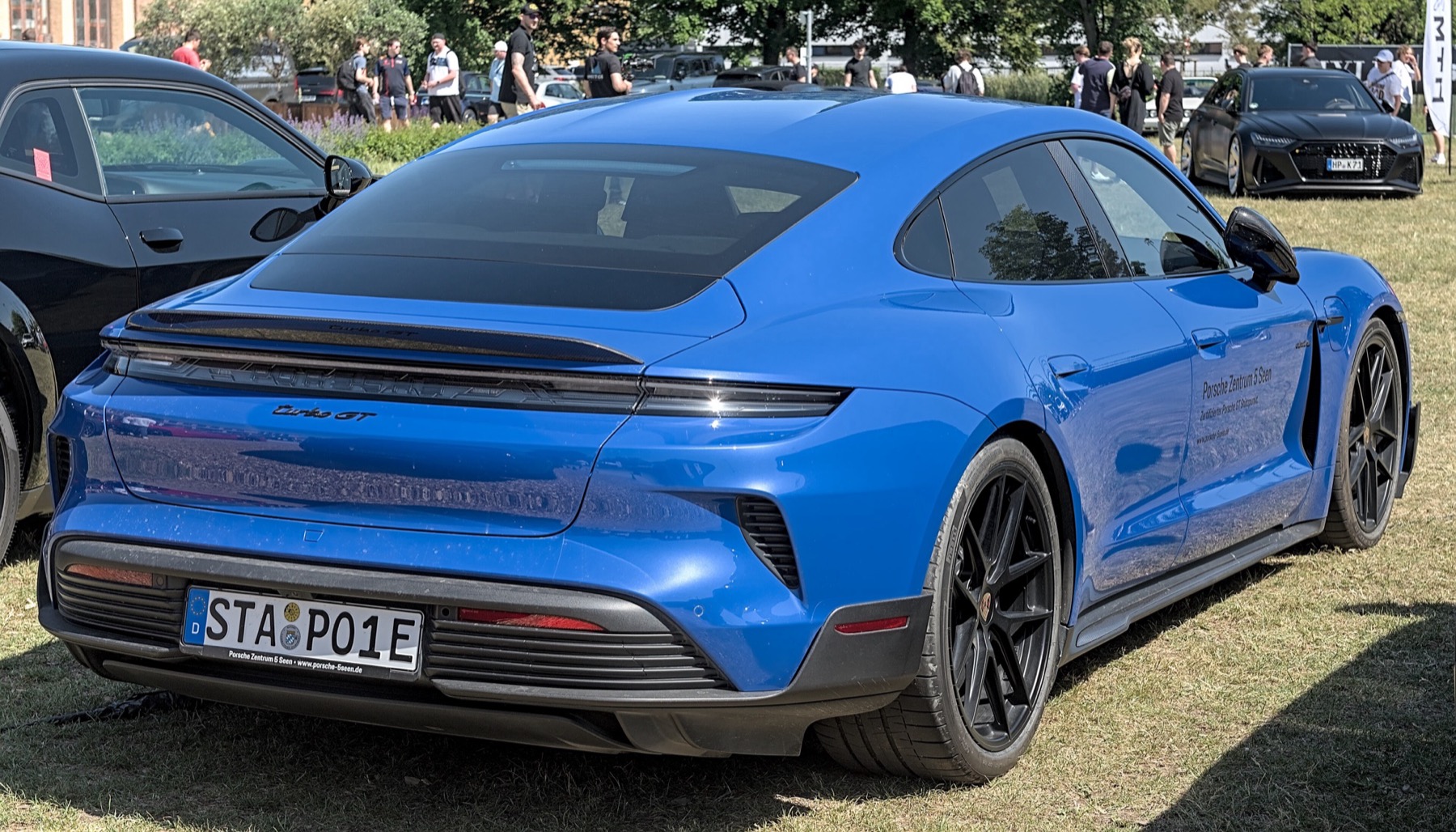
most of the past two decades, the fast four-door was a settled argument, and the choice between an M5, an E63, and a Panamera Turbo came down to chassis philosophy rather than infrastructure. The electric performance sedan has unsettled that comfort, because the two credible cars in the tier now ask a buyer to evaluate charging behaviour and thermal headroom before horsepower.The Porsche Taycan Turbo GT and the Lucid Air Sapphire sit roughly $18,000 apart on published MSRP and are separated by a fraction of a second to 60 mph. Accordingly, the acceleration figures — the numbers most coverage leads with — decide almost nothing.
What The Two Cars Actually Cost
Porsche published a US MSRP near $231,000 for the 2025 Taycan Turbo GT, with the Weissach package offered at no additional cost (Porsche). Lucid launched the Air Sapphire at $249,000 (Lucid), and the car arrives close to fully specified, with a short option sheet rather than a deep configurator.
The two commercial models differ more than that $18,000 gap suggests. A Turbo GT ordered with paint-to-sample, carbon interior trim, and the full ceramic brake specification can pass the Sapphire's list price before it leaves the dealer, while a Sapphire's transaction price tends to sit close to list.
Keep in mind that neither car qualified for the federal clean-vehicle credit, which capped sedan eligibility at $55,000 MSRP. Buyers building a total-cost model should treat both as full-freight purchases and check state programmes, most of which carry their own price ceilings.
Charging Behaviour Is The Actual Differentiator
Both cars run high-voltage architectures — Porsche at 800 volts, Lucid above 900 — and both quote peak DC rates that public infrastructure rarely sustains. Porsche cites up to 320 kW for the 2025 Taycan, and Lucid cites up to 300 kW for the Air platform.
Peak, however, is close to the least useful number on the specification sheet. What decides a real journey is the shape of the curve above 50% state of charge, how aggressively the car preconditions the pack when a charger is set as a navigation destination, and whether the stall you actually reach can deliver its rated output.
This is why the Sapphire's range advantage does not convert one-for-one into a trip-time advantage. A car that adds miles faster spends less time plugged in, and the practical gap between the two over a 600-mile day is narrower than the EPA figures imply.
Both marques have moved toward NACS access, and adapter programmes have shifted from one model year to the next. Confirm with the dealer or studio which adapter ships with the specific car and whether Supercharger access is enabled for that VIN before assuming network parity.
Thermal Sustainability And The Second Lap
Repeatability is where the two cars diverge most sharply, and it is the dimension least visible in a single road test. The Turbo GT uses direct oil cooling on its rear motor and adds Attack Mode, a paddle-triggered ten-second power overlay that Porsche engineered around lap use rather than traffic-light use.
Porsche has published a Nürburgring Nordschleife time for the Weissach-equipped car that stood as a production-EV benchmark at launch; verify the current figure against Porsche's own release rather than aggregator listings. The relevant point for a buyer is not the lap time itself but what a manufacturer has to engineer in order to survive setting one.
In fact, the useful question at a track day is not what the car does on the first flying lap but what it still does on the fourth. Sustained output on an electric car is a cooling problem, and cooling capacity is designed in at the factory rather than added later.
The Sapphire is built around sustained pace rather than repeated maximum-effort laps, and Lucid's own positioning reflects that emphasis. If the use case is a day at The Thermal Club, the Porsche is the correct instrument; if it is a 500-mile run from Los Angeles to the Bay Area with a single stop, the Lucid is.
Range, And What The EPA Figure Hides
Lucid publishes an EPA-rated 427 miles for the Air Sapphire, the longest rating in this tier by a wide margin (Lucid). The Turbo GT is rated in the mid-270s for the 2025 model year — confirm the exact number on the window sticker, because wheel and tyre selection moves it.
Remember that EPA cycles under-weight sustained high-speed running, which is precisely how a car of this kind gets used. Plan both cars on owner-reported highway figures rather than the sticker, and plan winter range at the low end of those reports.
Residual Risk Is The Line That Decides This Purchase
iSeeCars' 2024 five-year depreciation study put average electric-vehicle value loss near 49.1%, against roughly 39.2% for vehicles overall. That spread, rather than the delivery price, is the largest single line in a five-year ownership model at this level.
First-generation Taycans have been among the clearest illustrations of that curve in the used luxury market, and the Turbo GT's limited production does not fully insulate it. The Sapphire carries an additional variable — a marque without decades of resale history — which is one reason we treat this tier separately in our luxury sedan comparison.
Battery coverage is the partial offset. Both marques provide 8-year/100,000-mile high-voltage battery warranties in the US; read the capacity-retention threshold in the warranty booklet and confirm in writing that coverage transfers to a second owner.
Service Network And Purchase Path
Porsche sells through a franchised network of roughly 200 US dealers (Porsche Cars North America), which brings service access, loaner policy, and — on a limited car — allocation politics. Turbo GT supply was constrained, and the dynamics described in how Porsche allocation actually works apply here in a milder form than they do to a 911 special.
Lucid sells direct through its own studios and services through a smaller company-owned footprint concentrated in coastal metros. Check the drive time from your address to the nearest Lucid service centre before signing, because a mobile-service-first model works well right up until a car needs a lift.
For cross-shopping inside the marque, our Porsche brand hub collects the model-line analysis, and the 911 allocation piece explains how a dealer relationship translates into a build slot.
Specification That Holds Value
Specification decisions at this price move resale more than mileage does. The choices that matter include but are not limited to:
- Weissach package. Deleting the rear seats and fitting the roll bar narrows the resale pool to track buyers, which is the right trade only if the car will genuinely see track use.
- Wheels and tyres. The most aggressive wheel and tyre combination costs range and ride quality, and a second set of all-season tyres meaningfully widens the buyer pool at resale.
- Paint. Paint-to-sample and the restrained factory colours both hold better than a loud volume colour, though configuration extremes cut in both directions on time-on-market.
- Interior specification. Full leather delete and carbon-shell seats read as purposeful to an enthusiast buyer and as austere to everyone else, so match the choice to the likely next owner.
- Charging hardware. Confirm which adapters, cables, and home-charging equipment are included, and keep them with the car — replacements are expensive and their absence is noticed at resale.
All of these decisions point in the same direction: build the car you will actually use, and avoid specification that narrows the next buyer's tolerance without buying you anything in return.
What A Pre-Purchase Inspection Should Cover
A used example in this tier needs a different inspection from a combustion car. Ask for a battery state-of-health readout, the DC fast-charging frequency recorded in the vehicle logs, and the complete high-voltage service history, alongside the paperwork discipline we set out in reading a car's history file.
Software state matters as well. Confirm which over-the-air updates the car has taken, whether any subscription features transfer with ownership, and whether outstanding recalls or campaigns have been closed by an authorised centre.
Editorial Recommendation
Our position on this pairing:
- For track and canyon use: the 2025 Taycan Turbo GT in standard specification, rear seats retained, ceramic brakes, a restrained exterior colour, and a second set of tyres. Add the Weissach package only if track dates are already booked.
- For distance and daily use: the Air Sapphire, which returns its price premium in range, cabin comfort, and a materially simpler purchase process.
- For the buyer optimising cost of ownership: neither car at list. Given the depreciation base case above, a two- to three-year-old example bought with a documented battery state-of-health report is the stronger financial position.
Of course, either car is defensible at this level, and the deciding variable is honest use rather than specification. Work out how many track days and how many long drives you will really take in a year, then buy against that answer.
If you are weighing this tier against the wider four-door field, our cross-marque luxury sedan analysis sets out the comparison set, and the Porsche model-line hub covers the marque in depth.