Luxury cars in Boston.
Boston’s luxury market trends understated, biased toward classic British and German marques and the Greater Boston tech corridor.
- RegionNortheast
- StateMA
- Authorized dealers5
- Marques represented5
Market shape
Greater Boston combines several structurally distinct wealth profiles. Old-money concentration anchors Beacon Hill, Back Bay, and the historic Western-suburb corridor — Wellesley, Weston, Dover, Lincoln, Concord, and Sherborn — where multi-generational New England wealth has long been the dominant buyer profile. The North Shore (Marblehead, Manchester-by-the-Sea, Beverly Farms, Prides Crossing) extends the old-money cluster along the coast. The South Shore (Cohasset, Hingham, Duxbury) and Cape Cod (especially the established summer compounds in Osterville, Edgartown, and Nantucket) round out the inherited-wealth geography.
Newer wealth concentrates around technology and the life-sciences corridor — Cambridge (the Kendall Square biotechnology cluster), the Seaport District, and the Route 128 / I-95 belt that extends through Burlington, Lexington, Bedford, and Waltham. The wealth profile has shifted measurably over the past two decades as the region's biotech and software economies have matured; Cambridge in particular has emerged as a meaningful luxury-car sub-market with its own dealer-relationship pattern.
Used-market liquidity in Boston is meaningful but operates against headwinds — the metro's smaller absolute size, the winter-storage culture (which produces lower regional inventory volume than warmer markets), and the active cross-shop with the New York and Connecticut markets that draws inventory south. For pre-owned buyers, the productive search often spans Boston, Greenwich/Fairfield County, and the New York metro as a single regional market rather than a Boston-only search.
Driver culture
Boston driving conditions structurally shape the local ownership pattern. Real winters — November through March cold, snow, and the heavy salt application that municipal road crews apply across the metro — make convertible and supercar use functionally seasonal. Most Western-suburb and North Shore supercar owners run a winter-storage program (heated indoor facility, plug-in trickle charge, periodic maintenance circulation) from late October through April. The pattern is comparable to the Chicago winter-storage reality but at slightly smaller volume given the metro's smaller market size.
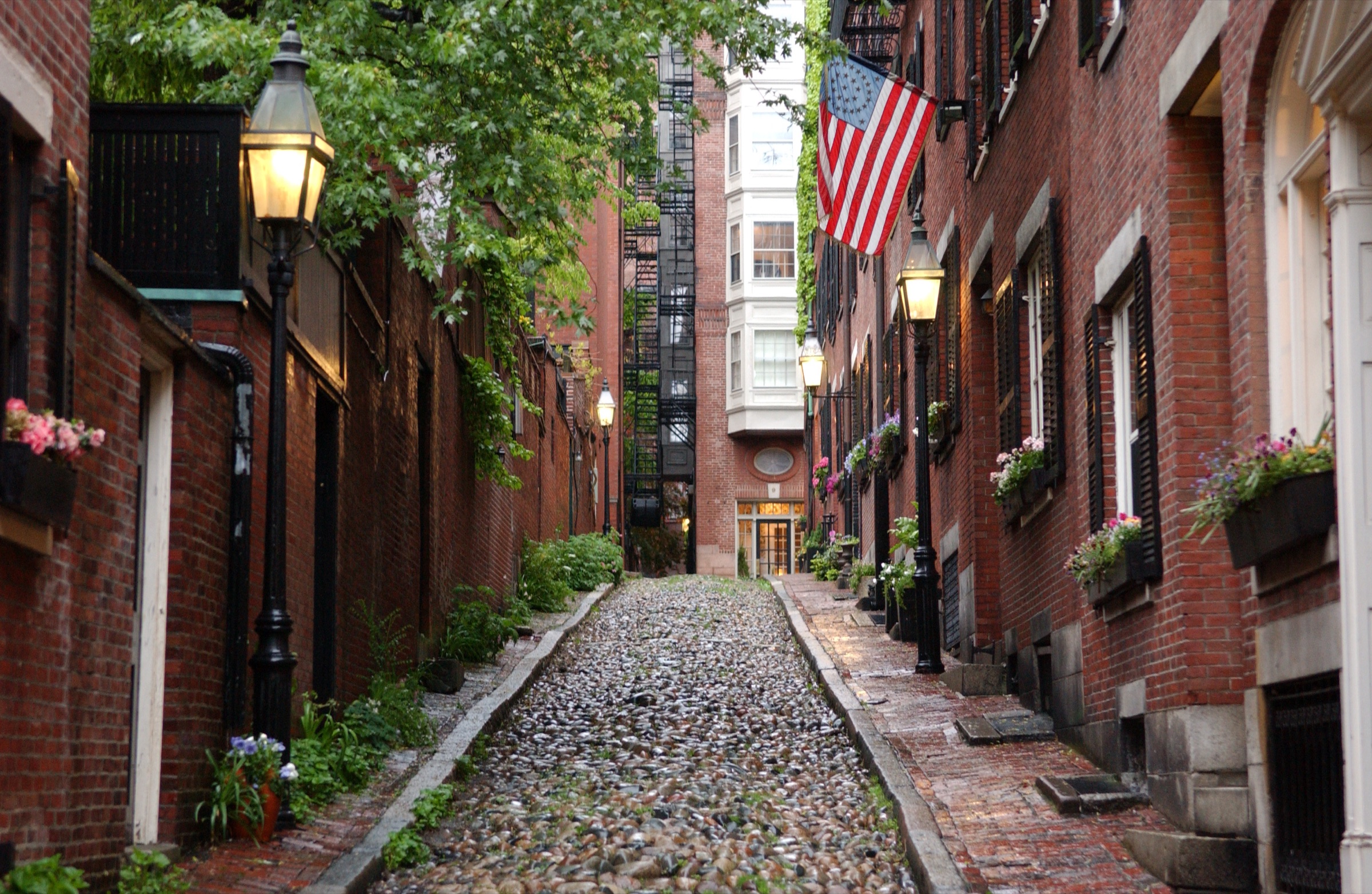
The narrow-street and limited-on-street-parking reality is a Boston-specific headwind that doesn't exist in most other US metros. Beacon Hill, Back Bay, and the South End have parking realities that make full-size SUV and large-sedan ownership operationally challenging — many city-resident owners use suburban storage and only operate vehicles for weekend or destination use rather than daily-driver patterns. The result is that the city-core ownership profile leans toward smaller, more-maneuverable specifications (911, Vantage, smaller sedan configurations) than the suburb pattern.
Driving roads near Boston are credible but require travel. The Berkshires (a three-hour drive west) offer Route 7, Route 23, and the Mohawk Trail (Route 2) — credible weekend driving with elevation change and corner density. The White Mountains of New Hampshire (two-and-a-half hours north) extend the regional driving destination set with the Kancamagus Highway as the established centerpiece. The Vermont backroads (Routes 100, 9, 30, 7) are a meaningful summer-weekend pattern. Within the immediate metro, sustained-pace driving is constrained by traffic and road geometry.
Dealer landscape
Boston has authorized-dealer presence for every Marque-covered marque, with the densest concentration along Route 9 through Newton and Wellesley (the historic luxury-dealer corridor of the Western suburbs) and along Route 1 north of the city through Saugus and Peabody. Specific anchors include Foreign Motors West (Bentley, Rolls-Royce historically; the regional ultra-luxury anchor), Boston Sports Cars (Maserati, Aston Martin, Lotus historically), Herb Chambers organization (a multi-marque anchor with Mercedes-Benz, Mercedes-Maybach, Porsche, Bentley, and other franchises), and Ferrari and Lamborghini Boston in the Norwood / Westwood corridor.
Suburban dealer activity concentrates along the Route 128 / I-95 belt — Lexington, Burlington, Norwood, Westwood, Walpole. The Cambridge / Watertown corridor has limited new-vehicle dealer presence given the urban-density and zoning realities; most Cambridge-resident buyers route through the Western-suburb dealer network. North Shore buyers commonly route through the Peabody / Danvers dealer cluster.
For new-vehicle allocation, the Boston dealer count provides reasonable buyer choice though the market is meaningfully smaller than New York or LA. The Foreign Motors West and Herb Chambers organizations' multi-marque structures mean existing-customer status across one franchise often produces allocation conversation depth on harder allocations within the same group. CPO inventory is competitive across the volume marques and reflects the winter-storage pattern (lower-mileage examples on average than warmer-market regional equivalents).
Authorized dealers in Boston
Manufacturer-authorized dealerships. Click through for current inventory and contact details.
Aston Martin of Boston
340 Boston Providence Highway
Westwood, MA 02090Bentley Boston
533 Boston Post Road
Wayland, MA 01778Herb Chambers Maserati of Boston
527 Boston Post Road
Wayland, MA 01778Herb Chambers Exotics complex on Boston Post Road, Route 20.
Lamborghini Boston
531 Boston Post Road
Wayland, MA 01778Herb Chambers Exotics complex — adjacent to Bentley Boston.
Porsche Norwell
75 Pond Street
Norwell, MA 02061South Shore — primary Porsche dealer for the greater Boston area.
Independent specialists
The Boston independent-specialist ecosystem is well-developed across the established marques, with particular depth in air-cooled Porsche (the New England air-cooled community has historical depth), classic British (Bentley, Rolls-Royce, Aston Martin, Jaguar, the broader marque cluster that aligns with the region's old-money buyer profile), and modern Italian (Ferrari, Lamborghini, Maserati). For out-of-warranty service on the volume marques, a Boston buyer typically has credible specialist alternatives to the authorized dealer, though the specialist cluster is smaller than the equivalent in LA or New York.
Pre-purchase inspection and winter-storage service are meaningful local service categories. Several specialists offer combined storage-and-service packages (heated indoor facility, periodic maintenance circulation, fluid service ahead of spring drive-out) that mirror the Chicago pattern. For any pre-owned car being shipped from a milder market, a Boston-based specialist inspection that includes corrosion and undercarriage assessment is the right risk-management step before closing.
Events and community
The regional event calendar centers on the Larz Anderson Auto Museum (Brookline, Massachusetts) — the country's oldest car museum and the anchor of the local automotive-cultural calendar. The Larz Anderson Concours d'Elegance and various marque-specific Lawn Days (Bentley Day, Italian Car Day, German Car Day, etc.) collectively define the Boston-area concours and gathering pattern. The Greenwich Concours d'Elegance (Connecticut, two-and-a-half-hour drive) and the Fairfield County Concours sit close enough to draw meaningful Boston participation.
The Misselwood Concours d'Elegance (Beverly, Massachusetts, on the North Shore) is the higher-end regional event and a meaningful Boston-collector calendar anchor. The Pebble Beach Concours d'Elegance and Monterey Car Week (mid-August, California) draws Boston participation among the most-active collector segment, with Logan and several private-aviation airports providing transcontinental connection.
Locally, the cars-and-coffee culture is anchored by various Sunday gatherings hosted by the major dealer groups (Herb Chambers Sunday meets, Foreign Motors West occasional events) and the Larz Anderson Lawn Days through the warmer months. The summer-only timing of most local gatherings reflects the broader winter-storage pattern of the metro.
Local buying notes
Massachusetts applies a 6.25% state sales tax (or use tax for out-of-state purchases) on motor vehicle purchases, with no local-municipal addition. The structure is among the more straightforward in the country at the point of purchase. The compliance-side complexity comes from the annual motor vehicle excise tax — a municipal personal-property tax assessed on vehicle value at a state-mandated rate (currently $25 per $1,000 of valuation), recalculated annually based on a depreciation schedule. The excise-tax exposure is a meaningful multi-year line item on a substantial luxury-car purchase that doesn't exist in many other states.
Massachusetts registration is annual and fee-based, with a state safety-and-emissions inspection requirement. The compliance burden is moderate — meaningfully lower than the California Vehicle License Fee or New York City use-tax processes, but with the annual excise-tax recalculation that adds ongoing complexity not present in flat-fee states.
New Hampshire registration is a long-established pattern for some Massachusetts-resident buyers, given New Hampshire's lack of state sales tax, the simpler annual registration structure, and the absence of an excise-tax equivalent. The structuring requirements (residency definition, primary-use determination, insurance jurisdiction) require registration counsel and have meaningful legal exposure if not done correctly. For buyers with New Hampshire vacation homes or genuine cross-state living patterns, this is an established and legitimate pattern; for purely tax-motivated structuring without underlying residency basis, the exposure is real.
Brands available in Boston
- Bentley
- Rolls-Royce
- Ferrari
- Lamborghini
- McLaren
- Aston Martin
- Porsche
- Maserati
- Bugatti
- Pagani
- Koenigsegg
- Mercedes-Maybach
- Mercedes-AMG
- Range Rover
Frequently asked questions
How does the Boston winter affect luxury-car ownership?
Materially — comparable to Chicago in the winter-storage culture pattern. Salt application on Boston-area roads from November through March is heavy enough that most Western-suburb and North Shore supercar owners run a winter-storage program (heated indoor facility, plug-in trickle charge, periodic maintenance circulation). The result is that Boston-market pre-owned cars typically present in mileage profiles meaningfully below the national luxury-car average — a buying advantage if the storage history is well-documented.
What is the Massachusetts motor vehicle excise tax?
A municipal personal-property tax assessed annually on vehicle value at a state-mandated rate (currently $25 per $1,000 of valuation), recalculated annually based on a depreciation schedule. The excise-tax exposure is a meaningful multi-year line item on a substantial luxury-car purchase that doesn't exist in many other states. The 6.25% state sales tax (or use tax for out-of-state purchases) at point of purchase is separate and has no local-municipal addition.
What about New Hampshire registration for Massachusetts-resident buyers?
A long-established pattern for some buyers given New Hampshire's lack of state sales tax, the simpler annual registration structure, and the absence of an excise-tax equivalent. The structuring requirements (residency definition, primary-use determination, insurance jurisdiction) require registration counsel and have meaningful legal exposure if not done correctly. For buyers with New Hampshire vacation homes or genuine cross-state living patterns, this is an established and legitimate pattern.
Where do Boston luxury-car buyers concentrate?
The historic old-money corridor anchors Beacon Hill, Back Bay, and the Western suburbs (Wellesley, Weston, Dover, Lincoln, Concord, Sherborn). The North Shore (Marblehead, Manchester-by-the-Sea, Beverly Farms) extends the old-money cluster along the coast. Newer wealth concentrates in Cambridge (the Kendall Square biotech cluster), the Seaport District, and along the Route 128 / I-95 belt through Burlington, Lexington, and Waltham.
How active is the Boston independent-specialist market?
Mature across the established marques, with particular depth in air-cooled Porsche, classic British (Bentley, Rolls-Royce, Aston Martin, Jaguar — aligning with the region's old-money buyer profile), and modern Italian. The specialist cluster is smaller than the equivalent in LA or New York but credible for out-of-warranty service across the marques in the Marque coverage list. Combined storage-and-service packages mirror the Chicago pattern.
What are the best driving roads from Boston?
The Berkshires (three-hour drive west) offer Route 7, Route 23, and the Mohawk Trail (Route 2). The White Mountains of New Hampshire (two-and-a-half hours north) extend the regional set with the Kancamagus Highway as the established centerpiece. Vermont backroads (Routes 100, 9, 30, 7) are a meaningful summer-weekend pattern. Within the immediate metro, sustained-pace driving is constrained by traffic and the narrow-street geometry of the city core and historic suburbs.
Figures on this page carry their source. Market character, dealer-group behavior, and how this metro compares with others are editorial judgment by The Marque Editors — informed by that data, but readings of it rather than measurements. How both are produced: methodology.