Luxury cars in Chicago.
The largest luxury-car market in the Midwest, with North Shore concentration and a strong all-weather SUV bias.
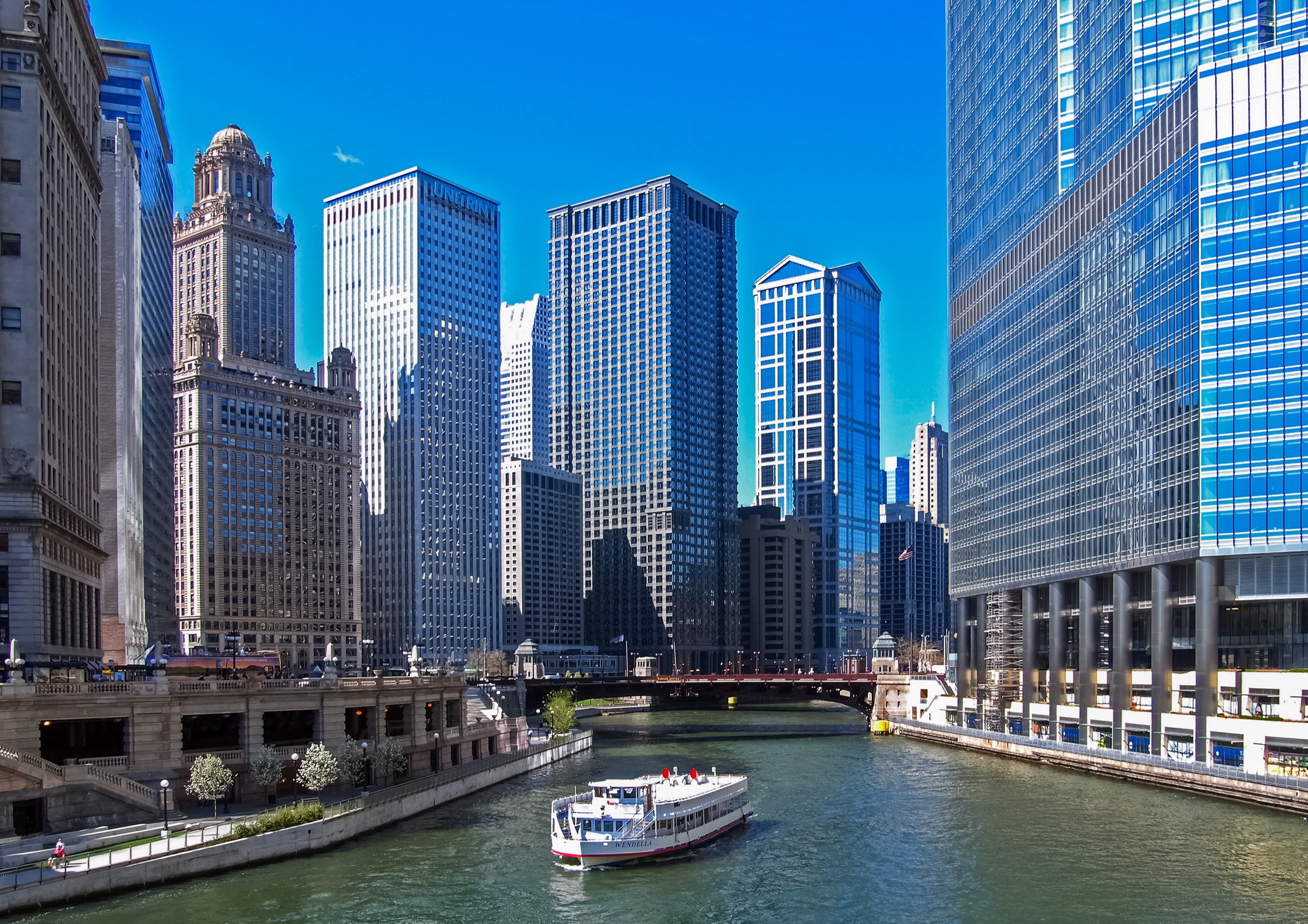
- RegionMidwest
- StateIL
- Authorized dealers6
- Marques represented4
Market shape
Greater Chicago is the country's largest luxury-car market outside the coastal metros, with high-net-worth household density that compares with Boston and Atlanta and dealer footprint that exceeds both. The wealth distribution is structurally bimodal — the old-money North Shore corridor (Winnetka, Kenilworth, Glencoe, Lake Forest, Highland Park, Lake Bluff) on the lake, and the newer-money western suburbs (Hinsdale, Oak Brook, Burr Ridge, Naperville) along the I-88 and I-355 corridors. The two clusters operate as effectively separate sub-markets with different dealer relationships and ownership patterns.
In-city wealth concentrates in Lincoln Park, Lakeview, the Gold Coast, Streeterville, and Old Town — younger and more professional than the North Shore old-money base, with ownership patterns that lean toward the volume-luxury sedan-and-SUV market (S-Class, 7 Series, A8, Bentayga, Cullinan) rather than the supercar segment that dominates the LA and Miami markets. The supercar buyer base in Chicago concentrates in the western suburbs and the North Shore.
Used-market liquidity in Chicago is meaningful and operates with deep regional cross-shop into Wisconsin, Indiana, Michigan, and the broader Midwest. For pre-owned buyers, Chicago is often the right starting point for a Midwest-region search; the cross-shop with Detroit (the Concours d'Elegance of America hosts and the established Detroit-area collector market) is well-developed for the higher-end specifications.
Driver culture
Chicago driving conditions structurally shape the local ownership pattern. Real winters — November through March cold, snow, and the heavy salt application that municipal road crews use to keep arterials clear — make convertible and supercar use functionally seasonal in a way that LA, Miami, and even New York ownership patterns do not face at the same intensity. Most North Shore and western-suburb supercar owners run a winter-storage program (heated indoor facility, plug-in trickle charge, periodic maintenance circulation) from late October through April.
The winter-storage reality has two implications for the buying conversation. First, Chicago-market pre-owned cars typically present in mileage profiles meaningfully below the national luxury-car average — a five-year-old Continental GT or Aventador in Chicago commonly shows 8,000-15,000 miles on the clock, where the same car in the LA market commonly shows 25,000-40,000. Second, Chicago-market buyers expect more rigorous service and storage documentation than buyers in milder climates — a "storage gap" of six months without documented service circulation is a meaningful concern.
The summer driving season is short but real. The classic regional driving destinations are Wisconsin's Driftless Area (the unglaciated southwestern corner of the state, with elevation change and corner density unusual for the Midwest), the Door County peninsula along Lake Michigan, and the lakefront drives along the North Shore. Lake Shore Drive within the city is more cruising than driving but is the editorial centerpiece of the city ownership experience.
Dealer landscape
Chicago has authorized-dealer presence for every Marque-covered marque, with the densest cluster running along the North Shore from Highland Park through Northbrook — the Continental Auto Group, Ferrari of Lake Forest, Lamborghini Chicago (in Westmont), McLaren Chicago (in Lake Forest as of recent operation), Bentley/Lamborghini Highland Park, and several Mercedes-Maybach Studio dealers. The North Shore corridor is the historical center of the Chicago luxury market and remains the most-developed dealer cluster in the metro.
Western-suburb dealer activity concentrates in Hinsdale, Oak Brook, and Westmont, with Audi, Maserati, Aston Martin, and Bentley presence and a growing concentration of Porsche and AMG-line activity. Downtown showrooms are limited to a handful of marques — most luxury-car activity routes through the suburban dealer network rather than the urban showroom model that defines New York and San Francisco.
For new-vehicle allocation, the Chicago dealer count provides reasonable buyer choice, though the market is meaningfully smaller than LA in the count of Special Series and Ultimate Series allocations. Existing-customer status with the Continental group, the Ferrari of Lake Forest group, or the Lamborghini-Bentley Highland Park group materially affects access to the harder allocations. CPO inventory is competitive across the volume marques and reflects the winter-storage pattern (lower-mileage examples than the regional MSRP-equivalent on coastal markets).
Authorized dealers in Chicago
Manufacturer-authorized dealerships. Click through for current inventory and contact details.
Bentley Downers Grove
330 Ogden Avenue
Downers Grove, IL 60515Bentley Gold Coast
834 North Rush Street
Chicago, IL 60611Bentley Northbrook
100 Skokie Blvd
Northbrook, IL 60062Continental Ferrari
420 East Ogden Avenue
Hinsdale, IL 60521Western suburbs — Continental is the Chicago-area Ferrari dealer.
Pagani of Lake Bluff
990 North Shore Drive
Lake Bluff, IL 60045North Shore — Lake Bluff is in the Chicago luxury corridor north of the city.
Porsche Downtown Chicago
570 W Monroe Street
Chicago, IL 60661The only Porsche dealership in the city of Chicago.
Independent specialists
The Chicago independent-specialist ecosystem is well-developed across the established marques, with particular depth in air-cooled Porsche (the Chicago region has been home to deep Porsche communities for decades), classic British (Bentley, Rolls-Royce, Aston Martin, Jaguar), and modern Italian (Ferrari, Lamborghini, Maserati). For out-of-warranty service on the volume marques, a Chicago buyer typically has credible specialist alternatives to the authorized dealer.
Pre-purchase inspection and winter-storage service are meaningful local service categories. Several specialists offer combined storage-and-service packages (heated indoor facility, periodic maintenance circulation, fluid service ahead of spring drive-out) that are an operational standard for North Shore and western-suburb supercar ownership. For any pre-owned car being shipped from a milder market, a Chicago-based specialist inspection that includes corrosion and undercarriage assessment is the right risk-management step before closing.
Events and community
The regional event calendar centers on the Concours d'Elegance of America (St. John's, Plymouth, Michigan, late July) — a four-hour drive from Chicago that draws meaningful Chicago-collector participation. The Cobble Beach Concours d'Elegance (Ontario, Canada) and the Greenwich Concours d'Elegance (Greenwich, Connecticut) sit further afield but are calendar destinations for the most-active Chicago collectors.
Locally, the cars-and-coffee culture is anchored by the Lake Forest Sportscars Sunday Morning gathering (one of the most-established Sunday gatherings in the Midwest), the Continental Cars and Coffee in Highland Park, and the various weekly meets that operate through the warmer months. The summer-only timing of most local gatherings reflects the broader winter-storage pattern.
The Chicago Auto Show (annual, McCormick Place, February) is the largest auto show in North America by attendance and is a meaningful market touchpoint, though the show's focus is more volume-luxury and mainstream than the high-end Marque coverage. The Concours d'Elegance of the Brickyard (Indianapolis, three-hour drive) and the Driving Through History event series provide additional regional touchpoints.
Local buying notes
Illinois sales tax on vehicle purchases combines the state base rate (6.25%), county tax, municipal tax, and (in some cases) regional transit authority tax. Combined rates in the city of Chicago typically run around 9.5-10.25%; North Shore and western-suburb rates vary by municipality but typically sit in the 7-8.5% range. For a substantial purchase, the registration-address selection within the metro can produce meaningful tax-cost differences — this is a question for the buyer's accountant before closing.
Illinois has historically operated a trade-in tax exemption that capped the deduction; the structure has been modified through recent legislative cycles and the current exemption rules should be verified with a dealer's F&I office or a tax advisor before closing. Use-tax exposure on out-of-state purchases is enforced; the Illinois Department of Revenue is actively pursuing out-of-state-titled vehicles registered to in-state owners.
Wisconsin and Indiana cross-state purchases are the most common out-of-state buying patterns for Chicago-area buyers, given the regional cross-shop and the proximity. The tax and registration exposure on cross-state purchases is well-understood by experienced dealers in those markets; for any cross-state purchase, the productive conversation includes the dealer's F&I office and the buyer's registration counsel before the wire transfer.
Brands available in Chicago
- Bentley
- Rolls-Royce
- Ferrari
- Lamborghini
- McLaren
- Aston Martin
- Porsche
- Maserati
- Bugatti
- Pagani
- Koenigsegg
- Mercedes-Maybach
- Mercedes-AMG
- Range Rover
Frequently asked questions
How does the Chicago winter affect luxury-car ownership?
Materially. Salt application on Chicago-region roads from November through March is heavy enough that most North Shore and western-suburb supercar owners run a winter-storage program (heated indoor facility, plug-in trickle charge, periodic maintenance circulation) for that window. The result is that Chicago-market pre-owned cars typically present in mileage profiles meaningfully below the national luxury-car average — a buying advantage if the storage history is well-documented.
Where are the best driving roads near Chicago?
Wisconsin's Driftless Area (the unglaciated southwestern corner of the state, with elevation change and corner density unusual for the Midwest) is the classic regional driving destination. The Door County peninsula along Lake Michigan is the second-tier weekend destination. Within the metro, the lakefront drives along the North Shore and Lake Shore Drive within the city are cruising routes more than driving roads — neither produces sustained-pace driving in the way Wisconsin's back roads do.
Where does the Chicago authorized-dealer market concentrate?
Highland Park and Northbrook on the North Shore are the densest dealer clusters — the Continental Auto Group, Ferrari of Lake Forest, Lamborghini Chicago, McLaren Chicago, Bentley and Mercedes-Maybach dealers are concentrated in this corridor. Western-suburb dealer activity centers in Hinsdale, Oak Brook, and Westmont. Downtown showrooms are limited; most Chicago luxury-car activity routes through the suburban network.
What is Illinois sales tax on a luxury-car purchase?
Illinois combines a state base rate (6.25%), county tax, municipal tax, and regional transit authority tax in some cases. Chicago city rates run around 9.5-10.25% combined; North Shore and western-suburb rates typically sit in the 7-8.5% range. The registration-address selection within the metro can produce meaningful tax-cost differences on a substantial purchase. Out-of-state purchases trigger Illinois use tax — the registration-counsel conversation matters.
How does Chicago compare to other Midwest luxury-car markets?
Largest by every measure — high-net-worth household count, dealer footprint, secondary-market liquidity, independent-specialist density. The cross-shop with Detroit (Concours d'Elegance of America host market and a deep collector base of its own), Indianapolis, and Minneapolis is well-developed for the higher-end specifications, but Chicago is the regional anchor and the productive starting point for most Midwest-region searches.
Is winter storage just for supercars, or for all luxury cars?
It depends on the car and the use case. AWD-equipped luxury sedans and SUVs (S-Class 4MATIC, 7 Series xDrive, Bentayga, Cullinan, Urus, DBX) are commonly used year-round on Chicago roads with appropriate winter tires and a wash regime to manage salt exposure. Rear-drive supercars, classic-collector cars, and high-end convertibles are almost universally winter-stored. The line moves with how aggressively the buyer is willing to use the car in adverse conditions and accept the salt-exposure consequences.
Figures on this page carry their source. Market character, dealer-group behavior, and how this metro compares with others are editorial judgment by The Marque Editors — informed by that data, but readings of it rather than measurements. How both are produced: methodology.