Porsche.
The longest continuous engineering case study in luxury performance.
- Founded1931
- HeadquartersStuttgart, Germany
- CountryGermany
- TierPerformance
What is Porsche today?
Porsche is a German luxury performance marque founded in 1931 by Ferdinand Porsche and owned by Volkswagen Group. The company has been publicly traded since the 2022 IPO. Porsche is the highest-volume manufacturer in the luxury performance segment. The current lineup spans the 911, Panamera, Cayenne, Macan, and the all-electric Taycan, with the 718 Cayman/Boxster in its last production years.
Who owns Porsche?
Porsche AG is owned by Volkswagen Group, which holds the majority stake. The Porsche IPO in September 2022 made Porsche AG publicly traded on the Frankfurt Stock Exchange while VW Group retained operational control. The Porsche and Piëch families control voting rights at the broader Porsche SE level, which holds VW Group voting majority.
What does Porsche ownership cost?
Porsche publishes the price of each scheduled service, which almost nothing else in this segment does: a single service runs $1,055 to $3,805 depending on model, and the four services a 911 needs after the included first one total $7,720. Tires are a meaningful line item; the ownership calculator prices a set for the specific trim. First-year depreciation on 911 carrera trims runs 15-22%. The 911 Turbo S, GT3, and GT4 RS hold value or appreciate. Cayenne and Macan follow more conventional luxury-SUV depreciation curves.
Where do you buy a Porsche?
Porsche sells through authorized US dealers only, on a far wider network than the specialist marques covered here — Porsche is a full-line manufacturer, and the network is sized for the Macan and the Cayenne rather than for the 911. The Porsche Approved CPO program covers two-to-eight-year-old cars with factory warranty extension. The Porsche Exclusive Manufaktur custom program runs through dealers but is increasingly factory-direct for high-end commissions. GT-class allocation is dealer-managed. Marque lists eight Porsche dealers across its ten covered metros; Porsche's own dealer locator is the current list for the rest of the country.
Should you buy a new or pre-owned Porsche?
For first-time Porsche buyers, two-to-four-year-old 911 carrera or Cayman examples are the editorial sweet spot. Initial depreciation has happened, the boxer engine architecture is durable, and Approved CPO extends factory coverage. GT-class cars (GT3, GT4, GT3 RS) hold value strongly; first-buyer-priced examples are difficult to acquire from dealers.
History
Porsche began as a design consultancy in 1931 — Dr. Ing. h.c. F. Porsche GmbH, run by Ferdinand Porsche. The first car to carry the Porsche name as a manufacturer (rather than as the design firm behind another company's product) was the 356, built starting in 1948. From the 356 the lineage runs continuously through the 911 (introduced 1963 and now in its eighth generation) and a steadily-broadening lineup that includes mid-engine sports cars, luxury sedans, SUVs, and the all-electric Taycan.
The Porsche/Volkswagen relationship has been complex throughout. Porsche provided design and engineering services to Volkswagen from before WWII; in 2008 Porsche Holding (the family-owned entity) attempted to acquire Volkswagen Group; the financial-crisis aftermath inverted the deal and Volkswagen Group acquired Porsche AG in 2012. Porsche AG was carved out and listed publicly in 2022, while the broader Porsche-family ownership of Porsche Holding (which owns the dealer network and other assets) continues separately.
The modern Porsche is the most volume-broad manufacturer in the luxury performance segment. The 911 remains the lineup's identity anchor; the Cayenne (launched 2002) was the manufacturer's most consequential commercial decision in the modern era and has driven the volume that funds the rest of the lineup; the Taycan (launched 2019) was the manufacturer's most consequential technical decision since the 928 and has positioned Porsche as the volume leader in the luxury-EV segment.
Anchored on the Porsche 911 Carrera.
Source: Industry composite estimate (Hagerty / KBB), 2024. GT-class 911s (GT3, Turbo S, GT4 RS) hold value at or above MSRP.
Positioning
Porsche sits across the luxury performance segment more broadly than any other manufacturer in the Marque coverage list. The lineup spans the outgoing entry-luxury 718 (Cayman/Boxster), the daily-driver 911, the luxury-sedan Panamera, the luxury-SUV Cayenne and Macan, and the EV Taycan. That breadth is the marque's defining commercial reality — a buyer can specify a $75,000 718 or a $300,000-plus 911 GT3 RS or a $200,000 Cayenne Turbo GT through the same dealer.
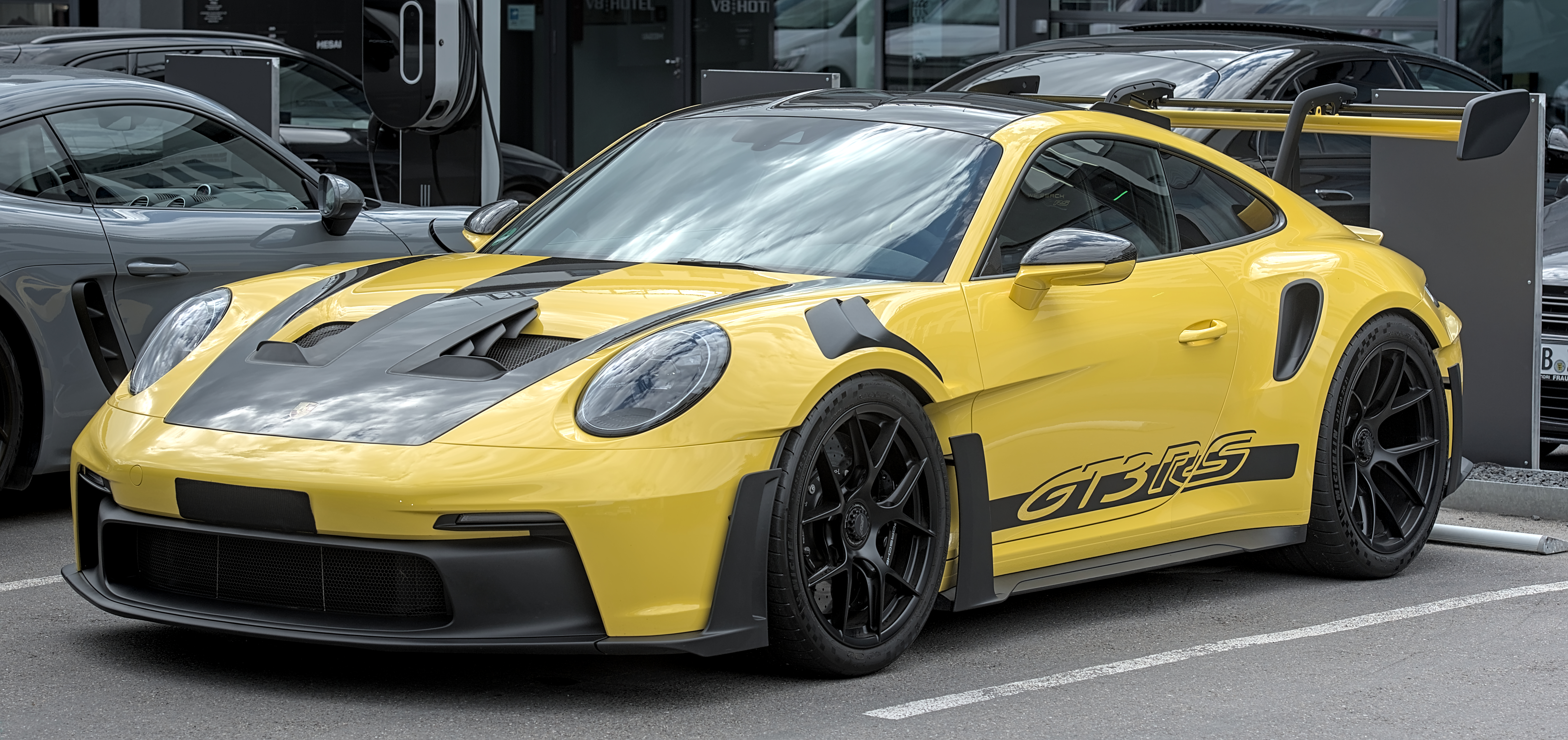
The 911 GT department — the in-house program that produces the GT3, GT3 RS, GT2 RS, GT4 RS, and the limited-volume hypercar program (918 Spyder, the upcoming successor) — operates on its own commercial logic. Allocation behavior on GT cars is much more Ferrari-like than on the rest of the Porsche lineup; existing-customer status and dealer relationship matter materially.
Current lineup
718 Cayman / Boxster (last production years, in pre-owned market)
The mid-engine entry to the lineup — coupe and convertible, now between generations.
The 718 family is the lineup's entry point and the most pure-driving Porsche in volume production. Available with a flat-four turbo (base, S) and the naturally-aspirated flat-six in the GTS 4.0 and GT4 RS — the latter a GT-department car with allocation behavior to match. Porsche ended combustion 718 production in October 2025, making the 2026 cars the last of them, and the all-electric replacement has slipped to 2027 at the earliest — so the mid-engine entry point is between generations rather than on sale.
911 (Carrera, Carrera S, Targa, Turbo, GT3, GT3 RS, etc.)
The lineup's identity anchor — roughly fifteen distinct trims.
The 911 spans the full luxury-performance spectrum, from the base Carrera to the GT3 RS and the upcoming GT2 RS. The current generation (992, in the second-generation refresh) includes the new 911 T (a stripped-down driver's spec), the Dakar (raised-suspension off-road variant), and the GT3 RS as the flagship of the regular GT department lineup. Allocation behavior varies dramatically across the trim spectrum.
Panamera
The four-door grand-tourer — luxury sedan with sports-car DNA.
The current Panamera (third generation) is the cleanest iteration of the four-door Porsche concept. Available with V6 and V8 powertrains, hybrid and Turbo S E-Hybrid variants, and Executive long-wheelbase commissioning. The Panamera competes most directly with the Mercedes-AMG GT 4-Door, the Audi RS7, and the BMW M8 Gran Coupe.
Cayenne
The luxury SUV that funded the modern Porsche lineup.
Now in its third generation (refreshed 2024), the Cayenne lineup spans base, S, GTS, Turbo, Turbo E-Hybrid, and the limited-volume Turbo GT. The Cayenne shares its platform with the Volkswagen Touareg, Audi Q7, Bentley Bentayga, and Lamborghini Urus, but is engineered and tuned distinctly within the platform-mate family.
Macan / Macan Electric
The smaller luxury SUV — the lineup's highest-volume model.
The Macan is now sold in two distinct versions: the second-generation Macan (internal-combustion, end-of-cycle) and the all-electric Macan Electric (launched 2024). The Macan Electric is built on Volkswagen Group's Premium Platform Electric (PPE) shared with the Audi Q6 e-tron and is the manufacturer's commercially most-consequential EV after the Taycan.
Taycan
The all-electric four-door — the volume leader in the luxury-EV segment.
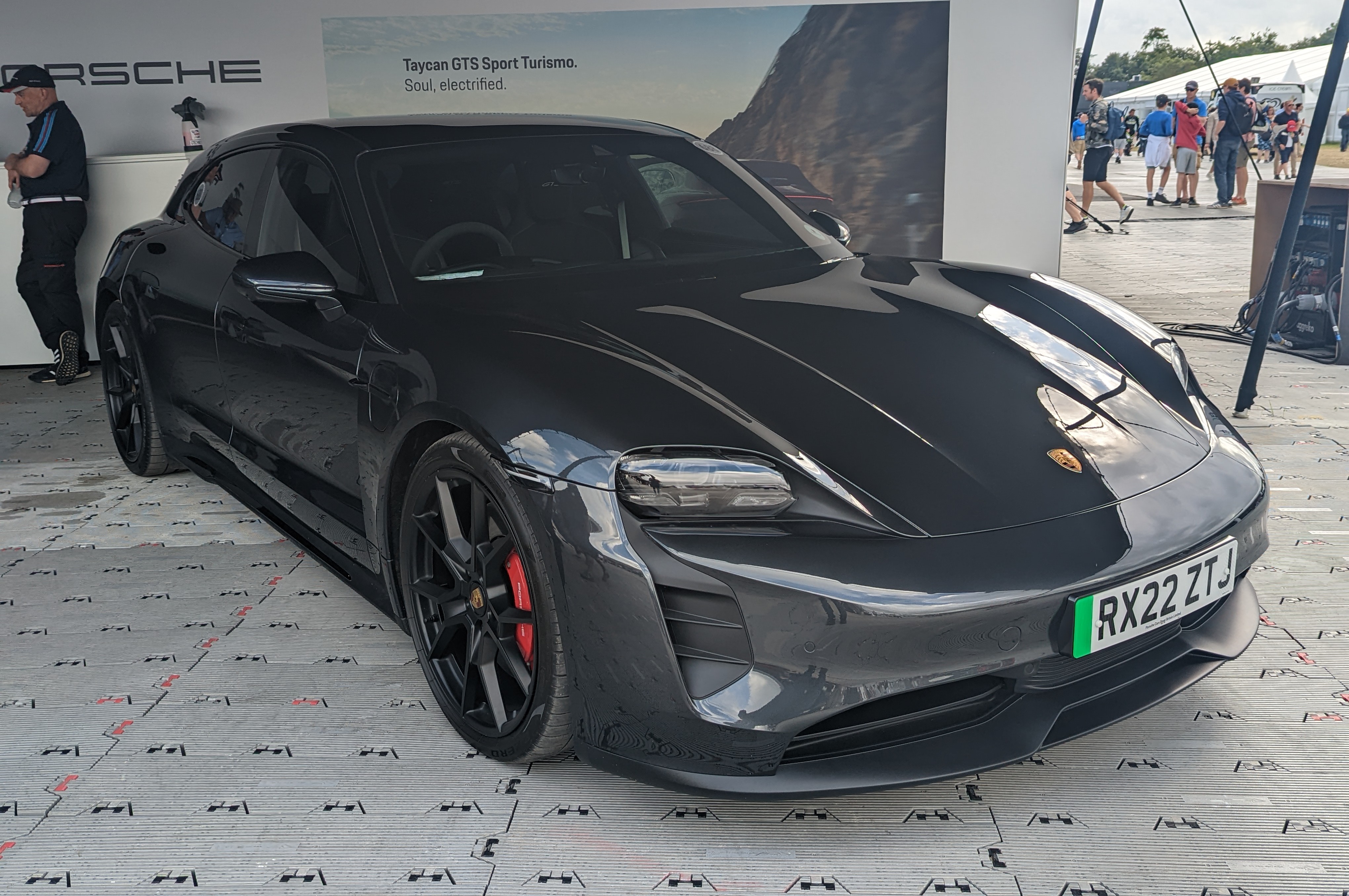
The Taycan (refreshed 2024) is the highest-volume luxury EV in the Marque coverage list. Available as a sedan, a Cross Turismo (raised wagon), and a Sport Turismo, with trims spanning Taycan, 4S, Turbo, Turbo S, and the limited-volume Turbo GT. Real-world charging behavior and battery longevity data are now mature enough to support pre-owned buying decisions on first-generation cars.
Porsche press gallery
Ownership reality
Porsche ownership economics are among the most favorable in the luxury-performance segment. Depreciation on the 911, Cayenne, and Macan tracks the segment but with comparatively-strong residuals — the 911 in particular has held value better than any direct competitor over the past decade. The 718 family depreciates more aggressively on the base trims and meaningfully less on the GTS 4.0 and GT4 RS. The Panamera depreciates the most aggressively in the lineup, reflecting both first-generation model history and the four-door luxury-sedan segment broadly.
GT-department cars (911 GT3, GT3 RS, GT2 RS, GT4 RS) operate on a different residual logic. These cars frequently sell at or above MSRP on the secondary market, particularly in popular colors and high-spec configurations. Allocation discipline at the dealer level keeps secondary-market prices firm; the GT cars are the closest the Porsche lineup gets to Ferrari-style allocation behavior.
Service intervals are 12 months or 10,000 miles, whichever comes first. Porsche publishes plan pricing for those services rather than leaving them to the dealer — $1,055 to $3,805 per service across the range — so the cost is checkable before you buy rather than after. Independent specialist service for Porsche is the most developed in the luxury-performance segment — there are credible Porsche-only independent shops in every major US metro, and the cost difference versus dealer service can be 30-50% on out-of-warranty work.
A 2026 ValuePenguin rate survey puts full coverage at $2,279 a year on a Macan and $4,475 on a 911 Turbo S for a clean-record driver in Texas — a narrower spread than the price gap between those cars suggests. GT-department cars (GT3, GT3 RS) often carry agreed-value insurance through Hagerty or Chubb rather than market-value through a standard carrier; the cost-and-coverage difference matters for collector-grade examples.
Dealer landscape
Porsche operates an estimated 190 authorized dealers in the United States — the largest authorized network among the Marque-covered marques by a meaningful margin. Dealer presence reaches well beyond the ultra-luxury metros; mid-sized US cities (Charlotte, Nashville, Phoenix, Salt Lake City, Indianapolis) typically have at least one authorized Porsche dealer, which is uncommon for the rest of the coverage list.
Independent Porsche specialists are the most developed in the luxury-performance segment. Air-cooled 911 work (1964-1998), water-cooled 911 work (996, 997, 991), Cayenne service, and even modern Taycan service are all served by credible independent shops in every major metro. For out-of-warranty work, independent specialist service often delivers materially better value than authorized dealer service while preserving marque-specific expertise. For pre-purchase inspections on pre-owned cars, the right Porsche-specialist independent will catch things a generalist will miss.
Buying advice
For new-vehicle buyers, allocation behavior on Porsche varies by trim. Standard lineup cars (Carrera, Cayenne base/S, Macan, Panamera, Taycan) are generally orderable from any authorized dealer with reasonable lead times. GT-department cars (GT3, GT3 RS, GT2 RS, GT4 RS) operate on existing-customer-priority allocation; first-time GT-car buyers face meaningfully harder allocation than buyers with a documented Porsche purchase history. The productive path to a GT car is consistent ownership across the regular lineup over several years.
For CPO buyers, the Porsche Approved CPO program covers cars up to a defined age and mileage and includes a 24-month warranty extension and a 111-point pre-sale inspection. CPO Porsche pricing typically sits at a moderate premium over private-party pre-owned but the warranty extension is substantive — particularly on the 911, where the extended warranty often pays for itself over a typical ownership cycle.
For pre-owned buyers, the editorial sweet spots differ sharply by model. On the 911, the late-991 Carrera S (2017-2019) is a documented depreciation floor for the modern car. On the 718 GTS 4.0, mileage and provenance matter more than age — these are appreciating cars on the right specifications. On the Cayenne, the depreciation floor on the third-generation cars is roughly four to six years old. On the Taycan, first-generation cars (2019-2023) are now showing meaningful depreciation and represent a particular value for buyers willing to manage the early-EV ownership profile.
For collector-grade interest, the air-cooled 911s (964 Carrera RS, 993 Turbo S, 993 GT2) remain the highest-conviction Porsche collector segment, with documented appreciation over the past decade. The recent GT-department cars (GT3 RS variants, GT2 RS, the Carrera GT) sit in the second-tier collector conversation. The Carrera GT specifically (2004-2007) is now firmly in the seven-figure market.
Frequently asked questions
Is Porsche owned by Volkswagen?
Yes — Porsche AG (the manufacturer) is owned by Volkswagen Group. The relationship is more complex than that summary suggests: Porsche Holding (the family-owned entity) owns a controlling stake in Volkswagen Group, which in turn owns Porsche AG. Porsche AG was carved out and listed publicly in 2022 while remaining a Volkswagen Group brand.
Why does the 911 hold value so well?
A combination of consistent product-strategy discipline (the 911 has remained recognizably the same car across eight generations since 1963), strong dealer-network discipline on allocation, and a well-developed independent-specialist support ecosystem that keeps long-term ownership costs predictable. The GT-department cars in particular have benefitted from Porsche's deliberate constraint on production volumes.
How is the Cayenne different from the Bentayga?
The Cayenne and Bentayga share their underlying platform (the MLB Evo architecture) along with the Audi Q7, Lamborghini Urus, and Volkswagen Touareg. The Cayenne is engineered and tuned for driver feel; the Bentayga is engineered for cabin standard and rear-seat comfort. The Bentayga's Crewe-built interior operates a tier above the Cayenne's; the Cayenne handles in a way the Bentayga does not. They are different commercial propositions on the same platform.
How long should I wait for a 911 GT3?
GT-department car allocation depends on dealer relationship and lineup history. For a first-time Porsche buyer with no allocation history, the wait for a GT3 is meaningfully longer than for a buyer with several documented Porsche purchases. For a buyer with the right relationship, lead times typically run 12-24 months from order to delivery on the current generation.
Is the Macan Electric the same car as the gas Macan?
No — they are two distinct vehicles. The internal-combustion Macan is the second-generation Macan (end-of-cycle, on the original platform). The Macan Electric (launched 2024) is built on Volkswagen Group's new Premium Platform Electric (PPE) architecture shared with the Audi Q6 e-tron. Different platforms, different technical approaches, different commercial positioning.
What is the Porsche Approved CPO program?
Porsche Approved is the manufacturer-backed CPO program covering cars up to a defined age and mileage. The program includes a 24-month warranty extension on top of any remaining factory warranty and requires a 111-point pre-sale inspection at an authorized dealer. CPO Porsches typically sit at a moderate premium over private-party pre-owned.
Should I buy a Porsche from the dealer or from an independent broker?
For new cars and CPO inventory, the authorized dealer network is the right path — for new in particular because allocation routes through dealers, and for CPO because the manufacturer-backed warranty extension is meaningful. For pre-owned cars outside the CPO window, both paths work; the deciding factor is the specific car, its provenance, and whether the seller (dealer or broker) has documented service history and a credible inspection.
Figures on this page carry their source. Positioning, allocation practice, and where this marque sits against its rivals are editorial judgment by The Marque Editors — informed by that data, but readings of it rather than measurements. How both are produced: methodology.