Luxury cars in San Francisco Bay Area.
The Bay Area’s tech wealth has shifted the luxury market toward EVs (Lucid, Taycan, Spectre).
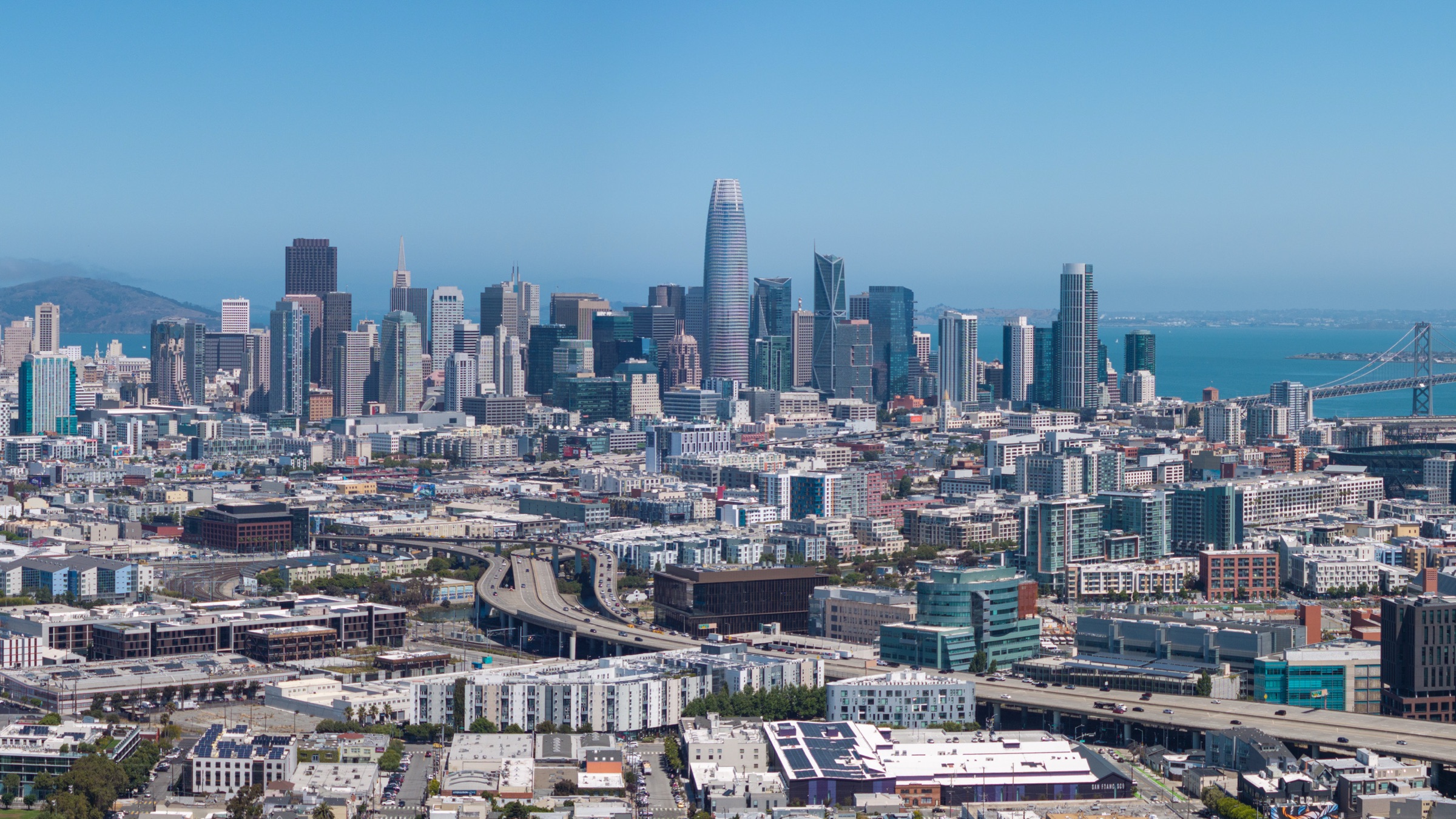
- RegionWest
- StateCA
- Authorized dealers4
- Marques represented3
Market shape
The Bay Area luxury-car market is structurally distinct from Los Angeles in two ways. First, the wealth distribution is more dispersed across geography — Silicon Valley wealth in Atherton, Hillsborough, Palo Alto, and Los Altos Hills; older San Francisco wealth in Pacific Heights, Sea Cliff, and Russian Hill; East Bay wealth in Piedmont, Lafayette, and Orinda; Marin County wealth in Belvedere, Tiburon, and Ross. The dealer geography responds to this dispersion rather than concentrating in a single corridor.
Second, the Bay Area is the country's most-advanced market for high-end electric and hybrid specifications. The Tesla early-adopter base, the Rivian and Lucid presence, the Porsche Taycan and the Audi e-tron GT receptions, and now the Mercedes-Maybach EQS SUV, the Ferrari SF90, the Lamborghini Revuelto, and the McLaren Artura have collectively shaped a buyer profile that is unusually receptive to electrified powertrains among US metros.
Used-market liquidity in the Bay Area is meaningful but smaller than the LA market. The major specialist dealers and brokers (Cole European, Sonnen Motorcars, McLaren San Francisco, Maserati Marin, the various air-cooled Porsche specialists) provide credible regional inventory, and the cross-shop with the Pacific Northwest and Southern California markets is well-developed for buyers willing to fly or ship.
Driver culture
Bay Area driving conditions favor luxury cars in a different way than the LA pattern. The weather is mild year-round but cooler than Southern California; rain is concentrated in a winter season but real; coastal fog through summer mornings is the defining visibility condition along the Pacific edge. Convertibles are usable but more weather-aware than in LA — the Pacific Coast in late summer is a fog drive, not a top-down drive.
The driving roads are among the best in the country. Highway 1 along the San Mateo and Santa Cruz coast, Skyline Boulevard along the ridge of the Santa Cruz Mountains, the Highway 9 / Highway 35 / Highway 84 triangle through the redwoods, the Mount Tamalpais loop in Marin, and the East Bay backroads (Tunnel Road, Wildcat Canyon, Pinehurst) collectively offer credible daily-driver routes that LA-area roads cannot match in elevation change and corner density. The Monterey peninsula sits two hours south by highway and is a frequent weekend destination for Bay Area collectors.
The traffic reality across the bridges (Bay Bridge, Golden Gate, San Mateo, Dumbarton) and along the 101/280 spine through the Peninsula is a meaningful counterweight. Sustained-speed driving within the urban core is rare; ownership patterns lean toward weekend and recreational use rather than daily-driver high-mileage operation, which preserves residual value.
Dealer landscape
The Bay Area has authorized-dealer presence for every Marque-covered marque, with the densest cluster running along the El Camino Real corridor through Burlingame, Redwood City, and Mountain View — historically known among the local market as the "luxury auto row." Specific anchors include Mountain View's Bentley, McLaren San Francisco (located in Belmont as of recent operation), Maserati and Aston Martin showrooms in Marin and the Peninsula, and Ferrari Silicon Valley in Mountain View.
For new-vehicle allocation, the Bay Area dealer count is meaningful but smaller than the LA market. Existing-customer status with the right dealer matters for harder-allocation cars (Ferrari Special Series, Porsche GT cars, McLaren Ultimate Series); the Bay Area dealers serve a smaller buyer pool than their LA counterparts, which can mean better access for established customers but fewer dealer-shopping options for first-time buyers.
CPO inventory in the Bay Area is competitive across the volume marques but typically thinner on harder-to-find specifications than the LA market. For buyers willing to fly, the LA-Bay Area pre-owned cross-shop is well-developed; the same enclosed-transport network that ships LA cars to East Coast buyers operates the regional Bay Area / LA pattern at lower cost ($600-$1,200 typical).
Authorized dealers in San Francisco Bay Area
Manufacturer-authorized dealerships. Click through for current inventory and contact details.
Bentley San Francisco
620 Du Bois Street
San Rafael, CA 94901Bentley Walnut Creek
1425 Parkside Drive
Walnut Creek, CA 94596Pagani of San Francisco
620 Du Bois Street
San Rafael, CA 94901Shares the 620 Du Bois Street complex with Bentley San Francisco.
Porsche Marin
900 Redwood Highway
Mill Valley, CA 94941The only Porsche Exclusive Manufaktur dealer in Northern California.
Independent specialists
The Bay Area independent-specialist ecosystem is mature, particularly for air-cooled Porsche (the Bay Area has been one of the country's deepest air-cooled communities for decades), classic British (Bentley, Jaguar, Aston Martin), and modern Italian (Ferrari V8 and V12, Lamborghini V10 and V12, Maserati). For out-of-warranty service on any marque in the Marque coverage list, a Bay Area buyer typically has credible specialist alternatives to the authorized dealer.
Pre-purchase inspection is a meaningful service category given the volume of pre-owned transactions and the regional cross-shop with LA. Most major specialists offer pre-purchase inspection as a standalone service; for cars being shipped from out of region (particularly from the Southeast or Florida markets), a Bay Area-based specialist inspection is often the right risk-management step before a wire transfer.
Events and community
The Monterey Car Week (mid-August) is the Bay Area's gravitational center for collector activity. Pebble Beach Concours d'Elegance, the Quail Motorsports Gathering, the Rolex Monterey Motorsports Reunion at Laguna Seca, and the various auction-house events (RM Sotheby's, Gooding & Company, Bonhams, Mecum) collectively define the calendar peak. Most Bay Area collectors plan their auction and acquisition activity around this week.
Beyond Monterey, the regional event calendar includes the Hillsborough Concours d'Elegance (annual, on the Peninsula), the Niello Concours at Serrano (Sacramento area, drives Bay Area attendance), and the various weekly cars-and-coffee gatherings (Cars and Coffee Marin, Canepa Cars and Coffee in Scotts Valley, the Filoli car show in Woodside). The Filoli and Canepa events draw the heaviest local-market participation.
The Bay Area's automotive community is anchored editorially by Bring a Trailer (BaT), the auction platform that has reshaped the modern collector-car market and is headquartered in the area. BaT's presence means the Bay Area is — uniquely among US metros — both a major buying market and the operational center of the most important secondary-market platform.
Local buying notes
California sales tax applies in the Bay Area at the same rate structure as Los Angeles — combined state and local rates typically lands in the 8-10% range, applied to the purchase price. Use-tax exposure on out-of-state purchases is enforced by the California Department of Tax and Fee Administration; structuring around the tax is a question for the buyer's accountant or registration counsel before closing.
California registration is annual and partially fee-based on a percentage of vehicle value (the Vehicle License Fee component), which makes it materially more expensive on luxury vehicles than the registration cost in most other states. Some buyers structure ownership through Montana LLCs or other out-of-state vehicle registration arrangements; this is a tax-planning question with material legal exposure if not done correctly.
California emissions and registration rules are the tightest in the United States and apply to all in-state-registered vehicles regardless of model year. Federal "show-and-display" registration for limited-import models is workable but procedurally narrow. For buyers interested in non-US-spec cars, California is the most procedurally-difficult state to navigate, regardless of metro.
Brands available in San Francisco Bay Area
- Bentley
- Rolls-Royce
- Ferrari
- Lamborghini
- McLaren
- Aston Martin
- Porsche
- Maserati
- Bugatti
- Pagani
- Koenigsegg
- Mercedes-Maybach
- Mercedes-AMG
- Range Rover
Frequently asked questions
How does the Bay Area luxury-car market compare to Los Angeles?
Smaller in absolute volume, more electrification-receptive, and structurally more dispersed across geography. The LA market concentrates in a small number of high-density wealth clusters; the Bay Area market disperses across San Francisco proper, the Peninsula, Marin, and the East Bay. The dealer geography responds to that dispersion rather than concentrating in a single auto-row. The cross-shop with LA on pre-owned cars is well-developed.
Where is the Bay Area's "auto row"?
The El Camino Real corridor through Burlingame, Redwood City, and Mountain View is the densest concentration of authorized luxury dealers in the region — historically the "Peninsula auto row." San Francisco proper has limited dealer presence given the urban-density and parking constraints; Marin County has a smaller cluster of luxury specialists; East Bay dealer activity tends to consolidate in Walnut Creek and Pleasanton.
Why does the Bay Area lean so heavily into electric and hybrid luxury?
Three factors compound: the early Tesla and Rivian buyer base built familiarity with EV ownership at the high end; the regional charging infrastructure is the most developed in the US outside of certain Pacific Northwest corridors; and the Silicon Valley wealth profile skews toward technology-receptive buyers. The Porsche Taycan, Audi e-tron GT, Mercedes-Maybach EQS SUV, Ferrari SF90, and Lamborghini Revuelto have all met Bay Area receptions that would be measurably different in other US metros.
What are the best driving roads in the Bay Area?
Highway 1 along the San Mateo and Santa Cruz coast, Skyline Boulevard along the Santa Cruz Mountains ridge, the Highway 9 / Highway 35 / Highway 84 triangle through the redwoods, the Mount Tamalpais loop in Marin, and the East Bay backroads (Tunnel Road, Wildcat Canyon, Pinehurst) are the established regional driving routes. Most are best in early-morning weekend timing; coastal fog can be a factor through summer mornings.
Should I plan my buying around Monterey Car Week?
For collector-grade purchases, yes. Pebble Beach Concours d'Elegance, the Quail Motorsports Gathering, and the Monterey-week auction houses (RM Sotheby's, Gooding & Company, Bonhams, Mecum) collectively define the calendar peak for the West Coast collector market. For volume-luxury purchases (new-car allocation, CPO, standard-spec pre-owned), the timing is less critical; for the rarer specifications and the firmly-collectible cars, Monterey week is the decisive event of the year.
How active is the Bay Area independent-specialist market?
Mature and deep, particularly for air-cooled Porsche (one of the country's deepest air-cooled communities), classic British (Bentley, Jaguar, Aston Martin), and modern Italian (Ferrari, Lamborghini, Maserati). For out-of-warranty service on any marque in the Marque coverage list, a Bay Area buyer typically has credible specialist alternatives to the authorized dealer.
Figures on this page carry their source. Market character, dealer-group behavior, and how this metro compares with others are editorial judgment by The Marque Editors — informed by that data, but readings of it rather than measurements. How both are produced: methodology.