Lamborghini.
Theatrical mid-engine supercars and the Urus, the segment’s best-selling SUV.
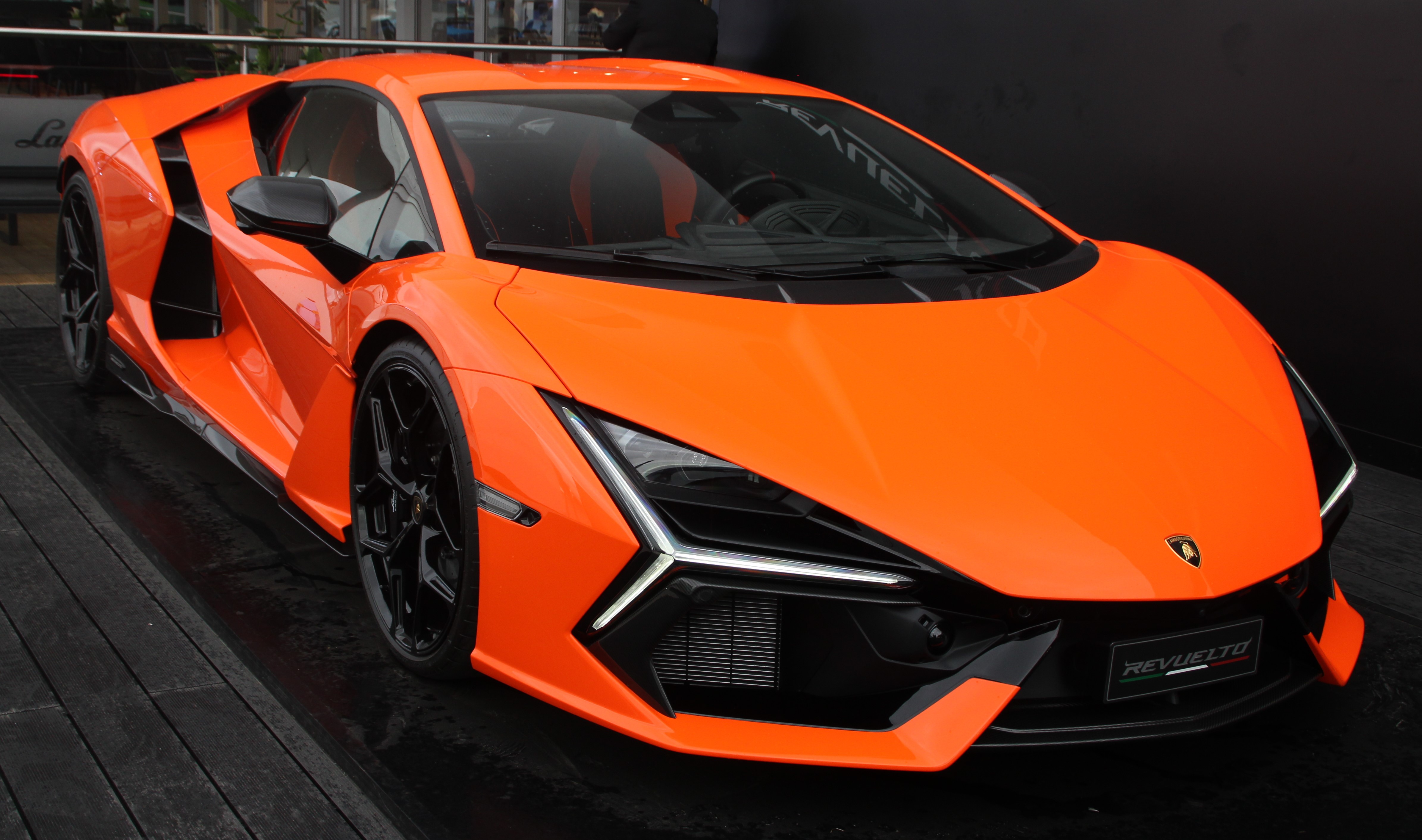
- Founded1963
- HeadquartersSant’Agata Bolognese, Italy
- CountryItaly
- TierHypercar
What is Lamborghini today?
Lamborghini is an Italian luxury sports-car and hypercar marque founded in 1963 by Ferruccio Lamborghini and headquartered in Sant'Agata Bolognese. The company has been an Audi AG subsidiary since 1998 within the Volkswagen Group. The current lineup is built around the Revuelto V12 hybrid, Temerario V8 hybrid, and Urus super-SUV.
Who owns Lamborghini?
Lamborghini is owned by Audi AG, which is itself owned by the Volkswagen Group. The acquisition closed in 1998 and Lamborghini has operated as an Audi subsidiary since then. Engineering autonomy remains in Sant'Agata Bolognese. VW Group platform sharing supports the marque's electrification investment and supply-chain economics.
What does Lamborghini ownership cost?
Lamborghini ownership runs at the moderate end of the supercar segment. Service is due every 12 months. Tires are a meaningful line item; the ownership calculator prices a set for the specific trim. First-year depreciation on standard Huracán and Revuelto runs 18-28%. Special Series and Few-Off cars hold value or appreciate; Urus follows a more conventional luxury-SUV depreciation curve.
Where do you buy a Lamborghini?
Lamborghini sells through authorized US dealers only, on a network that is wide by supercar standards. Configurator orders run through dealers; direct-from-Sant'Agata is not available to US buyers. The Selezione Lamborghini CPO program covers two-to-five-year-old cars with factory-extended warranty through the same dealer network. Marque lists seven Lamborghini dealers across its ten covered metros; Lamborghini's own dealer locator is the current list for the rest of the country.
How does Lamborghini allocation work?
Standard Revuelto, Temerario, and Urus cars are dealer-allocated and order-able by qualified buyers without significant brand history. Special Series and Few-Off cars (Sián, Countach LPI 800-4, Reventón-class) require established dealer relationships and demonstrated multi-purchase history with the marque. Allocation tightens dramatically above the standard lineup.
History
Ferruccio Lamborghini founded the company in 1963, having built a substantial business in agricultural tractors and industrial heating equipment in the post-war Italian economy. The road-car business was, in the founding lore, a deliberate response to the Ferrari ownership experience — Ferruccio's view that the engineering of grand-tourer Ferraris of the era was insufficiently refined for the price point. The first car, the 350 GT, launched in 1964; the Miura, launched in 1966, established the marque as a serious technical and commercial competitor.
Through the 1970s and 1980s the company moved through several ownership transitions — Swiss investors, the Mimran family, then Chrysler from 1987 to 1994, then a Malaysian-Indonesian holding before Audi AG's acquisition in 1998. The Audi era stabilized the engineering and capital base, integrated Sant'Agata into the Volkswagen Group platform-and-electrification strategy, and saw the marque expand from a two-model V12-and-V10 lineup to the modern three-pillar product structure.
The most consequential lineup decision of the modern era was the 2018 launch of the Urus. The super-SUV doubled annual production volume within three years and shifted the marque's commercial center of gravity decisively. The Revuelto launched in 2023 as the V12 plug-in hybrid successor to the Aventador, and the Temerario — the V8 twin-turbo hybrid that replaces the Huracán — was unveiled in 2024 with US deliveries running through 2025 and into 2026.
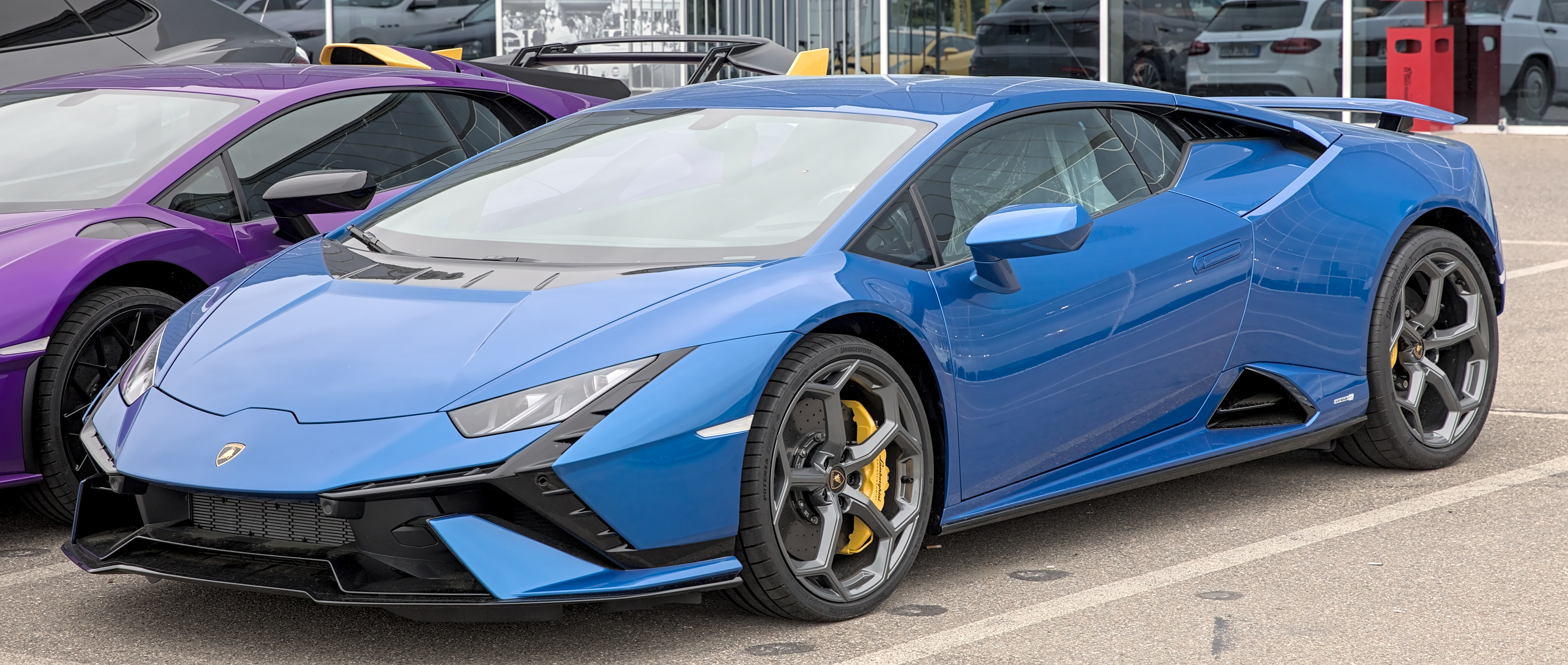
Anchored on the Lamborghini Huracán Tecnica — built through 2024, replaced by the Temerario.
Source: Industry composite estimate (Hagerty / KBB / Edmunds), 2024. Modern Lamborghini V10 and V12 cars have held value well; Revuelto and Sián FKP carry collector premiums.
Positioning
Lamborghini sits as the most theatrical of the volume Italian marques. The product strategy is built around three nameplates that occupy distinct segment roles — the Revuelto as the V12 flagship, the Temerario as the V8 mid-engine volume car, and the Urus as the lifestyle SUV that funds the lineup — plus a Few-Off and Special Series stream (the Sián, Countach LPI 800-4, the Reventón and Veneno of earlier eras, the more recent Essenza SCV12 and Invencible).
The Audi-era Lamborghini is more disciplined commercially than the Chrysler-era marque was, and the company's electrification roadmap is aligned with the Volkswagen Group strategy — the lineup is now fully hybridized, with the Lanzador GT EV scheduled for the back end of the decade as the marque's first dedicated battery-electric production model.
Current lineup
Revuelto
The V12 flagship — plug-in hybrid, mid-engine, successor to the Aventador.
The Revuelto launched in 2023 with a naturally-aspirated 6.5-liter V12 paired to three electric motors and a small battery, producing roughly 1,000 combined horsepower. It is the first plug-in hybrid Lamborghini and the first mid-engine V12 from the marque to use a transverse dual-clutch gearbox. Allocation has been the most constrained in the lineup since launch.
Temerario
The mid-engine V8 hybrid — the volume-defining car that succeeds the Huracán.
The Temerario, unveiled in 2024 with first US deliveries running through 2025-2026, is built around a 4.0-liter twin-turbo V8 paired to three electric motors. It replaces the long-running Huracán nameplate and represents the marque's clearest break from the naturally-aspirated V10 era. As of writing, allocation is open through authorized dealers but the order book runs more than a model-year out for popular specifications.
Urus SE / Urus Performante
The super-SUV — the volume nameplate and the lineup's commercial anchor.
The Urus SE is the plug-in hybrid version (twin-turbo V8 paired to an electric motor and battery), launched 2024; the Urus Performante is the more track-focused, lighter, naturally-aspirated-V8 specification. The Urus has been the marque's volume leader since the 2018 launch and has materially shifted the buyer profile of the brand.
Huracán (last production years, in pre-owned market)
The outgoing V10 — discontinued new but actively traded in the pre-owned market.
Huracán production wound down through 2024-2025 as the Temerario came online. The pre-owned Huracán market is deep and well-documented, with the STO (track-focused, rear-drive), Tecnica (a more usable variant of the STO recipe), and Sterrato (the rally-inflected, raised-suspension variant) commanding meaningful premiums over standard Evo and original LP-series cars.
Special Series and Few-Off (Sián, Countach LPI 800-4, Essenza SCV12, Invencible)
Limited-production heritage and technical-demonstration cars.
The Few-Off program (Sián FKP 37, Countach LPI 800-4, Essenza SCV12, Invencible and Auténtica) operates on existing-customer-priority allocation and rarely reaches the broad market at MSRP. These cars are typically allocated multi-year in advance and follow lineup ownership rather than retail availability.
Lamborghini press gallery
Ownership reality
Lamborghini ownership economics sit between the Ferrari curve and the broader luxury-SUV-and-sports-car market. Standard-lineup cars (Huracán, Urus) typically depreciate 30-45% over the first three years, with significant variability based on color and option specification. Special variants — STO, Tecnica, Sterrato on the Huracán; Performante on the Urus — depreciate more slowly and in some specifications have firmed in the past 18 months.
Annual service intervals are 12 months or 7,500 miles for the Huracán and Revuelto, with the Urus on a similar cadence. Lamborghini's included-service window has historically been more limited than Ferrari's Genuine Maintenance program — typically a three-year coverage window on standard cars, with extended service plans available at point of purchase. Out-of-warranty service is quoted per visit at an authorized dealer, and major service items sit materially above a routine visit.
A 2026 ValuePenguin survey quotes full coverage at $6,665 a year on a Huracán and $7,949 on an Aventador for a 40-year-old driver in New York City — and $17,533 on the same Aventador for a 19-year-old. The driver moves this number further than the car does. The Urus sits lower again, reflecting the SUV's position in the auto-insurance pricing model rather than its performance envelope.
Tire and brake consumables on the V10 and V12 cars are non-trivial. A Huracán in regular use turns over front tires every 8,000-15,000 miles and rears every 5,000-10,000 miles depending on driving style; the ownership calculator prices a set of OEM Pirelli P Zero or Trofeo R replacements for the specific trim.
Dealer landscape
Lamborghini operates an estimated 30-35 authorized dealers in the United States, with concentration in the same metros as the rest of the segment — Los Angeles, Miami, New York, San Francisco Bay Area, Houston, Dallas, Atlanta, Boston, Chicago, and Seattle. The dealer network is meaningfully larger than Ferrari's but smaller than Porsche's; expansion through the late 2010s and into the 2020s tracked the Urus volume increase.
Specialist independent service for older Lamborghini cars (the original Gallardo, the Murciélago, the early Aventador era) is meaningful in the same metros, particularly for the V12 cars where authorized dealer rates are at the high end of the segment. For modern lineup service while the car is in warranty, authorized dealer service is the right choice; for out-of-warranty work and for the V10-and-V12-heavy older lineup, an experienced independent specialist often beats the dealer on labor rate without compromising on parts.
Buying advice
For new-vehicle buyers, allocation on the Urus is generally achievable through any authorized dealer; allocation on the Temerario is open but with order-book lead times that vary by dealer and specification; allocation on the Revuelto is the constrained slot in the lineup and typically requires existing-customer status or a multi-year dealer relationship. First-time Lamborghini buyers can and routinely do order Urus and Temerario new; the Revuelto is the harder allocation conversation.
For CPO buyers, the Lamborghini Selezione program covers cars up to a defined age and mileage and includes a 24-month warranty extension plus a manufacturer-mandated reconditioning standard. Selezione cars typically sit at a premium over private-party pre-owned — the warranty extension on a V10 or V12 Lamborghini is, on the math, worth meaningful money relative to the alternative.
For pre-owned buyers, the editorial sweet spot on the V10 cars is the Huracán Evo or the Tecnica with documented service history and a well-specified factory order. The STO sits at a premium reflecting its production limits; the Sterrato sits at a meaningful premium reflecting its rarity. On the V12 cars, the Aventador SVJ has firmed in the past two years; the Aventador Ultimae (final-edition, 2022) is the cleanest editorial pick for V12-era Aventador buyers.
For the Urus, the 2022-onward facelift cars and the Performante (limited-volume, naturally-aspirated, sharper specification) represent the editorial sweet spot in the pre-owned market. Pre-facelift Urus depreciates more sharply and trades at a meaningful discount; for buyers who prioritize value-per-dollar and don't need the latest specification, that segment of the market is worth attention.
Frequently asked questions
Is Lamborghini owned by Audi?
Yes — Lamborghini has been an Audi AG subsidiary since 1998 and operates as part of the Volkswagen Group. The Sant'Agata Bolognese factory and the engineering organization remain Italian and have meaningful autonomy on product strategy, but capital, electrification, and platform investment run through the Group structure.
What replaces the Huracán?
The Temerario is the V10's successor — a mid-engine, twin-turbo V8 hybrid unveiled in 2024 with first US deliveries running through 2025 and into 2026. The break from the naturally-aspirated V10 to a turbocharged V8 hybrid is the marque's clearest commitment to the segment's electrification trajectory.
How does Lamborghini allocation compare to Ferrari?
Less constrained on the standard lineup, comparable on the Special Series. Urus and Temerario allocation is generally achievable for first-time buyers through any authorized dealer; Revuelto allocation is meaningfully constrained and typically requires existing-customer status. The Few-Off cars (Sián, Countach LPI, Invencible) operate on existing-customer-priority allocation in the same way Ferrari's Icona line does.
Is the Urus a "real" Lamborghini?
Editorially, yes — it carries the marque's engineering signature, is built in Sant'Agata Bolognese, and has been the volume leader of the lineup since 2018. It also shares its platform with the Audi Q8, Bentley Bentayga, and Porsche Cayenne — the same MLB Evo architecture that anchors the Volkswagen Group's luxury SUV segment. Both facts are accurate; how a buyer weighs them is a personal call rather than an editorial verdict.
Are Lamborghinis good investments?
Standard-lineup cars typically depreciate. Special variants (Huracán STO, Tecnica, Sterrato; Aventador SVJ and Ultimae; Urus Performante) have shown meaningfully slower depreciation and in some specifications have firmed. The Few-Off cars (Sián, Countach LPI 800-4, Essenza SCV12, Invencible) typically appreciate from delivery, but the buyer must already be in the existing-customer pipeline to access them — they are not retail products.
Where are Lamborghinis built?
Every road-car Lamborghini is built at the Sant'Agata Bolognese factory — the same site since 1963. The factory was substantially expanded and modernized through the Audi era, particularly during the Urus production ramp. Some platform components are sourced from Group suppliers; final assembly, paint, leatherwork, and powertrain installation are Sant'Agata operations.
Figures on this page carry their source. Positioning, allocation practice, and where this marque sits against its rivals are editorial judgment by The Marque Editors — informed by that data, but readings of it rather than measurements. How both are produced: methodology.