Koenigsegg.
Engineering-first Swedish hypercars that consistently rewrite top-speed and weight benchmarks.
- Founded1994
- HeadquartersÄngelholm, Sweden
- CountrySweden
- TierHypercar
What is Koenigsegg today?
Koenigsegg is a Swedish independent ultra-luxury hypercar marque founded in 1994 by Christian von Koenigsegg and headquartered in Ängelholm, Skåne. The company is founder-controlled, designs and builds its engines and transmissions in-house, and operates with annual production volumes typically in the 50-100-car range.
Who owns Koenigsegg?
Koenigsegg is founder-controlled by Christian von Koenigsegg, who founded the company in 1994 and remains CEO. The marque has never been part of a larger automotive group. The Ängelholm facility sits on the site of a former Swedish Air Force F10 fighter base. Family-and-founder ownership has shaped the marque's engineering and allocation philosophy.
What is the Koenigsegg Jesko?
The Jesko is the current flagship platform, available in two variants — Jesko Attack (downforce-optimized) and Jesko Absolut (low-drag, top-speed-optimized). Both use a 5.0-liter twin-turbocharged V8 producing over 1,280 horsepower. The Light Speed Transmission is a Koenigsegg-developed nine-speed multi-clutch unit. Base price exceeds $3 million.
How does Koenigsegg allocation work?
Koenigsegg allocation is direct-customer through the Ängelholm sales operation, with regional representatives in major markets. The 50-unit CC850 anniversary program sold out at announcement. Jesko and Gemera allocation is closed for current production. New buyers enter through pre-owned acquisitions or develop direct relationships for future programs.
Where do you buy a Koenigsegg?
Koenigsegg sells direct from Ängelholm with regional representatives rather than a traditional dealer network. The US market is served by a small number of authorized representatives in coastal metros. Pre-owned inventory rotates through specialist independents (Manhattan Motorcars, Galpin, RM Sotheby's). Buying conversations are direct-customer over multi-year timelines. Marque lists one Koenigsegg dealer across its ten covered metros; Koenigsegg's own dealer locator is the current list for the rest of the country.
History
Christian von Koenigsegg founded the company in 1994 at age 22, with a clean-sheet ambition to build hypercars in Sweden — a country with no established sports-or-supercar production base. The first prototype (CC) ran in 1996; the first production road car (CC8S) launched in 2002. The company moved into its current Ängelholm headquarters in 2003, on the site of a former Swedish Air Force F10 fighter base. The Ghost-emblem hangar buildings remain the marque's production facility today.
The CCR (2004), CCX (2006), and Agera lineage (2010 onward) established the marque as an engineering-led independent in the segment alongside Pagani. The Agera lineage ran through multiple specifications — Agera S, R, RS, One:1 (six units, the first homologated 1-megawatt road car), and the Final Edition variants (Thor and Vader) — before formally concluding. The Regera (2015 announcement, 80 units) introduced the marque's "Direct Drive" single-gear hybrid powertrain and ran through customer deliveries from 2016-2022.
The current product roadmap is built around three programs. The Jesko (announced 2019) is the Agera's direct successor — twin-turbo V8, the Koenigsegg-developed "Light Speed Transmission" nine-speed multi-clutch gearbox, in two variants (Attack with maximum downforce, Absolut with minimum drag). The Gemera (announced 2020) is the four-seat hyper-GT — originally with the Tiny Friendly Giant three-cylinder hybrid powertrain, subsequently expanded to include a twin-turbo V8 hybrid variant. The CC850 (announced 2022, 50 units) is an anniversary-edition tribute to the original CC8S, sold out at announcement.
Koenigsegg at public auction
Koenigsegg builds in numbers that make a residual curve meaningless. Individual models run to single or low double digits, each is specified with the buyer, and cars are resold into a small international collector market rather than through franchised dealers. No provider publishes a residual series for the marque, and constructing one from the handful of annual transactions would produce a line with more precision than evidence. Completed public auction results are shown instead.
- 2008 Koenigsegg CCXR$3,222,500
Broad Arrow, Monterey Jet Center · Monterey, California · August 2025 · Lot 120
The biflex-fuel development of the CCX, and the strongest public Koenigsegg result of the period. Early Christian von Koenigsegg-era cars have found a collector audience that the marque’s later track-focused models are only beginning to build.
Auction result - 2011 Koenigsegg Agera 'X'€1,917,500
RM Sotheby's, Paris · Paris, France · February 2025 · Lot 241
Catalogued as one of just seven base Agera examples built before the S, R and RS variants arrived, in exposed matte carbon. Rarity of this order is why the marque has no meaningful volume-model baseline to anchor a curve on.
Auction result
Positioning
Koenigsegg sits in a distinctive segment slot — Swedish, independent, founder-controlled, with a deeper in-house engineering footprint than most volume hypercar manufacturers. The marque designs its own engines (5.0-liter twin-turbo V8; 2.0-liter "Tiny Friendly Giant" three-cylinder), its own transmissions (the "Light Speed Transmission" multi-clutch gearbox; the Regera "Direct Drive" single-gear hybrid system), and a substantial portion of its own carbon-fiber composites and chassis components.
The FreeValve technology — Koenigsegg's camshaft-less variable-valve-actuation system — is one of the marque's clearest engineering signatures and the technical platform underlying the Tiny Friendly Giant engine. The system has been licensed for industrial-and-research use beyond Koenigsegg's own road cars and is one of the rare cases of a hypercar manufacturer operating as a tier-one engineering supplier.
Current lineup
Jesko (Attack and Absolut)
The current top-end flagship — twin-turbo V8, ~125-unit total production split between two variants.
The Jesko launched in 2019 with first customer deliveries running from 2022. The Attack variant is built around maximum downforce — large rear wing, more aggressive aerodynamic specification — and is positioned as the track-focused Jesko. The Absolut variant is built around minimum drag — clean rear deck, longer body, top-speed-record-targeted specification. Both share the Koenigsegg-developed 5.0-liter twin-turbocharged V8 producing roughly 1,280 horsepower (more on E85 fuel) and the nine-speed "Light Speed Transmission." Production split between Attack and Absolut variants.
Gemera
The four-seat hyper-GT — Tiny Friendly Giant three-cylinder hybrid or twin-turbo V8 hybrid.
The Gemera, announced in 2020 with first customer deliveries running from 2024-2025, is the marque's entry into the four-seat hyper-GT segment. The original specification used the Tiny Friendly Giant 2.0-liter three-cylinder twin-turbo hybrid powertrain (FreeValve technology, three electric motors). A subsequent twin-turbo V8 hybrid variant was added — Koenigsegg confirmed the V8 specification in response to customer demand for a more conventional powertrain in the four-seat package. Production is constrained relative to the standard Jesko but is the highest-volume Koenigsegg program announced to date.
CC850
The 50-unit anniversary tribute to the original CC8S — sold out at announcement.
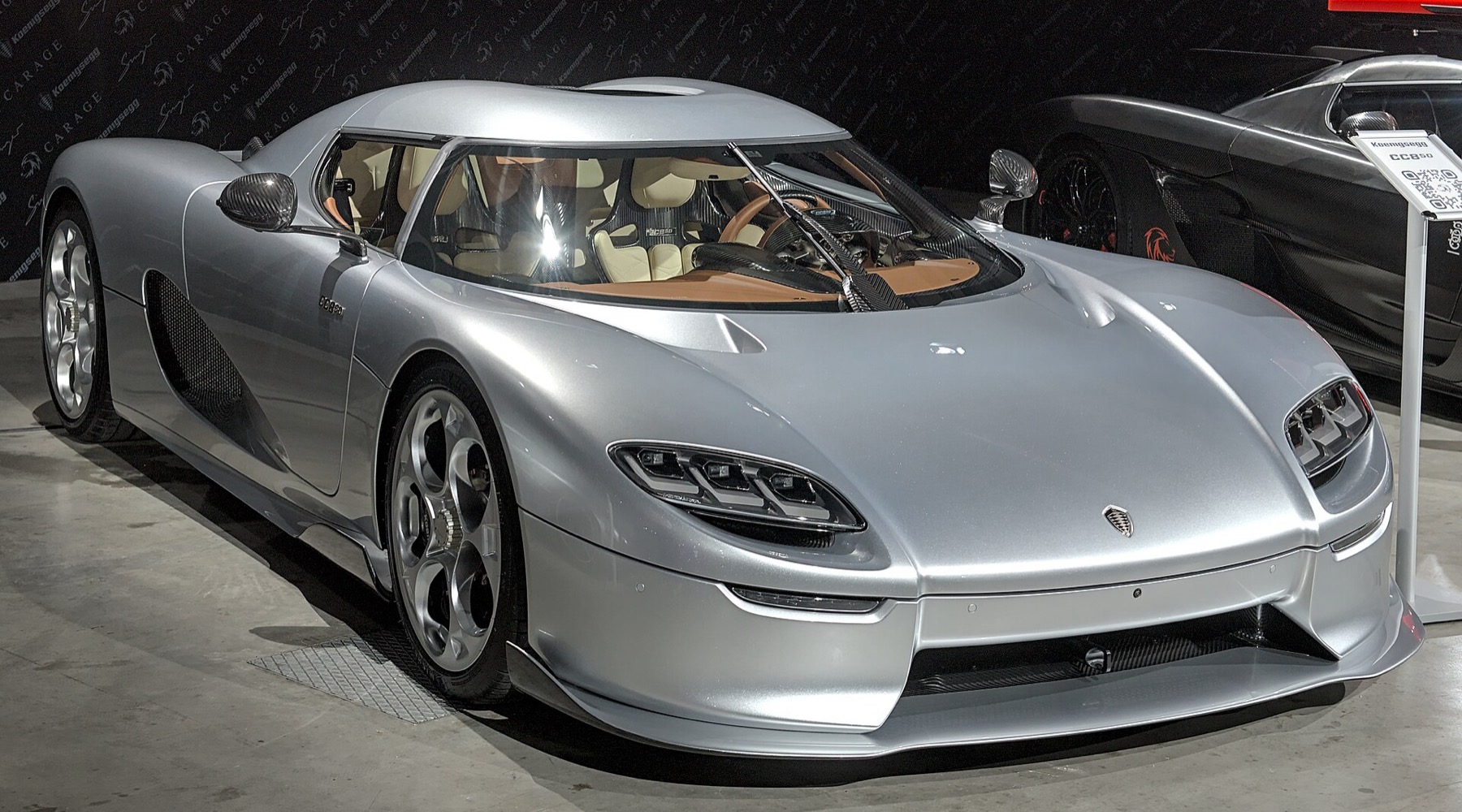
The CC850 launched in 2022 as a 50-unit anniversary program, designed to commemorate Christian von Koenigsegg's 50th birthday and the 20th anniversary of the original CC8S. The car uses the Jesko's 5.0-liter twin-turbocharged V8 and offers a unique transmission specification — a six-speed gated manual that switches mechanically into a nine-speed automated configuration via a clever electromechanical interface. Production allocation closed at announcement; deliveries are running through 2024-2026.
Regera (in pre-owned market)
The 80-unit "Direct Drive" hybrid — production closed, actively traded in the secondary market.
The Regera ran from 2016 customer deliveries through approximately 2022, in a total production run of 80 units. The car uses a 5.0-liter twin-turbocharged V8 paired to three electric motors and the proprietary "Direct Drive" single-gear hybrid system — no conventional multi-speed transmission. The Regera is the deepest entry point into the modern Koenigsegg lineage in the secondary market, though "deep" remains relative — production at 80 units total is by orders of magnitude smaller than any volume manufacturer's comparable car.
Agera lineage (One:1, RS, Final Edition cars)
The 2011-2018 production run — actively traded in the secondary collector market.
The Agera lineage covered the Agera, Agera S, Agera R, Agera RS, One:1 (six units), and the Final Edition variants (Thor and Vader). All variants closed at the manufacturer level. The One:1 is the most editorially significant specification — the first homologated 1-megawatt-per-tonne road car, six units total, and a foundational piece of the marque's top-end-power identity. Agera RS and One:1 trading is specialist-broker territory; standard Agera and Agera S specifications represent the more accessible entry points to the lineage.
Koenigsegg press gallery
CC850 — the 50-unit anniversary tribute to the original CC8S.Photo: Alexander Migl, CC BY-SA 4.0 · Source · CC BY-SA 4.0 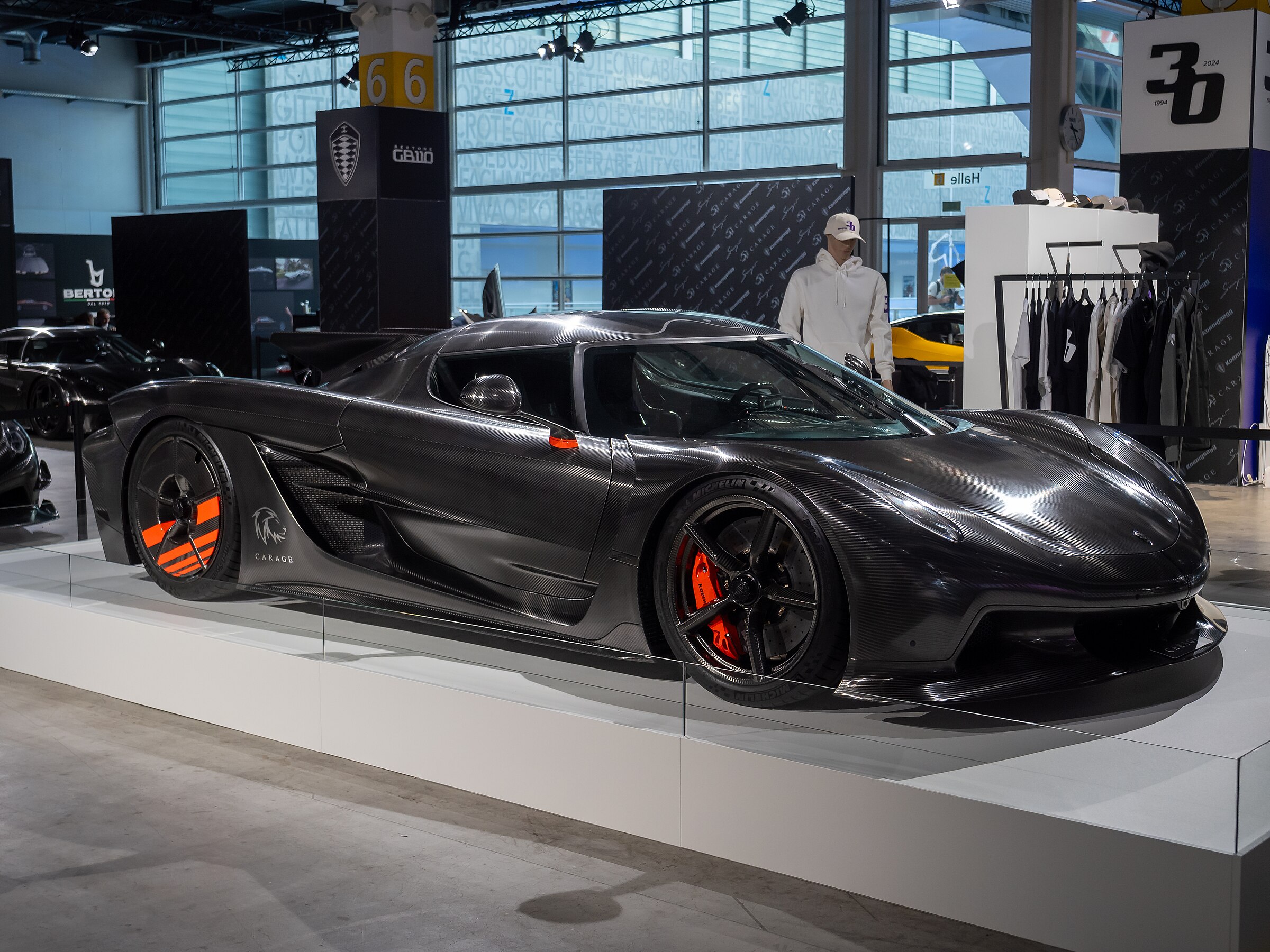
Jesko Absolut — low-drag, top-speed-optimized Jesko variant.Photo: Matti Blume via Wikimedia Commons (CC BY-SA 4.0) · Source 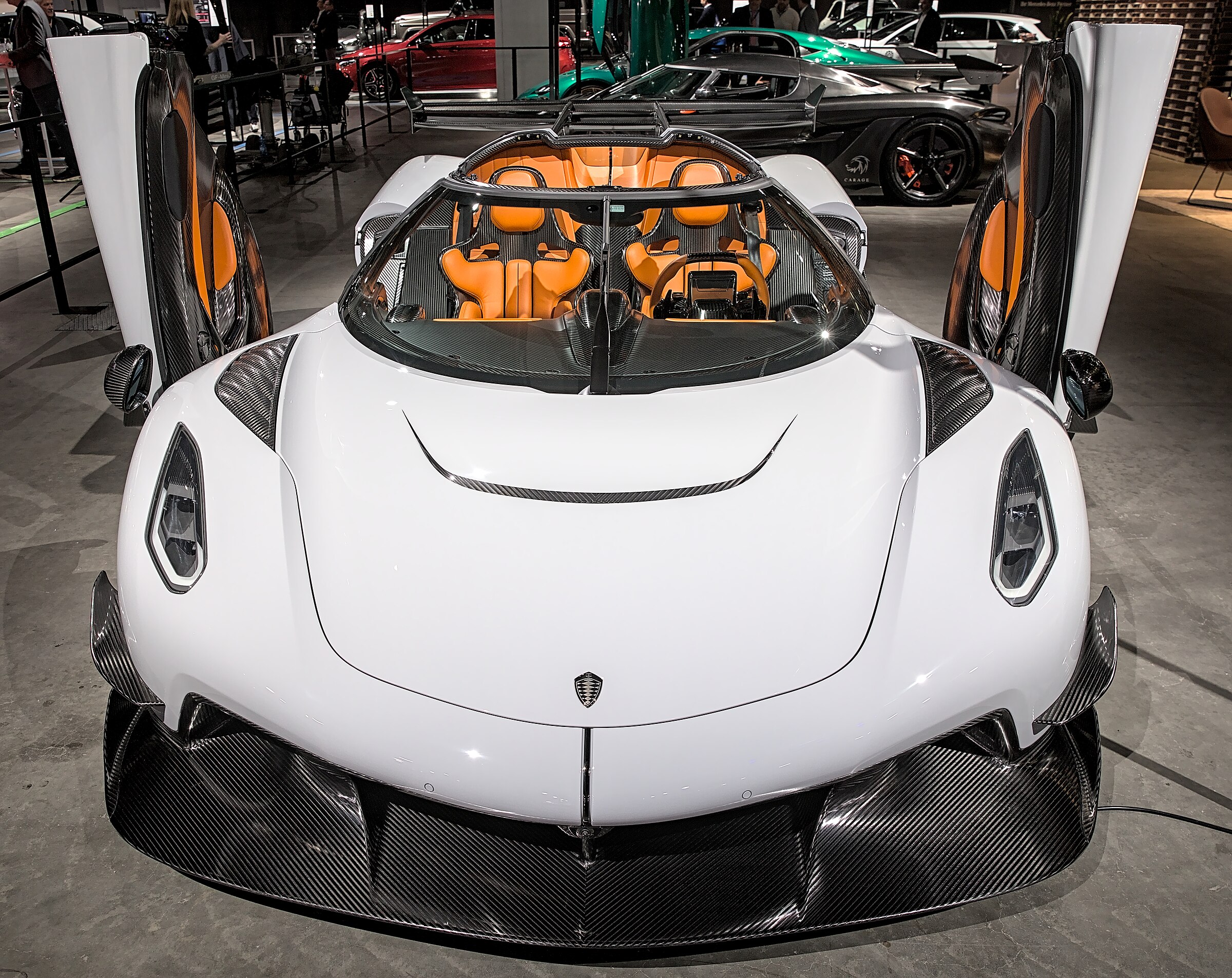
Jesko — twin-turbo V8, Light Speed Transmission flagship.Photo: Alexander-93 via Wikimedia Commons (CC BY-SA 4.0) · Source
Ownership reality
Koenigsegg ownership economics are similar to the Pagani and Bugatti reality — production volumes are deliberately constrained well below sustained collector demand, and depreciation curves on the standard variants have historically tracked closer to zero, with limited specifications (One:1, the Final Edition Agera cars, certain Regera specifications) firmly positive over the multi-year period. The Jesko, Gemera, and CC850 programs are too new to establish a multi-year depreciation track record.
Service for Koenigsegg road cars is structured around the Ängelholm factory and a small network of authorized service partners. Annual service intervals run 12 months or 6,000 miles for most specifications. Service costs are at the top of the segment — typically $15,000-$45,000 per visit, with major service items running materially higher. The Light Speed Transmission and Direct Drive systems are proprietary and require manufacturer-trained technicians; some service work is shipped to Ängelholm rather than performed locally.
Insurance for any modern Koenigsegg is typically agreed-value through a specialist high-value-asset broker (Hagerty, Chubb, Marsh) rather than market-value through a standard carrier. Cover at this value is individually underwritten by specialist carriers rather than quoted off a rate table, so the premium comes from an underwriter and not from a published figure. Most Koenigsegg policies are structured around exhibition, occasional road use, and transport — full general-driver policies are uncommon.
The tire-and-wheel system on the Jesko and CC850 carries unusually high consumable cost relative to other hypercars. Both cars use Koenigsegg's proprietary hollow-carbon-fiber wheels (the "Aircore" system) — replacement wheels are not standard inventory items and the lead times are meaningful. Tire fitting and wheel service is typically performed at a small number of specialist shops with the manufacturer's training rather than at a standard performance-tire specialist.
Dealer landscape
Koenigsegg operates a deliberately small US authorized-partner network — historically through Koenigsegg Florida, Koenigsegg Beverly Hills, and a handful of other specialist outlets in the segment's primary metros. The dealer relationship is bespoke from the first conversation; allocation is dealer-discretionary based on existing-customer status, the buying conversation is multi-decade-relationship-driven, and the specification process for a new commission typically runs months to over a year.
For pre-owned Koenigsegg — particularly the Agera lineage and the Regera — the productive market is specialist brokers (DuPont Registry-tier, the established Florida and California exotic specialists, certain European specialist houses) and the major auction houses (RM Sotheby's, Gooding & Company, Bonhams) for the rarer specifications. Authorized-dealer pre-owned Koenigsegg inventory is uncommon and moves quickly when it appears.
Buying advice
For new-vehicle buyers, the CC850 allocation is closed at the manufacturer level (50 units, sold out at announcement). Jesko allocation has been substantially placed but some specifications and configurations may remain available through dealer-relationship channels. Gemera allocation is the most open of the current programs, reflecting its higher production volume and the four-seat positioning that brings in buyers who would not otherwise enter the Koenigsegg conversation. First-time Koenigsegg buyers often enter the marque through the Gemera.
For pre-owned buyers, the editorial sweet spot on the Regera is a clean, low-mileage standard-specification car with documented service history. The Direct Drive hybrid system is mechanically distinctive and the secondary-market understanding of long-term reliability is still developing — provenance and service history matter more on a Regera than on most secondary-market cars in the segment.
For pre-owned Agera buyers, the standard Agera and Agera S represent the most accessible entry points to the modern marque. Agera RS, One:1, and Final Edition cars are firmly in collector territory and trade at multiples of original MSRP for the rarer examples. The One:1 is six units total and effectively does not appear in retail markets — when these cars trade, they trade through specialist channels.
For all Koenigsegg buying conversations, the operational reality of ownership matters more than the headline number. Service network access (the Ängelholm shipping reality on certain service work), wheel-and-tire system economics, transport logistics, and the bespoke specification process for new commissions are typically more material to the long-term ownership experience than the comparison shopping that drives the rest of the luxury-car market.
Frequently asked questions
Is Koenigsegg independent?
Yes — Koenigsegg has been independent and founder-controlled since founding in 1994 and has never been part of a larger automotive group. The company is structured around Christian von Koenigsegg's ownership and the Ängelholm engineering organization, with NEVS (the Swedish electric-vehicle company) as a joint-venture partner on the separate Koenigsegg Gemera-and-Quark high-performance EV components business.
What is the "Light Speed Transmission"?
The Light Speed Transmission (LST) is a Koenigsegg-developed nine-speed multi-clutch gearbox used in the Jesko and CC850. It uses seven wet clutches and a unique mechanical layout to enable any-gear-to-any-gear shifts (including non-sequential), with shift speeds claimed to be in the millisecond range. It is one of the marque's clearest engineering signatures and is built in-house at Ängelholm.
What is the "Tiny Friendly Giant"?
The Tiny Friendly Giant (TFG) is the Koenigsegg-developed 2.0-liter three-cylinder twin-turbocharged engine used in the Gemera. It uses Koenigsegg's FreeValve camshaft-less variable-valve-actuation technology — there is no camshaft in the engine, with each valve electromechanically actuated. The engine produces roughly 600 horsepower in the Gemera installation, paired with three electric motors in the original hybrid powertrain configuration.
What is the difference between the Jesko Attack and Jesko Absolut?
The Attack is a maximum-downforce, track-focused specification with a large active rear wing and more aggressive aerodynamic specification. The Absolut is a minimum-drag, top-speed-focused specification with a clean rear deck, longer body, and aerodynamic specification optimized for high-speed stability rather than corner downforce. Both share the same fundamental architecture (V8 engine, Light Speed Transmission, carbon-fiber chassis) and differ primarily in body, aerodynamic, and chassis-tuning specifications.
How does Koenigsegg allocation work?
Existing-customer-priority and dealer-discretionary, with multi-month-to-multi-year specification processes for new commissions. The CC850 allocation closed at announcement; Jesko allocation has been substantially placed; Gemera allocation is the most open of the current programs. First-time Koenigsegg buyers typically enter the marque through the Gemera (higher volume, four-seat positioning) or through pre-owned Agera and Regera acquisitions before the next-program allocation conversation opens.
Where are Koenigseggs built?
Every Koenigsegg road car is built at the Ängelholm, Skåne facility — the former Swedish Air Force F10 fighter base since 2003. The Ghost-emblem hangar buildings serve as the engineering, production, and customer-experience facility. Engine, transmission, carbon-fiber chassis, and most major components are manufactured on-site; the in-house engineering footprint is the deepest in the segment alongside Pagani.
Figures on this page carry their source. Positioning, allocation practice, and where this marque sits against its rivals are editorial judgment by The Marque Editors — informed by that data, but readings of it rather than measurements. How both are produced: methodology.