Electric.
The luxury EV cohort — Lucid Air, Taycan, Spectre, SF90, and what’s coming.
- Typical range$100K – $600,000
- Marques6
- Models covered6
Segment definition
The luxury electric segment is structurally distinct from the rest of the luxury-vehicle market in three ways. First, the current production lineup operates on platforms that are still maturing — the second-generation luxury EV programs are entering production through 2024-2027, and the residual-and-reliability track record on the segment is meaningfully shorter than the established ICE platforms. Second, charging infrastructure and range expectations shape the buying conversation in ways that don't apply to ICE luxury vehicles. Third, the segment's electrification trajectory is tied to specific manufacturer roadmaps that vary materially across the marques.
The defining structural characteristics of the segment are 100+ kWh battery capacity (with notable exceptions on the Porsche Taycan base specifications and the Audi RS e-tron GT), 350+ kW DC fast-charging capability on most current cars, range envelopes typically running 250-450 EPA-rated miles depending on specification, and powertrain configurations that range from single-motor RWD on entry specifications to triple-motor AWD on the higher-output cars.
Market shape
The US luxury-EV buyer base concentrates in the same metros as the broader luxury-vehicle market but with disproportionate skew toward the Bay Area and the broader West Coast (the segment's most-receptive geography), the Northeast (Boston, New York, Greenwich), and Florida (Miami, Naples). Charging-infrastructure availability matters more in some metros than others — secondary metros and rural ownership patterns operate with materially different practical use cases than urban-core or suburban-with-home-charging ownership patterns.
Demand has shifted measurably across the segment over the past three years. The early-adopter wave (2020-2022) drove rapid Lucid Air and Taycan adoption; the broader luxury-EV-receptive buyer base has matured into more-discerning specification-and-residual-aware purchase patterns. Manufacturer roadmap volatility has shaped buyer caution — Bentley, Maserati, and Aston Martin have all publicly adjusted their EV-only timing through the past 18 months as the broader segment's demand picture has evolved.
Used-market liquidity in the segment is meaningful but operates with depreciation curves that have been measurably sharper than the equivalent ICE specifications. First-generation Lucid Airs and 2020-2022 Taycans have shed 40-55% of original MSRP in their first three years; the segment's residual stability has not yet established itself the way ICE-segment residuals have. The pre-owned-buyer opportunity is real but the long-term residual trajectory is a structural unknown.
Lineup across marques
Porsche — Taycan (Turbo S, Turbo, GTS, 4S)
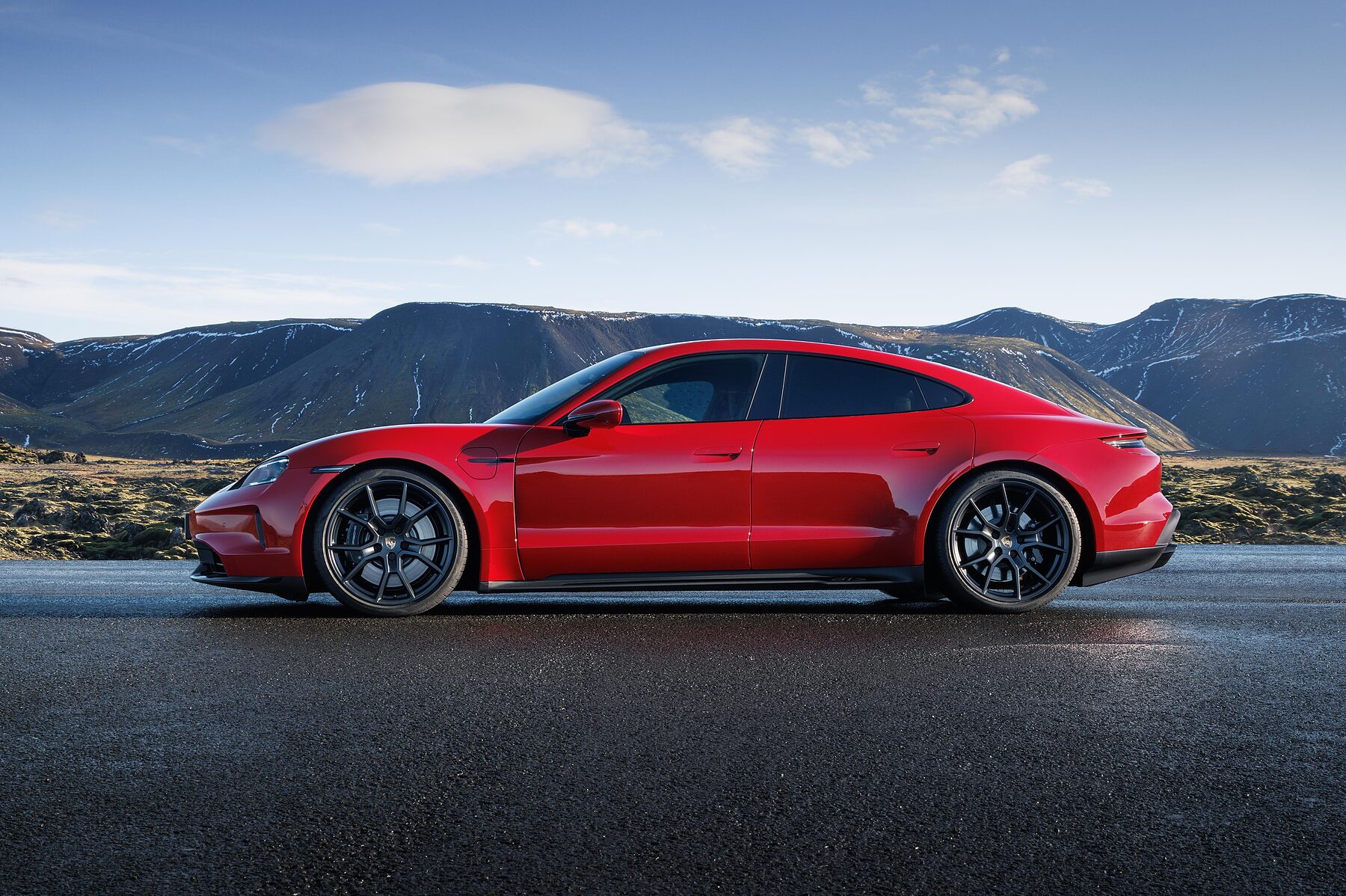
The segment's reference performance EV. 800V architecture, 350 kW DC fast-charging, multiple body styles (sedan, Cross Turismo, Sport Turismo). Anchors the volume of the modern luxury-EV segment.
Rolls-Royce — Spectre
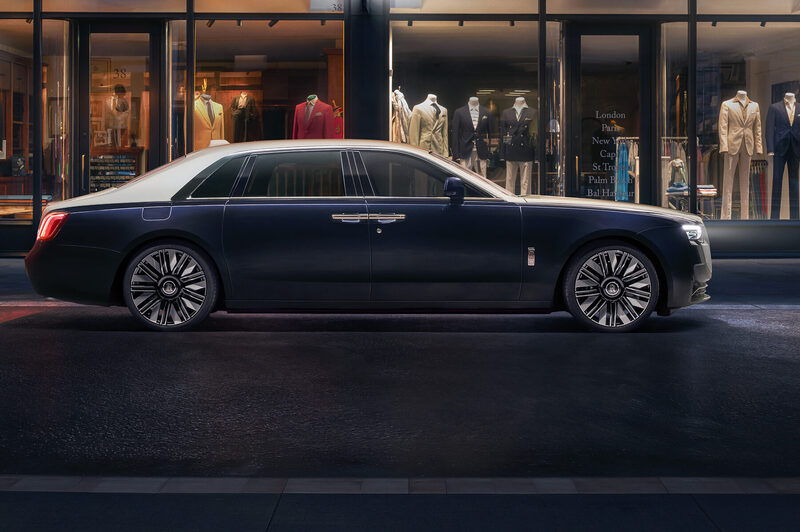
The first all-electric Rolls-Royce. Built on the Architecture of Luxury platform shared with the Phantom and Ghost, but with bespoke EV-specific engineering. The marque's clearest commitment to the EV transition.
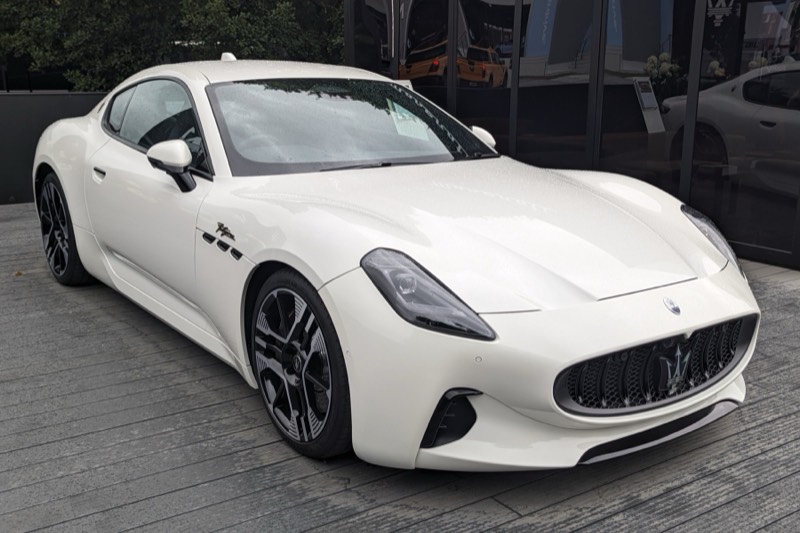
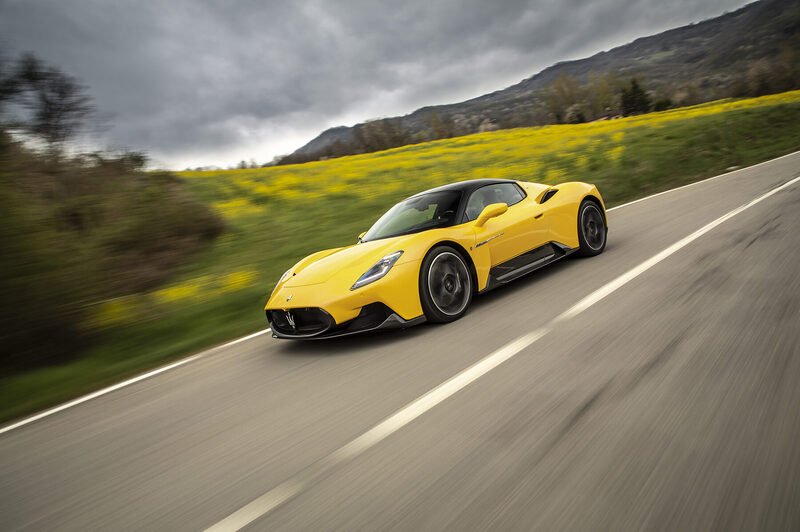
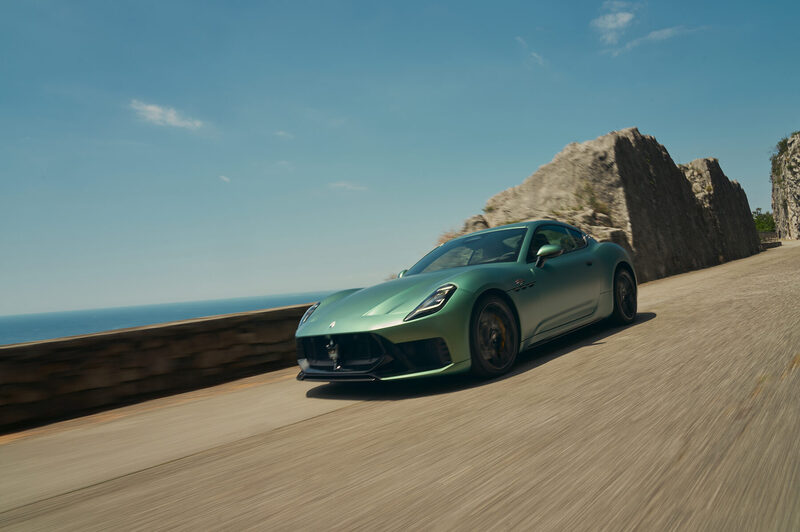
Maserati — GranTurismo Folgore / GranCabrio Folgore / MC20 Folgore / Grecale Folgore
The Folgore lineup — all-electric variants of the GranTurismo, GranCabrio, MC20, and Grecale, built on Stellantis-Group EV platforms with Maserati-specific calibration.
Mercedes-Maybach — EQS SUV
The Maybach sub-brand's electrification entry. Built on the EVA2 platform shared with the standard EQS SUV. Bespoke interior, four-zone rear cabin, the Mercedes-Maybach exterior trim language.
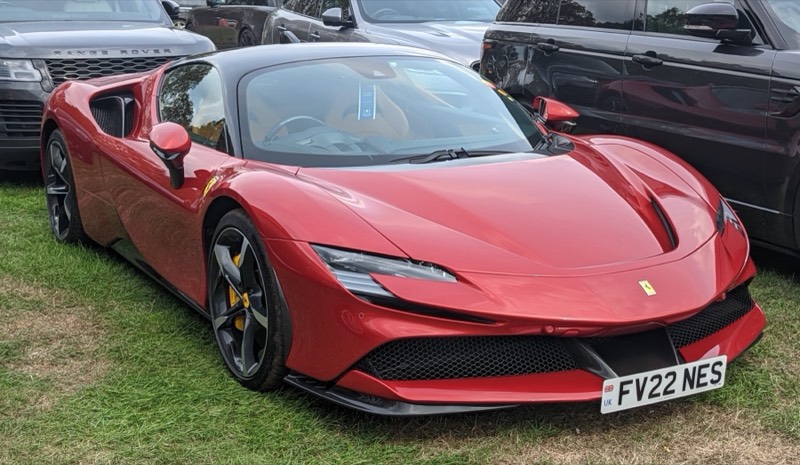
Ferrari — Elettrica (announced, 2026 launch)
Ferrari's first all-electric production model. Launch announced for late 2026 with deliveries running through 2027. Limited specification details are public; the marque has confirmed an electric-only powertrain on a clean-sheet platform.
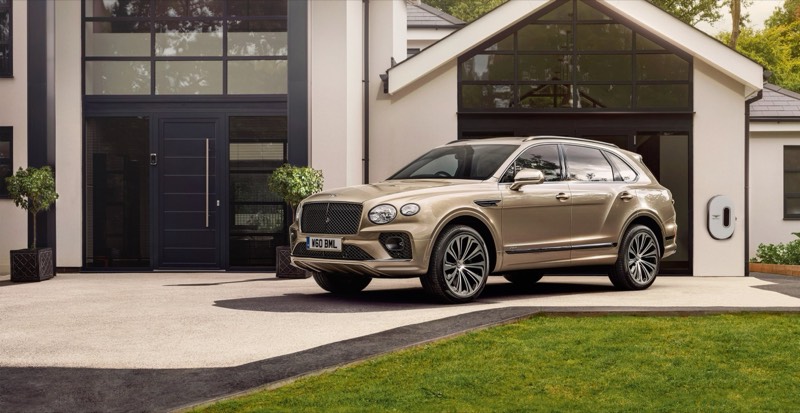
Bentley — First electric Bentley (scheduled for the back end of the decade)
The first all-electric Bentley is scheduled for the second half of the 2020s. Specific timing has shifted with the broader luxury-segment EV demand picture; the published roadmap remains an EV-only lineup by the early 2030s, with hybridized internal-combustion models in the interim.
Ownership reality
Luxury-EV ownership economics differ from ICE economics in three structural ways. First, charging infrastructure (home Level 2 charging, public DC fast-charging network) shapes the practical use case in ways that don't apply to ICE ownership; the home-charging investment ($800-$3,000 for a Level 2 installation) is effectively a prerequisite for productive EV ownership. Second, depreciation curves have been measurably sharper than the equivalent ICE specifications, reflecting both the segment's maturity stage and the rapid platform evolution that makes earlier-generation cars age faster.
Service costs in the segment are structurally lower than equivalent ICE luxury vehicles for routine maintenance — no oil changes, fewer fluid services, no transmission service on single-speed-gearbox cars (most luxury EVs are single-speed; the Taycan Turbo S two-speed gearbox is the notable exception). Battery service is the meaningful unknown — battery replacement costs run into the five-figure-to-low-six-figure range depending on car, and the battery-degradation patterns on first-generation luxury EVs are still establishing themselves.
Insurance for luxury EVs in major US metros is typically lower than equivalent ICE specifications — the actuarial profile reflects fewer thermal-incident claims and lower routine-service exposure. The Taycan Turbo S, Spectre, and Lucid Air at typical specifications run $3,000-$7,000 annually depending on metro and driver profile. Battery-warranty terms (typically 8 years or 100,000 miles across the segment, with variations by manufacturer) shape the meaningful long-term ownership risk.
Buying advice
For new-vehicle buyers, allocation across the segment is generally accessible — the volume Taycan, RS e-tron GT, EQS SUV, and Lucid Air specifications are typically available through any authorized dealer with reasonable lead times. The Spectre involves longer specification cycles given the Bespoke commissioning depth. The Maserati Folgore variants have generally been available in stock or near-stock at most dealers as the marque builds the EV order book. First-time buyers in the segment typically enter through a Taycan or RS e-tron GT.
For CPO buyers, the segment's manufacturer-backed programs are still maturing. Porsche Approved CPO covers the Taycan well; the broader segment's CPO depth is still building. CPO premiums over private-party pre-owned typically pencil out for buyers prioritizing battery-warranty confidence on the segment's first-generation cars.
For pre-owned buyers, the editorial sweet spot is the 2021-2022 Taycan at 50-65% of original MSRP — the segment's most-mature pre-owned market with credible specialist service support and reasonably-known battery-degradation patterns. The Lucid Air is too early in its market cycle to read as established pre-owned territory; the 2020-2022 cars are working through their first three-year depreciation phase. The Spectre is too new to read as a pre-owned market.
Cross-shop
Luxury EVs cross-shop most actively against the equivalent ICE cars within the same marque (Taycan vs 911 Turbo S, RS e-tron GT vs S6, Spectre vs Ghost, GranTurismo Folgore vs GranTurismo Trofeo) rather than against each other across marques. The intra-marque cross-shop pattern reflects the buyer-decision structure — most luxury-EV buyers are choosing electrification as a powertrain decision within an existing marque preference rather than choosing an EV first and then selecting between marques.
Frequently asked questions
How does luxury-EV depreciation compare to ICE depreciation?
Sharper, by current data. First-generation Lucid Airs and 2020-2022 Taycans have shed 40-55% of original MSRP in their first three years — measurably steeper than the equivalent ICE specifications. The segment's residual stability has not yet established itself the way ICE-segment residuals have, and the multi-year track record is still building. The pre-owned-buyer opportunity is real but the long-term residual trajectory is a structural unknown.
What's the practical range on a luxury EV?
Typically 250-450 EPA-rated miles depending on specification, with real-world range generally tracking 80-90% of the EPA figure on the volume cars. Cold-weather range degradation is meaningful — winter operation can shed 20-30% of typical range. The Taycan, RS e-tron GT, and Spectre all sit at the upper end of the range envelope; the higher-output and larger-battery specifications consistently outperform the entry-level battery configurations on multi-day touring use.
How fast does a luxury EV charge?
Most current luxury EVs support 250-350 kW DC fast-charging on the appropriate infrastructure. Real-world charging speeds — 10% to 80% state-of-charge in 18-25 minutes on the volume cars — are achievable on 350 kW chargers, with slower speeds on lower-capacity infrastructure. The 800V architecture on the Taycan and RS e-tron GT supports the segment's fastest practical charging speeds.
Are luxury EVs more expensive to insure than ICE equivalents?
Typically lower, by current actuarial data. The luxury-EV insurance profile reflects fewer thermal-incident claims, lower routine-service exposure, and the typical luxury-EV ownership pattern. Annual premiums on the volume cars in the segment (Taycan, RS e-tron GT, EQS SUV, Lucid Air) typically run $3,000-$7,000 in major US metros. The Spectre and the higher-output specifications run higher reflecting both vehicle value and the typical agreed-value coverage structure.
When are Bentley, Lamborghini, and Aston Martin going all-electric?
Specific timing has shifted across the segment over the past 18 months. Bentley's first all-electric program is scheduled for the second half of the 2020s. Lamborghini's Lanzador GT is scheduled for similar timing. Aston Martin's EV-only timing has been publicly deferred and is now scheduled for the back end of the decade. Ferrari's Elettrica is the segment's first major-marque EV launch, scheduled for late 2026 with deliveries running through 2027.
Is home charging necessary for luxury-EV ownership?
Effectively yes for productive ownership. Public DC fast-charging works for occasional long-distance use but the day-to-day economics of luxury-EV ownership are built around overnight Level 2 home charging. The home-charging investment ($800-$3,000 for a Level 2 installation, depending on electrical-panel capacity and installation distance) is functionally a prerequisite for the segment. Apartment-and-condominium ownership without dedicated home charging is workable but operationally more complex than the luxury-EV use case typically anticipates.