Luxury Sedans.
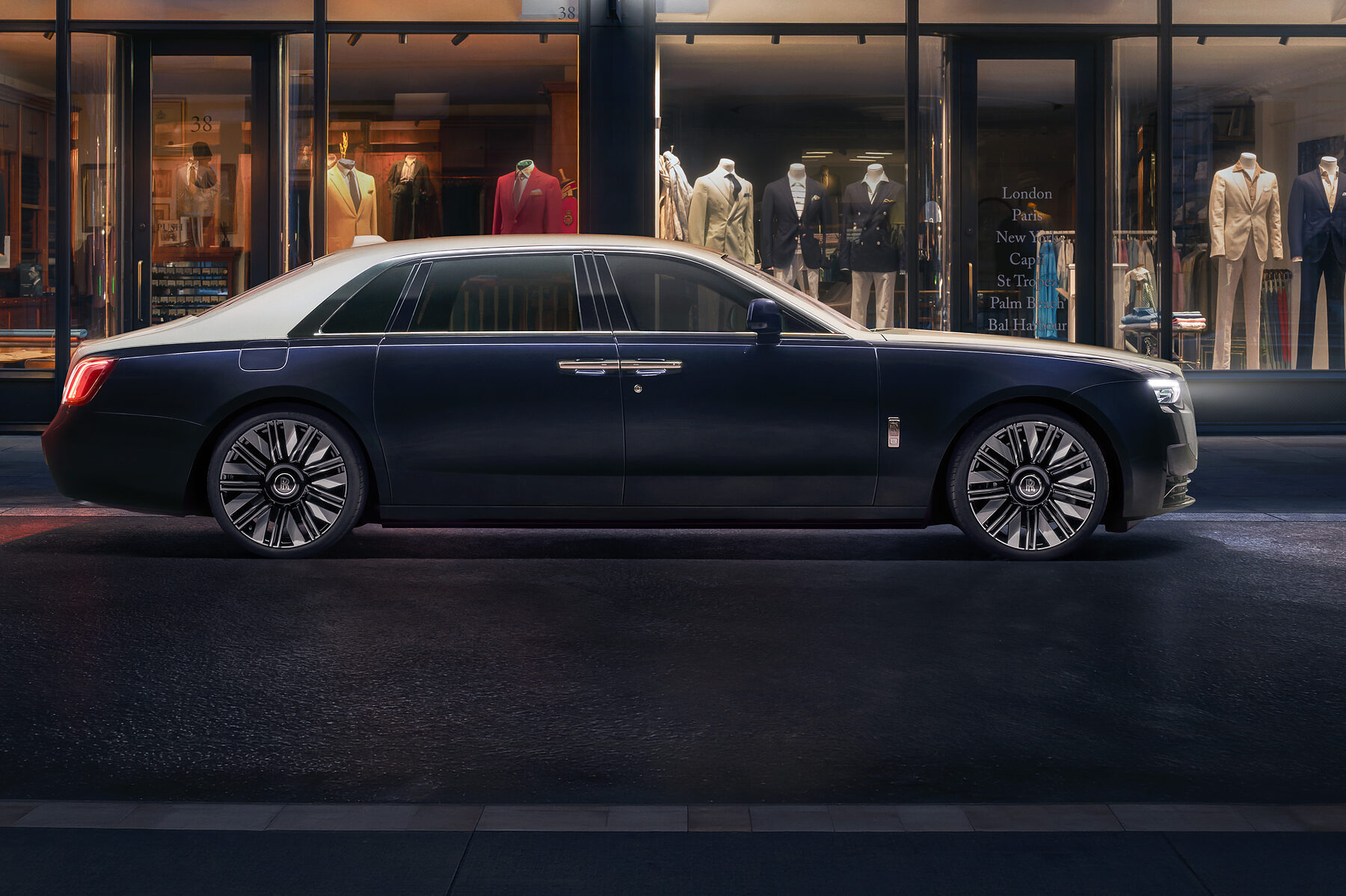
Chauffeur-grade four-doors built for the rear seat as much as the front.
- Typical range$200K – $750,000
- Marques5
- Models covered6
Segment definition
Luxury sedans are defined by rear-cabin priority. The structural distinction from the rest of the luxury-car market is that these cars are engineered to be experienced as a passenger first and as a driver second — long wheelbases, executive rear-seating configurations, isolation-focused chassis tuning, and bespoke commissioning programs that extend across the cabin specification rather than the mechanical hardware. The Phantom and Ghost are the segment's clearest expression of this brief; the Flying Spur and S-Class Maybach sit at the slightly more driver-engaged end without losing the rear-cabin priority.
The segment's historical roots run through the prewar luxury saloons of Europe — Maybach's Zeppelin, Rolls-Royce's Phantom lineage, Mercedes' 600 Pullman of the 1960s. The modern segment has tracked toward higher output and more electronic driver-aid integration, but the rear-cabin-priority brief has remained the segment's defining structural characteristic across the multi-generation evolution.
Market shape
The luxury-sedan buyer base in the US is structurally distinct from the supercar and grand-tourer segments. The chauffeur-grade ownership pattern is more common in the Phantom and S-Class Maybach segments than in the Continental GT or DB12 segments; the buyers are more often using cars as four-door rear-cabin propositions than as owner-driver vehicles. The geographic pattern follows the broader ultra-luxury wealth distribution but skews more heavily toward business-and-corporate ownership in metros with substantial financial-and-corporate concentration (New York, Chicago, Houston, Dallas).
Demand has shifted measurably over the past decade as the SUV segment has captured share from traditional luxury sedans. The Bentley Mulsanne (retired 2020) and the Maserati Quattroporte (current generation deferred) reflect this shift; the Phantom and Flying Spur have remained stable. The S-Class Maybach has materially benefited from the sub-brand reset, with annual production volumes that materially exceed the equivalent Phantom or Flying Spur volumes globally.
Used-market liquidity in the luxury-sedan segment varies sharply by car. The Phantom has the most-stable depreciation curve in the broader luxury-vehicle market (the Rolls-Royce Bespoke commissioning depth and the longer typical ownership cycle compound favorably). The Flying Spur depreciates faster but trades actively. The S-Class Maybach trades on segment-typical luxury-sedan curves — sharper depreciation than the Phantom but more accessible entry points.
Lineup across marques
Rolls-Royce — Phantom
The segment's reference point. V12 powertrain, Architecture of Luxury platform, the deepest Bespoke commissioning depth in the market. Production at Goodwood. The longest typical ownership cycle in the segment.
Rolls-Royce — Ghost
The more-accessible Rolls-Royce sedan. Twin-turbocharged V12, shorter wheelbase than the Phantom, more driver-engaged tuning. Anchors the volume of the modern Rolls-Royce sedan lineup.
Bentley — Flying Spur
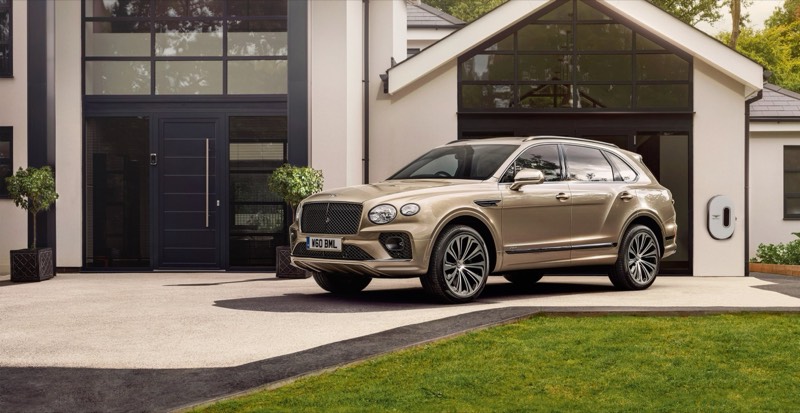
The four-door interpretation of the Continental GT — a true four-door grand tourer, not a long-wheelbase saloon. Engineered as a driver's car first and a chauffeur's car second, which differentiates it sharply from the Ghost.
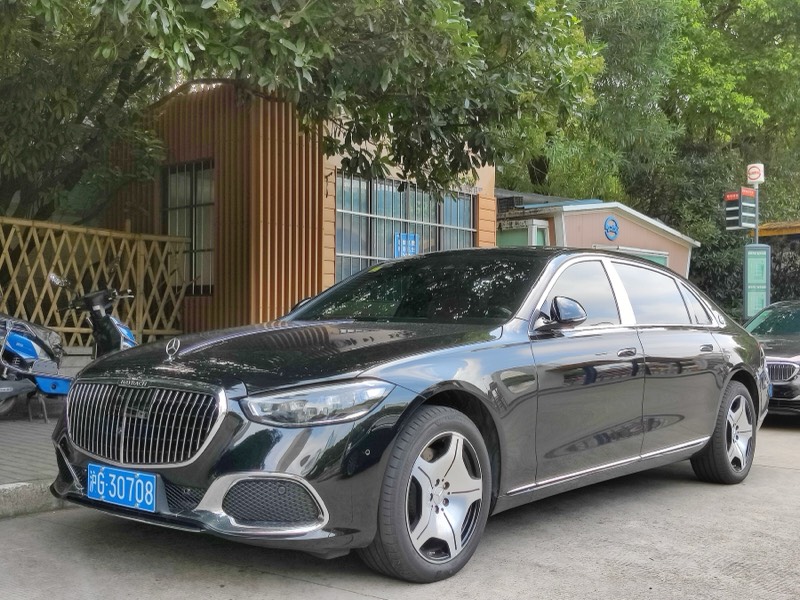
Mercedes-Maybach — S-Class (S 580, S 680)
The volume nameplate of the Maybach sub-brand. Long-wheelbase S-Class with mild-hybrid V8 (S 580) or biturbo V12 (S 680). The most-accessible price point in the segment relative to Rolls-Royce or Bentley.
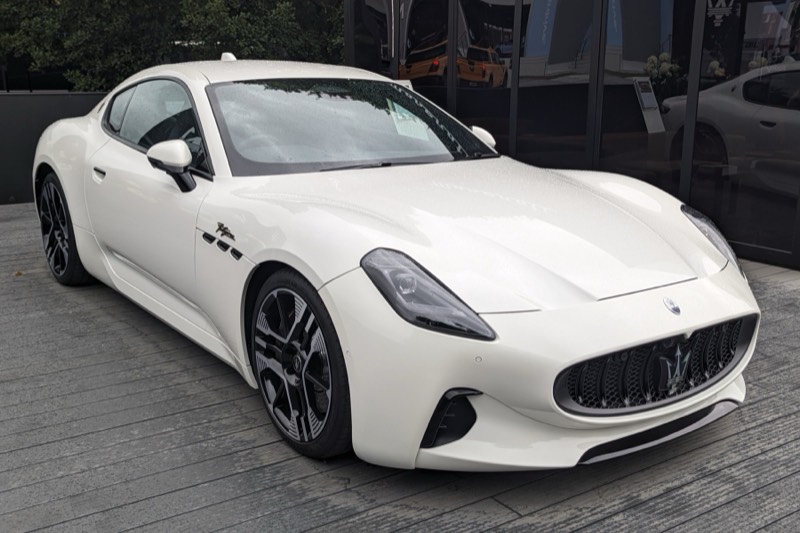
Maserati — Quattroporte (next-generation deferred)
The previous-generation Quattroporte ran out of production in 2024. The next-generation program has been publicly deferred and is expected to return as an EV-only flagship later in the decade.
Porsche — Panamera
Sits at the boundary between luxury sedan and sport sedan. Driver-engagement tuning is meaningfully more aggressive than Phantom, Ghost, or S-Class Maybach; the Turbo S and Turbo S E-Hybrid specifications cross into supercar-adjacent territory.
Ownership reality
Luxury-sedan ownership economics differ structurally from the rest of the luxury-vehicle market by car. The Phantom carries the segment's most-favorable depreciation curve — Bespoke-commissioned cars commonly hold materially better residuals than equivalent commodity-spec luxury vehicles, and the typical Phantom ownership cycle runs longer than the broader luxury-car market. The Ghost depreciates faster than the Phantom but more gently than the Flying Spur. The S-Class Maybach tracks segment-typical luxury-sedan curves — meaningful first-three-year decline, more-stable middle period.
Annual service intervals run 12 months or 10,000 miles across the segment. The V12 cars (Phantom, Ghost, S 680) carry materially higher service costs than V8 cars (Flying Spur, S 580). Authorized-dealer service runs $1,500-$4,500 per visit on the V8 cars and $3,500-$8,000+ per visit on the V12 cars depending on model and specification. Routine service for buyers using cars as chauffeured rear-cabin propositions runs higher mileage than owner-driver use, which changes the multi-year service-cost picture.
Insurance for the segment in major US metros typically runs $4,000-$10,000 annually depending on vehicle, coverage, storage, and use case. Phantom and Ghost insurance often runs higher reflecting both vehicle value and the typical agreed-value policy structure for Rolls-Royce ownership. The Flying Spur and S-Class Maybach typically run on segment-typical luxury-sedan policies through standard market-value carriers.
Buying advice
For new-vehicle buyers, allocation on the volume models (Flying Spur, S-Class Maybach) is generally achievable through any authorized dealer. The Phantom and Ghost involve longer specification cycles (the Bespoke program timeline runs months to over a year for a meaningfully customized car) but allocation on the standard configurations is reasonable. First-time buyers in the segment typically enter through an S-Class Maybach or a Flying Spur; the Phantom is the longer-cycle, higher-commitment entry.
For CPO buyers, the manufacturer-backed programs cover the segment well. Rolls-Royce Provenance, Bentley CPO, and Mercedes-Benz CPO all extend the warranty window and provide the reconditioning standard that makes used Phantom, Ghost, Flying Spur, and S-Class Maybach acquisitions viable for buyers planning multi-year ownership. CPO premiums over private-party pre-owned typically pencil out given the V12 service-cost exposure on the Rolls-Royce sedans and the meaningful warranty-extension value on the V8 cars.
For pre-owned buyers, the editorial sweet spot on the Phantom is mature — eight-to-twelve-year-old VIII-generation cars in well-documented Bespoke specification represent the depreciation floor. On the Ghost, six-to-eight-year-old cars in popular colors with restrained specification sit at meaningful discounts to original MSRP. On the Flying Spur, the four-to-six-year-old W12 era is the volume sweet spot. On the S-Class Maybach, three-to-five-year-old S 580 cars represent the most-accessible entry point to the modern Maybach lineage.
Cross-shop
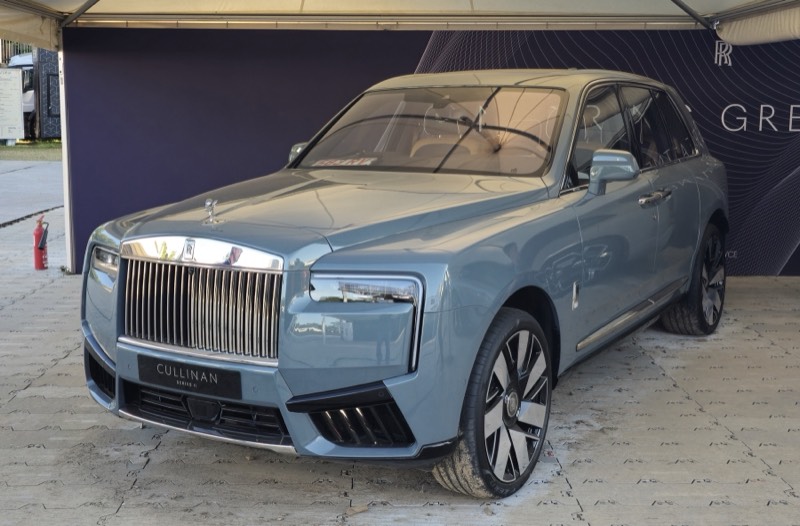
Luxury sedans cross-shop most actively against the upper end of the Grand Tourer segment (the Flying Spur and Continental GT cross-shop is real for buyers weighing two-door GT against four-door sedan use cases) and against the chauffeur-grade end of the Luxury SUV segment (the Phantom vs Cullinan cross-shop is one of the segment's primary buying-decision conversations). The segment also crosses into the high-end Electric segment (Rolls-Royce Spectre as the all-electric counterpart to the Ghost) for buyers prioritizing the EV powertrain.
Frequently asked questions
What's the difference between the Phantom and the Ghost?
The Phantom is the larger, more-formal flagship — built on a unique Architecture of Luxury platform variant, with the longest wheelbase in the segment, the deepest Bespoke commissioning depth, and the longest typical ownership cycle. The Ghost is the more-accessible sedan — shorter wheelbase, more driver-engaged tuning, the volume car of the modern Rolls-Royce sedan lineup. Both share the twin-turbocharged 6.75-liter V12 architecture but in different states of tune and integration.
How does the Flying Spur compare to the Phantom and Ghost?
The Flying Spur is engineered as a driver's car first, a chauffeur's car second — fundamentally different from the Phantom and Ghost's rear-cabin-priority brief. The Flying Spur shares its hybridized V8 powertrain with the Continental GT and is best understood as a four-door grand tourer rather than a luxury sedan in the Rolls-Royce sense. The Mulliner extended-wheelbase commissioning takes the Flying Spur further toward the Phantom-and-Ghost brief, but the standard car operates on a different ownership pattern.
Is the S-Class Maybach a "real" Maybach or a Mercedes-Benz variant?
A sub-brand variant operated by Mercedes-Benz. The standalone Maybach 57 and 62 program (2002-2012) ran as a separate marque and was commercially unsuccessful. The 2014-onward Mercedes-Maybach designation operates as a sub-brand within the Mercedes-Benz product hierarchy — the cars are built at Mercedes plants, sold through Mercedes dealers, and serviced through the Mercedes-Benz network. The sub-brand approach has been substantially more commercially successful and integrates Maybach product into the broader Mercedes-Benz infrastructure.
What is Bespoke (Rolls-Royce) and how does it differ from Mulliner (Bentley)?
Bespoke is Rolls-Royce's commissioning program — material, color, leather, wood, and trim specification options that extend across the entire cabin and the exterior, with timelines running months to over a year and pricing extending into six-figure additions for meaningfully-customized cars. Mulliner is Bentley's parallel program — broadly similar in scope but operating with a slightly broader factory option-set baseline before commissioning steps in. Both produce cars built to specification rather than configuration; both extend the build timeline materially.
How does luxury-sedan depreciation compare across the segment?
Sharply different by car. The Phantom carries the segment's most-stable depreciation curve — Bespoke-commissioned cars commonly hold materially better residuals than equivalent commodity-spec luxury vehicles. The Ghost depreciates faster than the Phantom but more gently than the Flying Spur. The Flying Spur tracks segment-typical luxury-vehicle depreciation. The S-Class Maybach depreciates sharper than any of the British cars but at meaningfully lower entry prices.
Are luxury sedans usable as daily drivers?
Variable by car. The Phantom and Ghost are not typically used as daily drivers — the chauffeur-grade scale, the Bespoke specification, and the typical ownership pattern lean toward use as a primary executive transport rather than a routine daily car. The Flying Spur and S-Class Maybach are meaningfully more usable for routine driving — the size, the dealer-network depth, and the service-cost economics all support more standard daily-driver patterns.