Classics & Investment Grade.
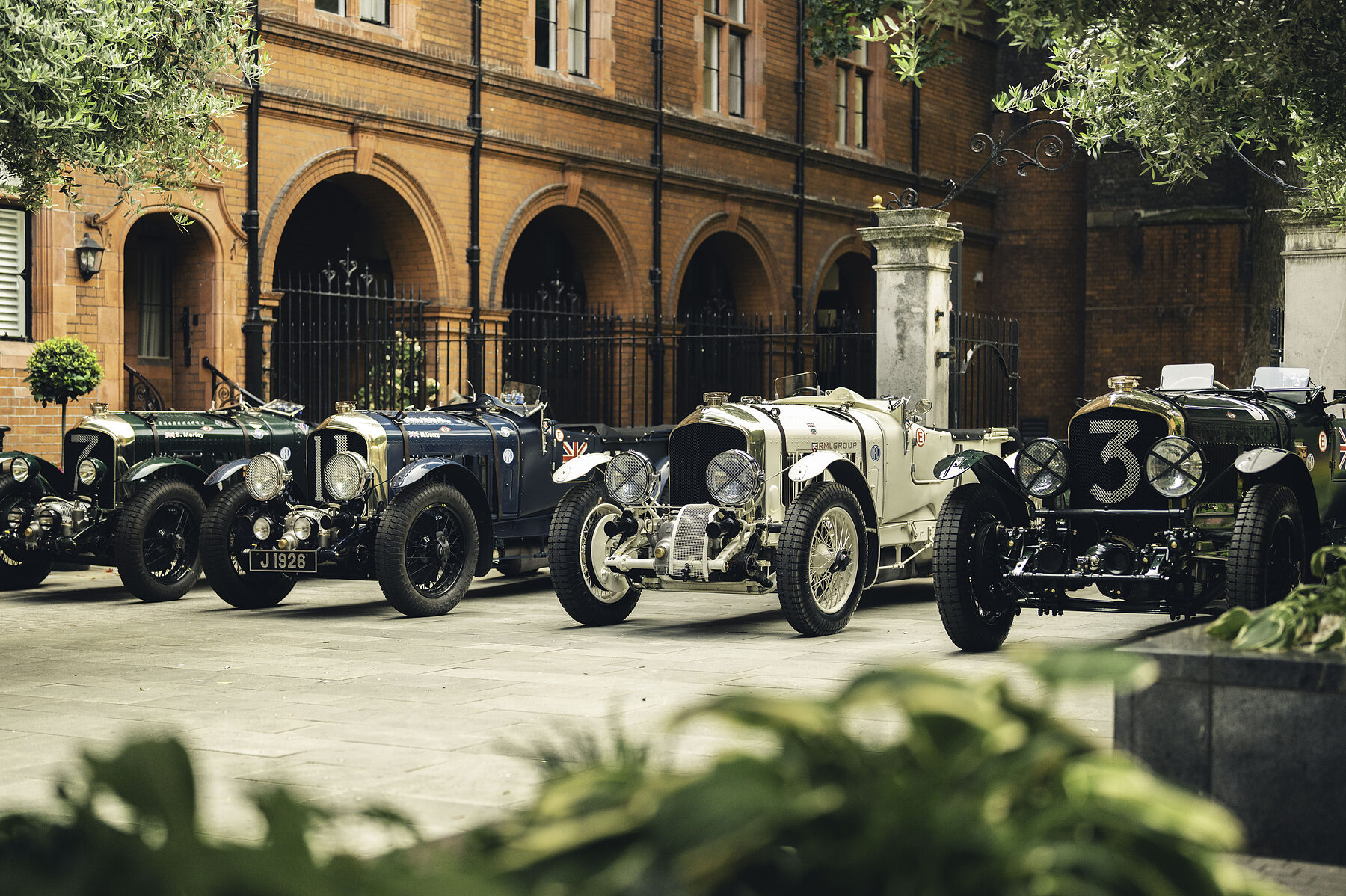
Air-cooled 911s, F-cars, vintage Bentleys — the appreciating end of the market.
- Typical range$100K – $50 million
- Marques5
- Models covered6
Segment definition
The investment-grade classic market is structurally distinct from the rest of the luxury-vehicle market in three ways. First, the cars are valued primarily as appreciating assets rather than functional transportation; ownership economics are dominated by storage, insurance, and provenance maintenance rather than service-and-consumable economics. Second, the buying conversation operates through specialist channels (major auction houses, established collector-market brokers, marque-specific specialist dealers) rather than retail dealer networks. Third, the price discovery mechanism runs through public auction results and specialist-market private transactions rather than the manufacturer-set MSRP-and-allocation model that defines new-car luxury markets.
The segment's defining characteristic is appreciation: cars that have shown the clearest signal of long-term value increase as collector-market demand outpaces supply. Production volumes that were already constrained at original delivery (the 250 GTO at 39 units, the McLaren F1 at 106 units, the Bugatti Type 41 Royale at six units) are the foundation of the segment's most-firm pricing tiers. Modern modern-classics (gated-manual Ferraris, F40 / F50 / Enzo / LaFerrari, GT-department Porsches) have entered the segment as their production-volume constraints have proven durable in collector demand.
Market shape
The investment-grade classic buyer base is structurally narrow and structurally repeat. Globally, the segment serves perhaps 10,000-15,000 active collectors across all tiers, with the highest tier (eight-figure-and-up cars) running at perhaps 200-500 active buyers globally. The buyer base operates through long-standing relationships with specialist brokers, major auction houses (RM Sotheby's, Gooding & Company, Bonhams, Mecum at the volume end), and a small number of marque-specific specialist dealers (Symbolic Motor Car Company in La Jolla, Fantasy Junction in Emeryville, Vantage Motorworks in North Miami, the Pebble Beach concours-affiliated dealer ecosystem).
The US market specifically anchors a substantial share of global collector-grade volume. Monterey Car Week (mid-August, California) is the global calendar's peak event — Pebble Beach Concours d'Elegance, the Quail Motorsports Gathering, Rolex Monterey Motorsports Reunion at Laguna Seca, and the major auction-house events collectively concentrate billions of dollars in collector-vehicle activity into a single week. Amelia Island (Florida, March), Greenwich (Connecticut, June), and the Scottsdale auction week (Arizona, January) are the secondary-tier US calendar events.
Used-market liquidity in the segment varies sharply by car. The most-firm pricing tiers (250 GTO, McLaren F1, Bugatti Type 41 Royale) are thinly-traded — single-digit transactions per year globally. The volume tiers (air-cooled 911s, F-cars, 60s-and-70s European GTs) trade actively through both auction-house and private-broker channels. The modern modern-classic tier (gated-manual Ferraris, F40 / F50 / Enzo / LaFerrari, certain GT-department Porsches) has expanded its market activity meaningfully over the past decade.
Lineup across marques
Porsche — Air-cooled 911 (1965-1998)
The deepest investment-grade modern-classic market by absolute count. 1973 Carrera RS 2.7, 964 RS America, 993 Turbo S, and the GT-department lineage all anchor specific tiers. The single-most-traded marque in the modern-classic segment.
Ferrari — F40 / F50 / Enzo / LaFerrari lineage
The four-decade flagship hypercar lineage. F40 trades at $2-3M+ for clean examples; F50 at $4-6M+; Enzo at $3-5M; LaFerrari at $3-5M. All four are firmly in collector territory and rarely retail-traded.
Ferrari — Gated-manual Ferraris (599 GTB, F430, 360 Modena, 550 Maranello)
The increasingly-firm modern-classic Ferrari sub-segment. Manual-transmission Ferraris from the post-2000 production era have appreciated meaningfully as the marque's manual era closed; gated-manual 599 GTBs at multiples of original MSRP.
Bugatti — Pre-war Type 35, 51, 41 Royale, 57 SC Atlantic
The highest tier of the segment. Type 41 Royale (six units, single-digit auction transactions over the past decade) and 57 SC Atlantic (four units) are foundational cars at nine-figure values. Type 35 racing cars and 57 road cars trade at meaningful market depth.
McLaren — F1 (1992-1998)
The single-most-firmly-priced modern hypercar in the secondary market. 106-unit production (including XP, GTR, and LM variants); auction-house transactions consistently in the $15-25M range for road specifications, with GTR and LM racing-derivative cars at multiples.
Lamborghini — Limited variants (Aventador SVJ, Huracán STO/Sterrato, Miura, Countach)
The Lamborghini sub-segment of the modern-classic market. Pre-Audi-era cars (Miura, original Countach LP400) trade at firmly-collector prices; modern limited variants (Aventador SVJ, Ultimae, Huracán STO and Sterrato) have firmed meaningfully over the past three to five years.
Ownership reality
Investment-grade classic ownership economics are dominated by storage, insurance, and provenance maintenance rather than service-and-consumable economics. Climate-controlled secured storage for tier-one collector cars typically runs $1,000-$5,000 per car per month at specialist facilities; the cost compounds materially across multi-car collections. Insurance is structurally agreed-value through specialist brokers (Hagerty, Chubb, Marsh) rather than market-value through standard carriers; annual premiums on tier-one cars typically run 0.5-1.5% of agreed value annually.
Service costs vary sharply by car. Modern modern-classics (post-2000 Ferraris, GT-department Porsches, modern hypercars) operate on segment-typical service economics with specialist-network support in every major US metro. Earlier cars (pre-1980 European GTs, racing-derivative cars from the 1950s-1970s) require specialist mechanical-and-restoration support that runs through a much smaller network of qualified shops; service-and-restoration timelines on these cars can run multi-month to multi-year.
The single highest-leverage spend on any investment-grade classic acquisition is provenance verification — confirming the documented chain of ownership, original specifications, accident-and-restoration history, and authenticity of mechanical-and-bodywork components. Specialist provenance research typically runs $2,000-$10,000+ per car for tier-one acquisitions and is the diligence step that distinguishes sound investment-grade buying from speculation. Multi-decade-known collector-market dealers and the major auction houses provide additional confidence layers on cars they have curated.
Buying advice
For investment-grade classic buyers, the productive entry point is rarely the auction house — it is multi-year relationship development with specialist dealers and brokers in the buyer's area of marque interest. The volume tier of the market (air-cooled 911s, modern modern-classics) supports auction and dealer-direct buying; the tier-one cars are typically traded through private channels with multi-month negotiations and specialist-broker mediation.
For first-time investment-grade buyers, the editorial recommendation is a focused area of marque interest rather than a portfolio-style approach. Air-cooled 911s, gated-manual Ferraris, modern Porsche GT-department cars, and the F40 / F50 / Enzo / LaFerrari lineage all support buyer-base entry through educated single-marque acquisition. The cross-marque tier-one collection-building approach typically requires multi-decade relationship development and specialist-advisor guidance.
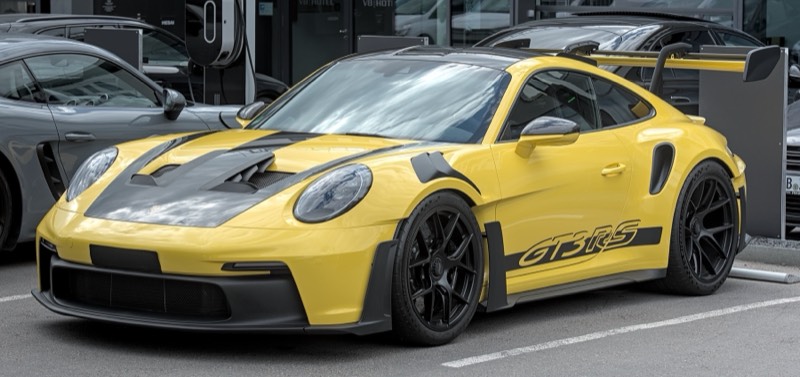
For the broader pre-owned modern-classic market, the editorial sweet spot is the air-cooled 911 (1965-1998 production), the post-2010 Porsche GT-department cars (911 GT3 RS, GT2 RS, 718 GT4 RS), and the gated-manual Ferraris. These cars trade actively through dealer networks, have credible specialist service support, and have established residual-and-appreciation patterns that make multi-year ownership economics knowable. The tier-one cars (F40, McLaren F1, pre-war Bugattis) are specialist territory that sits outside standard pre-owned market dynamics.
Cross-shop
Investment-grade classics cross-shop most actively against Hypercars (modern hypercar buyers commonly cross-shop tier-one collector-grade cars) and against modern modern-classics in the Supercar segment (the gated-manual 599 GTB and the dual-clutch 458 Speciale conversation often involves both new-allocation and pre-owned investment-grade considerations). The segment also cross-shops against fine art and watch collecting at the highest tiers — the buyer base for tier-one collector cars commonly holds multi-asset-class collections rather than purely automotive portfolios.
Frequently asked questions
How does the investment-grade classic market actually work?
Through specialist channels rather than retail dealer networks. The major auction houses (RM Sotheby's, Gooding & Company, Bonhams, Mecum at the volume end) handle public-discovery transactions; established collector-market dealers and specialist brokers handle private-channel transactions. Price discovery operates through public auction results and specialist-market private transactions rather than manufacturer-set MSRP. Buyer-side relationships with specialist dealers typically develop over multi-year horizons before the highest-tier transaction conversations open.
What's the difference between a "modern classic" and an investment-grade classic?
A modern classic is a recent-production car (typically 10-30 years old) that has aged into collector territory; an investment-grade classic is a car that has demonstrated firm and sustained appreciation in the secondary market and is recognized as a valuable collectible. Most modern classics are not yet investment-grade; they may become so as their production-volume constraints prove durable in collector demand. The McLaren F1 was a modern classic in the early 2000s and is now an investment-grade classic at multi-million-dollar pricing.
Where does the investment-grade market concentrate geographically?
Monterey Car Week (mid-August, California) is the global calendar peak — Pebble Beach Concours d'Elegance, the Quail Motorsports Gathering, and the major auction-house events collectively concentrate billions of dollars in activity. Amelia Island (Florida, March), Greenwich (Connecticut, June), and Scottsdale auction week (Arizona, January) are the secondary-tier US events. Specialist dealer concentration sits in California (La Jolla, Newport Beach, Fantasy Junction in Emeryville), Florida (Vantage Motorworks in North Miami, Ferrari and Bentley specialists in Naples and Palm Beach), and the New York / Greenwich corridor.
What does it cost to insure an investment-grade classic?
Annual premiums typically run 0.5-1.5% of agreed value annually through specialist high-value-asset brokers (Hagerty, Chubb, Marsh). The structure is agreed-value coverage tied to documented appraised value rather than market-value coverage through standard carriers — a meaningful cost-and-coverage difference relative to standard luxury-car insurance. Multi-car collections typically aggregate through portfolio-level policies that produce per-car efficiencies on premium pricing.
How do I verify a classic car's provenance?
Specialist provenance research is the right diligence step on any tier-one investment-grade acquisition. The work covers documented chain of ownership, original specifications, accident-and-restoration history, authenticity of mechanical-and-bodywork components, and verification against known production records. Research typically runs $2,000-$10,000+ per car for tier-one acquisitions. Multi-decade-known collector-market dealers and the major auction houses provide additional confidence layers; their reputational interest in transaction integrity is a meaningful diligence asset.
Are gated-manual Ferraris going to keep appreciating?
The trajectory has been firm over the past five-to-seven years and shows no immediate signs of reversal — manual-transmission Ferraris from the post-2000 production era are increasingly recognized as a structurally-constrained segment of the marque's history (Ferrari has not offered a manual transmission as a regular option since the early 2010s). Specific cars (the gated-manual 599 GTB, manual F430s in well-specified configurations, manual 360 Modenas) have shown the clearest appreciation signal. Future appreciation depends on continuing collector-market interest in the manual-transmission category specifically; current data supports the trajectory but the multi-decade picture is structurally uncertain in any collector market.