Convertibles.
Spider, drophead, cabriolet — open-top luxury across every price point.
- Typical range$150K – $1 million
- Marques6
- Models covered6
Segment definition
Luxury convertibles are not a structurally distinct segment in the way Hypercars or Luxury SUVs are — they are open-top variants of cars that exist in coupe, grand-tourer, supercar, and sedan configurations across the rest of the lineup. The segment's defining characteristic is the powered-folding-roof or fixed-targa configuration applied to a luxury platform, with chassis-rigidity reinforcement and weight-management engineering specific to the open-top conversion.
The trade-off across every car in the segment is consistent: marginally heavier curb weight, marginally higher chassis-stiffness penalty, marginally compromised cabin acoustics, all in exchange for the open-top experience. Modern engineering has reduced these penalties materially — current-generation convertibles are meaningfully closer to their coupe counterparts in chassis dynamics than the convertibles of even a decade ago. The Bentley Continental GTC, Aston DB12 Volante, and 296 GTS all read as legitimate driver's cars rather than fashion variants of their coupes.
Market shape
The luxury-convertible buyer base in the US concentrates in warm-climate metros where convertibles function as year-round daily-driver propositions. Los Angeles is the country's largest convertible market by some distance — the year-round dry weather, the LA-specific car-as-statement culture, and the meaningful share of national luxury-vehicle volume all compound. Miami, Naples, Phoenix, Scottsdale, Charleston, and the Southern California / Florida coastal markets carry disproportionate convertible inventory relative to population.
Cold-climate metros (Boston, Chicago, Seattle, New York) carry meaningful convertible inventory but with more-seasonal use patterns. The convertible-in-winter-storage pattern is comparable to the supercar-in-winter-storage pattern that anchors the Northeast and Midwest luxury-vehicle segments — most owners run heated indoor storage from November through March and operate the cars only in the summer-and-shoulder seasons.
Used-market liquidity in the segment is meaningful but operates with consistent discounts to the equivalent coupe. The cabriolet, spider, or volante variant typically trades at 5-15% lower than the equivalent coupe in pre-owned markets across most marques — partly reflecting the smaller buyer pool and partly reflecting the buyer-perception of convertibles as more-fashion-driven and less performance-oriented (whether or not the engineering supports that perception).
Lineup across marques
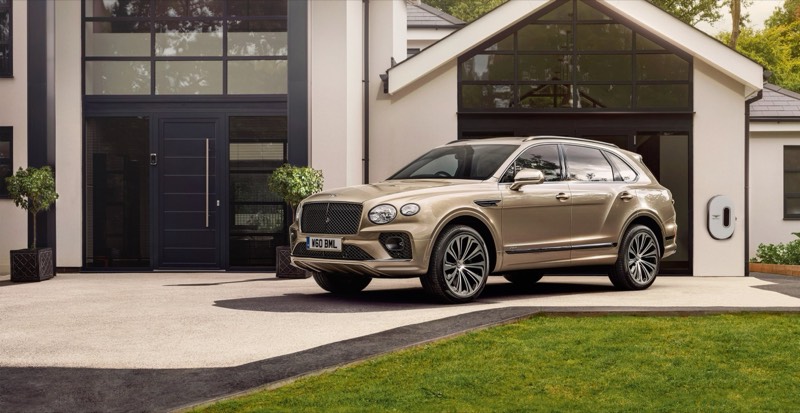
Bentley — Continental GTC
The convertible variant of the segment-defining grand tourer. Hybridized V8 powertrain, fully-engineered convertible structure that retains the Continental GT's chassis dynamics. Available in Speed and Mulliner trims.
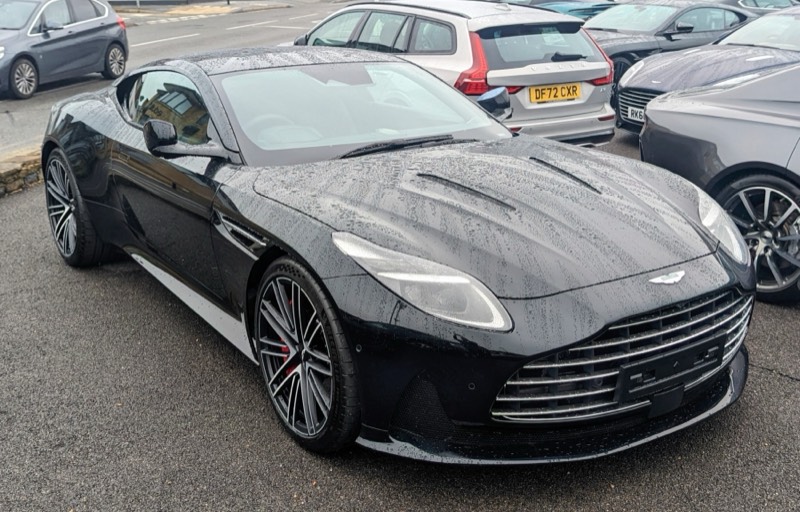
Aston Martin — DB12 Volante
The convertible DB12 — Mercedes-AMG-derived twin-turbo V8 in long-wheelbase 2+2 grand-tourer specification with powered fabric folding roof.
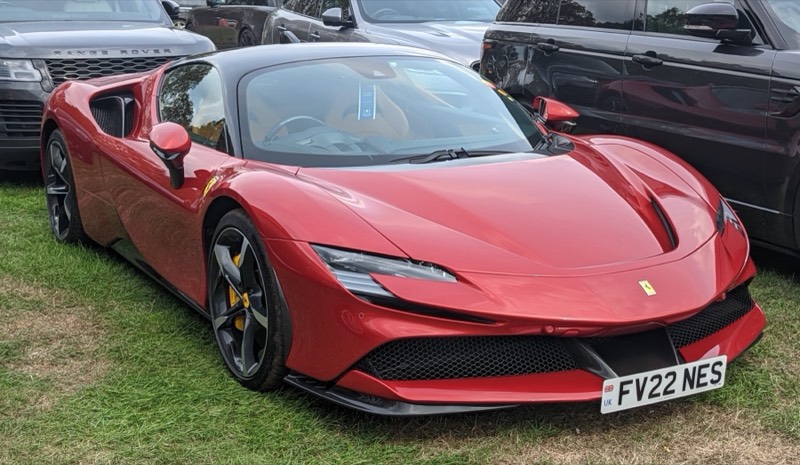
Ferrari — 296 GTS / 12Cilindri Spider
The current-generation convertible Ferraris. The 296 GTS is the V6 hybrid spider; the 12Cilindri Spider is the naturally-aspirated V12 GT spider. The Roma Spider held the front of the lineup until it ran out of production in 2026; Ferrari showed the Amalfi Spider in March 2026 with deliveries from 2027, so the V8 GT convertible is between generations.
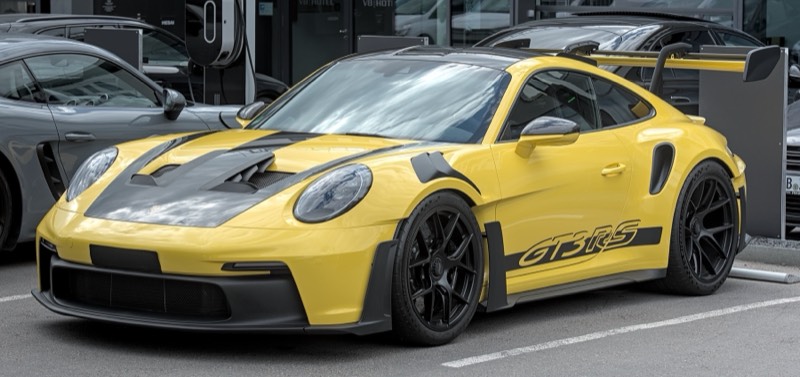
Porsche — 911 Turbo S Cabriolet
The 992-generation Turbo S in cabriolet form. Powered fabric roof, all-wheel-drive, twin-turbo flat-six. The most-cross-shopped convertible in the upper supercar tier of the segment.
Maserati — GranCabrio (Trofeo, Folgore)
The convertible variant of the second-generation GranTurismo. Available with the Nettuno V6 (Trofeo) or all-electric Folgore powertrain. Among the more accessible price points in the volume luxury-convertible segment.
Mercedes-Maybach — SL Monogram Series
The R232 SL in Maybach specification — AMG-derived twin-turbo V8 in higher output, bespoke trim. Limited-production halo of the broader SL lineup.
Ownership reality
Convertible ownership economics carry consistent patterns across the segment. Curb-weight penalties typically run 80-180 pounds over the equivalent coupe; chassis-rigidity reinforcement is engineered to compensate without materially changing the dynamic envelope. Insurance for convertibles typically runs 10-20% higher than the equivalent coupe in the same metro reflecting both the slightly higher accident-rate actuarial profile and the structural reality that open-top theft-and-vandalism exposure runs higher than fixed-roof equivalents.
Service costs follow the underlying platform — a Continental GTC services like a Continental GT, a 911 Turbo S Cabriolet services like a 911 Turbo S Coupe, with marginal additions for roof-mechanism service items. Roof-mechanism failure is uncommon on modern convertibles but the per-incident cost when it happens runs into the four-figure to low-five-figure range; pre-purchase inspection on a pre-owned convertible should specifically address roof-mechanism condition and operation across multiple cycles.
Climate-specific ownership patterns matter more in convertibles than in any other segment. Year-round daily-driver use in Los Angeles, Miami, or Phoenix produces materially different consumable economics than seasonal-use ownership in Boston, Chicago, or New York. The convertible-in-winter-storage pattern in cold-climate metros adds storage-and-transport costs that don't exist in warm-climate ownership.
Buying advice
For new-vehicle buyers, allocation on the convertible variants is typically more accessible than the equivalent coupe — the smaller buyer pool produces less allocation pressure. The exception is the Ferrari spider variants (296 GTS, 12Cilindri Spider), which track allocation patterns close to their coupe counterparts. First-time buyers in the segment typically enter through a Continental GTC, an SL, or a Maserati GranCabrio.
For CPO buyers, the manufacturer-backed programs cover convertibles within the standard CPO frameworks. Roof-mechanism inspection should be a specific item in any CPO or pre-owned diligence — manufacturers verify roof operation as part of CPO reconditioning, but specialist inspection on private-party pre-owned cars is the right additional step.
For pre-owned buyers, the editorial sweet spot on most convertibles is the same generation-and-vintage as the equivalent coupe but at 5-15% lower prices. The Continental GTC at 4-6 years old, the DB11 Volante at the same vintage, and the previous-generation 911 Turbo S Cabriolet (991.2 era) all sit in their respective segment sweet spots. Roof-mechanism service history is a specific diligence item; well-documented roof maintenance on a pre-owned convertible typically commands meaningful price premiums over equivalent specifications without records.
Cross-shop
Convertibles cross-shop most actively against their coupe counterparts (the Continental GT vs Continental GTC decision is the segment's primary cross-shop conversation, repeated across DB12 vs Volante, 296 GTB vs 296 GTS, 911 Turbo S Coupe vs Cabriolet). Buyers weighing convertible vs coupe typically resolve the question on use-case grounds (climate, daily-driver pattern, secondary-property storage logistics) rather than performance specifications. The segment also crosses with Grand Tourers in the GT-coupe-vs-cabriolet decision and with Supercars for the spider variants.
Frequently asked questions
Are luxury convertibles less rigid than their coupe counterparts?
Marginally, by modern engineering standards. Curb-weight penalties typically run 80-180 pounds over the equivalent coupe; chassis-rigidity reinforcement is engineered to compensate. Current-generation convertibles (Continental GTC, DB12 Volante, 296 GTS, 911 Turbo S Cabriolet) are meaningfully closer to their coupe counterparts in chassis dynamics than the convertibles of even a decade ago. The dynamic gap is real but smaller than buyer perception sometimes suggests.
Why do convertibles trade at lower prices than coupes in the pre-owned market?
Smaller buyer pool, lower performance perception (whether or not engineering supports it), and slightly higher insurance costs. Across most marques, the cabriolet, spider, or volante variant trades at 5-15% lower than the equivalent coupe in pre-owned markets. The discount is buyer opportunity for convertible-prioritizing buyers and the structural reason most convertibles sit at meaningfully more accessible entry points than their coupe equivalents.
Can luxury convertibles function as year-round daily drivers?
In warm-climate metros, yes — Los Angeles, Miami, Naples, Phoenix, and the Southern California / Florida coast all support year-round convertible daily-driver use. In cold-climate metros (Boston, Chicago, Seattle, New York), convertible ownership typically operates as seasonal — heated indoor storage from November through March, summer-and-shoulder-season operation. The seasonal pattern compounds storage-and-transport costs that don't exist in warm-climate ownership.
How does convertible insurance compare to coupe insurance?
Typically 10-20% higher than the equivalent coupe in the same metro. The actuarial profile reflects slightly higher accident-rate exposure, slightly higher theft-and-vandalism exposure for open-top cars, and the higher repair cost on convertible-specific structural components. The exact differential varies by carrier and policy structure.
What should I check on a pre-owned convertible that I wouldn't check on a coupe?
Roof-mechanism condition and operation across multiple cycles is the convertible-specific diligence item. Roof-mechanism failure is uncommon on modern convertibles but the per-incident cost when it happens runs into the four-figure to low-five-figure range. Specialist pre-purchase inspection should specifically address roof-mechanism condition, hydraulic-pump operation, weather-seal condition, and the structural reinforcement points around the windshield frame and B-pillar substitutes.
Is the Ferrari Roma Spider editorially distinct from the Roma coupe?
Operationally yes, editorially largely the same car. The Roma Spider is the convertible variant of the Roma coupe — same fundamental architecture, same V8 powertrain, same 2+2 grand-tourer configuration. The Spider operates with marginally different chassis-rigidity engineering and slightly higher curb weight. Both are positioned as the lineup's entry point and the most-useful Ferrari in daily-driver terms; the convertible-versus-coupe decision is a use-case decision rather than a model-position decision.