Bentley.
Hand-built grand tourers and saloons from Crewe.
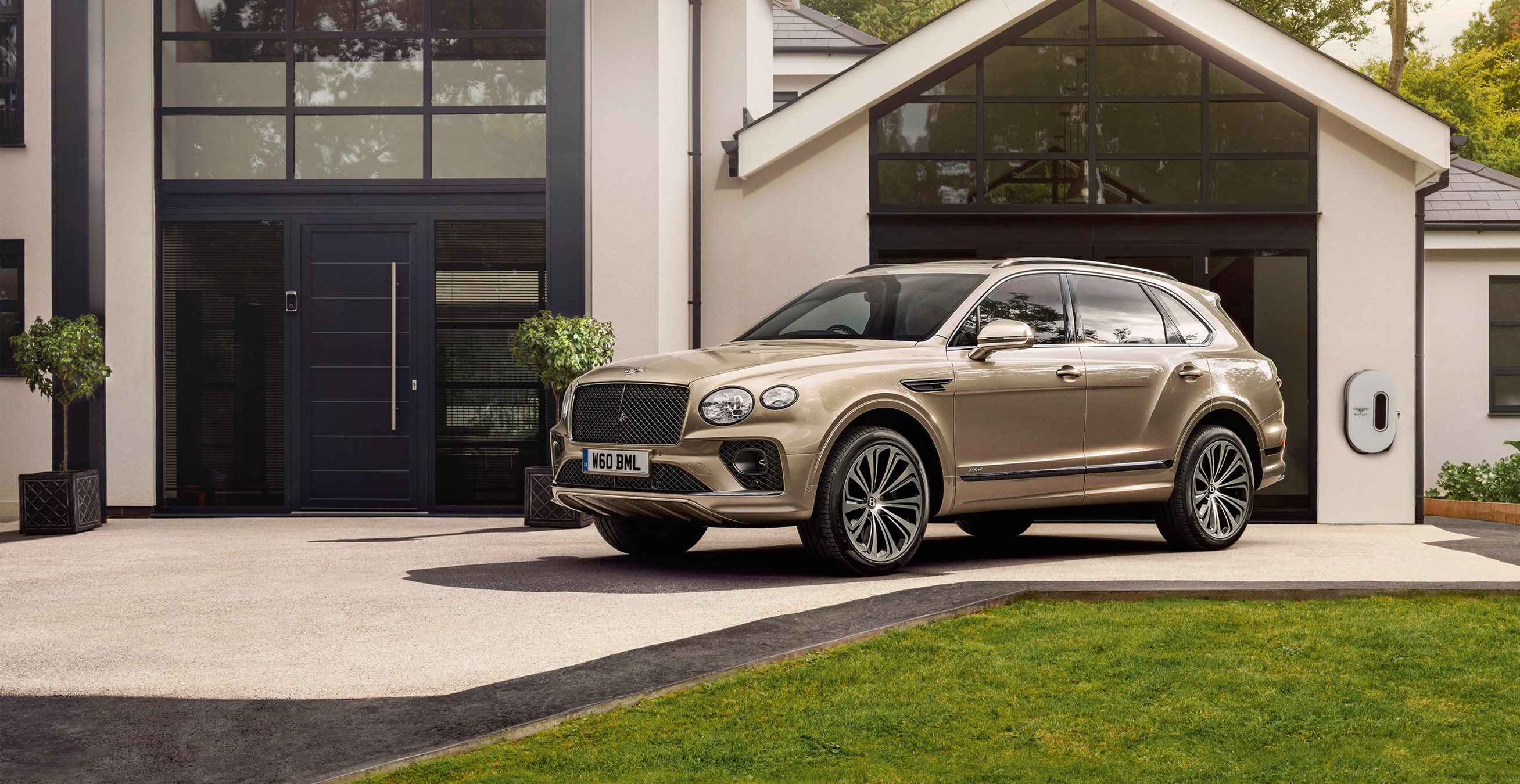
- Founded1919
- HeadquartersCrewe, England
- CountryUnited Kingdom
- TierUltra-luxury
What is Bentley today?
Bentley is a British ultra-luxury marque founded in 1919 and headquartered in Crewe, England. The brand has been owned by Volkswagen Group since 1998. The current lineup is the Continental GT, Flying Spur, and Bentayga SUV, with the first all-electric Bentley scheduled for the second half of the decade.
Who owns Bentley?
Bentley is wholly owned by Volkswagen Group, which acquired the Crewe factory in 1998. Bentley sits alongside Lamborghini in the VW luxury portfolio. BMW separately holds the Rolls-Royce name from the same 1998 split. The two formerly-paired marques have run independent product strategies since the late 1990s.
What does Bentley ownership cost?
Bentley ownership runs higher than competitors at the same MSRP. Service is due every 12 months or 10,000 miles, with a larger service on a longer cycle. Tires are a meaningful line item; the ownership calculator prices a set for the specific trim. First-year depreciation runs 25 to 35 percent. CPO programs cushion the cost gap for second-owner buyers.
Where do you buy a Bentley in the US?
Bentley sells in the US through authorized dealers only, concentrated in major metros. There is no direct-from-Crewe ordering for US buyers. Configurator orders run through dealers, with bespoke commission requests handled by Mulliner. Pre-owned and CPO inventory rotates through the same dealer network plus specialty independents. Marque lists eighteen Bentley dealers across its ten covered metros; Bentley's own dealer locator is the current list for the rest of the country.
Should you buy a new or pre-owned Bentley?
For first-time Bentley buyers, a two-to-three-year-old Continental GT or Bentayga is the editorial sweet spot. Initial depreciation has happened, options are loaded, and CPO warranty extends factory coverage. Pre-Mulliner W12 cars and entry-spec Bentaygas are the most accessible. Avoid first-year examples of any newly launched platform.
History
Bentley was founded in 1919 by Walter Owen Bentley, a former locomotive engineer turned aero-engine specialist, and built its reputation through racing — five outright wins at the 24 Hours of Le Mans between 1924 and 1930. The "Bentley Boys" who drove those cars were wealthy amateur racers as much as factory drivers, and that combination of engineering ambition and gentleman-driver association set the marque's tone for the next century.
Financial trouble in the early 1930s pushed Bentley into the arms of Rolls-Royce, which acquired the company in 1931. The two marques shared platforms — and, increasingly, identities — for the next sixty years. After Volkswagen Group acquired Bentley's Crewe factory in 1998 and BMW separately took the Rolls-Royce name, the two were finally cleaved apart. Bentley moved to a fully independent product strategy, anchored at first by the Continental GT in 2003.
The modern Bentley is what the Continental GT made it: a maker of ultra-luxury grand tourers and luxury SUVs, sharing engineering bones with the rest of the Volkswagen Group performance portfolio (notably the Porsche-platform Bentayga) but with a Crewe-built cabin standard that no competitor matches at volume. The W12 engine that defined the modern era was retired in 2024 in favor of a hybridized V8 and a transition program toward an EV-only lineup later in the decade.
Anchored on the Bentley Continental GT.
Source: Industry composite estimate (Hagerty / KBB / Edmunds), 2024. Verify against current dealer offers.
Positioning
Bentley sits at the engineering-led end of the ultra-luxury segment. Where Rolls-Royce builds rolling salons, Bentley builds cars that ask to be driven. The Continental GT remains the segment-defining grand tourer; the Flying Spur is the closest the segment offers to a true four-door GT; and the Bentayga sits in the most contested SUV bracket in the luxury market.
Mulliner — Bentley's in-house bespoke division — handles the commissioning work that distinguishes a specified Bentley from a configured one. The Mulliner program covers everything from custom paint and trim to coachbuilt special editions like the Bacalar and Batur, both produced in single-digit volumes.
Current lineup
Continental GT
The two-door grand tourer that anchors the lineup.
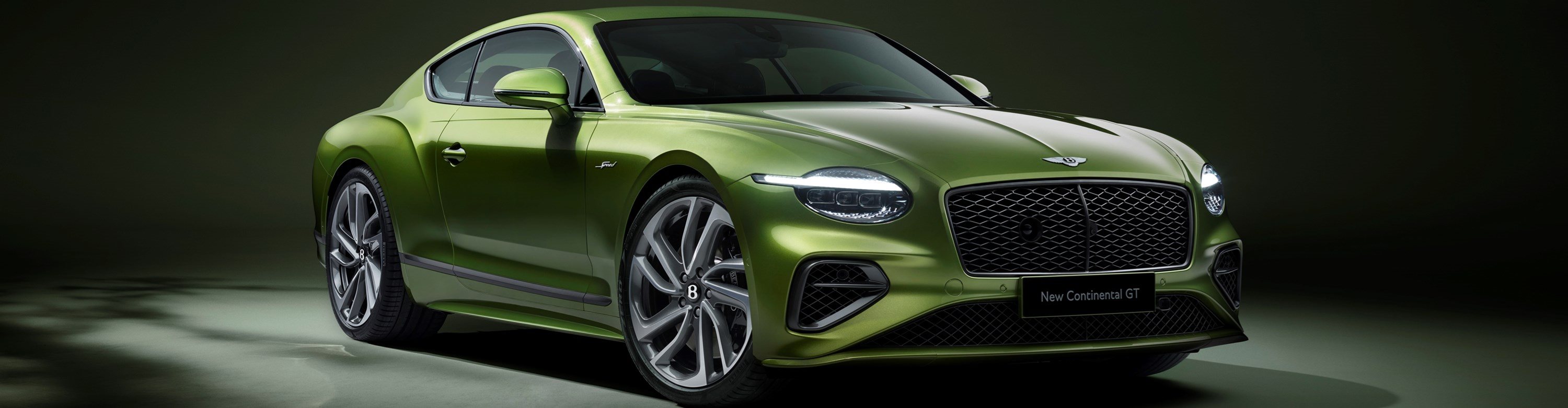
Now in its fourth generation and transitioned to a hybridized V8 powertrain, the Continental GT remains the reference point for ultra-luxury two-door GTs. Available as a coupe and a convertible, with Speed and Mulliner trims sitting at the top of the range. Specification is the most important variable in residual behavior — popular colors and factory options carry significantly stronger resale than custom one-offs.
Flying Spur
The four-door interpretation of the Continental GT — a true four-door grand tourer, not a long-wheelbase saloon.
The Flying Spur is engineered as a driver's car first and a chauffeur's car second, which differentiates it sharply from the Rolls-Royce Ghost. Available with the same hybridized V8 powertrain as the Continental GT, plus extended-wheelbase commissioning for buyers who do want a chauffeur car.
Bentayga
Bentley's entry into the ultra-luxury SUV segment.
The Bentayga shares its platform with the Porsche Cayenne, Audi Q7, and Lamborghini Urus, but carries a Crewe-built cabin that none of its platform-mates match. Available in standard and Extended Wheelbase forms; the EWB is increasingly the default for buyers prioritizing rear-cabin comfort. The Bentayga competes directly against the Cullinan, Urus, DBX, and Purosangue.
Coachbuilt specials (Bacalar, Batur)
Mulliner-led limited runs in single-digit-volume production.
Bentley has reintroduced the coachbuilt format with the Bacalar (12 units, open-top) and Batur (18 units, closed). These are allocation-only, often pre-sold to existing collectors, and operate on a different economic logic than the volume lineup. Marque covers them on a per-piece basis when they appear in the secondary market.
Bentley press gallery
Ownership reality
Bentley ownership carries the depreciation pattern typical of the $200,000-plus segment: a steep first-three-year curve, a flatter middle period, and increasing variability based on specification, mileage, and provenance after year five. Of the three current model families, the Continental GT depreciates the most aggressively in absolute dollars (highest volume, widest spec variability), the Flying Spur sits in the middle, and the Bentayga depreciates faster as a percentage than the Cullinan, reflecting brand-perception differences in the SUV segment.
Specification matters more on a Bentley than on most competitors. A Continental GT in a popular color (Beluga, Glacier White, Verdant) with restrained interior trim retains value materially better than the same car in a custom Mulliner spec, even though the Mulliner spec costs significantly more new. Buyers planning eventual resale should treat the configurator with discipline.
Annual service is the standard service-interval expectation, with a major service every two years. Pricing varies widely by region and is quoted by the dealer rather than published to a national price list. Tires are a meaningful line item — large diameter wheels, soft compounds, and the W12-era cars carry high consumable cost. Insurance is priced on the driver, the ZIP code and the record rather than on the car alone, and no rate survey publishes Bentley premiums — a written quote on your own profile is the only figure worth planning against.
Warranty coverage is three years/unlimited mileage standard, with extended warranty available through the manufacturer-backed CPO program. Pre-owned cars outside warranty should be inspected by a Bentley-experienced specialist before purchase; the W12 in particular has known service items that an inspection will surface.
Dealer landscape
Bentley operates an estimated 40 authorized dealers across the United States, concentrated heavily in the same metros where ultra-luxury demand concentrates — Los Angeles, Miami, New York, San Francisco Bay Area, Dallas, Houston, Atlanta, Chicago, and Boston. Several of the larger groups (Indigo Auto Group, the Holman family of dealerships, Sonic Automotive's luxury division) operate multiple Bentley locations. Per-metro coverage is documented on the city pages.
Independent Bentley specialists exist but are uncommon — mostly clustered in the same metros as the authorized dealers. For service work on cars older than warranty, an independent specialist will often beat the authorized dealer on both price and depth of marque-specific knowledge, particularly on the W12 platform. For pre-purchase inspections on pre-owned cars, an independent specialist with documented Bentley experience is the right call.
Buying advice
For new-vehicle buyers, allocation behavior on Bentley is more relaxed than on Ferrari or Porsche specials — most volume models can be ordered and delivered within reasonable lead times. Allocation does matter for Mulliner-spec orders and coachbuilt specials, where existing-customer status and relationship with a specific dealer carry weight. The first call is to the local authorized dealer; the productive conversation is about specification timing and any factory programs running on the model in question.
For CPO buyers, Bentley's manufacturer-backed CPO program covers cars up to a defined age and mileage threshold and includes a 12-month warranty extension. Pricing on CPO Continental GTs sits meaningfully above private-party pre-owned but carries the warranty backing and a manufacturer-mandated reconditioning standard. The trade-off is dollars-for-confidence; for a buyer planning four-plus years of ownership, the math typically favors CPO.
For pre-owned buyers, the editorial sweet spot on the Continental GT is four to six years old in the W12 era — depreciation has done its work, the car is mechanically mature, and the platform is well-understood by independent specialists. For the Bentayga, similar logic applies but watch for service history; the SUV gets used more like an SUV and shows it. For the Flying Spur, the four-door body absorbs more wear in the cabin than the GT — inspect leather, headliner, and rear-seat hardware specifically.
For collector-grade interest, the recently-discontinued Mulsanne (the 6.75-liter L-series flagship retired in 2020) is the piece that shows the clearest signal of long-term appreciation in the modern Bentley range. The first-generation Continental GT (2003-2011) is also entering the early-modern-classic conversation, particularly the Continental Supersports variants.
Frequently asked questions
Why is Bentley owned by Volkswagen?
When the Vickers conglomerate sold Rolls-Royce Motor Cars in 1998, Volkswagen Group acquired the Crewe factory and the Bentley name; BMW separately acquired the Rolls-Royce name through a parallel deal. Bentley has operated as a Volkswagen Group brand since, sharing engineering with Porsche, Audi, and Lamborghini at the platform level while preserving Crewe-led design and final assembly.
What is the difference between the Continental GT and the Flying Spur?
The Continental GT is a two-door grand tourer; the Flying Spur is the four-door interpretation of the same platform. They share powertrains and significant chassis hardware but are tuned and trimmed differently — the Continental GT prioritizes driver feel, while the Flying Spur is engineered to carry rear-seat passengers without compromise. Both are best understood as grand tourers rather than coupes or sedans in the conventional sense.
How much does a Bentley cost to service?
Service is due every 12 months or 10,000 miles, with a larger service on a longer cycle. Bentley dealers quote service per car rather than to a published price list, so ask for the figure in writing. Tires, brakes, and consumables compound on top — the W12-era cars are particularly expensive on tires given large diameters and soft compounds. Independent specialist service is often 20-40% less than dealer pricing for equivalent work outside warranty.
Where are Bentleys built?
Every modern Bentley road car is assembled at the Crewe, Cheshire factory in northwest England — the same site since just after World War II. Some platform components (engines, transmissions for certain models) are sourced from elsewhere in the Volkswagen Group manufacturing footprint, but final assembly, interior trim, and quality validation are Crewe operations.
Is the Bentayga a real Bentley or just a rebodied Volkswagen?
The Bentayga shares its underlying platform (the MLB Evo architecture) with the Porsche Cayenne, Audi Q7 and Q8, Lamborghini Urus, and Volkswagen Touareg, but the cabin, exterior, and tuning are Bentley-specific work done at Crewe. The platform-sharing question is real but the buying experience and ownership reality are distinct from the platform-mates — particularly the cabin standard, which is several tiers above any non-Bentley vehicle on the same architecture.
What is Bentley Mulliner?
Mulliner is Bentley's in-house bespoke and coachbuilding division — formally Bentley Mulliner, originally an independent coachbuilder dating to the 19th century and integrated into the modern Bentley operation. Mulliner handles three streams of work: trim and color customization beyond the standard configurator, limited-run special editions on existing models, and coachbuilt single-volume programs (most recently the Bacalar and Batur).
Is Bentley going electric?
Bentley has announced a transition to an all-electric lineup later in the decade, with the first electric Bentley scheduled for production in the second half of the 2020s. Specific timing has shifted with the broader luxury-segment EV demand picture; the published roadmap remains an EV-only lineup by the early 2030s, but the path includes hybridized internal-combustion models in the interim.
Figures on this page carry their source. Positioning, allocation practice, and where this marque sits against its rivals are editorial judgment by The Marque Editors — informed by that data, but readings of it rather than measurements. How both are produced: methodology.