Mercedes-Maybach.
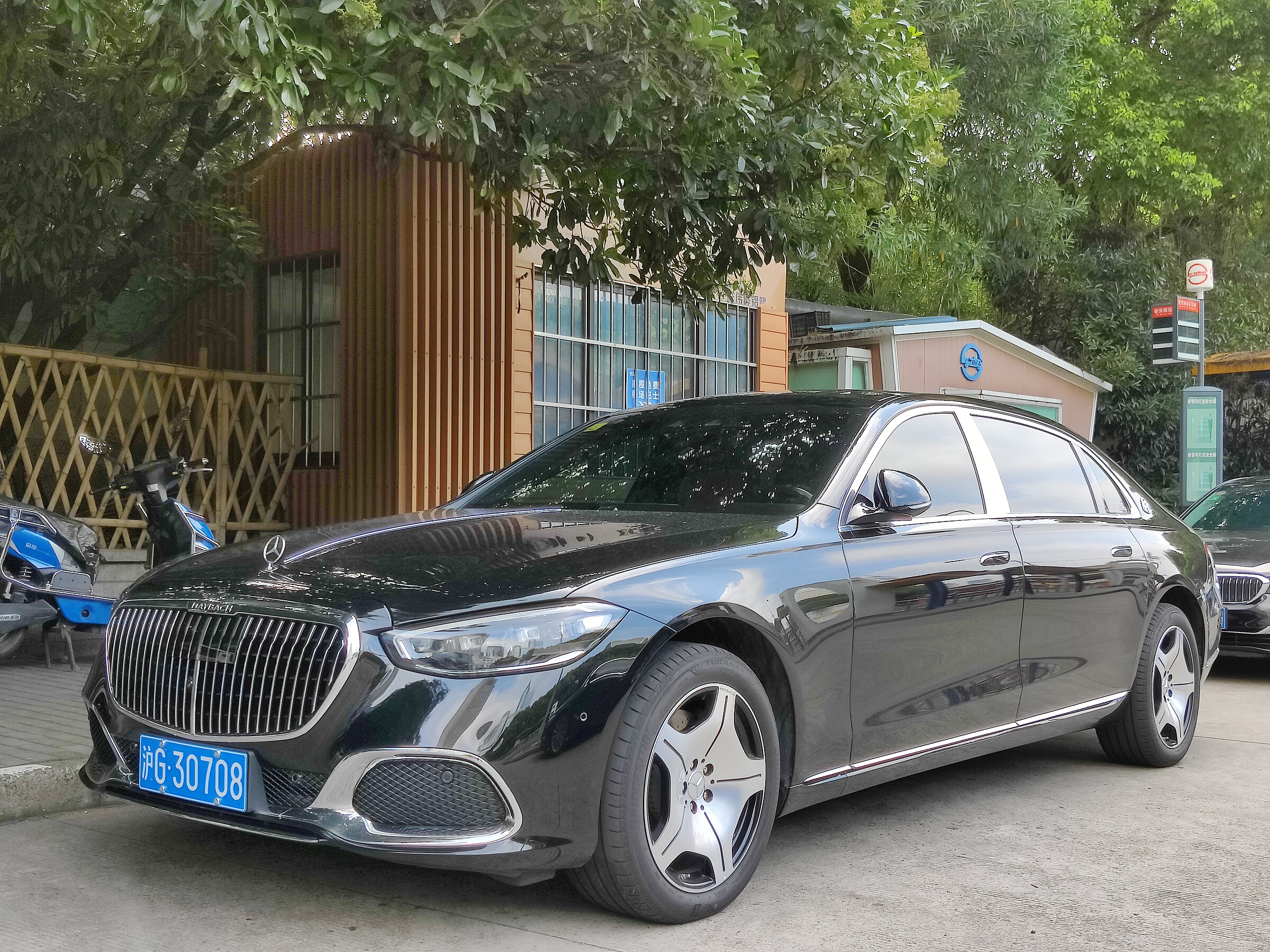
Mercedes-Benz’s ultra-luxury sub-brand; the chauffeur-grade interpretation of the S-Class and GLS.
- Founded1909
- HeadquartersStuttgart, Germany
- CountryGermany
- TierUltra-luxury
What is Mercedes-Maybach today?
Mercedes-Maybach is the ultra-luxury sub-brand of Mercedes-Benz, operated by Mercedes-Benz Group AG and headquartered in Stuttgart. The current designation was established in 2014-2015 as a sub-brand within the Mercedes-Benz product hierarchy. The current lineup includes the S-Class, GLS, EQS SUV, and SL Monogram Series.
Who owns Mercedes-Maybach?
Mercedes-Maybach is operated as a sub-brand by Mercedes-Benz Group AG, the publicly-traded German automotive group. There is no separate Mercedes-Maybach corporate entity; design, engineering, and production all run through Mercedes-Benz facilities. The original Maybach marque (1909-1960) was independent until Daimler-Benz integration, then dormant until the 2014-2015 sub-brand revival.
What does Mercedes-Maybach ownership cost?
Service alternates between Service A and Service B on a yearly cycle; Mercedes-Benz Prepaid Maintenance is not offered on Maybach models, so the cost is quoted by the dealer. Tires are a meaningful line item; the ownership calculator prices a set for the specific trim. First-year depreciation on the Maybach S-Class runs 22% on the Marque curve for the S 580. The GLS 600 follows similar curves. Maintenance costs are meaningfully lower than competing British or Italian ultra-luxury marques because the platform is shared with Mercedes-Benz S-Class infrastructure.
Where do you buy a Mercedes-Maybach?
Mercedes-Maybach sells through the Mercedes-Benz US dealer network — by far the widest distribution in ultra-luxury, because it is a full-line network rather than a specialist one. The Mercedes-Benz Certified Pre-Owned program covers Maybach inventory with factory warranty extension. Production volumes are meaningfully higher than the rest of the marques covered here; dealer inventory is comparatively accessible. Marque lists one Mercedes-Maybach dealer across its ten covered metros; Mercedes-Maybach's own dealer locator is the current list for the rest of the country.
Should you buy a new or pre-owned Mercedes-Maybach?
For first-time Mercedes-Maybach buyers, two-to-four-year-old S-Class examples are the editorial sweet spot. Initial 25-35% depreciation has happened, S-Class platform reliability is well-understood, and Mercedes-Benz CPO extends factory coverage. Avoid first-year examples of new platforms. The GLS 600 holds value better than the S-Class sedan body style.
History
Wilhelm Maybach was the engineering partner of Gottlieb Daimler in the founding years of the German automobile industry — co-developer of the first Daimler engines and a central figure in the early Mercedes program. Maybach left Daimler-Motoren-Gesellschaft in 1907 and founded the independent Maybach-Motorenbau in 1909, initially as an aircraft-engine manufacturer (most notably for Zeppelin airships). The road-car program ran from 1921 through the late 1930s, producing some of the most editorially significant pre-war German luxury cars — the Maybach Zeppelin DS7 and DS8 are foundational pieces in the long-term ultra-luxury collector market.
The marque went dormant through World War II and the post-war period; the Maybach name was acquired by Daimler-Benz in 1960 (through the company's purchase of Maybach-Motorenbau's parent industrial group). The name remained unused for road cars for four decades. The first modern Maybach revival — the standalone Maybach 57 and 62 program (2002-2012) — was a commercial failure: production volumes ran far below planning targets, the platform-and-pricing positioning was caught between the Mercedes S-Class and the Rolls-Royce Phantom, and the program was discontinued in 2012.
Mercedes-Benz re-launched the name in 2014-2015 as Mercedes-Maybach — a sub-brand within the Mercedes-Benz product hierarchy rather than a standalone marque. The first Mercedes-Maybach model was the S-Class-derived S 600 (W222 generation), launched as a longer-wheelbase, more bespoke-finished version of the standard S-Class. The sub-brand approach has been substantially more commercially successful than the 2002-2012 standalone program; the lineup has expanded across S-Class, GLS, EQS SUV, SL, and limited-production G-Class variants over the past decade.
Anchored on the Mercedes-Maybach S 580.
Source: Industry composite estimate (CarEdge / KBB), 2026. CarEdge estimates roughly 47% lost over five years on the S 580 (about 53% residual); a 2021 S 580 tracked by KBB at five years had lost 34% of its $185,950 base sticker. The gap is options — a Maybach is rarely delivered at base, so measuring from as-delivered price puts the real figure below the KBB read. Maybach holds materially better than the Mercedes-Benz S-Class it is built on.
Positioning
Mercedes-Maybach occupies a distinctive segment slot — meaningfully more accessible than Rolls-Royce or Bentley by price point, meaningfully more expensive than the standard Mercedes-Benz S-Class and GLS, with production volumes that are orders of magnitude higher than the volume Italian-and-British ultra-luxury marques. The sub-brand strategy means Mercedes-Maybach customers buy from existing Mercedes-Benz dealers, are served by the same warranty and service infrastructure, and benefit from the Mercedes-Benz parts-and-technology platform.
The product strategy is built around four pillars: the S-Class (the volume nameplate and the sub-brand's commercial anchor), the GLS (the luxury-SUV companion), the EQS SUV (the sub-brand's electrification entry point), and the SL Monogram Series (the limited-production grand-tourer variant). The G-Class Maybach program has historically operated through limited-production special variants (G 650 Landaulet) rather than as a permanent lineup nameplate. Bespoke commissioning through the "Manufaktur" program adds a further layer of customization on top of the standard Maybach specification.
Current lineup
Mercedes-Maybach S-Class (S 580 4MATIC, S 680 4MATIC)
The volume nameplate — long-wheelbase, V8 (S 580) or V12 (S 680), the sub-brand's commercial anchor.
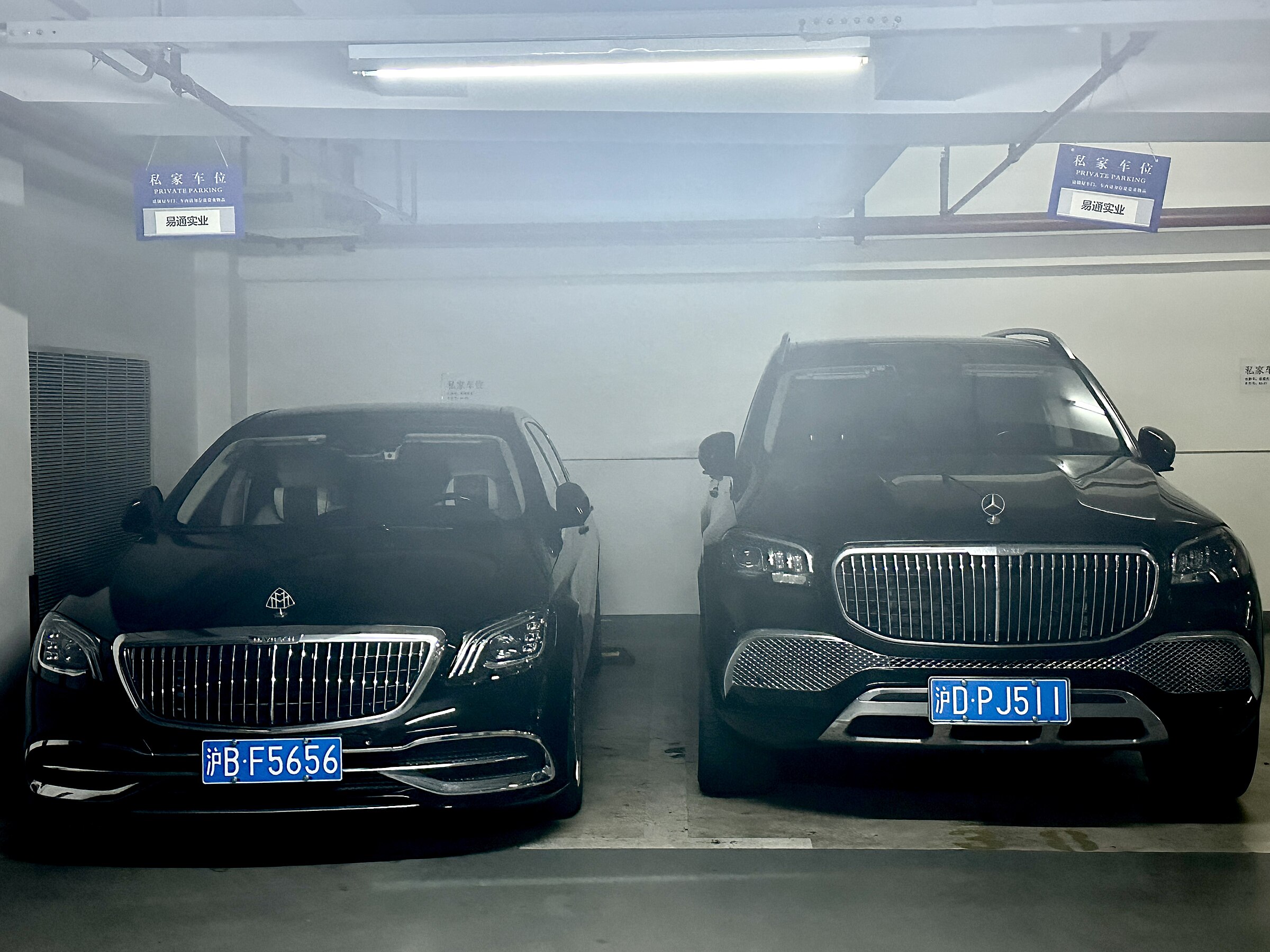
The Mercedes-Maybach S-Class is built on the W223-generation S-Class platform with extended wheelbase, more bespoke interior specification, and rear-cabin-focused equipment. The S 580 4MATIC uses a mild-hybrid 4.0-liter twin-turbocharged V8; the S 680 4MATIC uses a 6.0-liter biturbo V12 — the only V12 currently in any Mercedes-Benz product. Production runs at the Sindelfingen, Germany plant alongside the standard S-Class. The S-Class Maybach is the volume car of the lineup and the most directly cross-shopped against the Bentley Flying Spur and the Rolls-Royce Ghost.
Mercedes-Maybach GLS 600 4MATIC
The luxury SUV companion — the most editorially flexible Maybach for buyers who use the car daily.
The Mercedes-Maybach GLS 600 is built on the GLS platform with extended interior specification, four-zone rear cabin treatment, and higher-output mild-hybrid V8. The car is built at Mercedes-Benz's Tuscaloosa, Alabama plant — the same facility that produces the standard GLS. The GLS 600 sits squarely against the Bentley Bentayga and the Rolls-Royce Cullinan in the segment but at a meaningfully more accessible price point.
Mercedes-Maybach EQS SUV
The all-electric Maybach — the sub-brand's electrification entry point.
The Mercedes-Maybach EQS SUV is built on the EVA2 electric platform shared with the standard EQS SUV. Bespoke interior specification, four-zone rear cabin, and the Mercedes-Maybach exterior trim language. The car is the sub-brand's clearest commitment to the EV segment and is positioned to anchor the Maybach electrification roadmap as the Mercedes-Benz parent brand transitions through the back end of the decade.
Mercedes-Maybach SL 680 Monogram Series
The limited-production grand-tourer — the sub-brand's open-top halo.
The SL Monogram Series is the Maybach variant of the R232-generation Mercedes-AMG SL — an open-top grand-tourer with the AMG-derived 4.0-liter twin-turbocharged V8 in higher-output specification, bespoke Maybach exterior and interior trim, and unique color-and-material specifications under the "Monogram Series" designation. Production is meaningfully more constrained than the volume S-Class and GLS Maybach lineups.
Manufaktur and limited-production programs (G 650 Landaulet, S-Class Pullman historically)
Bespoke commissioning and limited-production halo cars.
The Manufaktur program offers bespoke material, color, and trim commissioning on top of the standard Maybach specification — broadly analogous to Rolls-Royce Bespoke or Bentley Mulliner. Historically, limited-production halo cars have included the G 650 Landaulet (six-wheel-drive open-rear-cabin G-Class variant, very limited production) and the S-Class Pullman (limousine-stretch S-Class, low-volume production). These programs operate on existing-customer-priority allocation and rarely reach the broad market.
Mercedes-Maybach press gallery
Ownership reality
Mercedes-Maybach ownership economics differ structurally from the rest of the marques covered here in two ways. First, production volumes are meaningfully higher — thousands of cars per year globally, with the S-Class and GLS Maybach as the volume nameplates — which means the sub-brand's depreciation curve tracks closer to the broader luxury-SUV-and-sedan segment than to the Rolls-Royce or Bentley curve. Second, the Mercedes-Benz parts-and-service infrastructure means Maybach service costs sit at the upper end of standard Mercedes-Benz S-Class and GLS service costs rather than at the bespoke ultra-luxury service tier.
Standard-lineup Maybachs (S 580, GLS 600, EQS SUV) typically depreciate 35-50% over the first three years, with significant variability based on color and option specification. The S 680 (V12) depreciates more sharply than the S 580, reflecting the V12 service-cost differential and the smaller pre-owned buyer pool for V12 specifications. The Monogram Series SL depreciates more gently, reflecting its lower production volume.
Annual service intervals run 12 months or 10,000 miles for the volume lineup. The Mercedes-Benz Pre-Paid Maintenance program covers a defined window from new-car purchase. Out-of-warranty service is quoted per visit at an authorized Mercedes-Benz or Mercedes-Maybach dealer. The V12 S 680 sits materially above the volume models, reflecting the V12-specific service requirements.
Rate surveys that cover Mercedes-Benz do not break out Maybach separately, and insurance is priced on the driver and the ZIP code rather than on the car alone — a written quote is the only figure worth planning against. The S 680 V12 and the SL 680 Monogram Series typically run higher, reflecting both vehicle value and the segment's actuarial profile. EQS SUV Maybach insurance is generally lower than the equivalent V8 specification.
Dealer landscape
Mercedes-Maybach is sold and serviced through the Mercedes-Benz dealer network in the United States — every Mercedes-Benz dealer can sell Maybach product, but only certain dealers are designated as "Mercedes-Maybach Studios" with the bespoke specification facilities, the dedicated Maybach-trained service staff, and the in-store experience layer that the sub-brand expects for new-vehicle purchases. The Studio dealers are concentrated in the segment's primary metros — Los Angeles, Miami, New York, San Francisco Bay Area, Houston, Dallas, Atlanta, Boston, Chicago, Seattle.
The Mercedes-Maybach service infrastructure is a meaningful operational advantage relative to the rest of the segment. Routine service can be performed at any Mercedes-Benz authorized dealer (with V12 service often referred to specific Maybach-equipped facilities); the parts-and-tooling-and-training network is materially deeper than the bespoke ultra-luxury marques can offer through their smaller dealer footprints.
Buying advice
For new-vehicle buyers, the standard S-Class Maybach (S 580), GLS 600, and EQS SUV Maybach are generally available through any authorized Mercedes-Maybach Studio with reasonable lead times. The S 680 V12 and the Monogram Series SL are constrained relative to the volume lineup — the V12 S 680 is the only V12 currently offered by Mercedes-Benz, and production levels are deliberately limited. First-time Maybach buyers typically enter through the S 580 or GLS 600.
For CPO buyers, the Mercedes-Benz Certified Pre-Owned program covers Maybach product within the standard CPO framework — defined-age-and-mileage cars, multi-point reconditioning, and 12-month-or-12,000-mile warranty extension. CPO Maybach inventory is typically deeper than for the bespoke ultra-luxury marques given the higher new-car production volumes; pricing premiums over private-party pre-owned are typically smaller than on Rolls-Royce or Bentley CPO programs.
For pre-owned buyers, the editorial sweet spot on the S-Class Maybach is a three-to-four-year-old S 580 with documented service history and a sensible factory specification — these cars typically trade at 50-65% of original MSRP and represent the most accessible entry point to the modern Maybach lineage. The S 680 V12 trades at meaningful discounts to original MSRP but carries materially higher service exposure — buyers should factor V12-specific service costs into the total ownership math.
For the GLS 600, the 2021-onward production years (the modern Maybach GLS launched 2020 model year for global markets, 2021 for US) represent the most editorially relevant pre-owned pool. The early-production cars trade at meaningful discounts and carry the same fundamental specification as the current model. The Monogram Series SL is too new to read as pre-owned; the limited-production G-Class Maybach variants (G 650 Landaulet) are firmly in collector territory and trade through specialist channels.
Frequently asked questions
Is Mercedes-Maybach a separate brand?
No — Mercedes-Maybach is a sub-brand within Mercedes-Benz, operated by Mercedes-Benz Group AG. The 2002-2012 standalone Maybach program (Maybach 57 and 62) ran as a separate marque and was commercially unsuccessful; the current sub-brand approach has been substantially more successful and integrates Maybach product into the broader Mercedes-Benz dealer, service, and parts infrastructure.
How does Mercedes-Maybach compare to Rolls-Royce and Bentley?
More accessible by price point, meaningfully higher production volume, fundamentally different operational model. Mercedes-Maybach customers buy from existing Mercedes-Benz dealers and are served by the same warranty and service infrastructure as standard Mercedes-Benz products; Rolls-Royce and Bentley operate stand-alone bespoke dealer networks and longer specification processes for new commissions. Both approaches have their advocates; the choice typically reflects buyer priorities around service convenience, depreciation expectations, and the bespoke-experience layer.
What is the difference between the S 580 and S 680?
The S 580 4MATIC uses a mild-hybrid 4.0-liter twin-turbocharged V8. The S 680 4MATIC uses a 6.0-liter biturbo V12 — the only V12 currently in any Mercedes-Benz product. Both are long-wheelbase Maybach-specification S-Class cars; the S 680 is the higher-spec, lower-volume specification with materially higher service costs and a smaller buyer pool. For most buying conversations, the S 580 is the editorially right choice; the S 680 is the conversation for buyers who specifically want the V12.
What is the "Manufaktur" program?
Manufaktur is Mercedes-Benz's bespoke commissioning program — broadly analogous to Rolls-Royce Bespoke or Bentley Mulliner. It offers extended material, color, leather, wood, and trim specification options on top of the standard Maybach factory configurations. Manufaktur commissions extend the build process and add to the as-delivered cost; it is one of the more meaningful ways Mercedes-Maybach competes with the bespoke specification depth of the British ultra-luxury marques.
Where are Mercedes-Maybachs built?
The S-Class Maybach is built at the Mercedes-Benz Sindelfingen, Germany plant alongside the standard S-Class. The GLS Maybach is built at the Mercedes-Benz Tuscaloosa, Alabama plant alongside the standard GLS. The EQS SUV Maybach is built at the same Tuscaloosa facility. The SL Monogram Series is built at the Mercedes-AMG production facility in Bremen, Germany.
Does Mercedes-Maybach allocation work like Rolls-Royce or Ferrari allocation?
No — meaningfully more open. Standard Mercedes-Maybach product (S 580, GLS 600, EQS SUV) is generally available through any authorized Mercedes-Maybach Studio with reasonable lead times and without the existing-customer-priority allocation framework that defines the Rolls-Royce, Ferrari, and Bugatti markets. The S 680 V12 and the Monogram Series SL are more constrained. Manufaktur bespoke commissions extend the timeline but are not allocation-restricted in the same sense.
Figures on this page carry their source. Positioning, allocation practice, and where this marque sits against its rivals are editorial judgment by The Marque Editors — informed by that data, but readings of it rather than measurements. How both are produced: methodology.