Supercars.
Mid-engine performance benchmarks built for daily-drivable speed.
- Typical range$200K – $1 million
- Marques5
- Models covered6
Segment definition
The supercar segment is structurally distinct from hypercars in three ways: production volumes are at retail-allocation scale rather than constrained-program scale, price points typically run $200,000-$700,000 (vs the $1M+ hypercar floor), and the buying conversation operates through standard dealer-allocation channels rather than existing-customer-priority lists. The segment is the volume layer of the performance luxury-car market and the entry point for most buyers building toward the higher-end programs.
The defining technical characteristics are mid-engine layout (with the front-engine Aston Vantage and DB12 and the V12 Ferraris as accepted exceptions), carbon-fiber or carbon-aluminum-hybrid chassis construction, output typically running 600-1,000 horsepower, and dual-clutch automated transmissions across the modern lineup. Manual-transmission supercars are increasingly rare; the segment's electrification trajectory is well-documented across all major marques.
Market shape
The US supercar buyer base is substantially larger than the hypercar segment — the country probably supports 40,000-60,000 active supercar owners across the volume marques. Geographic concentration follows the standard ultra-luxury pattern (Los Angeles, Miami, New York, San Francisco Bay Area, Houston, Dallas, Atlanta, Boston, Chicago, Seattle), with the LA market alone anchoring a substantial share of national volume.
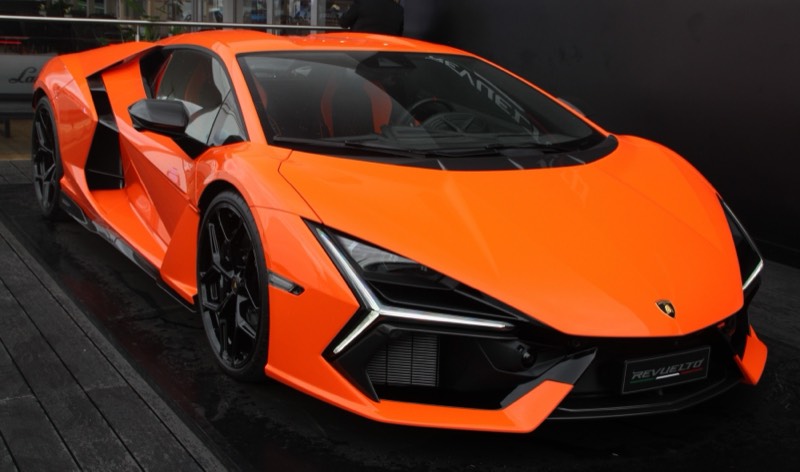
Demand has shifted measurably over the past decade as the segment has moved through hybridization (Ferrari SF90, Lamborghini Revuelto), turbocharging (replacing the naturally-aspirated V8 and V10 platforms), and the broader electrification trajectory. The naturally-aspirated era is closing — the Ferrari 12Cilindri V12 and the Lamborghini V10 (Huracán's departing engine) are the segment's clearest holdouts, both with replacement programs running through 2024-2026.
Used-market liquidity in the supercar segment is the deepest in the broader luxury-car market. Pre-owned 488 GTBs, F8 Tributos, Huracán Evos, McLaren 720S coupes and spiders, and 911 Turbo S examples trade actively across all major US metros, with specialist independent service networks in every metro supporting out-of-warranty ownership economics.
Lineup across marques
Ferrari — 296 GTB / 296 GTS
The mid-engine V6 hybrid — the volume car of the modern Ferrari lineup, the technical-statement car of the electrification transition. The Speciale variant adds a track-focused specification.
Lamborghini — Temerario
The mid-engine V8 hybrid — the volume car that replaces the Huracán. 4.0-liter twin-turbo V8 paired to three electric motors. First US deliveries running through 2025-2026.
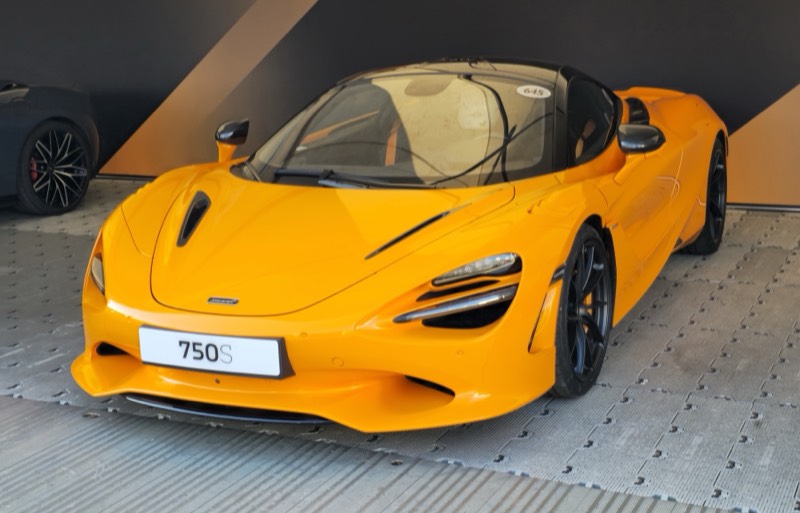
McLaren — 750S / Artura
The Sports Series volume cars. The 750S is the twin-turbocharged V8 evolution; the Artura is the V6 hybrid more-attainable option. Both anchor the McLaren retail lineup outside the Ultimate Series programs.
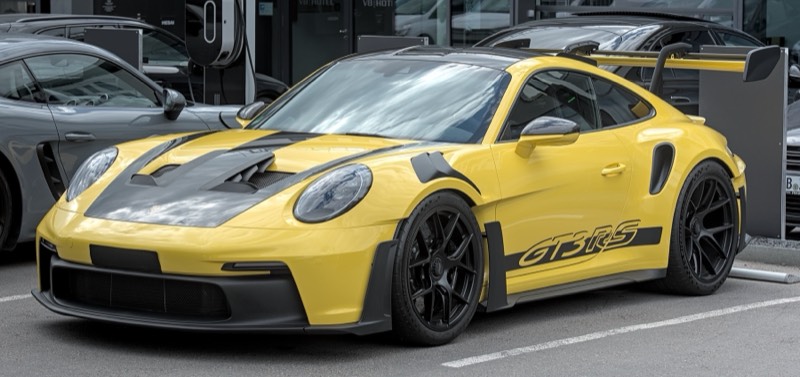
Porsche — 911 Turbo S / GT3 RS
The 992-generation Turbo S (twin-turbo flat-six, all-wheel-drive, 640+hp) and GT3 RS (naturally-aspirated 4.0-liter flat-six, motorsport-derived aerodynamics) are the volume top-of-range 911 specifications.
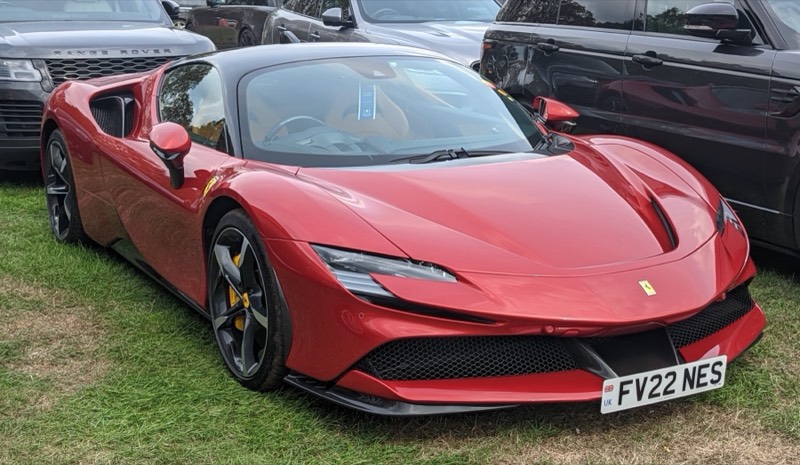
Ferrari — SF90 Stradale / SF90 Spider
The mid-engine V8 plug-in hybrid — roughly 1,000 horsepower combined output. Sits between the volume 296 and the Special Series cars in the Ferrari product hierarchy.
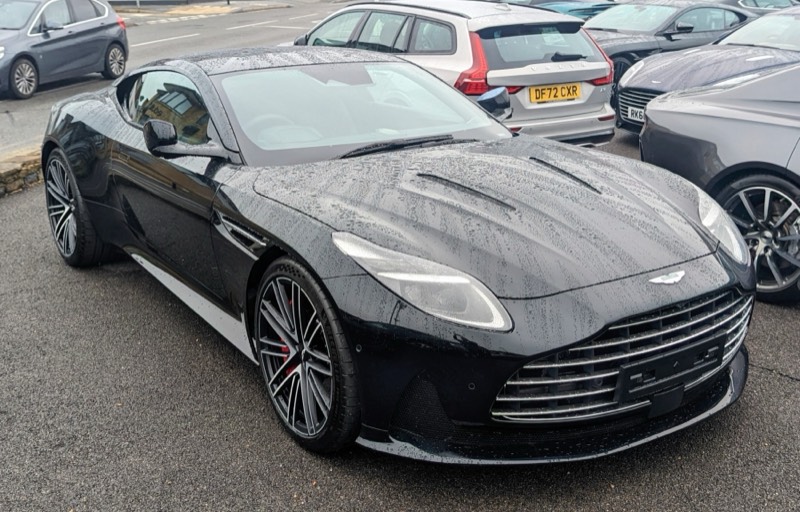
Aston Martin — Vantage (2024) / DB12
Mercedes-AMG-derived twin-turbo V8 in two distinct chassis specifications — the shorter-wheelbase, sport-focused Vantage and the longer-wheelbase, GT-leaning DB12. Both anchor the volume Aston lineup.
Ownership reality
Supercar ownership economics follow segment-typical patterns with significant model-by-model variation. Standard-lineup cars (488 GTB, F8 Tributo, 720S, Huracán Evo, 911 Turbo S) typically depreciate 25-40% in the first three years and another 5-10% per year through year six, then begin a slow climb on the right examples. Mileage matters but specification matters more — popular colors, well-chosen options, and documented service history compound favorably over the multi-year window.
Annual service intervals run 12 months or 7,500-12,500 miles depending on model. Authorized-dealer service typically runs $1,500-$4,500 per visit on the volume cars, with major service items running materially higher. Specialist independent service is mature across all major US metros and typically runs 25-40% less than dealer pricing for equivalent work outside warranty.
Tire-and-brake consumables on the mid-engine platforms are non-trivial. A 488 GTB or Huracán Evo in regular use turns over rear tires every 5,000-10,000 miles and fronts every 8,000-15,000 miles depending on driving style; OEM replacement sets typically run $2,500-$4,500 fitted at an authorized dealer. Carbon-ceramic brake-system service is a five-figure line item when it comes due.
Buying advice
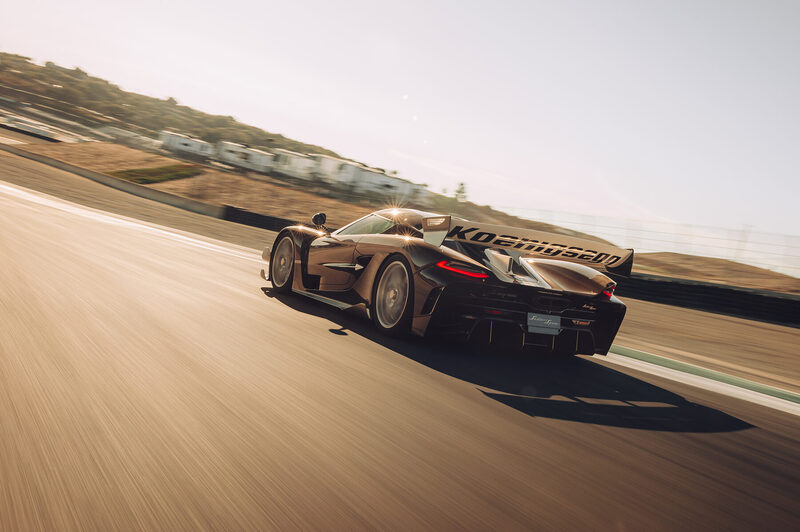
For new-vehicle buyers, allocation on the volume models (296 GTB, Temerario, 750S, Artura, 911 Turbo S, Vantage, DB12) is generally achievable through any authorized dealer with reasonable lead times. Allocation on the harder cars (SF90 XX, GT3 RS, McLaren Speedtail or Sabre) requires existing-customer status. First-time supercar buyers typically enter through a 911 Turbo S, an Aston Vantage, or a 296 GTB / Roma combination on the Ferrari side.
For CPO buyers, the manufacturer-backed programs (Ferrari Approved, McLaren Approved, Porsche Approved, Lamborghini Selezione, Aston Martin Timeless) cover cars up to defined age and mileage thresholds and include warranty extensions. CPO inventory typically sits at meaningful premiums over private-party pre-owned but the warranty backing is substantively valuable on V8, V10, and V12 cars outside factory warranty.
For pre-owned buyers, the editorial sweet spot on the V8 berlinetta line is typically four-to-six years old with documented service history and a well-specified factory order. The 991.2 911 Turbo S at 2026 sits at a particularly favorable depreciation-curve position; the F8 Tributo and 488 GTB are in similar territory. The naturally-aspirated 458 Italia is firming as it ages into early-modern-classic conversation.
Cross-shop
Supercars cross-shop most actively against Grand Tourers (the Bentley Continental GT, Aston DB12, and Ferrari Roma sit at the boundary), Convertibles (the Spider variants are often the cross-shop), and the lower end of the Hypercar segment (the Ferrari SF90 and Lamborghini Revuelto bridge supercar and hypercar economics). Buyers commonly run a Porsche 911 Turbo S against a 296 GTB or a Vantage against a McLaren 750S in the same buying cycle.
Frequently asked questions
What separates a supercar from a sports car?
Three structural factors: mid-engine layout (with accepted front-engine exceptions on the Aston Vantage and DB12), 600+ horsepower output as the modern segment baseline, and carbon-fiber or carbon-aluminum-hybrid chassis construction. The price band typically starts at $200,000 (Vantage, Artura) and reaches the $700,000-range (SF90 Stradale, McLaren 765LT). Sports cars (Porsche 911 Carrera, Audi R8 historically, Lotus Emira) sit below this in price, output, and chassis-construction tier.
Are supercars going electric?
Hybridizing rather than transitioning fully. The current segment's electrification trajectory is hybridization (Ferrari 296, SF90, Lamborghini Revuelto, Temerario, McLaren Artura, P1 historically) rather than pure-EV. Pure-electric supercars exist (Rimac Nevera, Lotus Evija, certain Pininfarina programs) but operate at the constrained-allocation hypercar tier rather than the volume supercar tier. The 2025-2030 generation across the volume marques is essentially fully hybridized.
How much does a supercar cost to maintain?
Annual service runs $1,500-$4,500 at authorized dealers on the volume cars, with major service items running materially higher. Specialist independent service is typically 25-40% less for equivalent work outside warranty. Tire-and-brake consumables compound on top — rear tires on a 488 GTB or Huracán Evo turn over every 5,000-10,000 miles depending on driving style, with OEM replacement sets running $2,500-$4,500 fitted.
Where does the supercar segment cross-shop with grand tourers?
Most actively at the Ferrari Roma / Aston DB12 / Bentley Continental GT boundary. The Roma is editorially closer to a grand tourer than to a mid-engine supercar; the DB12 is unambiguously a GT but competes against the 911 Turbo S, the Vantage, and other supercars in cross-shop conversations. The Continental GT sits firmly in the GT segment but is cross-shopped by buyers who would otherwise consider a 488 Spider or 720S Spider.
What's the editorial sweet spot for a pre-owned supercar?
Generally four-to-six years old with documented service history and a well-specified factory order — popular colors, restrained interior, common option mix. The 991.2 911 Turbo S at 2026, the 488 GTB at 4-6 years old, the F8 Tributo at 4-6 years old, and the Huracán Evo at 4-6 years old all sit in this sweet spot. The 458 Italia is firming as it ages into early-modern-classic conversation.
Are manual-transmission supercars still made?
Almost entirely retired across the volume marques. Ferrari has not offered a manual transmission as a regular option since the early 2010s. Lamborghini's last manual was the Gallardo. McLaren has never offered a manual on the Sports Series cars. Aston Martin's manual era ended with the previous-generation V12 Vantage. The Pagani Utopia is the notable exception in the modern segment — it offers a seven-speed manual transmission as a specification option, almost uniquely among contemporary high-output cars.