Grand Tourers.
Long-distance luxury coupes that prioritize comfort and engineering over outright pace.
- Typical range$150K – $500,000
- Marques5
- Models covered6
Segment definition
Grand tourers are defined by use-case rather than engineering specification. The category covers front-engine, two-door (or 2+2) luxury coupes with extended wheelbases, refined cabins, and powertrains tuned for sustained high-speed cross-continental driving rather than short-burst track performance. The structural distinction from supercars is layout (front-engine, normally) and use-case priority (long-distance comfort and stability rather than corner-by-corner track performance).
The segment's historical roots run through the postwar European luxury market — the Aston Martin DB4 and DB5 of the 1950s and 1960s, the Ferrari 250 GT and 275 GTB, the Mercedes 600, the Maserati 3500 GT and Sebring all collectively defined the genre. The modern segment has tracked toward higher output (typically 600-800 horsepower today vs the 250-400 horsepower of the era-defining cars) while preserving the long-wheelbase, comfort-focused, cross-continental ethos.
Market shape
The grand-tourer buyer base in the US is the most-stable across the luxury-car segments — buyers typically hold cars longer than supercar buyers, run higher annual mileage, and use cars across more of their full performance envelope. The buyer profile skews older than the supercar segment and weighs ride quality, cabin specification, and long-distance comfort more than absolute output.
Geographic concentration follows the broader ultra-luxury pattern, but grand-tourer ownership is meaningfully more distributed across secondary metros than the supercar or hypercar segments. Naples, Aspen, Greenwich, the Hamptons, and similar second-home or vacation-property markets carry disproportionate grand-tourer inventory relative to their population — the cross-continental use case fits the multi-residence ownership pattern that anchors much of US luxury wealth.
Used-market liquidity in the grand-tourer segment is meaningful and operates with a deeper buyer-pool than equivalent-price supercars. Pre-owned Continental GTs, DB11s and DB12s, Ferrari California and Romas, GranTurismos, and SLs trade actively across all major US metros, with specialist independent service networks supporting out-of-warranty ownership economics in every metro.
Lineup across marques
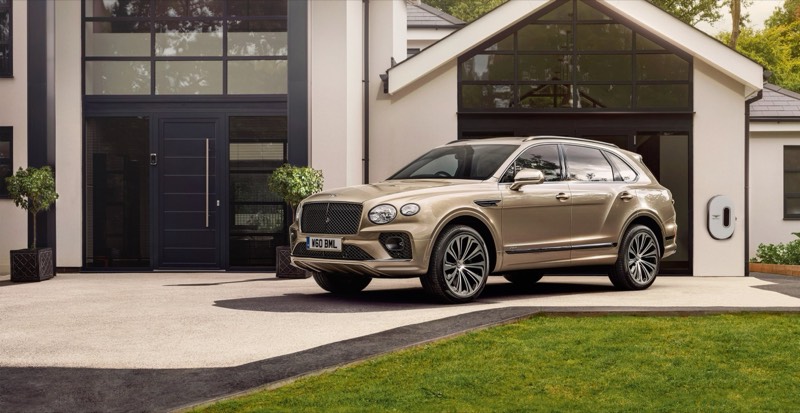
Bentley — Continental GT
The segment-defining grand tourer. Now in its fourth generation with hybridized V8 powertrain. Available as coupe and convertible; Speed and Mulliner trims at the top of the range.
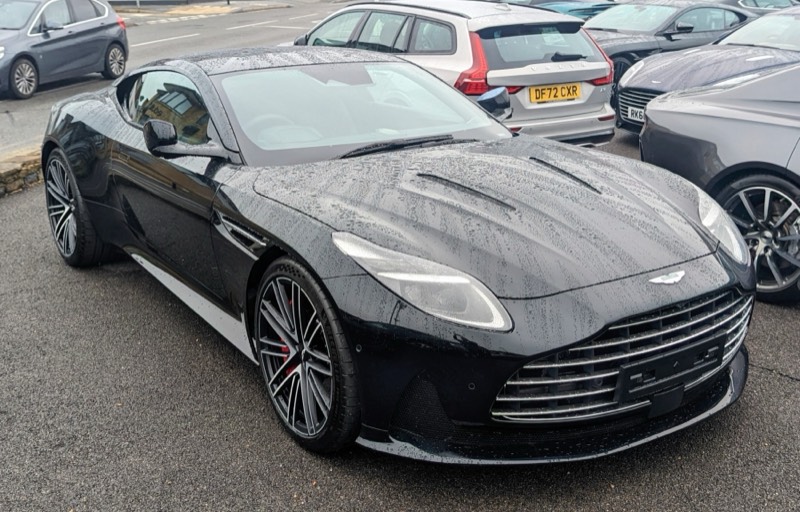
Aston Martin — DB12 / DB12 Volante
Mercedes-AMG-derived twin-turbo V8 in long-wheelbase 2+2 GT specification. The volume car of the modern Aston lineup; the Volante is the convertible.
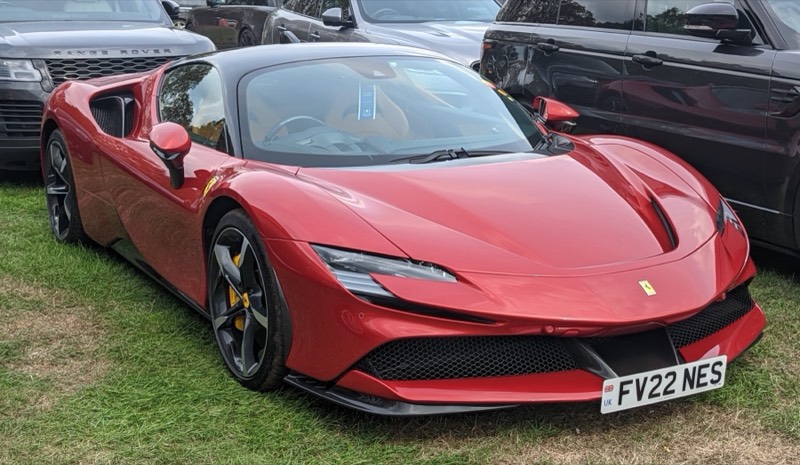
Ferrari — Roma / Roma Spider
Front-engine twin-turbo V8 in a 2+2 grand-tourer configuration, and the most useful Ferrari in daily-driver terms. It was the lineup's entry point until the coupé ran out of production in 2024 and the Spider in 2026; the Amalfi took the position. A pre-owned proposition now, which is what the price-history page treats it as.
Ferrari — 12Cilindri / 12Cilindri Spider
The flagship V12 grand tourer that succeeds the 812 Superfast. Naturally-aspirated 6.5-liter V12 in front-engine layout. The marque's clearest commitment to the naturally-aspirated V12 GT in the era of hybridization.
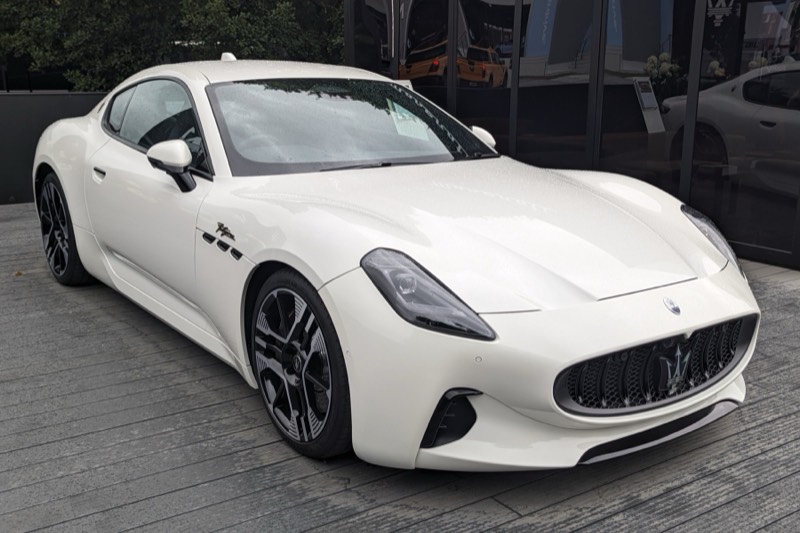
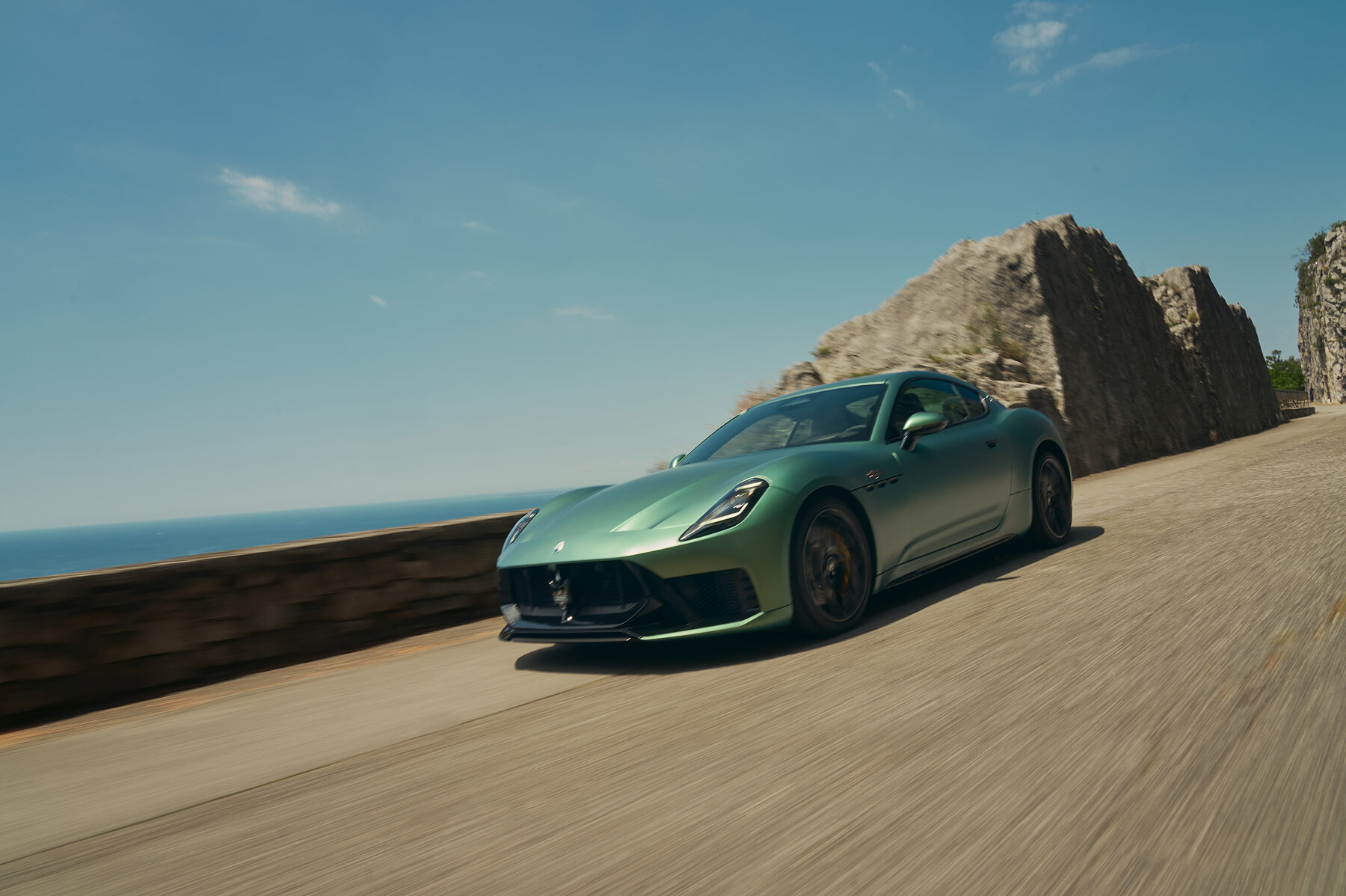
Maserati — GranTurismo (Modena, Trofeo, Folgore)
The second-generation 2022-onward GranTurismo — three powertrains (Nettuno V6 in two outputs and the all-electric Folgore). Anchors the modern Maserati lineup's flexibility across propulsion choices.
Mercedes-Maybach — SL Monogram Series
The R232-generation SL in Maybach specification — AMG-derived twin-turbo V8 in higher output, bespoke trim. Limited-production halo of the Maybach lineup.
Ownership reality
Grand-tourer ownership economics are typically more stable than the equivalent supercar specification. Standard-lineup cars (Continental GT, DB12, Roma, GranTurismo Modena, SL) typically depreciate 35-50% in the first three years and 5-10% per year through year six. The longer-wheelbase cabin specification and the front-engine layout produce service-cost profiles that are meaningfully less aggressive than mid-engine supercars on the same underlying powertrain.
Annual service intervals run 12 months or 10,000 miles for most cars in the segment. Authorized-dealer service runs $1,200-$3,500 per visit on the volume cars, with major service items running higher. The grand-tourer segment's longer-cycle ownership pattern means service-history depth matters more on the used market than for shorter-cycle supercar ownership — a well-documented Continental GT or DB11 with full service records typically commands meaningful premiums over equivalent specifications without records.
Insurance for the volume cars in the segment typically runs $3,500-$7,000 annually in major US metros depending on driver profile, coverage, and storage. The V12 cars (12Cilindri, prior 812 Superfast, Aston Vanquish) typically run higher reflecting both vehicle value and the segment's actuarial profile. The V12 service-cost differential matters meaningfully on the multi-year ownership math.
Buying advice
For new-vehicle buyers, allocation on the volume models (Continental GT, DB12, GranTurismo, SL Monogram Series) is generally achievable through any authorized dealer with reasonable lead times. Allocation on the V12 flagships (12Cilindri, Vanquish) is more constrained. First-time buyers in the segment typically enter through a Continental GT or a DB12 / Vantage combination on the Aston side; on the Ferrari side the GT entry point is now the Amalfi, the Roma having ended production in 2024.
For CPO buyers, the manufacturer-backed programs cover the segment well. Bentley CPO, Aston Martin Timeless, Ferrari Approved, Maserati Approved, and the Mercedes-Benz CPO program all support GT-segment cars within their respective frameworks. CPO premiums over private-party pre-owned typically pencil out for buyers planning four-plus years of ownership given the warranty extension value on V8 and V12 cars.
For pre-owned buyers, the editorial sweet spot on the Continental GT is the four-to-six-year-old W12 era (depreciation has done its work, the platform is mechanically mature, the platform is well-understood by independent specialists). The DB11 V8 at 4-6 years old is the equivalent Aston sweet spot. The previous-generation Roma and the 2022-onward GranTurismo are still establishing their pre-owned market trajectories.
Cross-shop
Grand tourers cross-shop most actively against Convertibles (the cabriolet variants of every car in the segment serve a parallel use case) and against the upper end of the Luxury Sedan segment (the Continental GT and Flying Spur cross-shop is real, and the 12Cilindri vs Roma vs Bentley vs Aston conversation is the primary GT-segment buying decision). The segment also crosses into Supercars at the Ferrari Roma and Amalfi / Aston DB12 / 911 Turbo S boundary and into Investment-Grade Classics on the V12 cars.
Frequently asked questions
What's the difference between a grand tourer and a supercar?
Use case more than spec sheet. Grand tourers are engineered for cross-continental driving — long wheelbases, refined cabins, torque-rich powertrains, comfort-focused chassis tuning. Supercars are engineered for shorter-burst, higher-pace performance — mid-engine layouts, more-aggressive aerodynamic specifications, and chassis tuning that prioritizes corner performance over long-distance comfort. The boundary is fluid — the Ferrari Roma, Aston DB12, and 911 Turbo S all sit at the boundary depending on configuration.
Why is the Continental GT considered the segment-defining car?
Three reasons. First, the modern grand-tourer segment effectively was reset by the original 2003 Continental GT — the car defined the dimensional, cabin-specification, and powertrain template that the rest of the segment followed. Second, Bentley's production volumes and dealer footprint exceed the equivalent Aston, Ferrari, or Maserati; the Continental GT is the volume car of the segment by some distance. Third, the multi-generation refinement of the formula (now in its fourth generation with the hybridized V8) means the platform has matured into the segment's reference point.
Is the Ferrari Roma a grand tourer or a supercar?
Editorially, a grand tourer — front-engine, 2+2 layout, comfort-focused chassis tuning, and the most useful Ferrari in daily-driver terms. It was the lineup's entry point until the Amalfi replaced it in 2026. The car is sometimes cross-shopped against mid-engine supercars and sometimes against the Continental GT; both cross-shops are legitimate. The 12Cilindri, by contrast, is unambiguously a grand tourer — front-engine V12 in the long-wheelbase configuration that has anchored Ferrari's flagship since the 550 Maranello.
How does the GT segment compare on long-term ownership economics?
Generally more favorable than the equivalent supercar specification. The longer-wheelbase cabin and front-engine layout produce service-cost profiles that are less aggressive than mid-engine supercars; the longer typical ownership cycle means service-history depth compounds favorably on the used market; and depreciation curves on the volume cars (Continental GT, DB12, Roma, GranTurismo) flatten earlier than the supercar segment median. The V12 cars (12Cilindri, Vanquish) operate at a separate cost-and-residual tier.
What's the editorial sweet spot for a pre-owned grand tourer?
On the Bentley Continental GT, four-to-six-year-old W12-era cars in popular colors and restrained specifications represent the depreciation floor. On the Aston DB11, four-to-six-year-old V8 examples sit at similar territory. The Roma is still establishing its pre-owned market; the Maserati GranTurismo (second-generation, 2022-onward) is too new to read as a pre-owned market yet. For Mercedes-AMG SL ownership, the R232-generation Monogram Series sits at limited-production residual logic; the standard SL operates on segment-typical depreciation curves.
Are grand tourers usable as daily drivers?
More so than supercars. The longer wheelbase, the front-engine layout (better visibility, more luggage space), the refined cabin specification, and the comfort-focused chassis tuning all make grand tourers meaningfully more usable for routine driving than mid-engine supercars. The Continental GT, DB12, Roma, GranTurismo, and SL all function reasonably as daily-driver propositions; the V12 cars (12Cilindri, Vanquish) operate at higher service-cost profiles that work against daily-driver economics.