Flying Spur vs Ghost vs Maybach S-Class: The Chauffeur Sedan Field
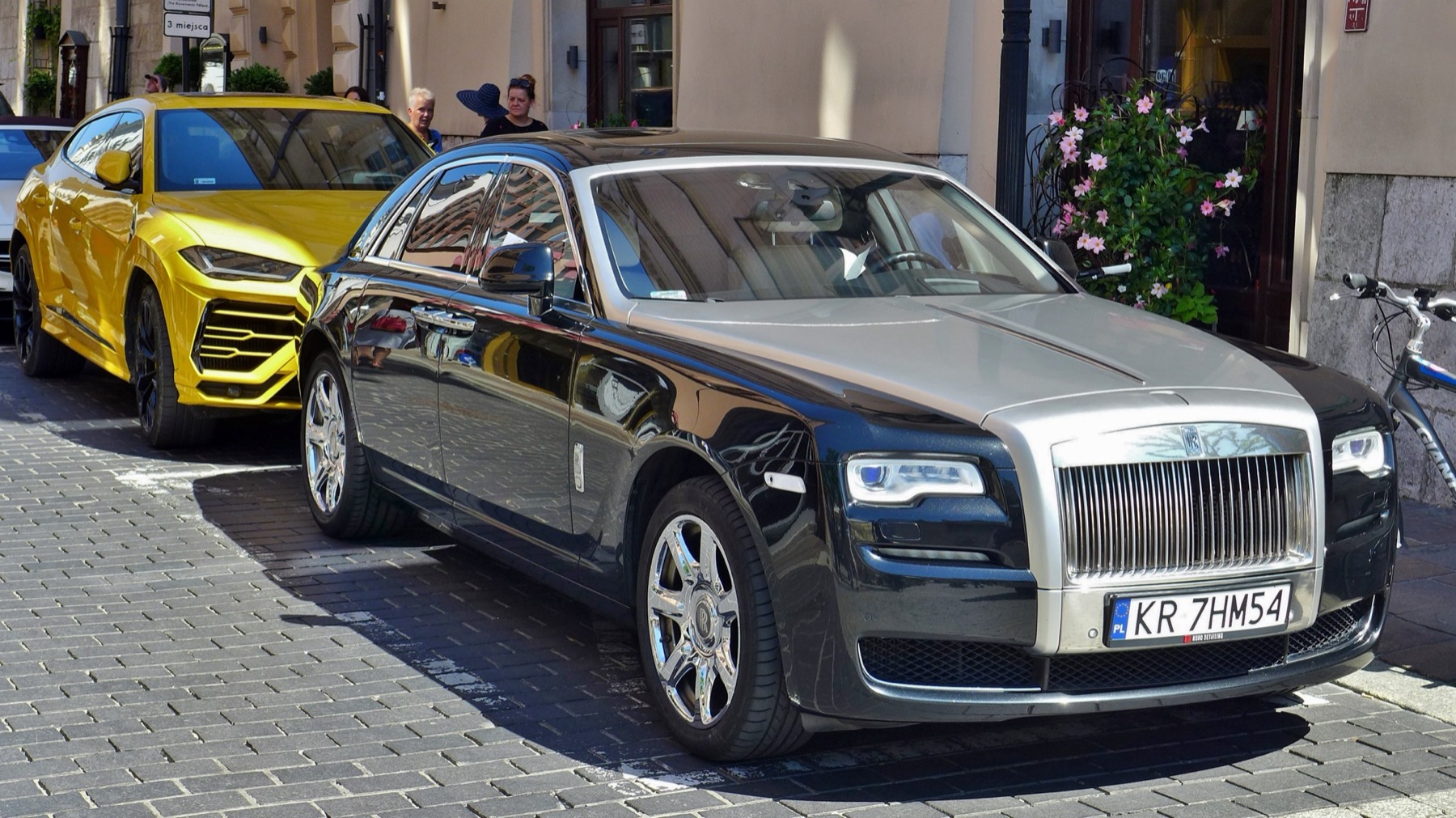
Every mature luxury market eventually produces a car bought for its back seat, and the United States — long convinced that the owner belongs behind the wheel — arrived at that conclusion later than most. Three sedans now define the top of that market here, and choosing between them turns far less on output figures than on which seat you expect to occupy.
The Bentley Flying Spur, the Rolls-Royce Ghost, and the Mercedes-Maybach S-Class are reviewed in isolation far more often than they are set against one another. That leaves buyers weighing a driver's car, a chauffeur's car, and a shared-platform flagship as though all three answered the same question.
Start With The Seat, Not The Spec Sheet
The most useful filter in this segment is a simple one: what share of your annual miles will you cover from the rear bench? A buyer who answers "most of them" is shopping a different category from one who answers "none," even though the three cars share a showroom tier and a broadly overlapping price band.
Bentley builds the Flying Spur for the person holding the wheel, and it shows in the steering weight, the rear-axle steering, and a chassis willing to carry real speed on a road the other two would rather waft along. Rolls-Royce builds the Ghost for the person being driven, and Mercedes-Maybach builds the S-Class for the buyer who wants most of that experience without the Rolls-Royce entry price.
Keep in mind that this filter sorts rather than ranks, and it will eliminate more bad purchases in this segment than any performance comparison.
The most expensive mistake in this segment is buying the car you want to be seen in rather than the car you will actually sit in.
What Each Marque Is Actually Selling
All three cars come from companies with long institutional memories, and each is selling something slightly different underneath the leather. Understanding what that something is makes the option list far easier to read.
Bentley Flying Spur
The Flying Spur is the only car here that a keen owner will genuinely enjoy driving quickly, and Bentley has leaned harder into that with each generation. The current Speed variant pairs a twin-turbocharged 4.0-litre V8 with an electric motor for a combined output Bentley quotes in the region of 770 horsepower.
That powertrain arrived alongside a larger shift in Bentley's model strategy: the marque ended W12 production in 2024, closing a run of roughly two decades and retiring the twelve-cylinder engine that defined its sedans for a generation. Buyers who want a W12 Flying Spur are now shopping the used market exclusively.
The plug-in hybrid system also gives the Flying Spur something neither rival offers, which is a usable electric-only range for short urban trips — quoted by Bentley on the WLTP cycle, and worth confirming against the EPA figure for US-market cars.
Rolls-Royce Ghost
The Ghost is the most structurally distinct car in this comparison, riding on Rolls-Royce's own aluminium spaceframe rather than an architecture shared with a volume model. It uses a 6.75-litre twin-turbocharged V12 rated at 563 horsepower in standard form and 592 horsepower in Black Badge specification, per the marque's published figures.
Series II arrived in 2024 with revised lighting, a wider illuminated grille treatment, and an expanded Bespoke catalogue rather than a mechanical overhaul. That restraint is characteristic: the Ghost's engineering case — Planar suspension, Satellite Aided Transmission, and the Flagbearer camera system that reads the road surface ahead — was largely settled when the second-generation car launched in 2020.
Mercedes-Maybach S-Class
The Maybach is the value proposition in this group, and it is a genuinely strong one. It shares its body-in-white and much of its electrical architecture with the standard S-Class, which is exactly why it opens near half the Ghost's price and exactly why it will never feel as rare.
US buyers choose between the S 580 4MATIC, with a 4.0-litre twin-turbocharged V8 rated at 496 horsepower, and the S 680 4MATIC, with a 6.0-litre V12 rated at 621 horsepower, per Mercedes-Benz USA specifications. The V12 is the halo car; the V8 is the one that makes financial sense.
The Three On Paper
The table below collects the figures that actually differ between these cars, with pricing given as a band rather than a point.
| Dimension | Bentley Flying Spur | Rolls-Royce Ghost | Mercedes-Maybach S-Class | |---|---|---|---| | Senior powertrain | 4.0L twin-turbo V8 plug-in hybrid | 6.75L twin-turbo V12 | 6.0L twin-turbo V12 (S 680) | | Quoted output | ~770 hp (Speed) | 563 hp; 592 hp Black Badge | 621 hp (S 680); 496 hp (S 580) | | Architecture | Shared group luxury platform | Rolls-Royce aluminium spaceframe | Shared with the standard S-Class | | Approx. starting MSRP | Mid-$200,000s | Above $350,000 | Low-$200,000s (S 580) | | Tuned for | The driver's seat | The rear seat | The rear seat |
Pricing above is approximate, reflects starting MSRP before options, and moves with model year and specification. Confirm current figures against each marque's US configurator before you transact.
Spec Strategy: What To Order And What To Skip
Options are where this segment quietly separates a car that resells from a car that sits on a dealer floor. The considerations that matter most include but are not limited to:
- Rear-seat packages earn their money on two of the three cars. On the Ghost and the Maybach, reclining rear seats, rear climate control, and the extended-wheelbase body are the entire point of the car; on a Flying Spur ordered for an owner-driver, they are weight and cost.
- Wheel diameter is a comfort decision, not a styling one. The largest available wheels sharpen how these cars look and coarsen how they ride, and they raise tire replacement costs measurably across a five-year hold.
- Bespoke and paint-to-sample commissions are personal, not financial. A commissioned color can make a car unforgettable to you and slow to sell to anyone else, so treat the spend as consumption rather than investment.
- Chassis options belong on the Bentley. Rear-axle steering and active anti-roll control change how a Flying Spur drives in a way no interior option will, and they are the boxes the next owner-driver buyer will look for.
- The V12 premium is an emotional purchase. In both the Ghost and the Maybach S 680, the twelve-cylinder engine costs meaningfully more new and appeals to a narrower used audience later.
Taken together, the pattern is consistent: spend on the systems that define the car's purpose, and stay disciplined about everything that only expresses taste. That approach also happens to protect the resale case, which is where this segment does the most damage.
What Depreciation Does To Each
This is the least comfortable section for a new-car buyer and the most important one. Retention data published by iSeeCars and Kelley Blue Book has consistently placed ultra-luxury sedans among the weakest-holding segments in the US market, with five-year retention for the category frequently landing under 50 percent of original MSRP.
Treat every percentage in that sentence as time-sensitive. These data sets are refreshed regularly and the segment moves, so verify the current figure for your specific model year against iSeeCars or KBB before you sign anything.
Directionally — and as editorial judgment rather than published statistic — Rolls-Royce's lower volumes and tighter allocation discipline tend to soften the Ghost's early curve relative to the Maybach, which competes for attention against a far more numerous standard S-Class. The Flying Spur sits between the two, with W12 cars now carrying an end-of-era argument that the V8 hybrid does not.
Readers who want the mechanics of how allocation shapes early residuals will find the fuller treatment in our allocation reality analysis.
Where The Used Sweet Spot Sits
The steepest part of the curve on all three cars falls in the first three years, which is the entire case for buying used here. A two- to four-year-old example with under roughly 25,000 miles, complete main-dealer service history, and factory-approved warranty coverage removes the worst of the depreciation without pushing you into out-of-warranty mechanical risk.
Bentley's certified pre-owned program and Rolls-Royce Provenance both extend factory coverage on approved cars, and both are worth their premium in this segment. Mercedes-Benz Certified Pre-Owned covers the Maybach the same way it covers the rest of the range, which is a real advantage given the depth of the dealer network behind it.
Order a pre-purchase inspection regardless of which badge sits on the window sticker. Air suspension, rear-seat electronics, and the complex body hardware on these cars are all expensive to correct after the fact, and a PPI from an independent specialist costs a rounding error against the repair it prevents.
Note that the same logic drives our Rolls-Royce Cullinan buyer's guide, where condition tier and service history move price more than odometer reading does.
Running Costs Nobody Quotes At Signing
Purchase price is the smaller number across a five-year hold. Insurance, tires, brakes, and air-suspension service on any of these three run to real money, and the gap between a maintained car and a neglected one is measured in tens of thousands of dollars.
Plan on four figures a year for routine service across all three, and five figures for a full tire, brake, and suspension cycle — both estimated, and both moving sharply with your dealer's labor rate, your annual mileage, and your metro area. Our broader treatment of supercar ownership costs applies directly here with only the consumables changed.
Insurance deserves separate attention, particularly if the car will be garaged in a high-theft metro or driven by more than one member of the household. The supercar insurance guide covers how agreed-value policies and mileage limits work at this price point.
Editorial Recommendation
Our recommendations name a specification rather than a marque, because the specification determines both the experience and the resale case. Here is where each buyer should land:
- Driving yourself: Flying Spur Speed, V8 plug-in hybrid, rear-axle steering, the smaller of the available wheel options. It is the only car in this group that rewards the front seat, and the chassis options are the ones a future buyer will search for.
- Being driven, budget open: Ghost Extended, standard V12 rather than Black Badge, restrained exterior specification. The long-wheelbase body is the reason to buy the car, and a conservative color will find its next owner faster.
- Being driven, budget disciplined: Maybach S 580 4MATIC with the executive rear seat package. It delivers the great majority of the rear-seat experience for roughly half the Ghost's entry price, and the V8 is the better long-term proposition than the S 680.
- Buying used: a two- to four-year-old car under an approved factory program, with a PPI regardless. The first owner has absorbed the steep part of the curve, and the warranty keeps the tail risk manageable.
All of the above assumes a five-year hold and US registration. Shorten that horizon and the depreciation math tightens considerably; lengthen it and service planning matters more than purchase price.
Where To Go Next
If your shortlist is still open, our Bentley model coverage and Rolls-Royce model coverage collect the marque-by-marque analysis behind this comparison. Readers weighing a coupe instead should start with the DB12 versus Continental GT comparison, and anyone leaning toward a high-riding body should read the luxury SUV comparison before committing to a sedan.