Buying a Bentley Flying Spur: Allocation, the V8-Versus-Hybrid Decision, and Spec Choices That Hold Value
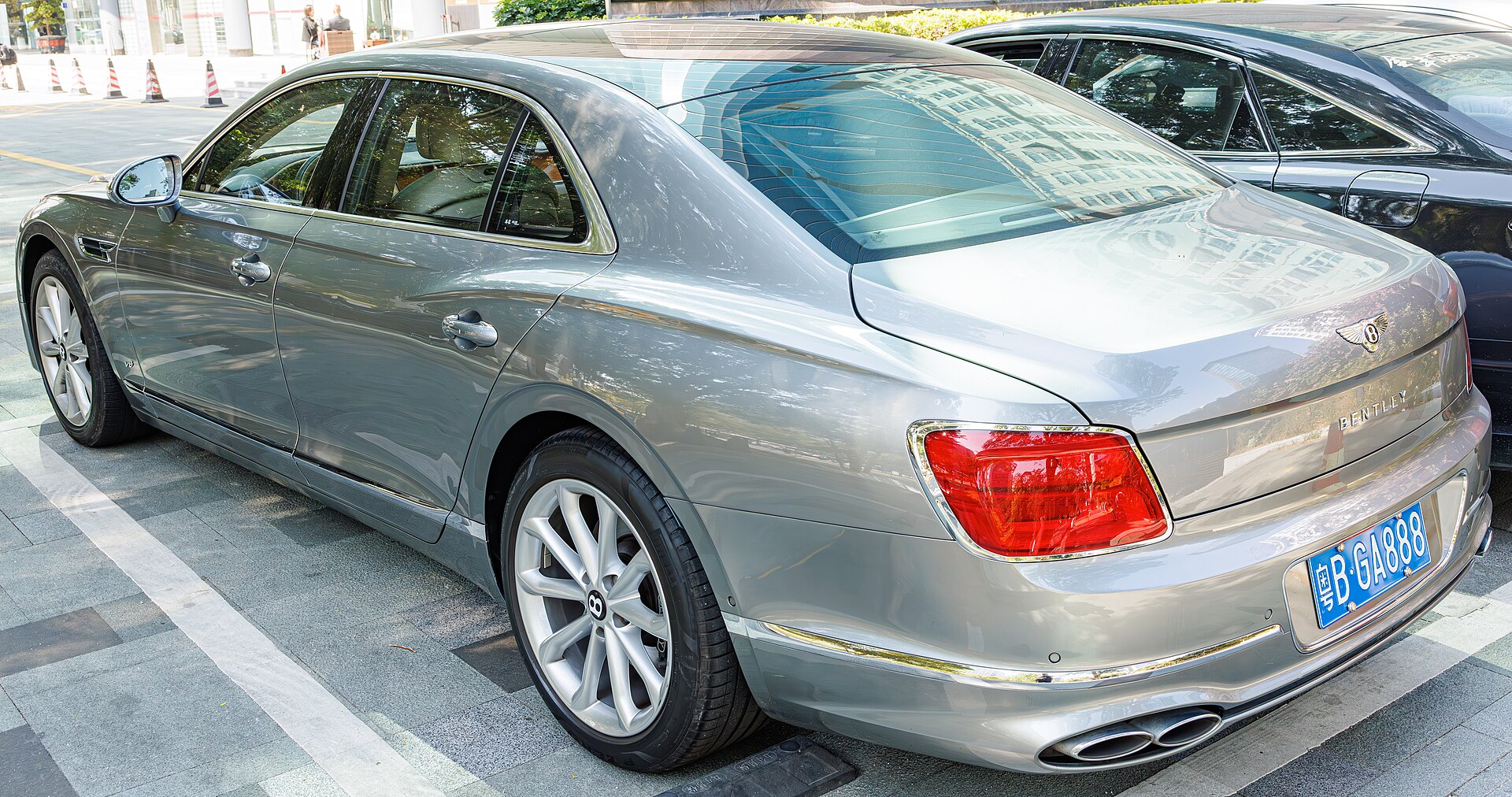
Have you priced a Flying Spur recently and found that the configurator no longer offers the engine you assumed you were buying? If so, you are not alone, and the confusion is reasonable rather than careless.
The fourth-generation Flying Spur launched in 2019 with a W12, added a V8 and a V6 plug-in hybrid over the following three years, and then Bentley retired the W12 entirely in 2024 as part of its Beyond100 electrification commitment. The car that replaced that lineup in the 2025 model year runs a 4.0-litre twin-turbo V8 paired to an electric motor, and it is now the volume seller rather than the curiosity.
That single fact reorganizes every other decision in this playbook. If you want a non-hybrid Flying Spur, you are shopping the used market, not the order book.
What The Flying Spur Actually Is In Bentley's Range
T
he Flying Spur is the four-door counterpart to the Continental GT, sharing the Volkswagen Group MSB platform with the Porsche Panamera and, in the previous generation, a good deal of its switchgear philosophy. It is not a Mulsanne successor and it is not a Rolls-Royce Ghost rival in the way the marketing sometimes implies.The distinction matters at purchase because it determines who you are competing with for the car. A Ghost buyer is buying chauffeur-grade isolation; a Flying Spur buyer is usually buying a car they intend to drive themselves, with rear-seat capability as insurance rather than as the point.
That self-driven posture is why the Flying Spur's option list skews toward chassis and drivetrain content rather than rear-compartment theatre. It also explains why the residual logic here diverges from what we documented in our analysis of when to buy a Rolls-Royce Cullinan.
How Bentley Allocation Works On A Flying Spur
Allocation on a Flying Spur is a materially softer constraint than allocation on a Porsche 911 GT product or a Ferrari special series. Bentley builds the car in Crewe against dealer forecasts, and a well-connected dealer can usually place a standard-specification order without a purchase history.
Where allocation does bite is on Mulliner-bodied and limited-run cars, and on any Speed variant in its launch year. Those slots are distributed by the dealer against its own client list, which is the same dynamic we described in the reality of supercar allocation — relationship first, deposit second.
The practical consequence is that you should not pay an allocation premium on a standard Flying Spur. If a dealer quotes an above-MSRP adjustment on a car that is not a Speed or a Mulliner, call two more dealers before you accept it.
Lead times lengthen considerably once you add paint-to-sample or bespoke veneer. A buyer who wants delivery inside a quarter is generally shopping dealer stock or a demonstrator, which narrows the spec conversation to whatever Crewe already built.
The V8-Versus-Hybrid Decision
This is the live question for anyone comparing a 2026 order against a used 2022–2024 car. The two drivetrains ask you to weigh different things, and neither answer is universally right.
The pure V8 — the 4.0-litre twin-turbo without electric assistance, offered through the 2024 model year — is the simpler ownership proposition. Fewer systems, no high-voltage battery, no charging behaviour to manage, and a service regime that any Bentley technician has performed hundreds of times.
The hybrid adds an electric motor and a battery pack that Bentley quotes at usable electric range in the region of 40 miles on the current car, subject to EPA confirmation for the US market. For an owner whose typical day is short-hop urban driving with occasional long runs, that is a genuine change in how the car behaves rather than a marketing line.
The honest caveat on the hybrid is that we do not yet have a long enough ownership record to price battery degradation into a ten-year residual. Bentley warrants the high-voltage battery separately from the vehicle warranty, and any buyer planning to keep the car past that term should read the coverage document rather than the brochure.
Our view for a 2026 order: take the hybrid if your driving pattern includes meaningful short-trip use and you have home charging, and buy a used pure-V8 car if you intend to hold past the battery warranty and you value drivetrain simplicity. Neither choice is a mistake; they are different bets.
| Consideration | Pure V8 (through MY2024) | V8 Plug-In Hybrid (MY2025+) | |---|---|---| | Availability | Used market only | Current order book | | Ownership complexity | Lower — conventional drivetrain | Higher — HV battery, charging, EV-certified service | | Short-trip behaviour | Cold-start cycles on every drive | Electric-only for most urban use | | Residual unknowns | Well-established curve | Battery health is an untested variable | | Service network | Any Bentley dealer | Bentley dealers with EV certification |
Keep in mind that the W12 sits outside this table on purpose. It is a discontinued engine, it carries the highest service cost of the three, and its long-term collector status is unresolved — an interesting speculation, not a value-preservation strategy.
What The Flying Spur Costs To Own
Bentley publishes US MSRP for the Flying Spur on its own configurator, and that figure should be your only anchor for a new-car conversation. Third-party aggregators frequently quote destination-inclusive or trim-blended numbers that do not match what a dealer will actually write.
Depreciation on a Flying Spur follows the pattern common to large luxury sedans rather than the flatter curve of a two-door Bentley. Check the specific model year and mileage band against KBB or Edmunds before you accept any dealer's trade or resale projection, and treat any percentage you read without a source attached as decorative.
The running costs are comparable to the two-door car in most line items, and our breakdown in the true cost of a Bentley Continental GT transfers directly on tyres, brakes, and scheduled service. The Flying Spur's extra mass does shorten tyre life relative to the coupe, particularly on the larger wheel options.
Insurance is the line item most buyers underestimate. Quote the exact VIN or at minimum the exact trim before you commit, because the spread between carriers on a car at this value is wide enough to change the monthly figure meaningfully.
Spec Choices That Hold Value
The resale market for a Flying Spur rewards restraint and punishes personality. This is the inverse of the coachbuilt end of the market, and it is the single most expensive thing a first-time buyer gets wrong.
Here are the specification decisions that consistently matter on resale:
- Conservative exterior paint. Beluga, Onyx, Glacier White, and the darker metallic greys and blues move fastest. A paint-to-sample colour costs real money at order and rarely returns it, unless it is a restrained shade that reads as factory.
- Restrained interior hide. Two-tone in conventional combinations holds better than a bright single-tone. A vivid interior narrows your buyer pool more sharply than a vivid exterior, because it cannot be changed without a full retrim.
- Rear-seat comfort content. On a four-door, rear-compartment options are the ones that justify the body style. A Flying Spur speced like a coupe with two extra doors is a harder sell than one with the rear package intact.
- Wheel size discipline. The largest wheel option looks correct in the configurator and costs you in ride quality, tyre budget, and kerbing risk. A mid-size wheel in a conventional finish is the safer resale choice.
- Naim or the upper audio tier. Audio is one of the few six-figure-adjacent options that buyers actively search for on a used listing, and its absence is noticed.
- Documented service history. Not a spec line, but it prices like one. A complete file is worth more at resale than most individual options — the argument we made at length in provenance and history files.
All of these come down to the same principle: on a car built in meaningful volume, the resale buyer wants the car Crewe would have built, with the boxes ticked that they would have ticked themselves. Specification is where you express taste; the order form is where you pay for it twice if you get it wrong.
Buying Used: What To Check
A pre-purchase inspection at a Bentley dealer or a marque specialist is not optional on a car of this value. Air suspension components, the 48-volt anti-roll system on so-equipped cars, and any water-ingress history in the rear compartment are the items worth naming specifically when you book it.
On a CPO car, read the actual warranty document rather than the dealer's summary of it. Coverage terms and what counts as a wear item vary more than buyers expect, a point we cover in certified pre-owned exotic warranties.
Check tyre date codes on any car with low annual mileage. A garage-kept Flying Spur with 6,000 miles and five-year-old tyres needs a full set before it is safe at speed, which is a four-figure cost the seller should be meeting.
Editorial Recommendation
For a 2026 order, we would specify a Flying Spur in a dark metallic over a conservative two-tone hide, with the mid-size wheel, the upper audio tier, and the rear-comfort package intact. Take the hybrid if you have home charging and a short-trip driving pattern; skip it if you plan to own past the high-voltage battery warranty term.
For a used purchase, the pure V8 cars from the 2021–2024 window represent the clearest value proposition available today — the first owner absorbed the steepest part of the curve, the drivetrain is conventional, and the service network is universal. Insist on a complete history file and a specialist PPI, and verify every value figure against KBB or Hagerty before you negotiate.
If you are still weighing the two-door against the four, our comparison of the DB12 and the Continental GT covers the grand-tourer side of that decision, and our guide to the best year for a used Continental GT applies the same generation-by-generation logic to the coupe.
Contact a Bentley dealer with a specification in hand rather than a budget, and be prepared to wait for the right car rather than accept the one on the floor.