Range Rover.
The full-size luxury SUV that defined the segment, now a standalone marque within JLR.
- Founded1970
- HeadquartersSolihull, England
- CountryUnited Kingdom
- TierLuxury
What is Range Rover today?
Range Rover is a standalone luxury marque within JLR, the group formerly called Jaguar Land Rover. Since the 2023 House of Brands restructure it sits alongside Defender, Discovery, and Jaguar as one of four separate brands. The range spans the full-size Range Rover, Range Rover Sport, Velar, and Evoque, with an electric model arriving.
How does JLR's House of Brands change Range Rover?
In 2023, JLR restructured into four distinct brands — Range Rover, Defender, Discovery, and Jaguar — with "Land Rover" retained only as a heritage trust mark rather than a consumer brand. For buyers, the practical effect is positioning: Range Rover is now run as JLR's dedicated luxury marque, and its products are developed and marketed on that footing.
What does Range Rover ownership cost?
Range Rover ownership runs above the luxury-SUV norm on every line. Depreciation is steep — the full-size car loses roughly fifty-eight percent of its value over five years. Scheduled service, tires, and out-of-warranty repair all run high, and the marque's mixed reliability record makes warranty coverage and a pre-purchase inspection more important than on most rivals.
Where do you buy a Range Rover in the US?
Range Rover sells through the US Land Rover Retailer network — the franchised dealers that also carry Defender and Discovery. New and certified pre-owned inventory flows through that network, and SV and SV Bespoke commissions are ordered through it as well. For pre-owned cars outside the CPO program, independent specialists and the auction market carry deeper selection. Range Rover's own dealer locator is the current authorized list.
Should you buy a new or used Range Rover?
For most buyers, used. The full-size Range Rover's steep early depreciation means a two-to-three-year-old example has absorbed the worst of the curve, and a Land Rover Approved certified pre-owned car extends the factory warranty — coverage that matters on a marque with this repair-cost profile. New ordering makes the most sense for SV buyers specifying a bespoke commission.
History
The Range Rover began in 1970 as a single model — a Land Rover that paired genuine off-road capability with a level of on-road comfort and finish the four-wheel-drive segment had not seen. The original, known retrospectively as the Range Rover Classic, ran in production for twenty-six years. It established the template the marque has refined ever since: a tall, commanding, properly capable vehicle that a buyer could also use as a luxury car.
Four further generations followed — the P38A in 1994, the L322 in 2002, the L405 in 2013, and the current L460 launched in 2022. Each moved the full-size Range Rover further upmarket. By the L405 and L460 eras the car had become a genuine ultra-luxury alternative, cross-shopped against Bentley and Mercedes-Maybach SUVs as readily as against other group products. The L460 added the SV trim and a long-wheelbase body, and brought a BMW-sourced 4.4-litre twin-turbo V8 to the range alongside mild-hybrid six-cylinder and plug-in hybrid powertrains.
For most of that history, Range Rover was a model — or a family of models — under the Land Rover brand, itself part of Jaguar Land Rover. That changed in 2023. JLR, having shortened its name from Jaguar Land Rover, restructured into a House of Brands: four distinct marques — Range Rover, Defender, Discovery, and Jaguar — each with its own identity and positioning. "Land Rover" was retained not as a consumer brand but as a heritage trust mark beneath the three former-Land-Rover marques.
The restructure formalized what the market already understood: Range Rover is the luxury brand of the group, Defender the adventure brand, Discovery the family brand, and Jaguar the brand undergoing a full electric reinvention. Range Rover's own electric future is part of that plan — an all-electric Range Rover joins the range as JLR moves its brands toward an electric-first lineup by 2030.
Anchored on the Range Rover Autobiography.
Source: Industry composite estimate (CarEdge / KBB / Edmunds), 2026. The full-size Range Rover depreciates faster than the luxury-SUV segment average — roughly 58% over five years — and materially faster than the Mercedes G-Class; verify against current dealer offers.
Positioning
Range Rover occupies the luxury tier of the SUV market — above the mainstream-premium German SUVs, below the ultra-luxury Bentley Bentayga and Rolls-Royce Cullinan, and distinct from the more rugged Defender and the family-focused Discovery within JLR's own house. The full-size Range Rover is the brand's anchor and its clearest statement: a car bought for presence, comfort, and a particular kind of understated authority rather than for outright performance.
The SV trim, and the SV Bespoke commissioning programme behind it, push the full-size car into genuine ultra-luxury territory on price and materials — the point at which a Range Rover is cross-shopped against a Bentayga rather than a loaded German SUV. The rest of the lineup steps down in size and price: the Range Rover Sport as the driver's interpretation, the Velar as the design-led mid-size choice, the Evoque as the compact entry. The common thread is that each is sold as a Range Rover first.
Current lineup
Range Rover
The full-size flagship — the brand's anchor and the segment's long-running reference.
The fifth-generation (L460) full-size Range Rover is offered in SE, HSE, Autobiography, and SV trims, in standard and long wheelbases. Powertrains span a mild-hybrid inline-six, the BMW-sourced P530 V8, and the P550e plug-in hybrid; the SV uses the V8 in its P615 state of tune. It is the most expensive and the most depreciation-exposed model in the range, and the car the brand is ultimately judged on.
Range Rover Sport
The driver's Range Rover — lower, faster, more focused.
The Range Rover Sport is the dynamic interpretation of the full-size car: a lower, more athletic body on a closely related platform, tuned for on-road pace over rear-seat occasion. It carries its own SV trim as a high-performance flagship and shares much of the full-size car's powertrain range. It cross-shops against the Porsche Cayenne and the larger performance BMWs more directly than the full-size Range Rover does.
Range Rover Velar
The design-led mid-size Range Rover.
The Velar is the mid-size Range Rover, positioned as the most design-forward car in the range — cleaner of line, more car-like, pitched at a buyer who wants the Range Rover identity in a smaller and less imposing package. It sits below the Range Rover Sport in size and price.
Range Rover Evoque
The compact Range Rover — the entry point to the marque.
The Evoque is the compact Range Rover and the most accessible way into the brand. It established the compact-luxury-SUV template when it launched, and remains the entry model — smaller, lighter, and priced well below the full-size car, but sold on the same Range Rover identity.
Range Rover Electric
The marque's first all-electric model.
Range Rover Electric is the battery-electric version of the full-size car — the marque's first all-electric model and part of JLR's plan for an electric-first lineup by 2030. It joins the range as a parallel powertrain choice rather than a replacement, with the combustion and plug-in-hybrid full-size cars continuing alongside it.
Range Rover press gallery
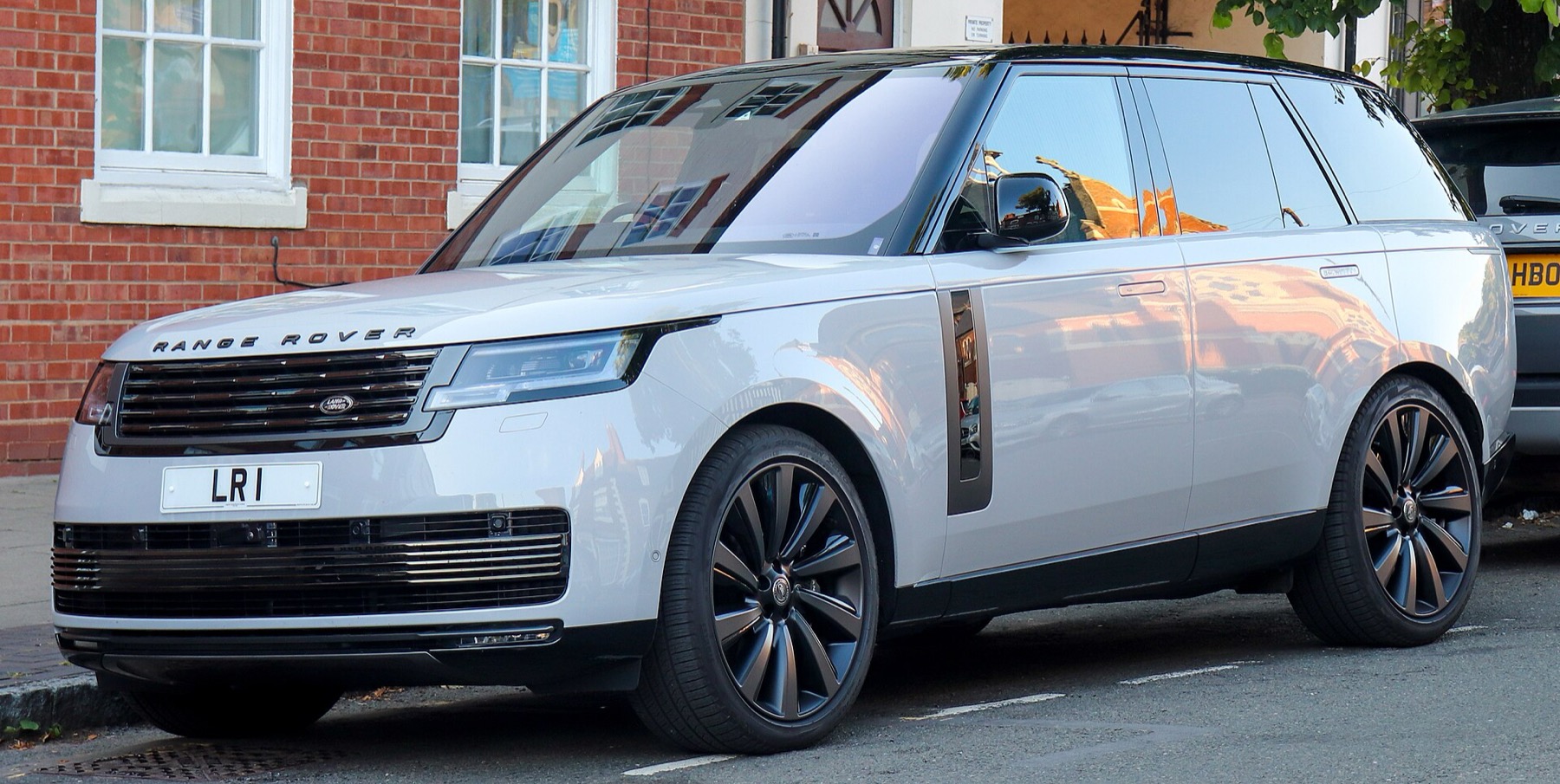
Range Rover SV — the fifth-generation (L460) full-size flagship in its top trim.Photo: Vauxford, CC BY-SA 4.0 · Source · CC BY-SA 4.0 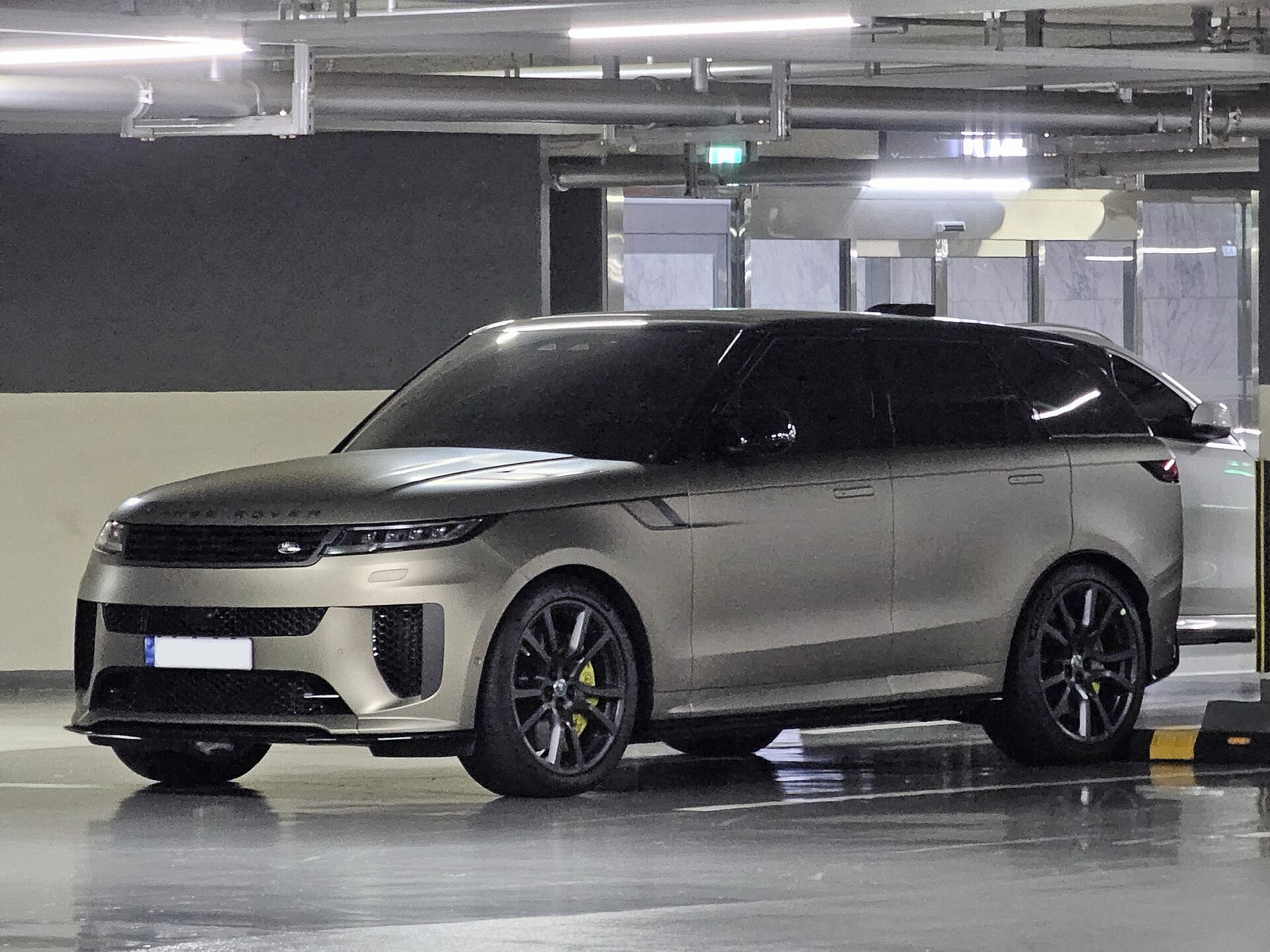
Range Rover Sport SV Edition One (L461) — the high-performance flagship of the Sport line.Photo: Damian B Oh, CC BY 4.0 · Source · CC BY 4.0
Ownership reality
Range Rover ownership costs more than the luxury-SUV average, and depreciation is the largest single reason. The full-size car loses roughly fifty-eight percent of its value over five years — a steeper curve than the segment norm and materially steeper than the Mercedes G-Class, which is the segment's value-retention outlier. The depreciation tool on this site models the year-by-year residual; the short version is that the first three years carry the worst of it.
Reliability is the marque's long-standing reputational weakness. Range Rover and the broader former-Land-Rover range have consistently placed near the bottom of large-sample dependability studies, and the second-owner market prices that risk in — it is part of why the depreciation curve sits where it does. The picture is not uniform: a well-maintained car with complete service history and unbroken warranty coverage is a very different proposition from a neglected one. But the buyer who treats reliability as a real cost and budgets for it is the buyer who is not surprised.
Scheduled service, tires, and consumables all run high, in line with the car's size, weight, and complexity. Out-of-warranty repair is the cost line that separates a good ownership experience from a painful one — air suspension, electronics, and the more involved powertrain work can be expensive, and they are the items a pre-purchase inspection exists to surface. Insurance sits in the luxury-SUV bracket and varies sharply by metro and driver profile.
The practical conclusion most Range Rover owners reach is to stay inside warranty coverage. A car bought new and sold at or before the warranty expiry, or a certified pre-owned car with the warranty extended, keeps the most expensive risk capped. A pre-owned car bought outside any warranty should be priced — and inspected — with the out-of-warranty repair exposure firmly in mind.
Dealer landscape
Range Rover is sold in the US through the franchised Land Rover Retailer network — the same dealers that carry Defender and Discovery. It is a broad network by luxury-marque standards, with retailers in every major metro and most secondary markets, which makes both new purchase and warranty service straightforwardly accessible. New full-size Range Rovers, certified pre-owned inventory, and SV commissions all flow through that network.
For pre-owned buyers shopping outside the certified program, the picture widens. The full-size Range Rover's steep depreciation puts a large volume of three-to-five-year-old cars into the general used market, and independent JLR specialists — shops that focus on the marque and know its weak points — are a meaningful resource both for buying and for out-of-warranty service. For a car with the Range Rover's repair profile, a relationship with a competent independent specialist is close to a requirement of sane ownership.
Buying advice
For new-vehicle buyers, the full-size Range Rover is generally orderable without the allocation friction that defines a Ferrari or a G-Wagon — the exception is the SV, and specifically SV Bespoke commissions, where build slots and lead times are more constrained. A buyer set on a particular SV specification should start the conversation with a retailer early. For the SE, HSE, and Autobiography trims, ordering to specification is routine.
For certified pre-owned buyers, the Land Rover Approved program is the most defensible channel. It extends the factory warranty and applies a manufacturer inspection standard — and on a marque with the Range Rover's reliability record, that warranty extension is worth more than the equivalent coverage would be on a more dependable car. A year-three Approved full-size Range Rover — after the steepest depreciation has absorbed, with coverage extended — is the editorial sweet spot for most buyers.
For pre-owned buyers shopping outside the certified program, the full-size Range Rover at four to five years old offers the strongest headline value in the lineup: the depreciation curve has flattened, and the cars are abundant. The discipline this requires is non-negotiable — a thorough pre-purchase inspection, complete service history, and a clear-eyed budget for out-of-warranty repair. A cheap Range Rover with no history is rarely cheap for long.
Across every channel, specification discipline matters on resale. A coherently specified car — restrained paint and interior, the long wheelbase where the buyer pool is deepest, the powertrain that suits the use — holds better than a maximally optioned car with conflicting choices. The Range Rover rewards the buyer who treats it as a considered purchase, times the entry to the depreciation curve, and stays inside warranty coverage; it is unforgiving of the buyer who does none of those things.
Pricing, depreciation figures, and specifications reflect the 2026 model year and are sourced to manufacturer data, Edmunds, and industry residual-value estimates (CarEdge / KBB). Treat all figures as buyer-facing estimates, not quotes.
Frequently asked questions
Is Range Rover the same as Land Rover?
Not in brand terms, not since 2023. JLR's House of Brands restructure made Range Rover a standalone marque alongside Defender, Discovery, and Jaguar. "Land Rover" was retained as a heritage trust mark beneath the three former-Land-Rover brands rather than as a consumer brand. Range Rover models are engineered and built by JLR, the company formerly named Jaguar Land Rover.
Who owns Range Rover?
Range Rover is a brand of JLR — formerly Jaguar Land Rover — which is a wholly-owned subsidiary of Tata Motors, the Indian automotive group. Tata acquired Jaguar Land Rover from Ford in 2008. The Range Rover marque is run within JLR's House of Brands structure as the group's dedicated luxury brand.
Do Range Rovers hold their value?
No. The full-size Range Rover depreciates faster than the luxury-SUV segment average, losing roughly fifty-eight percent of its value over five years, with the steepest decline in the first three. This is the central fact of Range Rover ownership economics, and it is why the editorial advice on this site is to buy a two-to-three-year-old car rather than a new one.
Are Range Rovers reliable?
Reliability is Range Rover's long-standing reputational weakness — the marque has consistently ranked near the bottom of large-sample dependability studies. Individual cars vary widely with maintenance and history, and a car kept inside warranty with a complete service record is a very different proposition from a neglected one. Budgeting for out-of-warranty repair, and inspecting thoroughly before buying, is essential.
What is the difference between the Range Rover Autobiography and SV?
Autobiography is the upper trim of the volume full-size Range Rover range; SV is the flagship above it, with the V8 in its highest state of tune, SV-specific chassis and interior work, and access to the SV Bespoke commissioning programme. The SV opens around two hundred twenty thousand dollars against roughly one hundred sixty thousand for the Autobiography. Both depreciate on the same curve.
Where are Range Rovers built?
The full-size Range Rover and Range Rover Sport are built at JLR's plant in Solihull, England. Range Rover is a British marque; the broader JLR group is a subsidiary of India's Tata Motors, with manufacturing and engineering concentrated in the United Kingdom.
Should you buy a Range Rover new or used?
For most buyers, used. The full-size Range Rover's steep early depreciation means a two-to-three-year-old certified pre-owned car — past the worst of the curve, with the factory warranty extended — is the strongest value. Buying new makes the most sense for SV buyers specifying a bespoke commission, where ordering to specification is the point of the exercise.
Figures on this page carry their source. Positioning, allocation practice, and where this marque sits against its rivals are editorial judgment by The Marque Editors — informed by that data, but readings of it rather than measurements. How both are produced: methodology.