The Best Year to Buy a Used Bentley Continental GT: Second-Generation W12s, the 2018 Reset, and Where the V8 Sits
F
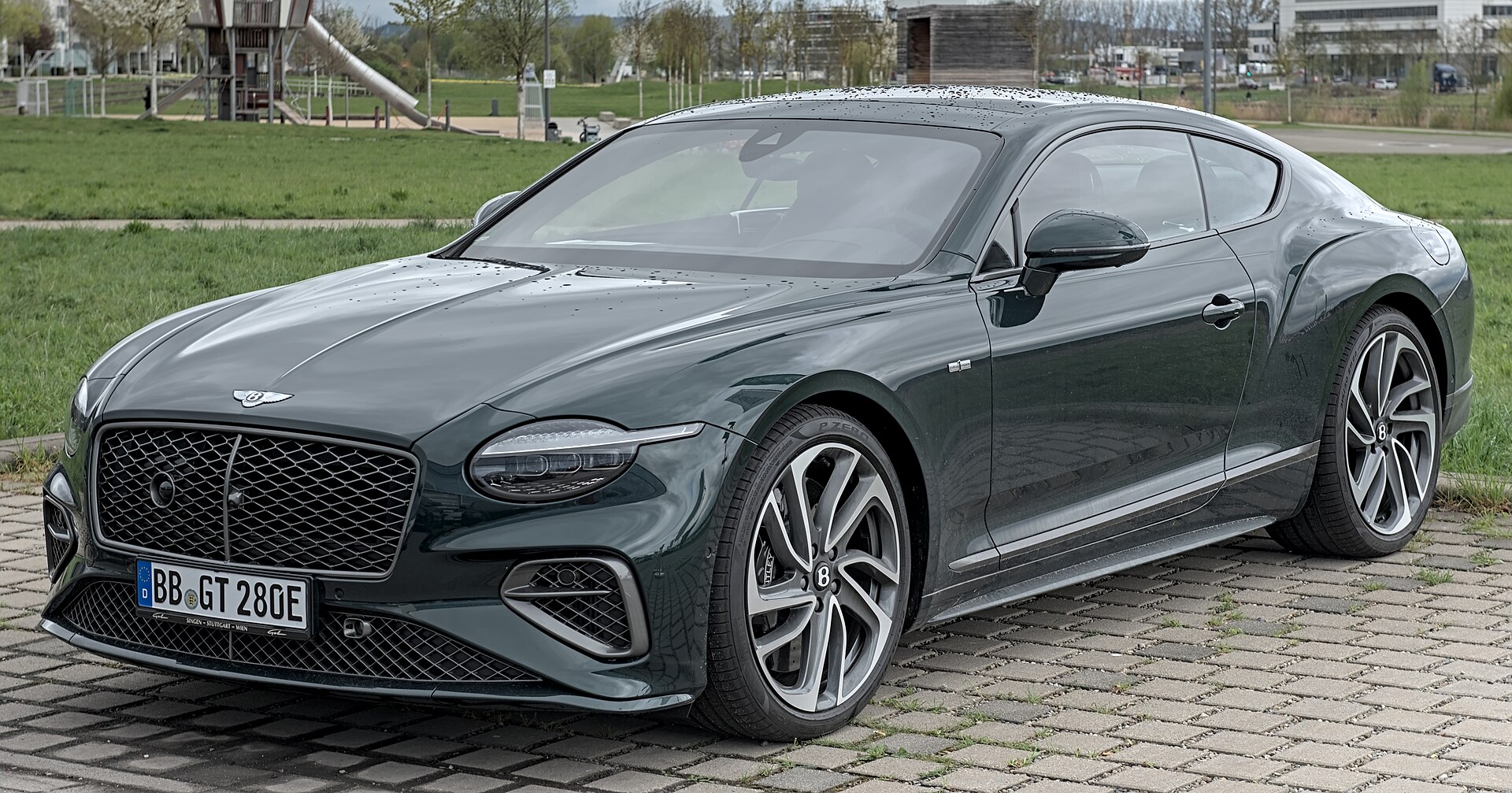
ew grand tourers have carried a depreciation curve as steep, or as well-documented, as the Bentley Continental GT. The car that effectively created the modern luxury-GT segment in 2003 now trades, in its second generation, at a fraction of what it cost new — and the gap between a good buy and an expensive lesson comes down almost entirely to model year, engine, and service history.This is a used-market analysis, not a road test. What follows walks the second generation (2011–2018) and third generation (2018 onward) by model year, sets W12 running costs against the V8, and names where we think the money sits.
Why the Continental GT Depreciates the Way It Does
The Continental GT's residual behavior is a function of two things: high original MSRP and high running costs relative to the cars it gets cross-shopped against on the used market. A used Continental GT at $70,000 is not competing with other $70,000 cars on ownership cost — it is competing with them on purchase price alone, and the buyer pool that understands the difference is small.
iSeeCars' depreciation tracking has repeatedly placed the Continental GT among the fastest-depreciating vehicles in the US market, with five-year figures reported in the 45–55% range depending on the study year and body style. Hagerty's valuation tools show second-generation W12 coupes in driver-condition trading well below their original window stickers, though ranges vary by spec and mileage — verify a specific car against current Hagerty and dealer comps before you transact.
The practical consequence is that the first and second owners absorb most of the loss. By the time a second-generation car reaches its eighth or tenth year, the curve flattens and price is driven less by age than by condition tier, service history, and options.
The Second Generation, 2011–2018
The second-generation car arrived for the 2012 model year in the US, built on the evolved version of the platform shared with Volkswagen Group's large-car architecture. It is visually close enough to the original that many buyers conflate the two — a useful thing, because the 2012-onward car is materially better resolved inside and out.
The W12 Years, 2012–2015
The launch car ran Bentley's 6.0-liter twin-turbocharged W12. Bentley quoted 567 horsepower for the standard GT and 616 for the GT Speed, which arrived for 2013 — the engine's appeal is its torque delivery and its refinement at cruise rather than its outright numbers.
These are the cheapest Continental GTs on the market, and that is exactly the problem. A twelve-cylinder engine with four turbochargers' worth of ancillaries packed into a very tight engine bay makes routine service expensive and makes deferred service catastrophic.
What's more, the 2012–2015 infotainment system is the weakest part of the car today. It predates the facelift's updated head unit, and buyers coming from a modern vehicle notice immediately.
The 2012 V8 Arrival
Bentley introduced the 4.0-liter twin-turbo V8 for the 2012 model year in Europe and the 2013 model year in most US markets, quoted at 500 horsepower, with a V8 S following at 521. This engine — shared in architecture with the Audi and Porsche applications of the same family — changed the ownership math more than any other single change in the car's history.
The V8 is materially cheaper to service, more common in independent-specialist experience, and carries fewer of the W12's known heat-soak and ancillary-access headaches. Keep in mind that the trade-off is real: the W12 is smoother at low load, and a certain kind of Bentley buyer will not accept eight cylinders in a Continental.
The 2016 Update
For 2016 Bentley gave the second generation a facelift: revised front and rear treatments, a wider grille, updated wheel designs, and — most consequentially for a used buyer — an updated infotainment system and cabin trim detailing. The powertrain lineup carried over.
This is the hinge point in the second-generation market. A 2016–2018 car looks contemporary, uses an interface a modern buyer can live with, and still sits deep in the depreciation curve — which is why we keep coming back to it.
The Third Generation, 2018 Onward
The third-generation Continental GT moved to the Volkswagen Group MSB platform shared with the Porsche Panamera, which relocated the front axle forward and fundamentally changed how the car carries its mass. It launched in the US as a 2019 model year W12, with Bentley quoting 626 horsepower and an MSRP starting around $214,600 before options — verify against Bentley's published pricing for the specific year you're shopping.
The cabin is the bigger story. The rotating display, the diamond-knurled controls, and the three-dimensional leather quilting moved the Continental from "expensive Volkswagen Group interior" to something genuinely bespoke, and that perception gap is now priced into the used market.
The 2020 V8
Bentley added the 4.0-liter twin-turbo V8 to the third-generation car for the 2020 model year, quoted at 542 horsepower. It weighs less over the front axle than the W12 and, for our money, is the better-balanced car to drive — the same argument that applied to the second generation, applied again.
The 2024 Speed and the Hybrid Change
The fourth-generation car, announced in 2024, replaced the W12 entirely with an Ultra Performance Hybrid powertrain pairing the 4.0-liter V8 with an electric motor. That decision has a used-market consequence worth watching: the final W12 cars become the last of a discontinued engine line, and Bentley's own limited-run treatment of the W12's retirement has given collectors a reason to pay attention.
We would not buy a late W12 on that thesis alone. Collector premiums on recently-discontinued engines are unpredictable, and a $200,000 car held for appreciation is a poor instrument for it.
Where the Sweet Spot Sits
Our recommendation is a 2016–2018 second-generation V8 or V8 S. You get the facelift interior and infotainment, the eight-cylinder service profile, and a purchase price that has already absorbed most of the curve.
If the third generation is non-negotiable, wait for a 2021 or 2022 V8 rather than reaching for a first-year 2019 W12 at similar money. The later V8 cars carry fewer first-model-year resolution items and cost less to keep.
The Mulliner Question
Mulliner Driving Specification — the quilted hide, the knurled detailing, the specific wheel treatments — commands a premium new and retains a portion of it used, but not proportionally. A Mulliner car will typically ask more than an equivalent standard car, and the delta is usually smaller than what the original buyer paid for it.
That asymmetry works in your favor. Buying someone else's expensive options list is one of the few reliable ways to get value out of a depreciating luxury GT.
Table: Generation and Engine at a Glance
| Generation | Years | Engines | Used-market note | |---|---|---|---| | Second gen, pre-facelift | 2012–2015 | 6.0 W12 (567 hp), 4.0 V8 from 2013 US | Cheapest entry; dated infotainment; W12 service risk | | Second gen, facelift | 2016–2018 | W12, W12 Speed, V8, V8 S | Our pick — updated cabin, curve largely absorbed | | Third gen | 2019–2023 | 6.0 W12 (626 hp), 4.0 V8 from 2020 | MSB platform; V8 better balanced; W12 costlier to keep | | Fourth gen | 2024 on | V8 Ultra Performance Hybrid | W12 discontinued; watch late-W12 collector behavior |
Horsepower figures are Bentley's published quotes for the relevant model years. Pricing is not included here because asking prices move too quickly to publish responsibly — pull current comps from dealer listings and Bentley Approved Pre-Owned inventory before you negotiate.
The Inspection That Actually Matters
A pre-purchase inspection on a Continental GT is not optional, and it is not a generic PPI. Have a Bentley-experienced specialist check air suspension condition, coolant system integrity, turbocharger oil-feed lines, and — on W12 cars — the condition of ancillaries that require substantial labor to reach.
Ask for the service file rather than a summary. Books, tools, and a documented history from a franchised dealer or a known independent are worth more in negotiation than any cosmetic condition item.
Related Reading
For the broader Bentley lineup and how the Continental sits against its stablemates, see our coverage of the Bentley market in New York and our comparison of the DB12 against the Continental GT. The same sweet-spot methodology applied to a different marque appears in our best year to buy a used 911 Turbo S analysis.
Buyers weighing a Bentley SUV instead should read our Bentayga, Cullinan, Urus and Purosangue comparison, and anyone shopping a warranty-backed car should start with our guide to CPO exotic warranty coverage.
The Continental GT rewards the patient buyer more than almost anything else in the grand-touring segment. Buy the history, not the color — and let the first owner keep the depreciation.