Bentayga vs Cullinan vs Urus vs Purosangue: The Ultra-Luxury SUV Field in 2026
F
or the first time, the ultra-luxury SUV field can be compared as a complete set. The Purosangue's first full allocation year closes a category that Bentley opened in 2016 and that Rolls-Royce, Lamborghini, and now Ferrari each interpret in deliberately different ways.This is not a ranking. Each of these cars is built for a buyer the others are not chasing, and treating them as substitutes misreads the segment.
What buyers are actually cross-shopping in 2026
The four cars rarely sit in the same garage by accident. They tend to arrive after a Continental GT, a Ghost, a Huracán, or a 296 GTB — and the SUV is the second or third car in the marque, not the first.
That matters for how the comparison should be read. The relevant question is not which is best, but which marque's logic do you already live inside.
Starting MSRPs and where transaction prices actually land
Manufacturer-published starting MSRPs anchor the segment, but no one in this category transacts at base. Options, bespoke programs, and dealer allocation realities push delivered prices well above sticker — often by six figures.
Use the figures below as floors, not as expected out-the-door numbers. Verify current MSRPs against each manufacturer's configurator before any transaction.
| Model | Approx. starting MSRP (US, 2026) | Powertrain | Source | |---|---|---|---| | Bentley Bentayga | ~$245,000 | 4.0L twin-turbo V8 | Bentley US | | Lamborghini Urus SE | ~$260,000 | 4.0L twin-turbo V8 PHEV | Lamborghini US | | Rolls-Royce Cullinan Series II | ~$400,000 | 6.75L twin-turbo V12 | Rolls-Royce Motor Cars | | Ferrari Purosangue | ~$400,000 | 6.5L naturally-aspirated V12 | Ferrari N.A. |
Figures are starting MSRPs published by the respective manufacturers for the 2026 model year and exclude destination, gas-guzzler tax, and any market adjustment. Treat them as directional.
How each marque positions its SUV
This is where the comparison becomes useful, because the four cars are answering four different questions.
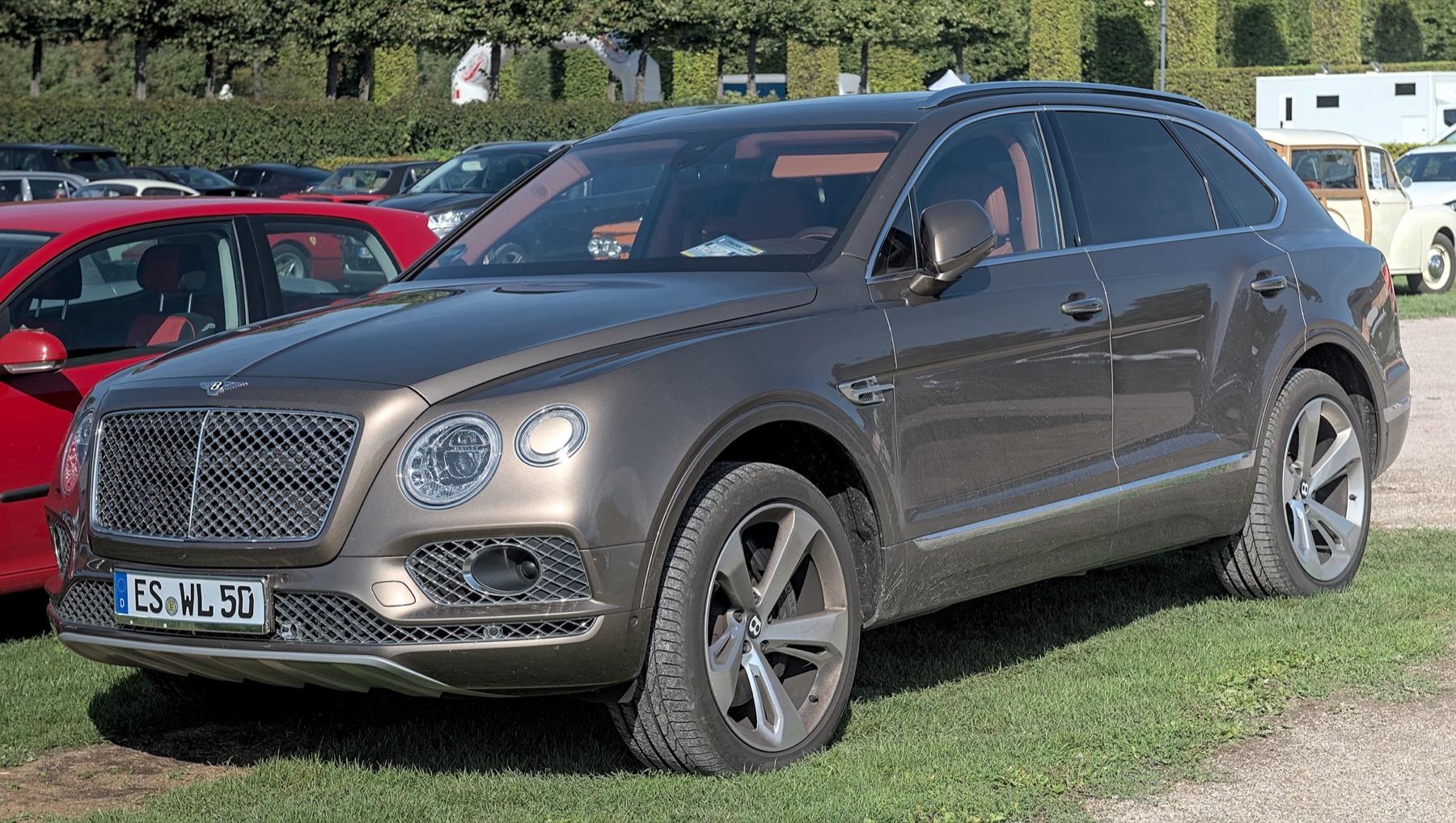
Bentley Bentayga — the grand-tourer in SUV form
The Bentayga is the volume entry of the four and the one most often used as a daily. Bentley's ownership under the Volkswagen Group gives it a parts and service network the others cannot match.
It is the car you buy when you want a Continental GT that seats the family. The true cost of a Bentley Continental GT in 2026 translates almost directly to Bentayga ownership economics, with a modest premium for tires and brakes.
Rolls-Royce Cullinan — the chauffeur-grade SUV
The Cullinan is the only car in this set that is genuinely as good from the back seat as the front. Series II and Black Badge variants are the volume of current production, and Bespoke commissioning is the norm rather than the exception.
It is the largest of the four, the heaviest, and the one with the deepest customization program. Buyers cross-shopping a Cullinan against a Purosangue are usually not the same buyer twice.
Lamborghini Urus SE — the performance-first interpretation
The Urus has been the volume leader of the segment since launch and now sits exclusively as the SE plug-in hybrid for the 2026 model year. It is the most aggressive of the four in styling and the most willing to be driven hard.
Residual logic on the Urus has held better than early skeptics predicted, in part because the model has a clear performance identity that the Bentayga and Cullinan deliberately do not chase.
Ferrari Purosangue — the four-door Ferrari, not an SUV
Ferrari has been explicit that the Purosangue is not an SUV. It is a four-door, four-seat, naturally-aspirated V12 GT with elevated ride height, and the marque's positioning of the car follows from that distinction.
The car shares allocation discipline with the rest of the Ferrari range. Like the Porsche 911 allocation reality, Purosangue allocation is relationship-gated, and order books are not an open queue.
Allocation and order-book reality
This is the dimension that a build-and-price configurator hides. Three of these four cars are not orderable in the conventional sense.
The Bentayga is the only one of the four with what could fairly be called open availability through a Bentley dealer in 2026. The Urus SE is constrained but obtainable for buyers with a Lamborghini relationship.
The Purosangue is not a car you order. It is a car you are offered.
Residuals — what depreciation actually looks like
Residual data on the Purosangue is still thin because the car is too new to have a meaningful three-year auction record. The other three have enough trade and auction history to draw conclusions, though the band is wide.
Hagerty and KBB residual modeling for the segment generally puts three-year retention in the 50–70% range for clean, well-specified examples, with the Cullinan and Urus historically outperforming the Bentayga on percentage retained. Verify current data against authoritative sources before any purchase decision — these are estimated bands, not point figures.
The pattern in this segment mirrors what we documented in the used Ferrari depreciation sweet spot analysis: the steepest curve is years one through three, and the floor for desirable specifications arrives earlier than buyers expect.
Ownership economics — beyond the sticker
The segment-wide ownership cost is dominated by three line items: tires, brakes, and scheduled service. None of these are surprises, but the magnitudes differ.
The Urus SE and Purosangue carry the highest consumables cost of the four because of tire sizing and pad wear under enthusiastic use. The Cullinan is the most expensive to insure in most US states, by a meaningful margin. The Bentayga is the cheapest to run on a per-mile basis because of the dealer network and parts commonality with VW Group platforms.
Figures are estimated bands drawn from Hagerty Valuation Tools and Edmunds True Cost to Own modeling for the segment. Verify against quotes specific to your zip code and driving profile.
Editorial recommendation
The four cars are not substitutes, so a single recommendation is dishonest. The honest framing is which buyer each is for.
- Buy the Bentayga if the SUV is going to be daily-driven, the dealer network matters, and you are translating a Continental GT lifestyle into a family car.
- Buy the Cullinan if the back seat matters as much as the front, and Bespoke commissioning is part of why you are buying the marque at all. Series II or Black Badge, well-specified.
- Buy the Urus SE if you want one of the four to actually drive, you have a Lamborghini relationship, and you are comfortable with a performance-first interpretation of the segment.
- Buy the Purosangue if you are already a Ferrari client, the allocation is offered to you, and you accept that this is a four-door V12 GT rather than an SUV.
If none of those buyer profiles match, the right answer in this segment may not be in this segment at all. A used 911 Turbo S — see our analysis of the best year for a used 911 Turbo S — covers more practical ground for less money than any of the four, with a residual curve that has historically been kinder.
For a deeper single-comparison treatment of three of these four cars, the companion piece on the Bentayga, Cullinan, Urus, and Purosangue goes further into specification-level detail.
What we are watching in 2026
Three variables will shape this segment over the next twelve months. First, the Purosangue's first full year of secondary-market data will tell us whether Ferrari's allocation discipline holds residuals at the level the order-book pressure suggests.
Second, the Cullinan Series II refresh cycle is now mid-life, and Bespoke commissioning volume is the leading indicator of where the next price floor sits. Third, the Urus SE's plug-in hybrid powertrain is the first meaningful electrification in the segment, and the residual market has not yet decided how to price it.
None of these are predictions. They are the data points worth checking before transacting at the top of this market.