When to buy a used Ferrari: the depreciation sweet spot, by model
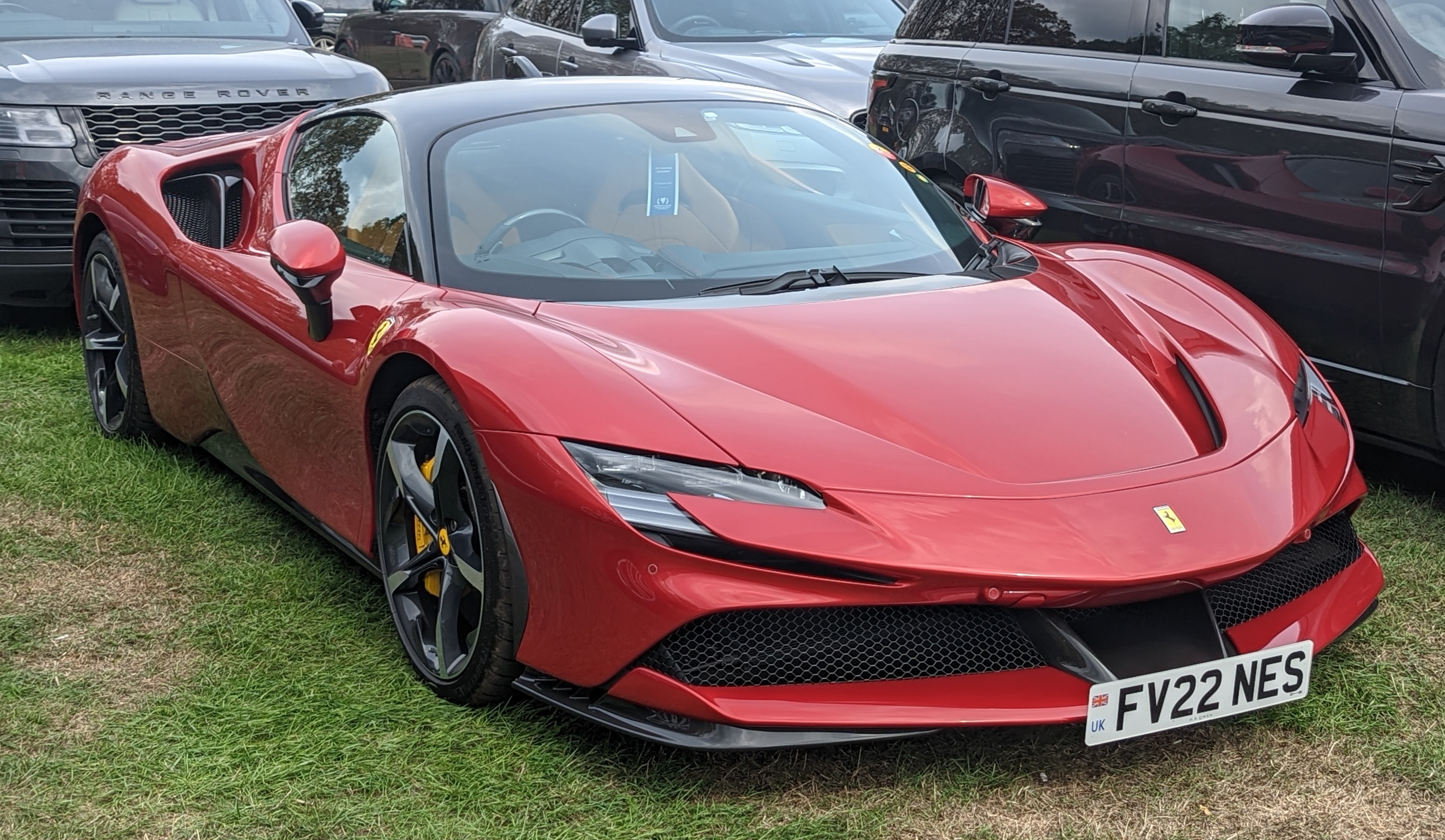
Ferrari depreciation is one of the more knowable patterns in the modern luxury-car market. The cars track a predictable curve through the first six years of ownership, with specification, color, and variant being the dominant variables on residual outcomes. For pre-owned buyers entering the marque, the question is rarely "should I buy a Ferrari" — it is "which Ferrari, at which point in its depreciation curve, is the right entry point for the use case I have in mind."
This piece walks through the sweet-spot analysis on the volume Ferrari lineage — the V8 berlinetta line and the V12 grand-tourer line — and addresses the Special Series and limited-allocation cars on a separate logic. It does not address the modern lineup at MSRP (Roma, 296, 12Cilindri, SF90, Purosangue) or the Special Series and Icona cars, which operate on the manufacturer's allocation discipline rather than the secondary market.
The general pattern: when the curve flattens
Across the volume Ferrari lineage of the past two decades, the depreciation curve follows a consistent shape. Year one carries the typical luxury-vehicle off-the-lot decline — generally 15-25% on a standard-specification car. Years two and three compound the decline; by the end of year three, most volume Ferrari specifications have shed 30-40% of original MSRP. Years four through six see a flattening period — depreciation continues but at a meaningfully shallower rate, typically 5-10% per year. By the end of year six, most volume Ferrari specifications sit in the 45-55% of original MSRP range.
After year six, the curve's behavior diverges sharply by model. Standard-specification cars in popular configurations begin a slow climb on the right examples — well-specified, low-mileage, documented service history, popular paint and trim. Limited variants and Special Series cars accelerate the climb materially. Cars in unpopular specifications, with mileage profiles or service-history concerns, continue to decline through year seven and eight before stabilizing at the lower bound of their condition-and-specification cohort.
The "sweet spot" — the year-and-condition combination that produces the most-favorable per-year ownership economics — is typically year four through year six on the volume cars and year seven through year ten on the firmer specifications. This is not a universal rule; specific models track this pattern differently and the decision is per-car rather than per-model.
V8 berlinetta line: the volume sweet spot
The V8 berlinetta line — 360 Modena, F430, 458 Italia, 488 GTB, F8 Tributo, and now the 296 GTB at the front of the modern lineup — is where the depreciation curve produces the broadest pre-owned-buyer opportunity. These cars are built in higher volumes than the V12 cars, the secondary market is deeper, and the per-model price band sits at a more-accessible point than the V12 grand-tourer line.
The 488 GTB and F8 Tributo at four-to-six years old are the volume sweet spot of the modern V8 line. Both cars are mechanically mature, the 3.9-liter twin-turbo V8 is well-understood by the specialist service community, and the design has aged into a recognizable Ferrari profile rather than a current-model proposition. Cars in popular colors (Rosso Corsa, Nero Daytona, Grigio Silverstone, Blu Tour de France) with restrained interior trim and standard wheel choice typically sit at 50-65% of original MSRP at the four-to-six-year mark.
The 458 Italia is a separate conversation. The naturally-aspirated 4.5-liter V8 — the last naturally-aspirated mid-engine V8 Ferrari — has firmed materially over the past three to five years as the secondary market has recognized its position as a generational hinge between the analog Ferrari era and the turbocharged modern era. Standard 458 Italia coupes have stabilized at the lower bound of their depreciation curve and have started a slow climb on well-specified examples; the 458 Spider tracks a similar pattern. Specification matters more on the 458 than on the 488 — popular colors and original-specification examples are firming faster than custom-spec cars.
The 360 Modena and F430 are firmly in the early-modern-classic conversation. Manual-transmission F430s (a small percentage of total production; the 6-speed manual was a no-cost option but rarely specified) trade at substantial premiums to F1-gearbox cars and have appreciated meaningfully over the past five years. The Modena is the depreciation floor of the modern V8 lineage — the cars sit at well-defined market levels and the per-year ownership economics are the most-favorable in the segment for buyers comfortable with a 15-to-20-year-old Ferrari's service profile.
V12 grand tourers: a different residual logic
The V12 grand-tourer line — 550 Maranello, 575M, 599 GTB Fiorano, F12berlinetta, 812 Superfast, and now the 12Cilindri — operates on different residual logic than the V8 berlinetta line. The cars are built in lower volumes, the per-vehicle service exposure runs higher (the V12 is more demanding to service than the V8), and the buyer profile skews toward longer-term ownership and lower-mileage operating patterns.
The 812 Superfast at five-to-seven years old is the volume V12 sweet spot. The naturally-aspirated 6.5-liter V12 (the same fundamental architecture that anchors the 12Cilindri) is mechanically mature, the chassis dynamics are well-documented, and the cars sit at meaningful discounts to original MSRP for buyers willing to enter the V12-service-cost reality. Specifications matter more than on the V8 line — popular colors with restrained interior specifications sit at 55-70% of original MSRP at the five-to-seven-year mark.
The 599 GTB Fiorano carries a separate residual conversation entirely. Standard 599 specifications track the segment-typical curve. The 599 with the gated 6-speed manual transmission — produced in very limited numbers (production estimates vary; verified production data should be confirmed against authoritative sources before transaction) — is firmly in collector territory and trades at multiples of original MSRP for clean, low-mileage examples. The manual 599 is one of the clearest signals of the modern Ferrari market's premium on driver-engagement specifications that the marque no longer offers.
The F12berlinetta and F12tdf operate as a paired set in the secondary market. The standard F12berlinetta tracks a relatively-mild depreciation curve and has stabilized at well-defined market levels over the past three to four years. The F12tdf — a limited-production variant with bespoke aerodynamics, more-aggressive chassis tuning, and constrained allocation — has firmly appreciated from delivery and trades at substantial premiums to original MSRP. The F12tdf is not a depreciation-sweet-spot conversation; it is a collector-tier specialty.
Special Series and limited-allocation cars: a separate logic
Ferrari's Special Series cars — 360 Challenge Stradale, 430 Scuderia, 458 Speciale, 488 Pista, 599 GTO, F12tdf, SF90 XX — and the Icona cars (Monza SP1/SP2, Daytona SP3) operate on separate residual logic from the volume lineage. Production volumes are deliberately constrained, allocation is existing-customer-priority, and these cars frequently appreciate from delivery rather than depreciate.
For buyers entering the marque through the secondary market, the Special Series cars are typically not the right first-Ferrari decision. The cars trade at premiums that reflect their constrained allocation and require specialist insurance, specialist service, and meaningful ownership budgets that compound the entry cost. The right path for first-Ferrari buyers is the volume V8 or V12 line; the Special Series conversation belongs in the second-or-third-Ferrari decision after the buyer has built the dealer relationship and the service-network access that supports the more-specialized cars.
The 458 Speciale and 488 Pista are the modern Special Series cars most often confused with their volume siblings in cross-shopping conversations. Both carry meaningful premiums over the standard 458 Italia and 488 GTB, both trade in collector-tier markets, and both are typically held longer than a standard Ferrari ownership cycle. They are not depreciation-sweet-spot opportunities; they are specialist purchases for buyers who have already established their position in the marque.
What the math means for the buying decision
For first-time Ferrari buyers in the secondary market, the editorial recommendation is structurally consistent across the V8 and V12 lines:
- V8 berlinetta line. 488 GTB or F8 Tributo at 4-6 years old in popular specification; 458 Italia at 6-8 years old as the more-engaged-driver alternative.
- V12 grand-tourer line. 812 Superfast at 5-7 years old in popular specification; F12berlinetta at 7-9 years old as the more-mature-pricing alternative.
- Manual-transmission Ferraris. F430 6-speed manual at 12-15 years old or 599 GTB 6-speed manual (specialist territory). Both trade at substantial premiums to F1-gearbox equivalents and are firming.
- Special Series and Icona cars. Not first-Ferrari purchases. These belong in the second-or-third-Ferrari decision after the dealer relationship and service-network position have been established.
Pre-purchase diligence: the spend that always pays back
Across the entire pre-owned Ferrari market, the single highest-leverage spend is the pre-purchase inspection by a Ferrari-experienced specialist. The cost typically runs $500-$2,000 depending on metro and the depth of the inspection; the work surfaces service-history gaps, accident-history concerns, electronic-system status, mechanical condition, and the specification-and-provenance details that distinguish a sound car from a problematic one.
For V8-line cars within the Ferrari Approved CPO window, the manufacturer-backed warranty provides a meaningful additional layer of confidence at the cost of a CPO premium over private-party pre-owned. For V12 cars and out-of-warranty V8 cars, the specialist inspection is the right diligence step regardless of the seller's reputation. The Ferrari secondary market is well-documented and reasonably-transparent, but specification-by-specification verification through an independent specialist is the path that produces consistent buying outcomes.
The cars that are most often misjudged in the pre-owned Ferrari market are the 360 Modena and F430 — old enough that mechanical condition varies sharply by ownership history, well-known enough that the headline pricing reads accessible, but with service-cost exposure that buyers from outside the marque routinely under-model. A 15-year-old F430 with deferred service is meaningfully more expensive to bring current than the headline pre-owned price suggests; the specialist inspection on these cars typically pays for itself five-to-ten times over against the cost of the wrong purchase.
The Ferrari depreciation curve is one of the most-knowable patterns in the modern luxury-car market. The volume V8 and V12 cars track predictable shapes through the first six years of ownership; the sweet spots for pre-owned entry are well-defined; the diligence steps that produce consistent buying outcomes are clear and repeatable. The buyers who do well on Ferrari secondary-market economics are the ones who match the right car-and-vintage to the right use case rather than chasing the headline price on whichever specific car happens to be available.
For brand-specific deeper coverage on the Ferrari lineup, see the Ferrari hub. For city-specific dealer routing and independent-specialist coverage, see the relevant city pages.