Buying a Porsche 911 in 2026: allocation reality, trim hierarchy, and what dealers won't tell you
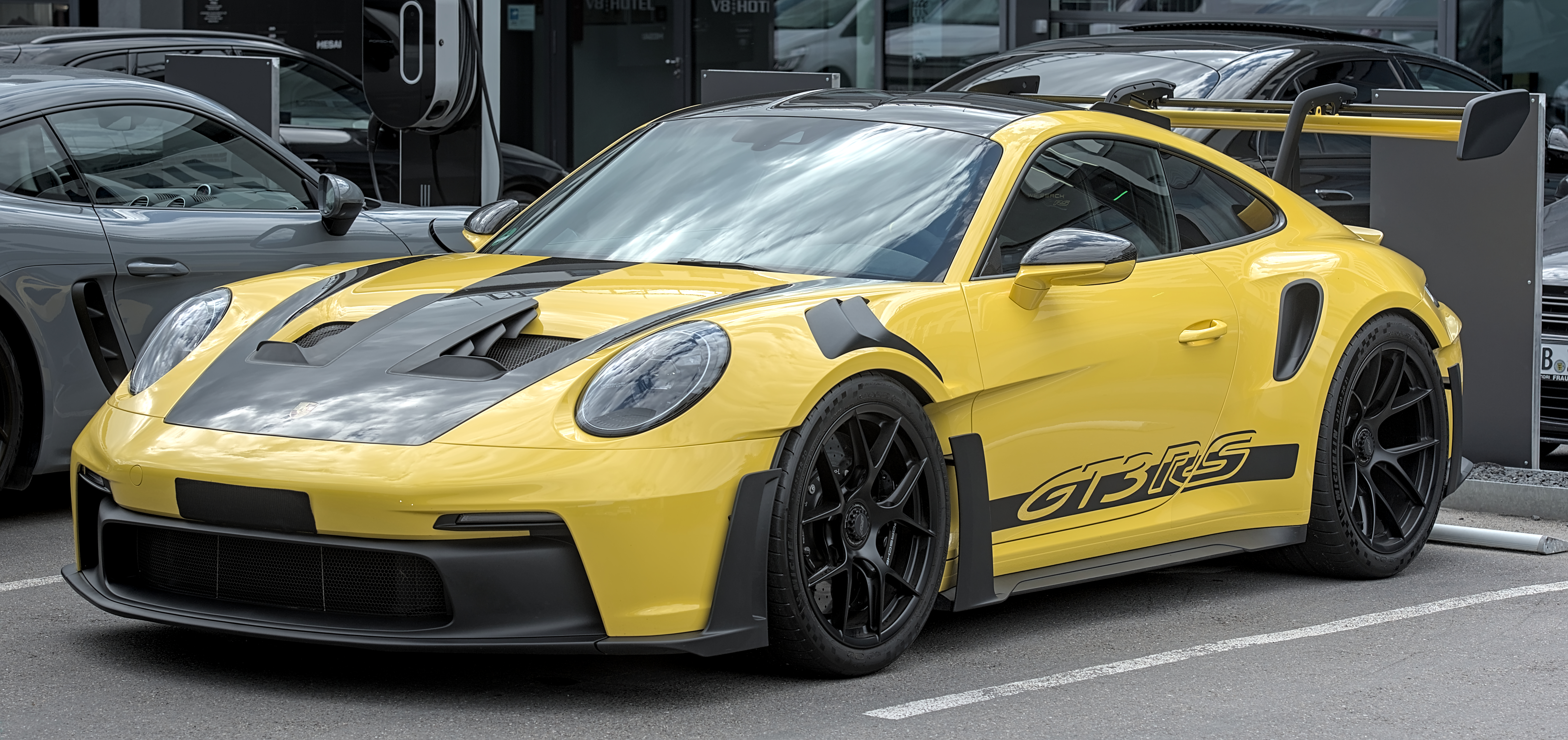
The 911 has spent five decades as the most predictable purchase in performance motoring, and the 992.2 facelift plus the arrival of the GTS T-Hybrid has, almost overnight, made it one of the more confusing. Allocation behavior at Porsche Cars North America has shifted, the trim ladder no longer climbs the way it did under the 991 and early 992, and the CPO market is pricing risk in places most buyers are not looking.
What follows is the research-grade buyer's map for the 2026 model year, written for someone weighing a real $150,000 to $400,000 decision rather than scrolling forum threads. Numbers are sourced; opinions are labeled.
How PCNA allocation actually works
Porsche Cars North America does not sell cars to customers. It allocates production slots to its roughly 200 US dealers, and each dealer in turn decides which customer receives which slot.
That second step is where most of the misunderstanding lives. A dealer's allocation count for a given model is driven primarily by its prior twelve months of sales velocity, its CPO throughput, and its loyalty-customer roster — not by how many deposits it is sitting on.
The practical consequence: walking into a dealer you have never bought from and asking for a GT3 allocation is, in nearly every market, a polite formality. The slot is already informally promised to a repeat buyer, often months before the configurator opens.
The 992.2 trim ladder, reordered
Under the 991 and early 992, the ladder climbed cleanly: Carrera, Carrera S, Carrera 4S, GTS, Turbo, Turbo S, GT3, GT3 RS. The 992.2 broke that order in two places.
First, the GTS is now a T-Hybrid — the only electrified 911 in the lineup at this price point — which has pulled it out of the upgrade-path conversation and into a category of its own. Second, the gap between a well-optioned Carrera S and a base GTS T-Hybrid has narrowed to roughly $25,000 at MSRP, while the gap between the GTS and the Turbo has widened to a $110,000 chasm that GT3 and GTS only partially fill.
2026 model-year MSRPs (Porsche.com US configurator, retrieved Q1 2026, excluding destination): Carrera at $122,095 with low allocation pressure; Carrera S at $137,795, low pressure; Carrera GTS T-Hybrid at $166,895, moderate pressure; Turbo S at $248,495, moderate-to-high pressure; GT3 and GT3 Touring at $224,495, severe relationship-gated pressure; GT3 RS at $249,895, severe pressure with no premium-free path at retail.
For Turbo S buyers, the meaningful question is which generation, at which option specification, fits the use case — the 991.2 generation is the established editorial sweet spot in the secondary market.
What dealers are less likely to volunteer
The single most useful thing to understand about a Porsche dealer in 2026 is that the 911 is no longer their most profitable car to sell. Macan EV, Cayenne, and Taycan now drive more gross per unit on average, which has subtly changed the conversation in the showroom.
Dealer markups (ADM) on Carrera and Carrera S have largely disappeared in coastal metros and have softened to $5,000-$10,000 in interior markets. ADM on GT3 and GT3 RS remains routine and is openly disclosed in many markets at $50,000 or higher.
The factory-build wait on a non-allocated trim is currently 4-6 months. A dealer-stock car you can drive home today is often optioned defensively — meaning the dealer added the high-margin packages, not the ones you would have chosen.
Porsche Approved CPO carries a 2-year unlimited-mileage warranty layered on top of the original 4-year factory warranty, but only if the car is sold by an authorized Porsche dealer. A non-Porsche used-car lot selling a 2023 Carrera cannot offer Porsche Approved coverage, no matter what the listing says.
The CPO sweet spot most buyers miss
Conventional wisdom says a three-year-old 911 is the value play because depreciation has flattened. The data is more nuanced than that.
According to iSeeCars 2025 luxury depreciation analysis, the 911 retains approximately 71% of its original value at five years, the strongest performance of any car in its segment — against a segment average of roughly 51%, a Bentley Continental GT at 39%, and a Ferrari segment-blended figure of roughly 60%. But the curve is not smooth — there is a measurable inflection at the 30,000-mile mark and another when the original 4-year factory warranty lapses.
The CPO sweet spot for a 992-generation 911 is a 2022-2023 Carrera S or GTS coupe with 18,000-28,000 miles, sold by an authorized Porsche dealer with Porsche Approved CPO. This combination captures the post-warranty depreciation step, restores warranty coverage to roughly six years from in-service date, and avoids the 30,000-mile service inflection.
Manual versus PDK in 2026
The seven-speed manual is now offered only in Carrera T, Carrera S, GTS T-Hybrid (limited), and GT3 / GT3 Touring. Take rates for the manual on the GT3 Touring exceed 60% in the US per Porsche disclosures, and used-market premiums of $15,000-$30,000 over PDK equivalents are now standard.
For a daily-driven Carrera S, the manual is a value choice rather than a tax. For a GT3 RS or Turbo S, the manual is unavailable, and the conversation ends there.
Cross-marque context
The 911 is unusual in this segment for offering a coherent two-car proposition — track car and grand tourer — within a single nameplate. Most $200,000-plus buyers cross-shop across marques rather than within them, and the 911's residual strength changes the math meaningfully.
Versus a Bentley, the 911 holds value better by a wide margin — the Continental GT loses roughly 60% of its value over five years, against the 911's 29%. Versus Ferrari, the comparison is model-specific: limited-allocation Ferraris can appreciate, while standard production cars depreciate similarly to or slightly worse than a comparable 911.
The three mistakes worth avoiding
Three buyer mistakes recur often enough to call out explicitly.
- Treating a GT3 deposit at a non-loyalty dealer as an allocation. It is, almost universally, a waitlist for an allocation that will be awarded to someone else.
- Buying a 992.1 GTS expecting it to behave like the 992.2 GTS T-Hybrid. The two cars share a name and very little else; residuals will diverge quickly as the hybrid system becomes the reference point.
- Underspecifying a Carrera or Carrera S to come in under a budget number. The base car is excellent, but the option list is where the 911's resale strength is concentrated — sport seats, sport exhaust, PASM, rear-axle steering, and PDLS+ all carry better than 50% to the second owner per Hagerty market data.
Order new or buy CPO?
If your trim is Carrera, Carrera S, or GTS T-Hybrid, ordering at MSRP is now realistic and the option-spec advantage is real. If your trim is Turbo S, GT3, or GT3 RS, Porsche Approved CPO is usually the only no-premium path to ownership in 2026.
On ADM in 2026: PCNA dealer inventory through Q1 2026 reflects 60-90 days of supply on Carrera and Carrera S, and ADM has largely receded except on launch-edition trims and GT cars. On GT3 timelines: for a buyer with no prior Porsche purchase history at the dealer, indefinitely; for a loyalty buyer with two or more recent purchases, typically 12-24 months from request to delivery, depending on dealer allocation count.
On CPO value: the 2-year unlimited-mileage warranty layers on top of any remaining factory coverage, includes roadside assistance, and requires a 111-point inspection. It is contractually meaningful and only available through authorized Porsche dealers. On the GTS T-Hybrid residual: too early to say with data — early auction results from late 2025 suggest the market is treating it cautiously, with residuals tracking slightly below comparable non-hybrid GTS cars. Long-term battery service costs are the open question.
On used 992 Carrera S mileage: roughly 18,000-28,000 miles is the editorial band. Below 18,000 you pay a low-mileage premium that historically does not hold; above 30,000 the next major service interval is approaching and the original warranty has typically lapsed. On CPO negotiation: modestly — discounts of 2-4% off asking are typical, deeper discounts usually signal a longer-than-average days-on-lot.