The Best Year to Buy a Used McLaren 720S: First-Year Cars, the 2020 Updates, and the 765LT Effect on Values
F
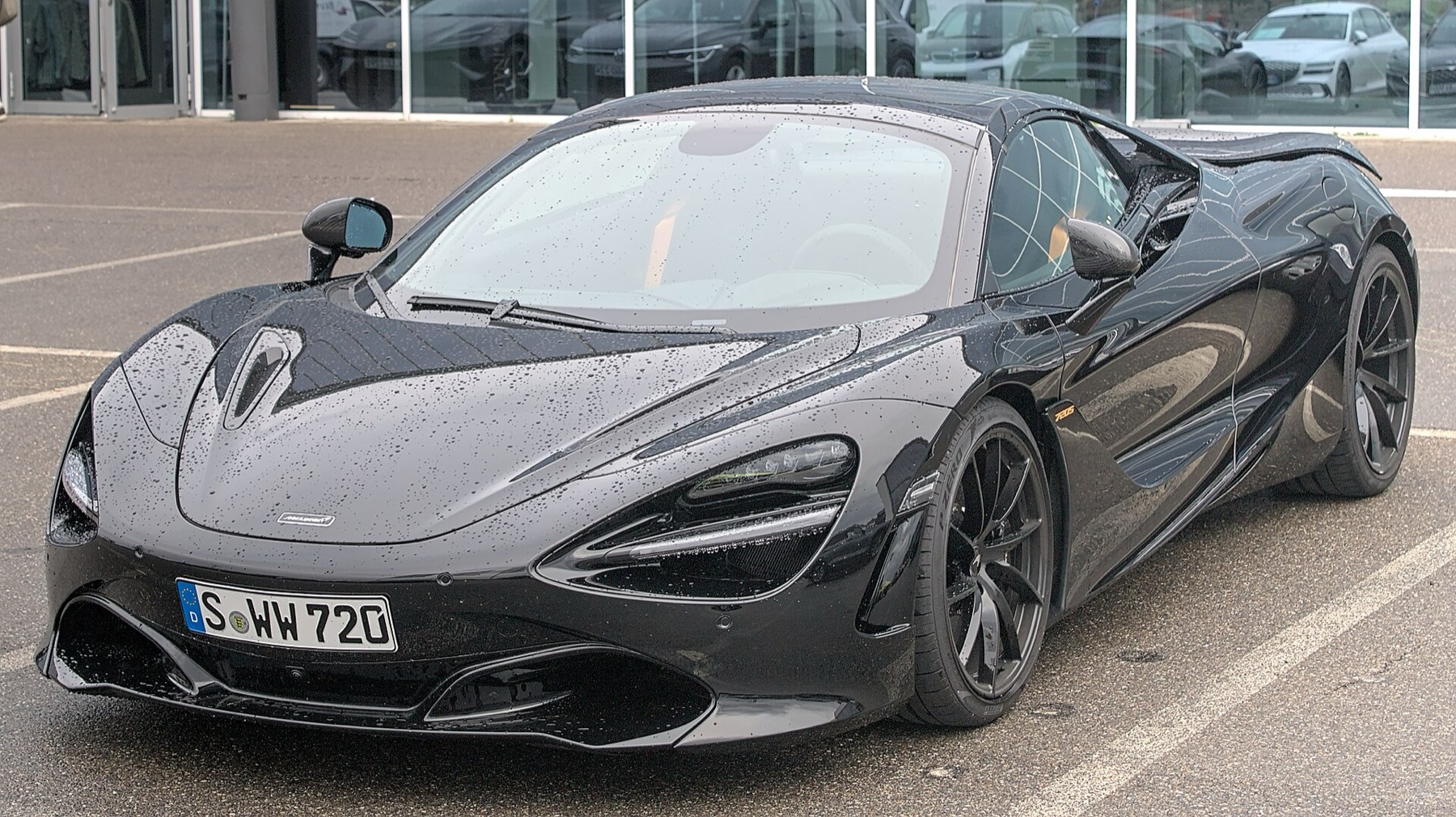
ew modern supercars have fallen as far, as fast, or as publicly as the McLaren 720S. A car that opened at $284,745 before options for the 2018 model year, per McLaren's own launch pricing, now trades in a band that puts it alongside lightly used mainstream performance SUVs — and that gap is the entire reason this buying question exists.The question is not whether a used 720S is cheap. It is which of the 2018–2022 cars carries the fewest unresolved early-build issues, which trim holds its money, and what the 765LT and the 750S did to the residual floor underneath all of them.
Where 720S Pricing Actually Sits
McLaren listed the 720S Coupe at $284,745 including destination at US launch for 2018, with the Spider arriving for 2020 at a premium over the fixed-roof car. Those are the reference points every depreciation figure below is measured against.
Current asking prices vary widely by mileage, trim, and specification, and any buyer should verify against live listings on the major exotic marketplaces rather than a published average. As a working frame, well-kept high-mileage early cars have been advertised in the low-to-mid $200Ks, while low-mileage later cars and Spiders ask materially more — treat these as observed listing ranges, not transaction data.
McLaren depreciation has been a recurring theme in third-party analyses from outlets including iSeeCars, which has repeatedly placed McLaren among the fastest-depreciating marques in its five-year depreciation studies. Hagerty's valuation tools carry 720S entries as well, and both should be consulted before an offer — cited data beats a dealer's characterization of "where the market is."
The short version: the first owner absorbed the steepest part of the curve, and the second owner is buying into a flatter, slower stretch of it. That is the structural argument for the car.
The 2018–2019 Cars: Cheapest Entry, Highest Diligence
Early 720S production carried the usual first-years-of-a-new-platform profile — electrical and infotainment complaints, hydraulic and suspension sensor faults, and the general reality that McLaren issued running revisions through the model's life. Many of these were addressed under warranty campaigns on cars that were serviced properly.
That last clause is the whole risk. An early car with a complete McLaren dealer service file and documented campaign work is a genuinely different asset than an identical car that spent three years with an independent and a deferred-maintenance habit.
The 720S also inherits McLaren's carbon MonoCage II tub, which is structurally excellent and financially unforgiving. Any accident history on a McLaren deserves far more scrutiny than the same disclosure on a steel-and-aluminum grand-tourer, and a pre-purchase inspection by a McLaren-experienced shop is not optional at this price.
The 2020 Model Year and What Changed
The 2020 model year is the practical dividing line for most buyers, for three converging reasons. It is when the Spider joined the range in the US, it is when the accumulated running production revisions had been folded in, and it is the year that puts the most remaining factory and extended-warranty runway on the table.
McLaren has not treated the 720S as a heavily facelifted car — there is no dramatic mid-cycle refresh to point at. What changed was incremental and unglamorous, which is exactly the kind of change that matters when you are the third owner.
On warranty, McLaren's Approved programme is the relevant instrument. Coverage terms, extension pricing, and eligibility have changed over time and vary by car and region, so the only reliable number is the quote a McLaren retailer gives you against that specific VIN — treat any figure quoted secondhand as unverified.
Performance Versus Luxury: The Trim Question
The 720S was offered in the base car plus Performance and Luxury specification packs, which differ mainly in trim materials, finish treatments, and interior detailing rather than mechanical content. Neither pack changes the powertrain.
In the used market, the residual logic runs less through the pack name and more through what sits on top of it: carbon-ceramic and carbon-fibre option content, the sports exhaust, lift, and the MSO or paint-to-sample work that separates a car from the grey-on-black baseline.
The practical guidance is to buy specification rather than pack. A Luxury-trim car in an interesting exterior colour with extensive carbon and a clean file will outlast a plainly specified Performance car on the market — and will cost less to move on. The same option-content logic governs the broader used exotic market and CPO warranty landscape.
The Spider Premium
The 720S Spider commanded a premium new and has generally held one used, consistent with the pattern across the segment where open-top variants of fixed-roof supercars trade above their coupe equivalents. The retractable hardtop preserves the coupe's profile closed, which is part of why the premium persists rather than eroding.
That said, open-top premiums are not uniform across the market, and the segment's own depreciation behaviour is worth understanding before assuming the Spider is automatically the better store of value — our analysis of convertible depreciation patterns covers how that premium behaves over a full ownership cycle.
The 765LT Effect
The 765LT is the 720S's Longtail derivative — more power, less weight, limited production, and a specification that made it a collector object from launch rather than a used-market commodity. Its effect on 720S values runs in two directions at once.
Upward, it validated the platform: the 765LT's reception confirmed the 720S chassis as the best thing McLaren was building in that era. Downward, it siphoned the buyers who wanted a McLaren as an appreciating asset, leaving the standard 720S to be priced as a driving car rather than a collectible.
That is not a bad outcome for a buyer. It means the 720S is priced on utility, and utility is the one thing the car has in surplus. The same limited-series dynamic plays out across the segment, as our coverage of Ferrari's Special Series cars and homologation specials documents.
What the 750S Launch Did to Asking Prices
The 750S replaced the 720S as McLaren's series-production car, carrying a revised version of the same twin-turbo V8 architecture and a broad package of chassis and interior updates rather than an all-new platform. Because the successor is evolutionary rather than revolutionary, the 720S did not become obsolete overnight.
What the 750S did do was reset the top of the range and push 720S asking prices down a further step, as is normal when a successor arrives. For a buyer, the successor's arrival is the buying signal — the car got materially cheaper without getting materially worse.
Ownership Economics Before You Commit
McLaren service intervals, consumables, and out-of-warranty repair exposure are the real cost of the car, not the purchase price. Carbon-ceramic brake replacement, tyres, and any hydraulic suspension work sit well above mainstream-performance-car figures, and specific quotes should come from a McLaren retailer rather than from an internet consensus.
The structural recommendation is straightforward: buy the car with warranty coverage remaining, or buy the extension, and price the difference into the offer. A 720S without coverage is a calculated bet on a carbon-tubbed twin-turbo supercar staying healthy — a bet that can be worth taking, but only knowingly.
Financing structures matter here too, particularly for buyers accustomed to mainstream terms; our guide to exotic car financing covers how lenders treat depreciating supercars.
Editorial Recommendation
- Best overall buy: a 2020–2022 Coupe with a documented McLaren service file, remaining or extendable Approved warranty, and meaningful carbon option content.
- Best value buy: a 2018–2019 Coupe, bought only after a McLaren-specialist PPI and a full review of warranty campaign history.
- Best long-hold: a Spider in an interesting specification, accepting the premium in exchange for a firmer residual.
- Skip: any car with undocumented accident history, a gap in the service file, or a monochrome specification with no option content — all three cost more to exit than they save to enter.
For the wider marque picture, see our McLaren coverage and the rest of the supercars category. Buyers cross-shopping McLaren's own current range should read our comparison of the Artura and Ferrari 296, which addresses where McLaren's hybrid era sits against the 720S's naturally more conventional twin-turbo V8.