Homologation Specials: Why Road Cars Built to Satisfy a Rulebook Command a Premium
Two
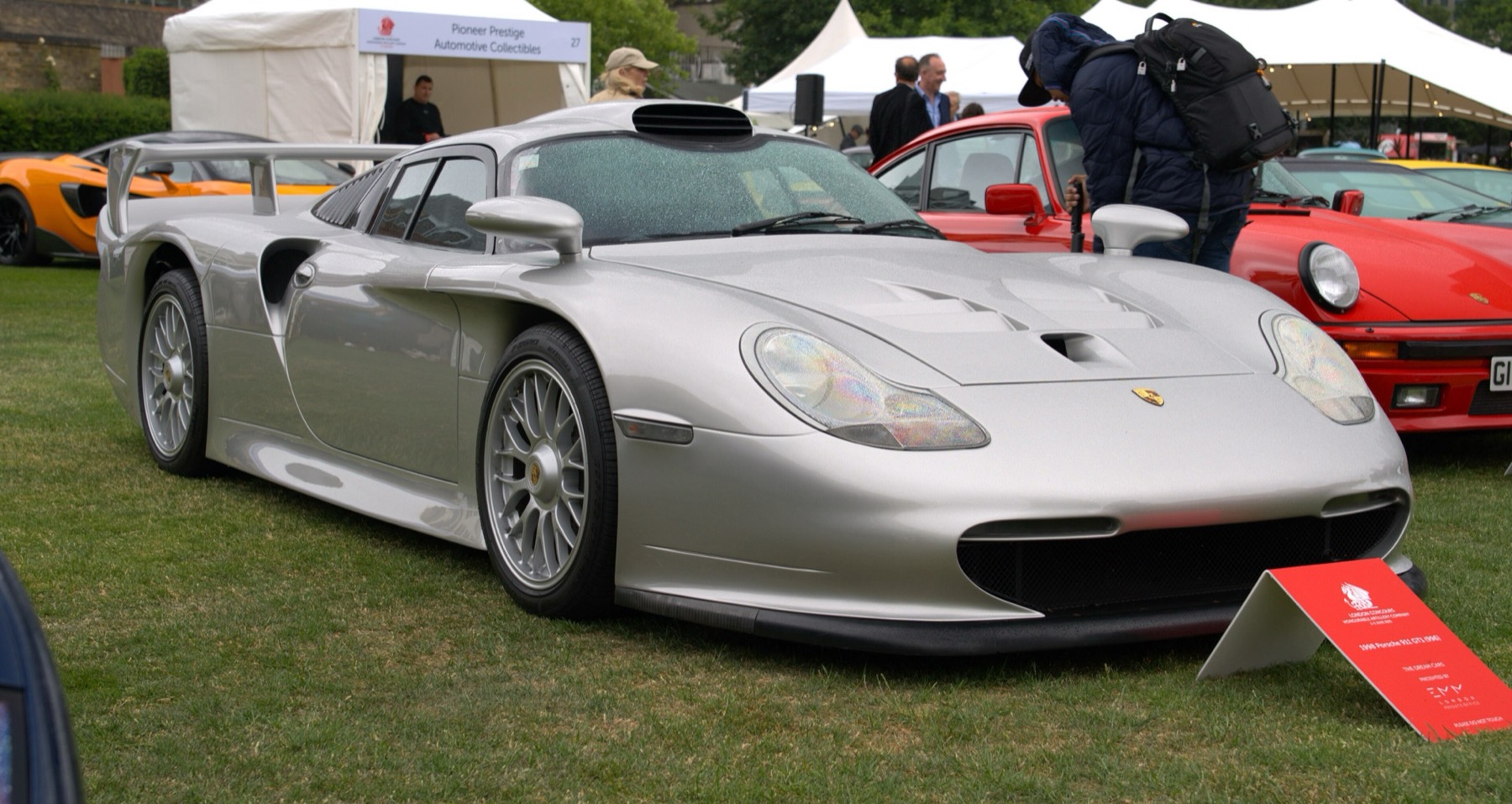
hundred road cars for Group B, plus twenty more for each Evolution variant. Four hundred for Group 4 through most of its life, five thousand for Group A, one hundred for the Group 3 GT class Ferrari's 250 GTO was entered under, and, by the late 1990s, as few as one road-legal example to put a GT1 car on the grid at Le Mans.Those figures were regulatory thresholds, written by sanctioning bodies to keep competition machinery tethered to something a customer could actually buy. They also fixed the supply of a narrow class of road cars at a number no marketing department chose, and that is the fact sitting underneath every premium in this segment.
A collector evaluating one of these cars is buying a build count as much as a driving experience. The count was filed with a governing body, it cannot be revised upward, and for most of the cars in this class it is small enough that the entire population can be tracked chassis by chassis.
What The Rulebook Actually Required
Each era of postwar regulation set a production minimum, and the number moved as governing bodies tried to balance accessibility against escalating cost. The thresholds that produced today's collector class include but are not limited to:
- Group 3 GT, early 1960s — 100 cars within twelve months. Ferrari built 36 250 GTOs and secured homologation on the argument that the car was a development of the 250 GT SWB.
- Group 4, 1970s — 400 to 500 cars depending on the season. The Porsche 911 Carrera RS 2.7, of which roughly 1,580 were built against a 500-car requirement, the Lancia Stratos HF and the BMW M1 all exist because of it.
- Group B, 1982 to 1986 — 200 cars, plus 20 for each Evolution. The Lancia Delta S4 Stradale, Peugeot 205 T16, Ford RS200 and Audi Sport quattro were built to that ceiling and very little beyond it.
- Group A, from 1987 — 5,000 cars, with 500-unit Evolutions. The Ford Sierra RS Cosworth, BMW E30 M3 and Nissan Skyline GT-R R32 all came out of this formula.
- GT1 at Le Mans, 1997 to 1998 — 25 road cars, then effectively one. Mercedes-Benz built 25 CLK GTRs in coupe and roadster form, while Nissan's R390 GT1 and Toyota's GT-One were homologated on a single road-legal example each.
- NASCAR, 1969 and 1970 — 500 units, then one car per two dealers. That formula produced roughly 503 Dodge Charger Daytonas and approximately 1,900 Plymouth Superbirds, and the two have traded in different bands ever since.
Build counts in this class are contested more often than buyers expect, and the figures above should be read as the commonly cited range rather than as settled fact. Lancia's claimed 492 Stratos Stradales and Ford's nominal 200 RS200s are both numbers that specialists still argue over, because homologation filings and completed customer cars were rarely the same population.
The 250 GTO makes the point at the extreme end of the market. Thirty-six were built against a nominal requirement of one hundred, and the model has since produced the highest publicly recorded results in the collector market: RM Sotheby's sold a 1962 Ferrari 330 LM / 250 GTO by Scaglietti for $51.7 million in New York in November 2023.
Why A Regulated Build Count Behaves Differently
The first mechanism is the denominator. When Peugeot completed 200 205 T16 road cars, it built them to clear an FIA threshold, and there was no commercial argument for a 201st once the championship moved on.
The second is hardware. Homologation runs carried components that existed to be legalized rather than to be sold: dry-sump lubrication, close-ratio gearsets, seam-welded and composite shells, aerodynamic addenda, and in several cases an engine architecture that appeared nowhere else in the catalogue.
Ferrari's 288 GTO is the clean example. Roughly 272 were built for a Group B circuit category that collapsed before the car ever raced in it, and the longitudinally mounted twin-turbocharged V8 beneath that lengthened 308 body shared its layout with nothing in the volume range — a separation that still reads clearly against the Ferrari special-series cars that inherited the badge language.
The third is timing. A homologation car reached customers while its competition sibling was actively winning, which means period results attach to a specific chassis series rather than to a nameplate, and that attachment survives every subsequent generation of the model.
The Evolution Tier Is Where The Spread Lives
Group A's structure created the most instructive pricing in the class. The base homologation required 5,000 units, but a 500-unit Evolution allowance let manufacturers legalize upgraded competition parts mid-cycle, and those Evolution runs are where the value concentrates.
Ford built 500 Sierra RS500 Cosworths through Tickford against a base RS Cosworth run in the thousands, BMW built 600 E30 M3 Sport Evolutions, and Mercedes-Benz built 502 190E 2.5-16 Evolution IIs. In each case the spread between the Evolution and the standard homologation car is wider than the spread between that standard car and an ordinary contemporary from the same showroom.
Evolution parts were also sold over the counter and retrofitted by owners, dealers and race teams, which is precisely why the tier has to be established before anything else in a transaction. A retrofitted car and a factory Evolution can present identically in photographs and transact at very different levels, so establish the delta from recent auction results for that specific model rather than from a rule of thumb.
Historic Racing Eligibility Is A Second Demand Pool
An ordinary collector car has one buyer pool. A documented homologation special has two, because the grids at Le Mans Classic, the Monaco Historique, the Goodwood Revival and the Tour Auto exist specifically for cars whose period specification can be proven.
The instrument is the FIA Historic Technical Passport, issued through a national sporting authority and recording a car's period-correct specification against the original homologation form. Eligibility rules differ by organizer and change between events, so confirm with the series directly before paying a premium that assumes a grid slot.
A car that cannot document its period specification is not shut out of the collector market, but it is limited to one of the two pools. That is a structural discount, and it explains a meaningful share of the dispersion between two cars that look identical in a listing.
Verification: Where The Facts Actually Live
Provenance in this class is checkable at the source, which is unusual, and the buyer's job is to check it there rather than in the seller's binder. The marque archives are that source: Ferrari Classiche, a Porsche Certificate of Authenticity drawn from the production archive, BMW Group Classic, Mercedes-Benz Classic, and Stellantis Heritage for the Lancia and Abarth material.
Each will confirm, against the chassis number, what the car left the factory as. Period photographs, magazine features and a folder of invoices support a story; the archive document settles it.
The pre-purchase inspection should then be commissioned from a specialist in that specific model rather than a general exotic shop, because the failure modes here are model-specific. Engine and gearbox numbers, shell originality, composite panel condition and the presence of homologation-only components are the items that move price.
Replication is a live risk across the entire class. Stratos, RS200, Sport quattro and 22B tributes have been built for decades, and a competent one presents convincingly at a distance — which is the argument for treating the archive letter as a transaction gate rather than a nice-to-have.
The US Import Layer
Most of this class was never federalized, because 200 or 500 cars never justified a US certification program. Group B and Group A homologation specials in particular were sold in Europe and Japan and reach American buyers only through the import exemptions.
The practical gates are age-based. NHTSA exempts vehicles 25 years old or older from Federal Motor Vehicle Safety Standards, the EPA exemption for original unmodified vehicles runs at 21 years, and anything newer requires the Show or Display route, which is granted on historical or technological significance and caps use at 2,500 miles per year.
State titling then varies, and a car that clears federal entry can still stall at a DMV that wants documentation the importer never assembled. Confirm the import file is complete — customs entry, the relevant NHTSA and EPA forms, and a clean bill of lading — before the wire, not after the car lands.
Where The Risk Concentrates
The buying case in this class is strong enough that the failure modes deserve equal space. Four of them concentrate most of the downside:
- Parts scarcity. Composite panels, one-off aerodynamic components and competition-specific engine internals were produced in run-sized quantities, and a single unavailable part can hold a car off the road for a year or more.
- Restoration economics. On the lower-value tiers of this class a full mechanical and cosmetic restoration can exceed the finished value of the car, which is why condition at purchase matters more here than in almost any other segment.
- Illiquidity. A small buyer pool means time-on-market runs long, and a seller who needs a fast exit will find the bid well below the last public comp.
- Condition dispersion. Hagerty grades condition from #1 concours through #2 excellent, #3 good and #4 fair, and on a run of a few hundred cars the gap between adjacent grades is wide enough that a misjudged tier costs more than the inspection that would have caught it.
All of the above argues for the same discipline. Buy the documented, sorted car near the top of the range rather than the project at the bottom, because the spread between them is set by the cost of restoring something nobody makes parts for.
Why The Class Stopped Growing
Contemporary regulation has largely abandoned production minimums. GT3 sets competitiveness through balance of performance, LMDh and LMH work to cost caps and prescribed hybrid formulas, and Rally1 is built around a spaceframe and a homologated kit rather than a customer road car in the hundreds.
Homologating a race car today means submitting a technical form and accepting performance balancing. It no longer means finding 200 buyers for a difficult road car, which means the historical class is closed at its existing size.
That leaves the modern scarcity plays operating on a different mechanism entirely. The air-cooled 911 market, the surviving gated-manual supercars and halo cars such as the Lexus LFA are scarce because a manufacturer decided they would be, and current Ferrari and Porsche allocation practice rations that scarcity commercially rather than through a rulebook.
Both mechanisms produce premiums. Only one of them produces a number that a governing body recorded and that no future product decision can dilute.
Editorial Recommendation
For buyers entering this class rather than trading within it, the following holds across marques:
- Buy the Evolution tier where the documentation supports it. Sierra RS500 over the standard RS Cosworth, E30 M3 Sport Evolution over the base car, 190E Evolution II over the 2.5-16 — the regulated number is smaller and the factory record is cleaner.
- Make the factory archive letter a condition of sale. Ferrari Classiche, a Porsche Certificate of Authenticity, BMW Group Classic or the marque equivalent, obtained before funds move rather than after.
- Commission a model-specific pre-purchase inspection. A generalist shop will not know which homologation-only parts should be present, or what they cost to source when they are missing.
- Confirm grid eligibility with the organizer, not the seller. This matters only if part of your valuation assumes a historic-racing entry, but where it does, it is the whole premium.
- Price in ranges built from settled comps. Auction records from RM Sotheby's, Gooding, Bonhams, Broad Arrow and Mecum, alongside Hagerty valuation tools, describe a market; asking prices describe an ambition.
The cars in this class were built to satisfy an administrator, and that origin is the reason their values behave the way they do. Verify the number, verify the tier, verify the specification, and the premium becomes something you can underwrite rather than something you hope holds.