The Air-Cooled Premium: Why 993-Generation Porsche 911 Values Keep Climbing
Air-cooling
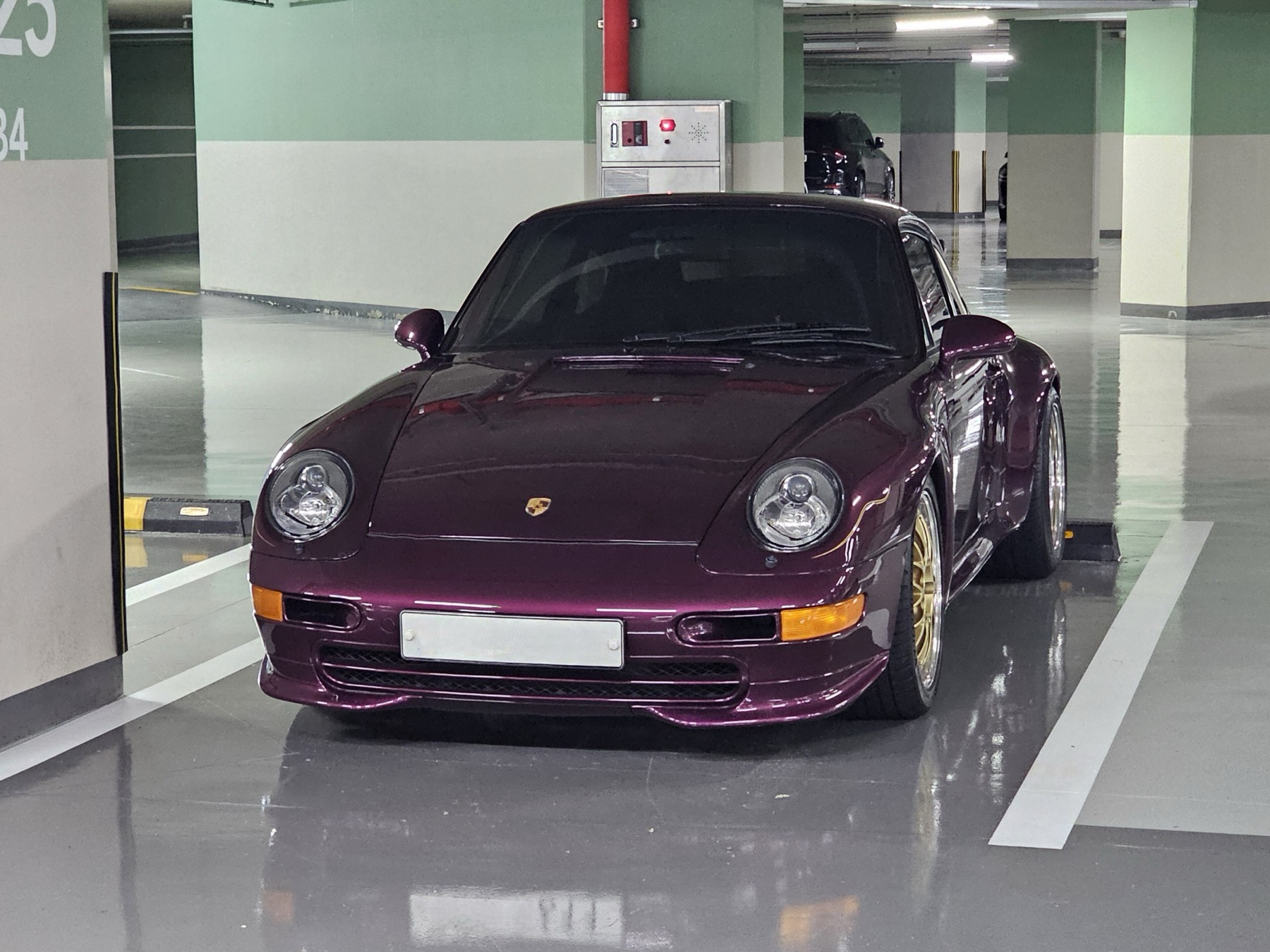
is the dividing line in Porsche 911 history, and every collector who spends real time with the cars eventually arrives at it. On one side sits a lineage that ran from 1963 to 1998; on the other, the water-cooled era that followed.The 993 generation, built from 1994 to 1998, closed that first chapter — and it has spent the years since becoming a collector benchmark rather than a used car. That status is the reason its values have climbed while much of the wider performance market has cooled.
This is a secondary-market read, not a new-car story. If you are tracking factory supply and waitlists, our Porsche 911 allocation coverage handles that side; here, the subject is where finished 993 values actually sit.
What Makes The 993 The Last Air-Cooled 911?
The 993 was the final 911 to carry Porsche's air-cooled flat-six, an architecture the marque had refined for roughly three decades before retiring it. Its successor, the 996, moved to water-cooling for the 1998 model year, and the door closed permanently.
What's more, the 993 was not merely the last of something — it was also a high-water mark of the air-cooled design. It introduced a multi-link rear suspension that reshaped the car's behavior at the limit, and it is often described as one of the last substantially hand-assembled 911s.
Mechanically, the naturally aspirated cars produced approximately 270 to 285 horsepower depending on model year and the introduction of Varioram intake in 1996. The 993 Turbo went further, pairing a twin-turbocharged 3.6-liter flat-six — the first twin-turbo 911 — with all-wheel drive and roughly 400 horsepower.
Keep in mind that none of this engineering, on its own, explains the price. It explains the desirability; scarcity explains the premium.
Where Do 993 Values Sit Today?
Values vary widely, and any honest answer has to be a range rather than a single figure. Per Hagerty valuation tracking, clean driver-grade narrow-body Carreras are estimated in the high five to low six figures, with excellent, well-documented examples climbing higher.
Move up the variant ladder and the numbers change character entirely. Turbo and Turbo S cars are estimated well into six figures, and the rare GT2 reaches seven-figure auction territory — all figures estimated and worth verifying against current comparable sales.
The trajectory matters more than any single number. Over the past decade the 993 has shifted from a depreciated used sports car into appreciating-asset territory, a move documented across major collector-value indices.
That said, appreciation is not uniform. A high-mileage Tiptronic Cabriolet and a documented manual Carrera 4S coupe are barely the same conversation, even though both wear the 993 badge.
Which 993 Variants Carry The Premium?
The premium is not spread evenly across the range, and understanding the hierarchy is the difference between buying a car and buying an appreciating one. Here is how the variants stack, from the value end upward:
- 993 Carrera (narrow-body coupe). The entry point to air-cooled ownership, and the most attainable way in. A manual coupe carries a clear premium over Tiptronic, Cabriolet, and Targa examples.
- 993 Carrera S and Carrera 4S. The wide "Turbo-look" body over a naturally aspirated drivetrain. These command a premium over narrow-body cars on looks and relative scarcity alone.
- 993 Turbo. The twin-turbo, all-wheel-drive flagship of the standard range, and one of the most cross-shopped air-cooled Porsches. A strong, durable premium over naturally aspirated cars.
- 993 Turbo S. A limited, higher-output evolution of the Turbo with estimated values well above the standard car. Rarity does most of the work here.
- 993 GT2. The apex — a rear-drive homologation special built in very limited numbers, with estimated seven-figure results at auction.
Of course, the Carrera RS belongs in this conversation too, though it was a European-market car rather than a US offering. For American buyers, the practical ceiling is the GT2 and the realistic sweet spot sits lower.
The 993 is not appreciating because it is fast. It is appreciating because it is finite.
Why Do 993 Values Keep Climbing?
Several forces compound here, and none of them is easily reversible. First, supply is finite and shrinking — production ended in 1998, and every car lost to attrition tightens the pool further.
Production totals are commonly cited at roughly 68,000 units across the entire 1994–1998 run, a figure worth treating as estimated and verifying against authoritative Porsche references. Against three decades of accumulated demand, that is not a large number.
Second, the 993 occupies a status no later 911 can ever claim. As the last air-cooled generation, it is the natural endpoint of a collection, and endpoint cars price at a premium.
Third, the buyer pool is widening rather than narrowing. A generation that grew up aspiring to these cars has reached peak earning years, and that demographic pressure shows up directly in collector-value data.
Finally, condition itself has become scarce. Well-documented, unmodified, accident-free examples with full service history are a shrinking subset of an already finite group — and that subset is where nearly all of the appreciation concentrates.
What Should A Buyer Watch For?
The 993 is old enough that condition and documentation now outweigh almost everything else. A pre-purchase inspection by a Porsche specialist is not optional at these values; it is the cheapest insurance available.
Prioritize documented service history and matching-numbers originality, and be skeptical of any car that cannot account for its own past. Later Varioram cars can show secondary-air-injection system issues, and any 911 of this era may hide prior accident repair or non-original paint.
Be aware that the cheapest example is rarely the cheapest to own. A well-sorted, fully documented car commands a premium precisely because the alternative — buying cheap and sorting later — usually costs more in the end.
For buyers also cross-shopping the forced-induction cars, our read on the best model year for a used 911 Turbo S covers the later water-cooled Turbos, while the 993 Turbo remains the air-cooled benchmark.
Editorial Recommendation
For most buyers entering air-cooled ownership, the strongest combination of usability and residual logic is a documented, manual-transmission 993 Carrera coupe in original specification. It offers the full air-cooled experience without the rarity tax of the forced-induction cars.
For buyers prioritizing appreciation and willing to pay for it, a low-owner, fully documented Carrera 4S or 993 Turbo represents the more defensible long-term position. Either way, the spec to chase is the same: manual gearbox, complete history, unmodified, and accident-free.
We would treat any 993 as a car first and an asset second. The cars that have appreciated most are the ones that were maintained as if their value depended on it — because it does.
The gated manual matters more here than the badge, a point we make across our manual supercars coverage and one that holds for the broader Porsche range.