The Last Manual Supercars: Why Three-Pedal Cars Are Appreciating
For
most of the past century, driving a supercar meant operating one — heel-and-toe downshifts, a clutch pedal heavy enough to remind you it was there, and a metal gate that turned every gearchange into a deliberate act. That arrangement has all but vanished from the showroom floor.A current flagship from Ferrari, Lamborghini, or McLaren shifts faster than any human foot ever could, and it does so without a clutch pedal at all. The third pedal did not disappear because buyers stopped wanting it — it disappeared because the dual-clutch gearbox won nearly every objective contest that mattered to a lap time.
What The Manual Premium Actually Means
Among collector-car analysts, the gap between a manual car and its otherwise-identical automatic counterpart has a name: the manual premium. It is the clearest single number in this entire conversation.
Hagerty's valuation team has tracked that premium across a wide range of enthusiast cars, and at the supercar tier it has tended to widen rather than narrow as the configuration left production. The reason is simple — the supply of new manuals is now effectively zero, while demand from a particular kind of buyer has not moved.
Why The Manual Left The Supercar
The case against the manual was never sentimental — it was empirical. A modern dual-clutch transmission swaps gears in milliseconds, keeps the engine inside its power band through a corner, and removes measurable time from a lap.
As lap time became the headline specification on every press release, the manufacturers followed the data. Ferrari's last manual-equipped car left production around 2012; Lamborghini's final manual was the Gallardo, which ended its run in 2013.
McLaren's modern road cars have never offered a manual at all, and the second-generation Audi R8 dropped the configuration entirely before the model was discontinued. What was once standard equipment became, within a single decade, a historical footnote.
The Cars Driving The Trend
The premium is not abstract — it attaches to a specific and identifiable set of cars. The examples below are the ones collector-market analysts cite most often, though every figure should be confirmed against current valuation data before you act on it.
- Porsche 911R (2016). Manual only, limited to 991 examples, and launched at an estimated MSRP near $185,000. It became the early symbol of the manual premium, with speculative asking prices reported well into the high six figures within months of delivery.
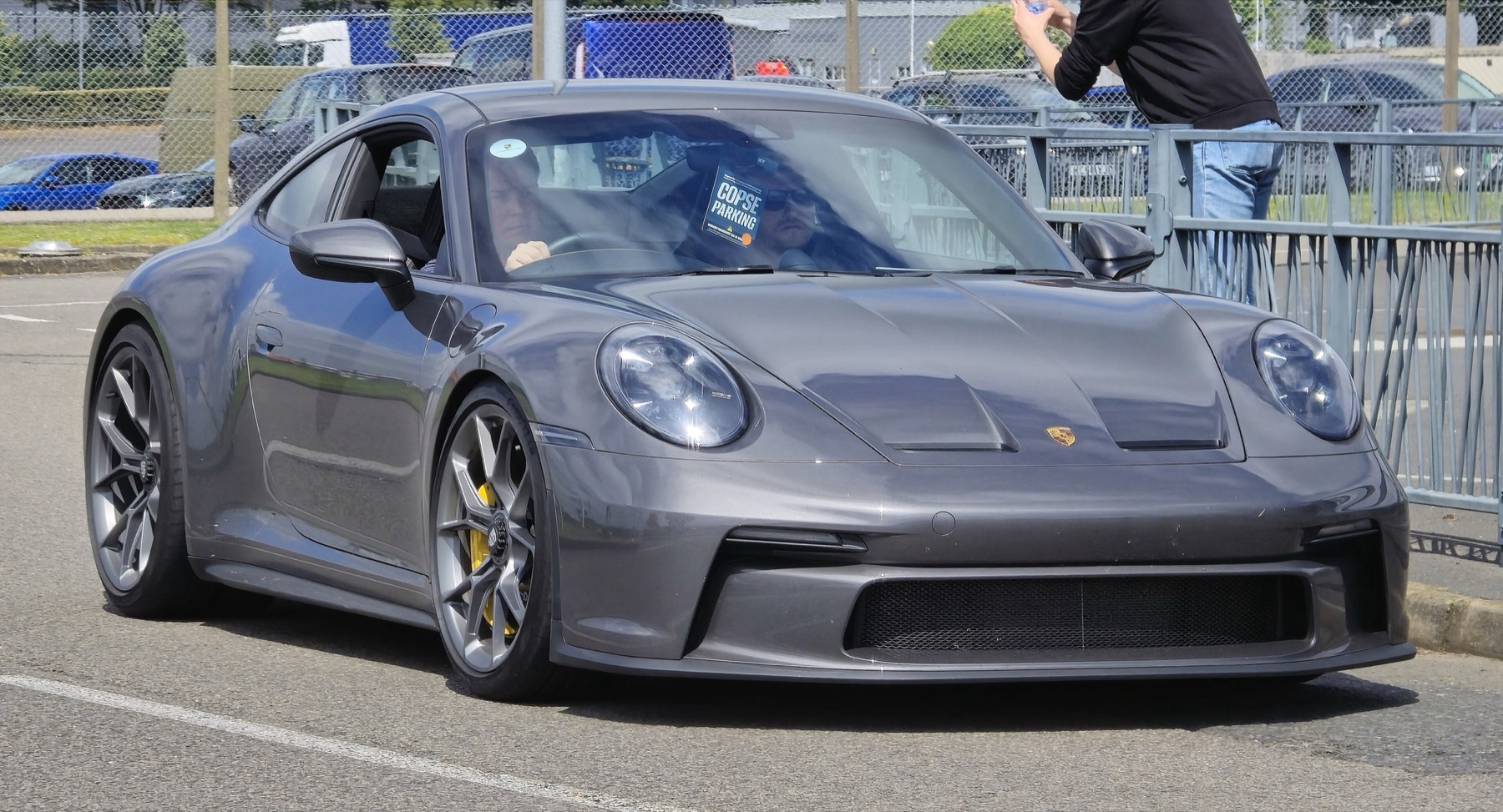
- Porsche 911 GT3 Touring and manual GT3. Porsche reintroduced the manual as a no-cost option on the 991.2 GT3 and made the wingless Touring a quietly collectible specification. Manual cars generally ask more than their PDK equivalents on the secondary market.
- Gated-manual Ferraris (F430 and 599 GTB). Both were offered with an open metal gate, and both were ordered overwhelmingly with the paddle-shift F1 gearbox — which leaves the true manuals genuinely rare. The 599 manual, in particular, is estimated to number only a few dozen worldwide.
- Lamborghini Gallardo (gated manual). The last Lamborghini you can buy with a clutch pedal. Manual Gallardos trade at a premium over the automated e-gear cars, and the gap has widened as the model recedes into history.
- Audi R8 (first generation, gated manual). The original R8 offered a true gated six-speed; the V10 manual is among the rarest and most sought specifications, precisely because the second-generation car abandoned the manual altogether.
Why Three Pedals Command More Than Two
The logic is partly mechanical scarcity and partly something harder to put on a spreadsheet. A manual demands involvement, and involvement is exactly what a certain buyer is paying to recover.
Remember that the typical customer for one of these cars is not a first-time owner. This is often the second or third car in the garage, bought by someone who already owns the faster automatic and now wants the version that asks more of the driver.
A dual-clutch gearbox makes a car quicker. A manual makes it memorable — and, increasingly, collectible.
There is also the matter of finality. These are, in many cases, the last manual a given marque will ever build, and "last of an era" has always carried weight in the collector market.
What This Means If You Are Buying
A pre-purchase inspection matters more here than on an ordinary used car, because the premium is built almost entirely on originality. Confirm that the gearbox is the original, factory-fitted unit — manual conversions exist, and a converted car does not carry the value of a car born with three pedals.
Keep in mind that this premium sits on top of an already-demanding ownership proposition; our breakdown of supercar ownership costs applies in full to a manual car, with the added note that a worn clutch on a low-production gearbox is rarely a cheap repair.
The Risk Beneath The Premium
None of this makes a manual supercar a guaranteed investment, and it would be a disservice to present it that way. Speculative peaks — the 911R's early asking prices among them — have a habit of softening once the initial scarcity narrative cools.
Be aware that the premium is not evenly distributed. It rewards the rare, original, and historically significant car, and largely ignores the high-mileage driver with a replaced clutch and a thin folder of paperwork.
For a broader sense of how condition and specification move money on these cars, our analysis of the used-Ferrari depreciation sweet spot and the Porsche 911 allocation reality are both worth reading alongside this piece.
The Marque Editors' Recommendation
The right car depends on what you actually want from it — appreciation, rarity, or the drive itself. The configuration rewards clarity of intent.
- If you want the appreciation story: an original, low-owner Porsche 911R or a manual 991.2 GT3 Touring offers the clearest combination of documented scarcity and proven demand.
- If you want the rarity play: a gated-manual Ferrari 599 GTB or a first-generation Audi R8 V10 manual sits at the thin end of the production curve, but demands a forensic inspection and complete history.
- If you want to drive it more than store it: a manual Lamborghini Gallardo or a 997-generation 911 delivers most of the engagement for a fraction of the speculative premium.
Whichever way you lean, verify every figure against current Hagerty Valuation Tools and the specific lot record before you transact — the manual premium is real, but it is not evenly distributed across the market.
To see where today's three-pedal cars are trading, explore more collector-grade supercar analysis or browse our Porsche and Ferrari marque hubs.