The Lexus LFA's Slow Climb to Blue-Chip Status
The
advances we have made in performance engineering over the past two decades are extraordinary — turbocharging, hybridization, and electrification have pushed output figures into territory that read as fantasy in 2010. Yet the foundation of what makes a halo car endure is not its peak number; it is the way the car makes that number.That distinction is exactly why the Lexus LFA, a car many buyers ignored when it was new, has become one of the most closely watched collector benchmarks of its generation. As naturally aspirated, analog halo cars vanish from manufacturer order books, the LFA has climbed from misunderstood curiosity to blue-chip status.
What the LFA Actually Is
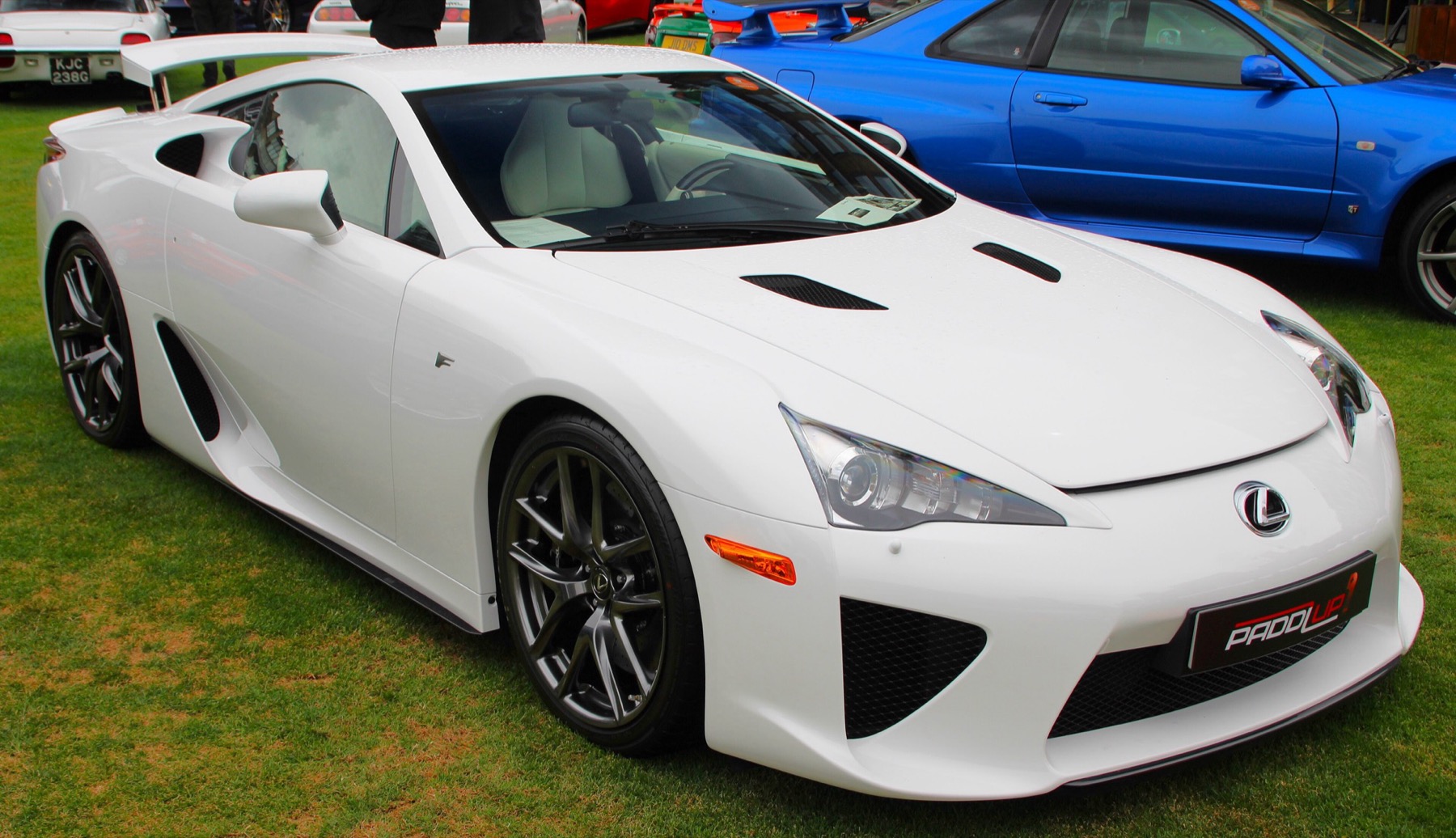
Produced between 2010 and 2012 and capped at 500 examples worldwide, the LFA was Lexus's first and only attempt at a no-compromise supercar. Its body and chassis are built largely from carbon fiber reinforced polymer, to the point that Toyota engineered its own carbon loom to weave the structure.
At the center sits the 1LR-GUE, a 4.8-liter naturally aspirated V10 developed with Yamaha, producing roughly 553 horsepower and revving to a 9,000 rpm redline (manufacturer figures). The engine spins up so quickly that Lexus fitted a digital tachometer, because a conventional analog needle could not physically keep pace.
On the road, the LFA records roughly a 3.6-second 0–60 mph time and a top speed near 202 mph, sending drive through a six-speed single-clutch automated manual (manufacturer figures). Those numbers were merely competitive in 2010, which is part of why the car was undervalued on a pure-performance basis.
The LFA also carries an unusually long and expensive development story. Toyota spent close to a decade refining it, famously scrapping an early all-aluminum prototype to start over in carbon fiber.
Why the Market Overlooked It at Launch
When the LFA arrived with an original MSRP around $375,000, the reaction from much of the market was skepticism rather than reverence. A Lexus priced above a contemporary Ferrari or Lamborghini struck many buyers as a category error.
Compounding the hesitation, the LFA was widely reported to have been sold at a loss, with Toyota treating the program as a halo and engineering exercise rather than a profit center. Several cars lingered unsold at dealers for years after production ended, occasionally discounted below sticker.
Each car was effectively hand-assembled at the dedicated LFA Works inside the Motomachi plant, at a pace of about 20 cars a month. That deliberate, low-volume process is part of why no follow-up was ever commercially viable.
That early ambivalence is precisely what set up the appreciation that followed. The cars the market dismisses at launch are frequently the ones that reward patience, particularly when production is permanently capped.
What the Numbers Say Now
The trajectory has reversed completely. Hagerty's valuation tracking has charted the LFA moving steadily upward, and the car now routinely trades well above its original MSRP rather than below it.
Clean, well-documented examples are estimated to change hands from the high-$700,000s to north of $1,000,000, depending on mileage, specification, and provenance (estimated — verify against current Hagerty valuations and recent auction comps). Low-mileage cars with complete books and tools and single-ownership histories sit at the top of that band.
For context, that range represents appreciation well above the original $375,000 MSRP — an outcome almost no six-figure car from 2010 to 2012 has matched. The combination of a fixed 500-unit supply and rising demand for analog, naturally aspirated halo cars has done most of the work.
The Nürburgring Package Premium
A subset of the run left the factory as the Nürburgring Package, which added sharper aerodynamics, revised suspension, roughly 10 additional horsepower, and unique wheels, at an original price near $445,000. Only a small fraction of the 500 cars received this specification.
In the collector market, that scarcity translates into a meaningful premium over a standard LFA. Buyers should expect Nürburgring examples to command a clear step up, with the exact delta dependent on condition tier and documentation (estimated — confirm against auction comps).
Why Values Keep Climbing
Three forces are compounding here, and none of them is speculative hype. First, supply is permanently fixed at 500 cars, with no possibility of a follow-up run.
Second, the LFA sits at the increasingly rare intersection of a high-revving naturally aspirated engine and a genuinely analog driving experience, a combination that emissions and efficiency regulation has all but legislated out of new production. Third, Lexus's reliability reputation makes the LFA unusually usable for a carbon-tubbed supercar, which widens the pool of buyers willing to own and drive one.
The LFA is appreciating for the most durable reason a car can — they stopped making the thing it represents.
This is the same logic that has supported air-cooled Porsche 911 values and the best naturally aspirated Ferraris. Scarcity plus a driving character that can no longer be reproduced tends to create a durable floor under prices.
Where the LFA Sits Among Its Peers
Measured against the Carrera GT, the Ferrari 599 GTB, and other naturally aspirated halo cars of its era, the LFA was once the outlier few defended. Today it is frequently grouped with them as a reference point for the analog, high-revving formula.
The difference is usability. Where many carbon-era exotics demand expensive, anxious ownership, the LFA's Lexus underpinnings make regular use far less fraught, which sustains demand from buyers who actually intend to drive the car.
What to Watch If You're Buying
Provenance and documentation matter more here than on almost any comparable car. Because so few were built, the market has a long memory for individual chassis, and gaps in service history or unexplained time on market depress value quickly.
A pre-purchase inspection (PPI) by a specialist familiar with the carbon structure and the single-clutch automated manual is non-negotiable. Mileage profile, completeness of books and tools, and whether the car is a concours, show, or driver example all move the figure materially.
Carbon-tubbed construction means cosmetic damage and structural repair are specialist work, so a clean, accident-free history carries a premium. Sun-faded interiors, worn Alcantara, and incomplete tool kits are the small details that separate a concours car from a driver.
The reassuring news is that the LFA's mechanicals are robust by supercar standards. The risk in ownership is far more about preserving documentation and condition than about chasing fragile reliability.
Editorial Recommendation
For a collector building a position in analog halo cars, the LFA reads as a benchmark rather than a gamble. The case rests on fixed supply, an irreplaceable engine character, and unusual usability — not on momentum alone.
Our guidance is to prioritize a single-ownership or well-documented car with complete books and tools over a cheaper example with a thin history, and to treat the Nürburgring Package as a distinct, higher tier. Verify every figure against current Hagerty valuations and recent auction comps before transacting, and budget for a specialist PPI.
If you are weighing the LFA against other analog options, our coverage of manual supercars worth owning, air-cooled Porsche 911 values, and the used-Ferrari depreciation sweet spot maps the broader landscape. For the running costs of carbon-era exotics, see our breakdown of supercar ownership costs.