McLaren Artura vs Ferrari 296 GTB: The Hybrid-V6 Supercar Decision
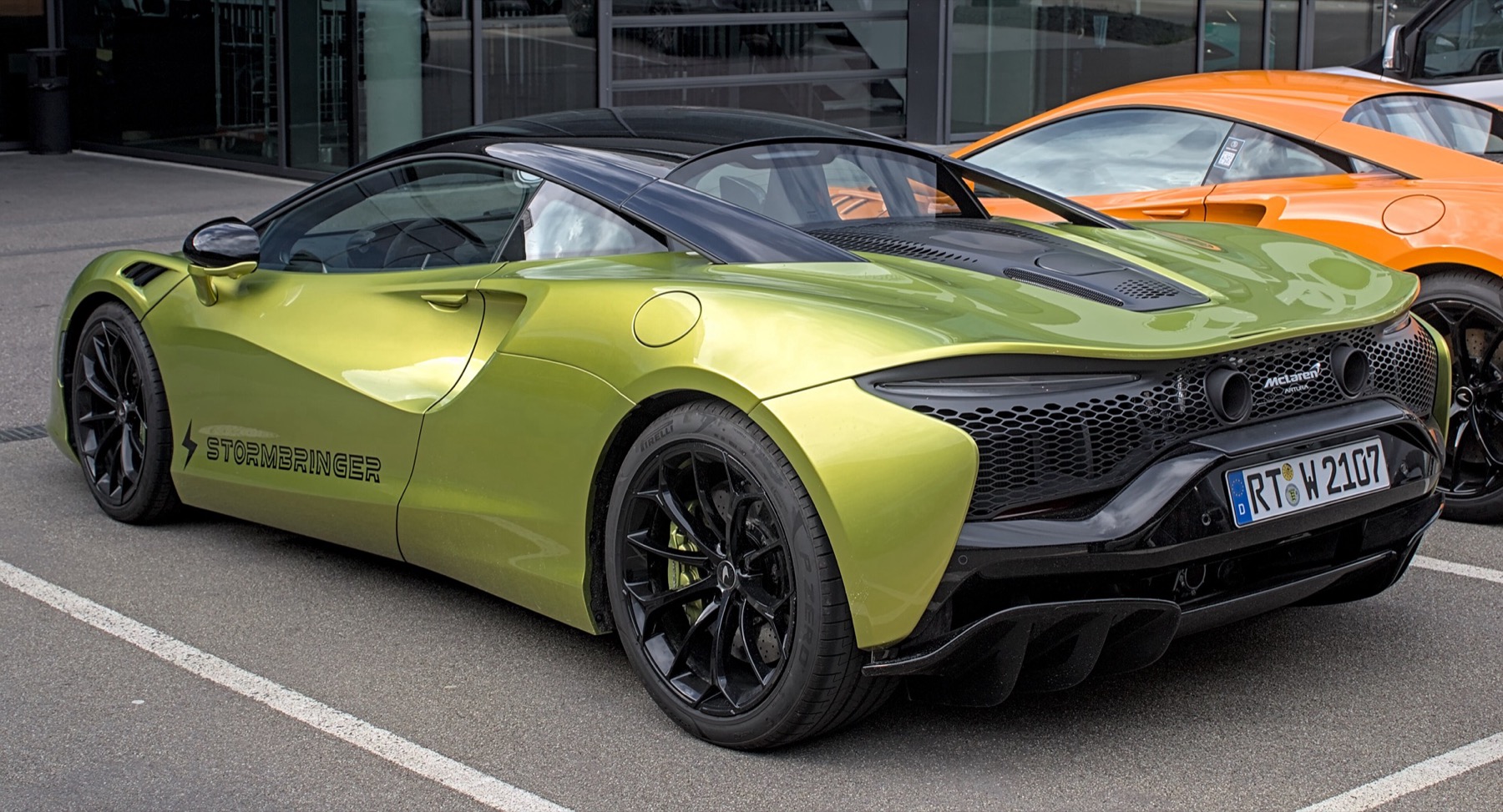
The
segment that barely existed five years ago now has a center of gravity. Two cars define it — the McLaren Artura and the Ferrari 296 GTB — and they arrived close enough together that cross-shopping them has become one of the more consequential decisions in the six-figure supercar market.Both answer the same question: what does a mid-engine supercar look like once a plug-in hybrid powertrain stops being a compromise and becomes the point? That said, the two marques answered it from opposite ends of the buying experience, and that difference matters more than any horsepower figure.
The figures below stay qualified and source-aware, because in this segment the spec sheet is the easy part. What follows is built for the buyer deciding between these two right now — on allocation, ownership cost, and early depreciation rather than lap times.
The Two Cars On Paper
On the mechanical fundamentals, these cars are closer than their badges suggest. Each pairs a compact twin-turbocharged V6 with a plug-in hybrid system, a dual-clutch transmission, and a carbon-intensive structure built around short-range electric capability.
| Specification | McLaren Artura | Ferrari 296 GTB | |---|---|---| | Engine | 3.0L twin-turbo V6 + e-motor | 3.0L twin-turbo V6 + e-motor | | Combined output (est.) | ~671 hp (≈690 hp, 2025 update) | ~819 hp | | 0–60 mph (est.) | ~3.0 sec | ~2.9 sec | | Electric-only range (est.) | ~11 miles | ~15 miles | | Layout | Mid-engine, rear-wheel drive | Mid-engine, rear-wheel drive | | Base MSRP (est.) | mid-$230,000s | low-$320,000s |
All figures above are approximate and should be verified against current manufacturer specifications.
The headline divergence is output. Ferrari's 120-degree V6 and larger electric assist produce an estimated 819 horsepower combined, while McLaren launched the Artura at approximately 671 and raised it to roughly 690 for the 2025 model year.
McLaren's system uses a compact axial-flux electric motor and an eight-speed dual-clutch gearbox; Ferrari pairs its V6 with an electric motor and a comparable dual-clutch setup. Both can creep through a city on electricity alone for a handful of miles, then summon their full combined output the instant the driver asks.
Yet both reach 60 mph in about three seconds, and both deliver hybrid torque the same way — instantly and low down, filling the turbo lag that used to define small-displacement forced induction. In other words, the experiential gap is narrower than the roughly 150-horsepower spread on paper implies.
What They Cost
Price is where the two cars stop resembling each other. Based on estimated base MSRP, the Artura opens in the mid-$230,000s and the 296 GTB in the low-$320,000s — a separation approaching $90,000 before a single option is specified.
Of course, neither car leaves a showroom at base. Carbon-ceramic options, paint-to-sample, lifting systems, and interior trim routinely add tens of thousands, and the Ferrari's options ladder tends to climb higher and faster than the McLaren's.
Keep in mind that the MSRP gap is only the entry cost. What happens to each figure over the first three years of ownership is where the real money is made or lost — and that is a question of allocation and depreciation, not list price.
Allocation Is The Real Divider
If these cars are mechanically close and merely separated by price at the top of the page, they are separated by something more decisive at the dealer: allocation.
Ferrari does not simply sell a 296 GTB to whoever arrives with funds. Allocation typically flows to established clients with an ownership history and a standing dealer relationship, which means a first-time buyer may face a wait, a lesser initial allocation, or a secondary-market premium over a car already spoken for.
This is the same scarcity logic that governs Ferrari's specials and, in a different form, Porsche's 911 allocation system — supply is engineered below demand, and that gap protects residual value. McLaren, by contrast, operates closer to a conventional sales model.
Artura inventory is comparatively accessible — buyable from dealer stock or a short-lead order without a deep relationship — which is welcome news for the buyer who wants the car now, and far less helpful for the one counting on it to hold value.
In this segment, the spec sheet is the easy part — the buying experience is the product.
Early Depreciation: What The Trackers Show
This is where allocation converts into dollars. Because Ferrari constrains supply and McLaren does not, the two cars have behaved very differently on the used market in their opening years.
Resale trackers including iSeeCars, Edmunds, and Cars.com listings have generally shown Ferrari's mid-engine hybrids retaining a larger share of original MSRP than comparable McLarens — the 296 GTB benefiting from the scarcity logic that has long underpinned Ferrari residuals. However, these figures move with spec, mileage, and condition, so read them as direction rather than a fixed percentage.
The reason is structural rather than sentimental. When a manufacturer builds fewer cars than the market wants and rations them through allocation, the secondary market clears above where open supply would settle — and that floor under used prices is what owners experience as strong residuals.
The Artura tells the more interesting value story. Steeper early depreciation means a lightly used, low-mileage example can represent a meaningful discount to a new car — which mirrors the used-Ferrari depreciation sweet spot that rewards the second or third owner rather than the first.
Note that none of this makes the McLaren the lesser car — it makes it a different financial instrument. Buy the Artura new and you absorb the depreciation; buy it at one to three years old and you let the first owner absorb it for you.
Ownership And Running Costs
Depreciation is the largest ownership cost on either car, but it is not the only one. Both are plug-in hybrids, which adds a high-voltage battery and its eventual servicing to the conventional supercar maintenance bill.
Ferrari's complimentary scheduled-maintenance program — historically seven years on recent models — softens early service costs in a way McLaren does not consistently match, and it transfers to subsequent owners, which quietly supports used-296 values. McLaren service pricing and parts availability, by contrast, vary by market and dealer.
Plan for the hybrid battery as a long-term line item. These packs are durable, but high-voltage components are expensive to service or replace once a car ages out of warranty, and that cost falls disproportionately on later owners — another reason to read service history closely on a used example.
Beyond servicing, budget for consumables that scale with performance: tires, carbon-ceramic brake refreshes, and insurance that runs well into four figures annually on either car. We cover the full picture in our guide to supercar ownership costs, and the short version is that the purchase price is the beginning of the math, not the end.
Editorial Recommendation
For most cross-shoppers, the decision resolves cleanly once allocation and depreciation are weighed alongside the spec sheet. Here is how we would frame it.
- Buy the Ferrari 296 GTB if you can secure allocation and intend to keep it. Residual strength, the transferable maintenance program, and brand-supported scarcity make it the stronger long-hold — specify it conservatively, avoiding the most divisive colors, to protect resale.
- Buy the McLaren Artura used, not new, if value is the priority. A one-to-three-year-old, low-mileage example lets the first owner absorb the steepest depreciation; favor a post-2025 powertrain update with a documented service history.
- Buy the Artura new only if you want the car immediately and are not relying on it to hold value — the accessibility that softens residuals is exactly what gets you driving sooner.
- Cross-shop both in person before committing. These cars feel different from the seat despite their shared formula, and if you are buying in a major market, our notes on buying a Ferrari in Miami apply to either marque.
The hybrid-V6 supercar is no longer a curiosity — it is the segment's mainstream, and the Artura and 296 GTB are its two reference points. Choose between them on access and economics, verify every figure against current listings and manufacturer specifications, and the right answer for your situation tends to declare itself.
Explore more cross-marque comparisons and depreciation analysis across the Marque journal, and weigh either car against the broader hybrid-supercar field before you commit.