Track Days and Your Warranty: What Manufacturer Coverage Actually Says About Circuit Use
A
New Vehicle Limited Warranty is a commercial promise with defined edges, and those edges live in a booklet most owners open once at delivery and never read closely. Circuit use sits directly on one of them.The paddock version of the rule is short: one track day and the warranty is gone. It is repeated confidently enough that owners of cars engineered specifically for lapping decline to lap them.
The accurate version is narrower and considerably more useful. Manufacturer coverage generally excludes damage caused by competitive or track use, which makes every denial a claim-by-claim, component-by-component determination rather than a single switch.
What The Exclusions Page Actually Says
Open the exclusions section of almost any New Vehicle Limited Warranty and you will find a familiar list: accident, misuse, alteration, neglect, improper maintenance, and — in most performance-car booklets — damage resulting from racing or competitive events. Exact phrasing varies by marque and by model year, which is why the booklet in your glovebox is the only authoritative version for your car.
Note the grammar, because the grammar does the work. These clauses exclude damage resulting from the named activity.
That construction is causal rather than categorical. It removes coverage from failures the activity produced, and it says nothing about a window regulator, an infotainment head unit, or a coolant hose that happened to be attached to a car that once ran laps.
Accordingly, the useful question is never whether the car was tracked. It is whether track use caused this specific failure, and whether the manufacturer can show that it did.
The exclusion reads on causation. It removes the failure the activity produced, not the coverage on the car that produced it.
Racing, Competitive Events, And The HPDE Distinction
The phrase most owners collide with is “racing or competitive event,” and it is meaningfully narrower than “track.” Reading it precisely is the highest-value thing an owner can do before booking a session.
A wheel-to-wheel race, a time trial with posted classifications, an autocross with results, or a hillclimb is competitive under any reading. A non-competitive high performance driving education day — instructor in the right seat, point-by passing only, no timing equipment — is harder to fit inside that language.
Harder is not impossible. Some booklets add “track use,” “competitive driving,” or “driving school” to the exclusion list outright, and certain performance models carry a separate track-use advisory in the owner's manual that functions as maintenance guidance rather than as an exclusion.
Keep in mind that the wording of your specific booklet, and not the general reputation of your marque, determines the exposure. Verify it before the first session rather than after the first failure.
What The Car Records About You
Modern performance cars log far more than owners assume, and the record is retrievable at any franchise dealer with factory diagnostics. What's more, the owner has no practical way to clear it.
The most consequential record is the overrev counter. Engine control units on most performance marques store engine-speed excursions above the rev limit, bucketed into ranges by severity and typically stamped with the operating hours at which each occurred.
A low-range overrev is common and generally unremarkable. A high-range excursion — the kind produced by a missed downshift into third instead of fifth — is the mechanical fingerprint of an over-speed event, and it is precisely what a warranty administrator looks for when an engine comes apart.
An overrev entry records a downshift error rather than a lap. Such an error happens on a back road as readily as at Road Atlanta, and the counter alone does not establish that a car was ever on a circuit.
Other evidence does. Elevated oil and coolant temperature histories, brake and tire wear patterns, tow-hook installation, camber or corner-balance settings outside factory specification, and the roll bar, harness, or camera mount a service advisor notices from the driver's seat all point the same direction.
Be aware that lap-timing applications sit outside this picture. Telemetry tools such as Porsche Track Precision write to a phone rather than to the car, and a dealer does not need them to build a case.
The Components Dealers Deny First
Denials cluster, and they cluster around the parts that circuit use loads hardest. The components most often refused on a track-driven car include but are not limited to:
- Clutch and dual-clutch transmission hardware. Friction material is treated as a wear item in nearly every booklet regardless of use, and heat-cycled clutch packs hand an administrator both a wear argument and a use argument in the same breath.
- Brake pads, rotors, and carbon-ceramic discs. Pads and rotors are consumables; carbon-ceramic discs are usually warranted against manufacturing defect but not against the pad transfer, edge chipping, and thermal wear that lapping produces.
- Engines with a logged high-range overrev. This is the cleanest denial available to a manufacturer, because the record is timestamped and over-speed damage is legible on teardown.
- Suspension components outside factory alignment. Camber plates, spherical bearings, and coilovers move the failure from “defect” to “alteration,” which is a separate exclusion requiring no argument about racing at all.
- Turbochargers, oil coolers, and cooling-system parts. Sustained high-load operation is the condition these fail under, and thermal history is retrievable from the same diagnostic session.
- Tires and wheels. Tires are almost never covered by the vehicle warranty in the first place, carrying a separate tire-manufacturer warranty instead.
The pattern in that list is worth naming. Denials follow heat, friction, and modification rather than the abstract fact of a track day, which is why an owner who laps a stock car conservatively and documents the maintenance carries meaningfully less exposure than one who does neither.
Where Federal Law Puts The Burden
United States owners have a statutory backstop that owners in several other markets do not. The Magnuson-Moss Warranty Act, codified at 15 U.S.C. §2301 and following, governs consumer product warranties and constrains how a manufacturer may deny a claim.
Under the Act and long-standing Federal Trade Commission guidance interpreting it, a manufacturer may not void coverage wholesale because a vehicle was modified or used in a particular way. It has to connect that modification or use to the specific failure being claimed.
In practice this is a burden allocation rather than an immunity. If a dealer asserts that track use caused a transmission failure, the manufacturer is the party that must make the connection, and the strength of its evidence — not the existence of a track day — determines whether the claim is paid.
Remember that the above describes a federal statute in general terms and is not legal advice about a particular denial. An owner facing a high-value refusal should have the booklet language and the dealer's written reason reviewed by counsel.
Marques That Build Circuit Use Into The Product
Several manufacturers sell cars whose reason for existing is a circuit, and their commercial posture reflects it. That posture, however, sits alongside the standard warranty rather than replacing it.
Porsche's GT models are marketed on lap capability, and Porsche operates factory driving-experience programs at its North American Experience Centers. Coverage on those cars still runs under the standard New Vehicle Limited Warranty — published by Porsche at four years or 50,000 miles for recent model years — so confirm the term and the exclusions for your own model year rather than assuming.
Ferrari occupies the other end of the spectrum, running a full client-motorsport arm through Corse Clienti, the XX Programmes, and Challenge. Road cars carry Ferrari's standard road-car warranty, published as three years with unlimited mileage plus paid extension programs, while a Challenge car is not a warranted road car at all.
McLaren, Lamborghini, and Aston Martin sit between those poles, each pairing a published road-car warranty with a separate track or motorsport product line. The shape holds across all of them: the road warranty covers the road car, the track program is a distinct commercial relationship, and the exclusion still reads on causation.
Readers working a specific car rather than the general rule can pair this with our McLaren 750S coverage, our used Ferrari 488 market reading, and the Porsche 911 allocation analysis for how GT cars are actually acquired.
The Second-Order Cost Is Resale
Warranty exposure is the cost owners ask about. Resale exposure is usually the larger number.
A documented track history narrows the buyer pool for most road-going supercars and moves a car down the condition ladder in the eyes of a careful buyer, whatever the mechanical reality. The exception is the model bought explicitly to be driven, where a thick file of track-focused maintenance reads as care rather than as abuse.
Two variables separate those outcomes: documentation and consumables. A car with dated brake-fluid changes, pad and tire records, oil analyses, and a clean post-event inspection presents very differently from one carrying a high-range overrev, a fresh clutch, and no explanation attached.
For instance, the cars covered in our manual supercars and air-cooled 911 readings are held to a stricter provenance standard than modern series-production models, and undocumented circuit time costs more there than almost anywhere else in the market.
Insurance Is The Larger Single-Day Exposure
Warranty questions concern components. Insurance questions concern the entire car, which makes them the more urgent item on the pre-event list.
Standard United States personal auto policies commonly exclude loss occurring during racing, speed contests, and, in many forms, organized track events of any kind — including non-competitive instruction days. That exclusion typically reaches physical damage to your own vehicle and, depending on the form, liability as well.
Specialty on-track physical damage coverage is sold separately in the US market, on either a per-event or an annual basis, through motorsport-focused brokers and program underwriters. Terms, deductibles, and agreed values vary materially by carrier and by event type, so confirm the specific form in writing rather than relying on a general description.
Note that on-track coverage is typically written on an agreed-value basis with a deductible expressed as a percentage of that value. For a car in the $200,000 to $1,000,000 band, that percentage is a substantial figure and belongs in the day's budget alongside tires and fuel.
The Pre-Session Checklist
An owner who intends to lap the car and preserve coverage has a short list of steps that materially improve the position. Here is the sequence worth following:
- Read the exclusion clause verbatim. Find the exclusions page in the New Vehicle Limited Warranty booklet for your model year and read the racing and competitive-event language yourself.
- Keep the car at factory specification. Alteration is a separate exclusion from racing, and factory alignment, factory calibration, and approved fluids remove the easier of the two arguments from the dealer's hand.
- Choose non-competitive events. An instructed HPDE with no timing equipment sits outside competitive-event language in a way that a time trial with posted results does not.
- Manage the rev limiter deliberately. Overrev entries come from downshift errors, so using automatic mode or upshift-only manual mode on an unfamiliar circuit removes the single most damaging record a dealer can pull.
- Service on a track interval, not a road interval. Fresh brake fluid, an oil change after heavy sessions, and a torque check on wheels and suspension fasteners cost very little relative to the components they protect.
- Document everything. Dated invoices, session logs, pad and tire records, and a post-event inspection report build the file that answers a denial before it is written.
- Confirm event coverage in writing. On-track physical damage coverage should be bound before the car is loaded, not negotiated afterward.
None of that guarantees a paid claim. It changes the picture from a car with an unexplained failure and a visible track history to a car with a documented maintenance record and a specific, arguable defect — which is the difference that decides most warranty disputes.
Editorial Recommendation
Our position on circuit use and factory coverage, stated plainly:
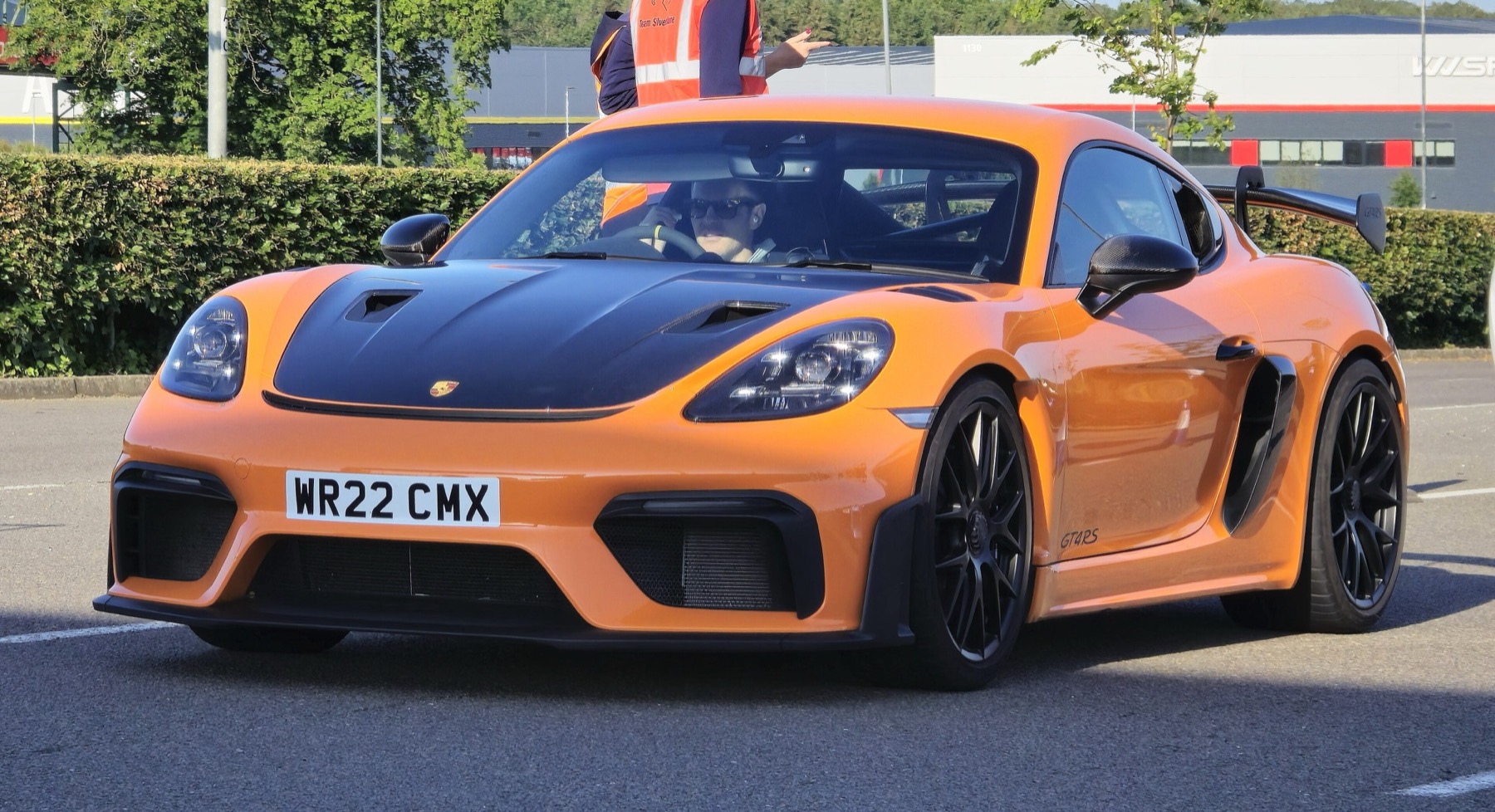
- Drive the cars that were engineered to be driven. A 911 GT3, a 718 Cayman GT4, a Huracán STO, or a 765LT that never sees a circuit is a car whose most expensive engineering sits idle, and the warranty exposure on a stock example at an instructed HPDE is smaller than paddock consensus suggests.
- Draw the line at competition, not at circuits. Timed and classified events land inside the plainest reading of the exclusion; instructed lapping generally does not.
- Treat the overrev log as the real risk. It is the one piece of evidence that is unambiguous, timestamped, and hard to argue with, and it is entirely within the driver's control.
- Leave a warranted car unmodified. Alteration is the exclusion that requires the manufacturer to prove nothing whatsoever about racing.
- Buy on-track coverage every time. The warranty argument is about components; the insurance argument is about the whole car.
Owners working through a specific marque can start with our Porsche, Ferrari, and McLaren hubs, where warranty terms, service intervals, and running costs are tracked model by model. Where a claim has already been refused, take the booklet language and the written denial to counsel before accepting it.