Buying a McLaren 750S: Allocation, the Carbon Tub, and McLaren's Depreciation Problem
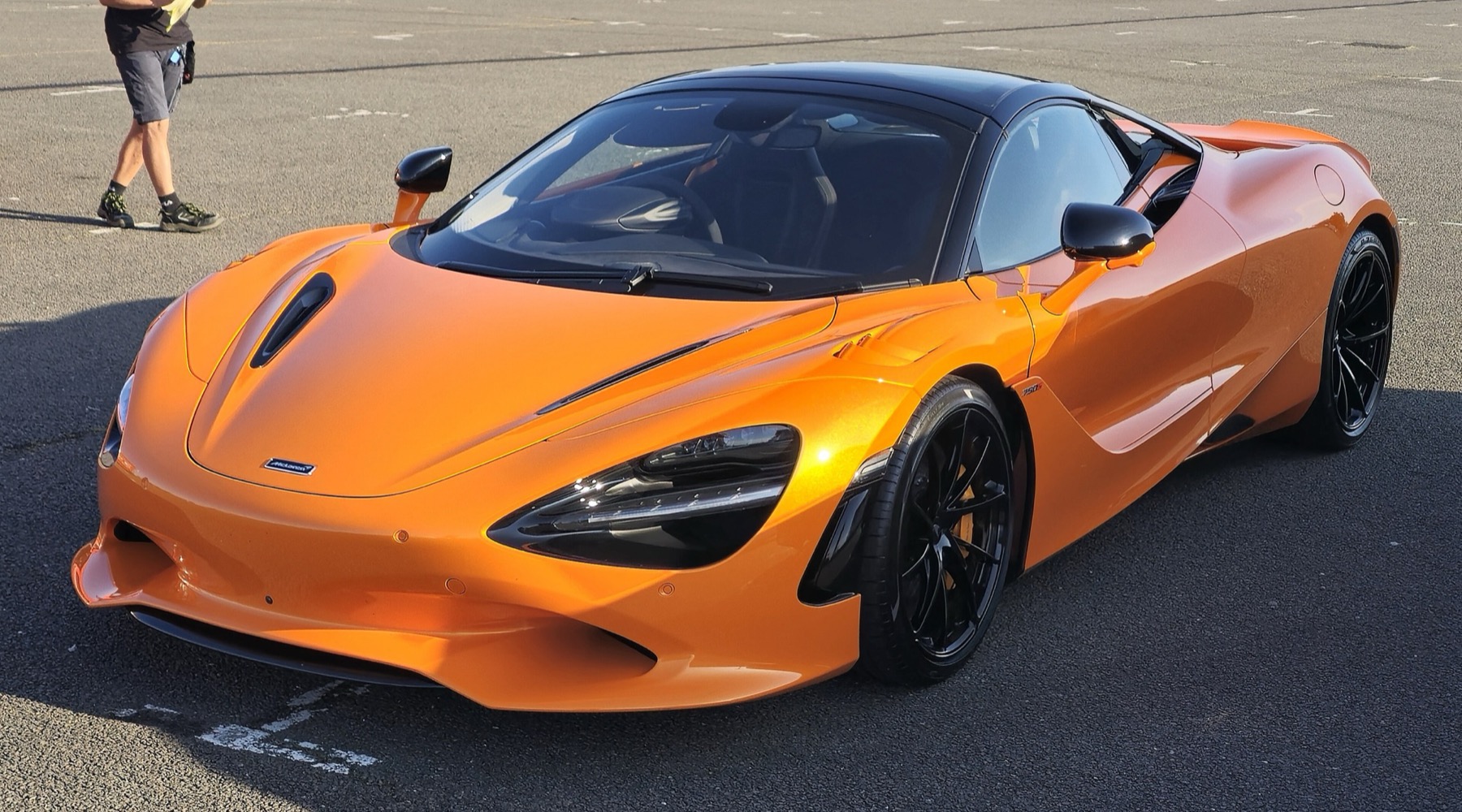
The
modern supercar is a study in contradiction, engineered to appreciate in driving pleasure while almost always depreciating in dollars. The McLaren 750S sits squarely inside that tension — a car that does very little wrong on the road and one fairly predictable thing on a balance sheet.Revealed in 2023 as the successor to the 720S, the 750S is the most accessible front-of-house McLaren you can order without a multi-year wait. That accessibility is exactly why its depreciation curve deserves your attention before you sign anything.
This guide is written for the second or third McLaren owner — the buyer who already knows the marque and wants the purchase structured correctly. The question is rarely whether the 750S is good; it is how to own one without funding an avoidable loss.
What the 750S Actually Is
The 750S is powered by a 4.0-litre twin-turbocharged V8 producing approximately 740 horsepower — 750 PS, the figure that gives the car its name — alongside roughly 590 lb-ft of torque. McLaren quotes a 0-60 mph time near 2.7 seconds and a top speed of approximately 206 mph (manufacturer figures).
Against the 720S it replaces, the changes are evolutionary — more power, slightly less weight, retuned suspension, and a sharper driver interface — rather than a reinvention. For a used buyer that continuity is useful, because the well-understood 720S ownership record largely carries over.
The base Coupé carries a manufacturer MSRP of approximately $324,000, with the Spider listed higher. Those are starting figures; options, paint-to-sample, and dealer dynamics move the real transaction price.
The Carbon Tub Is the Real Asset
Every modern McLaren is built around a carbon-fibre monocoque tub, a lineage running back to the MP4-12C's MonoCell. The 750S continues this with a carbon structure that does not rust, does not fatigue the way steel does, and underpins both rigidity and crash safety.
For a buyer, the tub matters in two specific ways. It means a structurally sound used 750S is, in chassis terms, effectively as good as a new one — and it means the car's long-term integrity is a far smaller gamble than its depreciation curve might suggest.
This is the quiet argument for buying used with confidence. The most expensive and most safety-critical component on the car is the one least affected by age or mileage.
Allocation: Easier Than a Ferrari, and That Cuts Both Ways
Here the McLaren ownership story diverges sharply from its Maranello rival. Ferrari gates allocation of its core and limited cars behind ownership history and a cultivated dealer relationship, often asking buyers to build a portfolio before a halo model is ever offered.
McLaren operates no such hierarchy on the 750S. A first-time buyer can typically order one — or buy from existing inventory — without the relationship-building ritual that defines Ferrari ownership.
That ease is a genuine convenience, but it is also the mechanism behind the depreciation problem. Supply that is never artificially constrained cannot generate the scarcity premium that defends residual values on harder-to-acquire cars.
Contrast this with how Porsche and Ferrari manage their halo products, a dynamic we examine in our Porsche 911 allocation guide. Scarcity, whether real or manufactured, is what props up a residual — and the 750S has very little of it.
McLaren's Depreciation Problem
This is the part of the story enthusiasts know and dealers rarely volunteer. Across the modern range, McLarens have historically depreciated faster than comparable Ferrari and Lamborghini models, and the 720S — the 750S's direct predecessor — is the clearest recent example.
Valuation trackers such as KBB and Hagerty are the right place to confirm current numbers, and the directional pattern is well established. A 720S that listed near $300,000 new has, in many cases, traded well below that within a few years — a first-period decline that estimates commonly place in the range of 30-45% over three to four years (estimated; verify any specific car against KBB and Hagerty).
Several forces compound the effect. McLaren's brand equity, while real, does not command the multi-generational collector loyalty Ferrari enjoys, and the company's relatively steady production keeps the used market well supplied.
The 750S will not escape this gravity, but being newer it sits earlier on the same curve. Steep depreciation is a loss for the first owner and, handled correctly, an opportunity for the second.
Buy New or Buy CPO?
This is the decision the depreciation curve actually forces. Buying new means absorbing the steepest part of the curve yourself, because the first-owner premium evaporates fastest.
Buying a low-mileage, manufacturer-approved used 750S lets someone else pay that depreciation — often for a car with delivery miles and documented history. McLaren's approved pre-owned programme exists precisely to make that path less risky.
The case for buying new is narrow but real. If you want a specific paint-to-sample or made-to-order specification, full factory warranty from day one, and the certainty of known history, ordering new buys those things at a known cost.
The case for CPO is broader. Approved pre-owned coverage typically extends a manufacturer-backed warranty and includes a multi-point inspection, which materially de-risks a used purchase relative to a private-party car.
If the 750S is fundamentally the durable, carbon-tubbed machine it appears to be, then letting depreciation do its work and buying near the bottom of the steep section is the rational move — the same logic we apply in our used-supercar depreciation analysis.
What to Inspect on a Used 750S
Buying used shifts the risk from depreciation to condition, so a proper pre-purchase inspection (PPI) is non-negotiable. The following deserve specific attention before money changes hands:
- Service history. Confirm scheduled servicing was completed on time at an authorised facility, with documentation for every interval.
- Structural and accident records. Verify the carbon tub and panels are undamaged and that any repairs were carried out to McLaren standard.
- Consumables. Inspect tyre age and wear along with the condition of the carbon-ceramic brakes, both of which are expensive to replace.
- Electronics. Check the infotainment, dihedral door mechanisms, and active aero behave correctly during the test drive.
- Specification. Favour a desirable, resilient colour and the lightweight or carbon options the used market quietly rewards.
Ownership Costs Beyond the Sticker
Depreciation is the single largest cost of supercar ownership, but it is not the only one. Scheduled servicing, consumables such as carbon-ceramic brakes and bespoke tyres, and specialist insurance all compound the true cost of running a 750S.
We break the full picture down in our guide to supercar ownership costs, and the short version applies cleanly here. Budget the running costs before the purchase, not after, because a car bought at a depreciation discount can still surprise an unprepared owner at the first major service.
Editorial Recommendation
For most buyers, the 750S makes the strongest financial sense as a late-model, low-mileage approved used car rather than a fresh order. Let the first owner absorb the early curve, then buy a well-specified, fully-documented example with its service history intact.
On specification, prioritise a Coupé over the Spider where outright residual resilience matters, a restrained but desirable colour over a divisive one, and the carbon and lightweight options the secondary market rewards. If you must buy new, order with resale in mind — paint-to-sample novelty pleases the first owner and tends to worry the third.
Above all, treat the 750S as a car to drive rather than an asset to flip. The carbon tub will outlast the depreciation; buy the experience, price the depreciation in honestly, and the McLaren ownership math works in your favour.
For the wider range and where the 750S sits within it, see our McLaren marque hub and our comparison of the Artura against Ferrari's 296.