The Best Year to Buy a Used Lamborghini Aventador: LP 700-4 Launch Cars, the S Update and the SVJ Premium
Lamborghini
built the Aventador for a little over eleven years, and the marque put final production at 11,465 units when the line closed in 2022. That is a large number for a twelve-cylinder flagship. It also explains why the used market now spans from approachable early coupes to limited-run cars that trade as collector property.What's more, the Aventador is now firmly in the past tense. The hybrid Lamborghini Revuelto has taken its place, which makes the Aventador the last naturally aspirated V12 flagship from Sant'Agata without electrification.
As a result, values have stopped moving on launch hype and started moving on condition, specification and scarcity. That makes this a good moment to work out which year, and which variant, gives the buyer the most car for the money.
The Aventador Timeline In Brief
Before comparing prices, it helps to know how the line developed. Keep in mind that US model years usually ran one year ahead of the European debut, so the dates below follow the US convention:
- LP 700-4 Coupe (2012–2016). The launch car, with a 6.5-liter naturally aspirated V12 rated at 700 PS (691 hp) and the seven-speed ISR automated single-clutch gearbox. The carbon-fiber monocoque and pushrod suspension set the template for every later car.
- LP 700-4 Roadster (2013–2016). Two removable carbon roof panels and a revised engine cover, on the same mechanical base as the coupe.
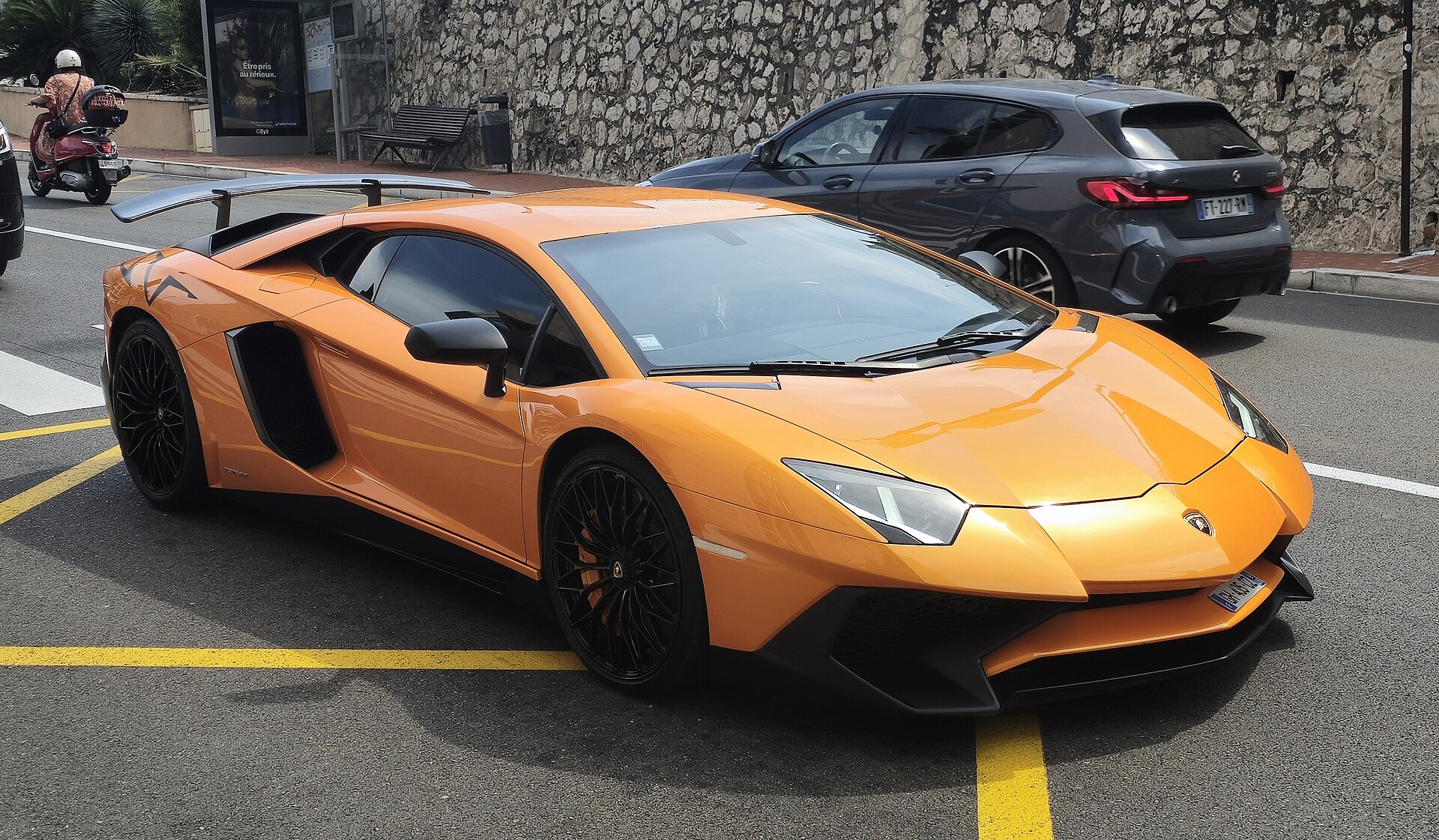
- LP 750-4 Superveloce (2016–2017). A lighter, more focused car at 750 PS, limited to 600 coupes and 500 roadsters.
- Aventador S (2017–2021). The mid-cycle update, rated at 740 PS (730 hp), with rear-wheel steering, retuned suspension and new drive modes.
- Aventador SVJ (2019–2021). 770 PS, ALA active aerodynamics and a production cap of 900 coupes and 800 roadsters.
- LP 780-4 Ultimae (2022). The final series car, at 780 PS, limited to 350 coupes and 250 roadsters.
All of the above share the same basic architecture. That said, the driving experience and the residual logic change a great deal from one variant to the next.
What The Aventador Cost New
Launch pricing frames everything that follows. The figures below are base US MSRPs as reported at each car's launch, before destination, gas-guzzler tax and options, which on many cars added tens of thousands of dollars.
| Variant | US model years | Output | Base MSRP at launch (reported) | Production | |---|---|---|---|---| | LP 700-4 Coupe | 2012–2016 | 700 PS / 691 hp | approx. $380,000 | Series production | | Aventador SV Coupe | 2016–2017 | 750 PS | approx. $493,000 | 600 coupes | | Aventador S Coupe | 2017–2021 | 740 PS / 730 hp | approx. $417,000 | Series production | | Aventador SVJ Coupe | 2019–2021 | 770 PS / 759 hp | approx. $518,000 | 900 coupes | | Aventador Ultimae Coupe | 2022 | 780 PS | approx. $500,000 | 350 coupes |
Sources: Lamborghini press releases and US pricing announcements at launch. Roadster versions carried higher prices across every series; verify the exact sticker on any specific car against its original window sticker.
The LP 700-4 Launch Cars (2012–2016)
The early cars are the entry point to Aventador ownership, and the price gap to an S is real. However, an LP 700-4 asks the buyer to accept a first-generation car in both the good and the less flattering sense.
The ISR gearbox is the defining trait. It shifts with a violence that some owners enjoy and many find tiresome in traffic, and its single clutch wears faster than a dual-clutch unit would under urban driving.
In addition, early cars were subject to a 2013 US recall covering 2012–2013 LP 700-4 coupes over an engine-fire risk linked to excessive idling. Any car you consider should show completed recall work on the NHTSA VIN lookup and in its dealer records.
Lamborghini refined the car through the run, with later model years receiving revised gearbox calibration and other running changes. Accordingly, a 2015 or 2016 LP 700-4 with documented dealer service is generally a more resolved purchase than a 2012 launch car at a similar price.
The Aventador S (2017–2021)
The S is where the Aventador became the car it was meant to be. Lamborghini raised output to 740 PS, added the LDS rear-wheel steering system, retuned the pushrod suspension with magnetorheological dampers and introduced the Ego drive mode, which lets the driver mix steering, suspension and powertrain settings.
The result is a car that turns in more willingly at low speed and settles more calmly at high speed. Of course, the ISR gearbox remains, but its calibration on the S is noticeably smoother than on launch cars.
The first 2017 model-year cars carried the usual launch-year teething items. For this reason, 2018 through 2021 S coupes, and the 2018-onward S Roadster, tend to be the cleaner targets, particularly with a dealer-stamped service book and a clutch-wear reading from the inspection.
SV, SVJ And Ultimae: The Limited-Run Premium
The numbered and limited cars sit in a different market altogether. Their prices follow production caps, specification and provenance far more than they follow mileage.
The SVJ is the clearest example. In 2018 it set a production-car lap record at the Nürburgring Nordschleife of 6:44.97, and its ALA 2.0 active aerodynamics give it a character the standard S cannot match.
Moreover, production was capped at 900 coupes, which keeps the supply of clean, well-specified examples thin. The SV, at 600 coupes, and the Ultimae, at 350 coupes, follow the same logic, with the Ultimae carrying the extra weight of being the final series-production Aventador.
If you are weighing one of these cars, it belongs in the same conversation as other homologation specials and limited-run collector cars. After all, the buyer is paying for scarcity as much as for performance.
Where The Used Market Sits Now
With the Revuelto delivering, the spread between the variants is easier to read. Standard LP 700-4 and S cars now price like used flagships, while the limited-run cars price like collector property.
The bands below are Marque Editors' estimates based on observed US asking-price spreads for coupes in good condition. They are not transaction data; verify any specific car against Hagerty valuation tools and current Cars.com and dealer listings before you commit.
| Variant | Estimated asking-price band (coupe) | What drives the spread | |---|---|---| | LP 700-4 (2012–2014) | estimated $230,000–$300,000 | Recall records, clutch wear, mileage | | LP 700-4 (2015–2016) | estimated $260,000–$330,000 | Running changes, service history | | Aventador S (2018–2021) | estimated $330,000–$430,000 | Spec, mileage, CPO status | | Aventador SV | estimated $450,000–$575,000 | Production number, condition, provenance | | Aventador SVJ | estimated $550,000–$750,000+ | Spec, special editions, mileage | | Aventador Ultimae | estimated $600,000–$850,000+ | Final-year status, single ownership |
Keep in mind that roadsters usually sit above coupes within each series, and that paint-to-sample, Ad Personam interiors and carbon packages can move a car well outside these bands. For a wider view on how open cars age, see our analysis of convertible depreciation.
What To Inspect Before You Buy
A carbon monocoque, a single-clutch gearbox and a high-revving V12 make an independent inspection non-negotiable. Here is what a thorough inspection should cover, including but not limited to:
- Clutch wear. The ISR clutch is a consumable, and a dealer or specialist can read wear from the gearbox control unit. Ask for the reading in writing rather than estimating from the odometer.
- Recall and campaign status. Confirm the 2013 fire-risk recall on early cars and any later campaigns through the NHTSA VIN lookup and Lamborghini dealer records.
- Front-lift system. Most owners specified the nose-lift option, and its hydraulics should raise and lower cleanly without warning lights.
- Accident and chassis history. Carbon monocoque repairs are specialist work, so any structural damage history changes the value conversation entirely.
- Service documentation. A stamped book, invoices and evidence of annual service matter more than low mileage on a car that has sat unused.
Our pre-purchase inspection guide walks through how to commission one and what the report should include. Furthermore, a Lamborghini Selezione certified pre-owned car carries its own inspection and warranty, which narrows the risk on an S or later example.
How The Aventador Compares Within The Marque
The Aventador sits in a very different place from the rest of the modern Lamborghini lineup. A buyer who wants daily usability and lower running costs is usually better served by the best year to buy a used Lamborghini Urus, and the V8 hybrid Lamborghini Temerario now occupies the brand's mid-engine entry point.
The Aventador, by contrast, is an occasion car. Its appeal rests on the twelve cylinders, the scissor doors and the sense of mechanical theater, and that appeal is now finite because no new car will offer the same combination.
If you are comparing it with manual-gearbox alternatives for the same budget, our look at manual supercars covers the other side of that decision. For a full overview of the marque, start with our Lamborghini brand hub.
Editorial Recommendation
The Aventador rewards a buyer who chooses the variant first and the price second. Our recommendations, by buyer profile, are as follows:
- Best overall: 2018–2021 Aventador S Coupe. It delivers the four-wheel steering, the 740 PS V12 and the smoother calibration that the launch car lacked, without the limited-run premium.
- Best value: 2015–2016 LP 700-4 Coupe with dealer records. It captures most of the experience at the lowest entry price, provided the clutch reading and recall records are clean.
- Best open car: 2018-onward Aventador S Roadster. It pairs the S chassis with the removable roof, and it suits warm-climate owners who will actually drive it.
- Best collector car: Aventador SVJ Coupe, low-mileage, single-owner, well-specified. It carries the strongest provenance story of the standard-body limited cars, and it is the one most likely to be discussed decades from now.
- Approach with caution: 2012 launch cars priced well below the market. The cheapest Aventadors are usually cheapest for a reason that an inspection will uncover.
Overall, the S coupe is the sweet spot for most buyers, while the SVJ is the right call only for those who are buying scarcity with intent. If you are structuring the purchase, our guide to exotic car financing explains how specialty lenders treat cars of this age and value.