Buying a Lamborghini Revuelto: Allocation Reality, Spec Strategy, and the V12 Hybrid Premium
Every
serious flagship purchase begins with a question that has nothing to do with the car itself: can you actually get one? With the Revuelto, that question matters more than horsepower, color, or carbon options combined.Lamborghini confirmed shortly after the car's March 2023 reveal that early production was effectively spoken for across roughly two years of build slots, according to the manufacturer's statements at launch. For a buyer reading this in 2026, that single fact reframes the purchase — this is an allocation exercise first and a configuration exercise second.
What Actually Makes the Revuelto Different
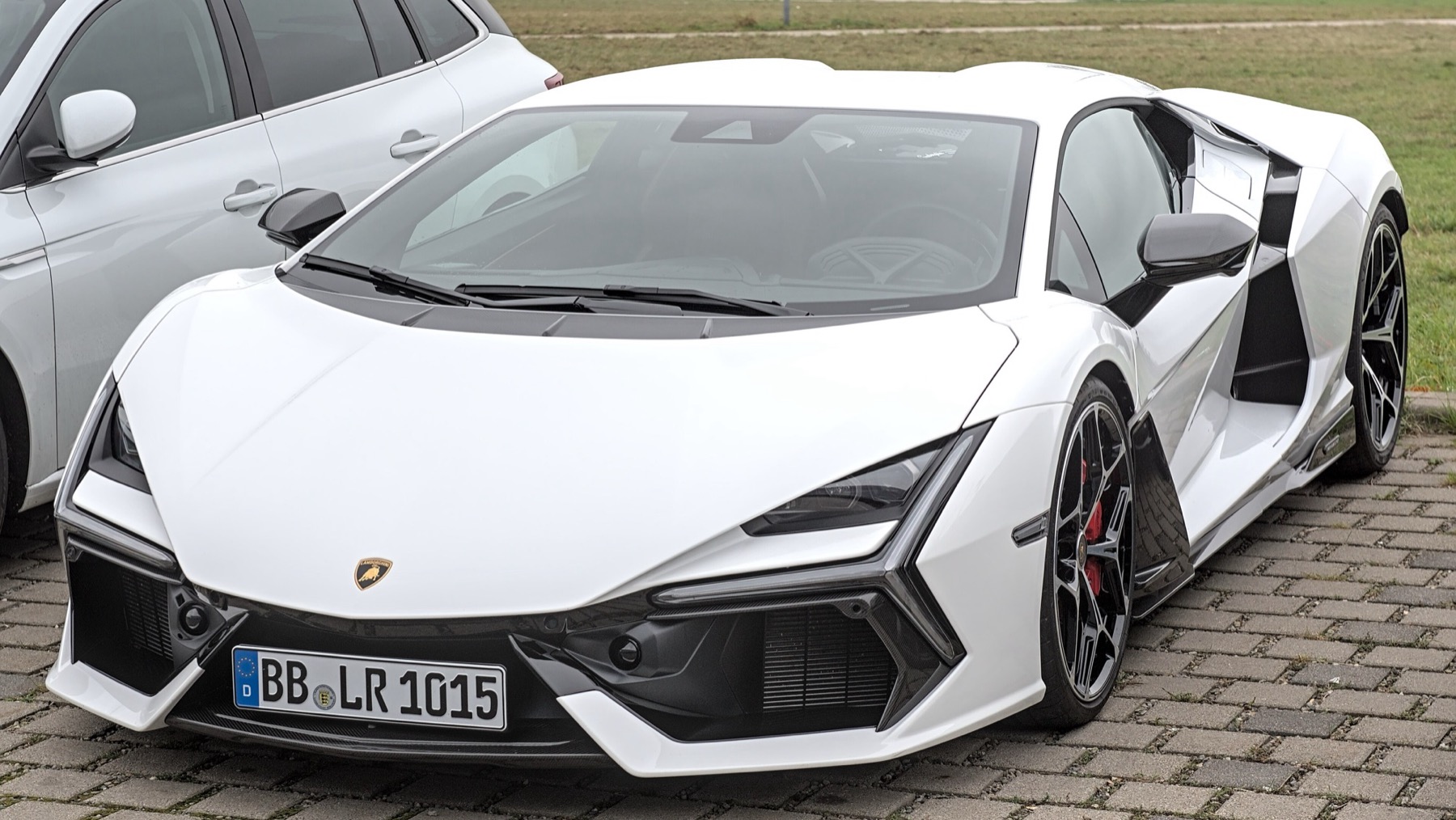
The Revuelto is Lamborghini's first series-production hybrid V12, and that sentence carries more weight than it appears to. It is the successor to the Aventador, but it is not a revision of it — the carbon monocoque, the powertrain, and the transmission are all new.
At its core sits a new 6.5-liter naturally-aspirated V12 (Lamborghini's L545 designation), which the manufacturer rates at 825 CV — roughly 814 hp — on its own. Three electric motors — two on the front axle and one integrated into the gearbox — bring the combined system output to a manufacturer-quoted 1,015 CV, or approximately 1,001 hp.
That powertrain pairs with the first dual-clutch transmission ever fitted to Lamborghini's V12 flagship line, replacing the Aventador's single-clutch automated gearbox. A modest 3.8 kWh battery supports the hybrid system and a brief electric-only mode, per Lamborghini's published figures, rather than meaningful EV range.
The hybrid layout also changes how the car drives, not only how quickly it accelerates. The front motors deliver electric all-wheel drive and torque vectoring, and Lamborghini offers an expanded set of drive modes that blend combustion and electric power differently depending on the setting.
The Allocation Reality
Allocation is the mechanism by which a manufacturer decides which dealers receive which cars, and in turn which clients a dealer chooses to offer them to. For a sold-out flagship, it is rationed less by money than by relationship and history with the marque.
In practice, a first-time Lamborghini buyer walking in to order a Revuelto in 2026 is unlikely to be near the front of the queue. Dealers protect allocation for established clients — those with prior Huracán, Urus, or Aventador ownership, and increasingly those who have committed to limited models.
If you are not yet a known client, the realistic path is to start the relationship now rather than at the moment you want the car. A documented history — a Urus or Huracán bought and serviced at the same dealer — is the currency that moves you up an allocation list, and it cannot be created retroactively.
This is the same dynamic we documented in the Porsche 911 allocation playbook, and it holds across every supply-constrained marque. The difference with the Revuelto is severity — there is only one current Lamborghini V12, and it has no direct series-production rival.
What the Revuelto Costs
We will not pretend to a single transaction figure, because allocation-constrained cars rarely trade at one. Lamborghini's US starting MSRP has been reported in the low-to-mid $600,000s (estimated — verify against current Lamborghini pricing and your dealer's window sticker), before options and taxes.
Options move that number materially. Ad Personam paint, carbon packages, and bespoke interior work can add tens of thousands of dollars, and on a car this scarce the realistic out-the-door figure often lands well above base MSRP — at times with secondary-market examples trading at a premium to sticker.
Financing changes the picture only at the margins. Many buyers at this level use specialist exotic-car lenders or balloon-style structures, but on an allocation car that holds its value the more relevant variable is acquisition price, not interest rate.
Spec Strategy: Order Like the Car Will Be Sold Again
Even buyers who intend to keep a Revuelto indefinitely should configure it as though a future owner is watching, because flagship residuals reward discipline. The goal is a specification that reads as considered rather than loud.
A few principles tend to protect long-term desirability:
- Restraint in primary color. A confident classic — a tasteful blue, a deep green, or a well-chosen Ad Personam hue — typically ages better in the secondary market than a hard-to-place statement color.
- Carbon where it is functional. The carbon-fiber monocoque is structural, but optional exposed-carbon and aero packages should be chosen for coherence, not box-ticking.
- Document everything. Retain the Ad Personam build sheet, books, and tools — provenance and a complete history file matter as much on a modern flagship as on a used-market Ferrari.
The thread through all of the above is legibility. A Revuelto that a future buyer can immediately understand — sensible color, coherent options, full history — is the one that holds its position.
The V12 Hybrid Premium
The Revuelto's value case rests on a fact that will not repeat: it is the car that carried Lamborghini's naturally-aspirated V12 across the threshold into electrification. That historical position tends to support residual logic in a way that mid-cycle cars do not.
Flagship V12 Lamborghinis — particularly first-of-line and final-of-line cars — have historically shown stronger residual behavior than mainstream exotics, though past performance is no guarantee and no firm depreciation curve has established for a model still in backlog. We would treat any specific resale projection on the Revuelto today as estimated.
The Revuelto is the bridge between the naturally-aspirated V12 era and whatever Lamborghini builds next — and bridges tend to be remembered.
What Ownership Actually Costs
The sticker is the smallest of the long-term numbers on a car like this. Scheduled servicing, tires, insurance, and the eventual brake and high-voltage considerations all compound, and prospective owners should budget conservatively rather than optimistically.
We will not quote a precise annual figure, because it varies by mileage, region, and use — any specific service or insurance number here would be estimated. As a discipline, treat consumables, annual maintenance, and insurance as a meaningful recurring line, and confirm current scheduled-service intervals and warranty terms with your dealer before signing.
Hybrid-specific considerations add a layer the Aventador never had. The high-voltage system and battery introduce service items that a purely combustion flagship does not, so factory warranty coverage and the dealer's familiarity with the hybrid hardware are worth confirming up front.
Where It Sits in the Range
The Revuelto anchors the top of Lamborghini's series line, above the Urus and the smaller mid-engined cars, and it sits in a different conversation from the limited-run specials. For collectors weighing a halo car, our coverage of the Lamborghini Fenomeno Roadster and the broader Lamborghini brand hub give context on where the series flagship sits against the limited editions.
Editorial Recommendation
For a buyer with the relationship to secure an allocation, the Revuelto is a straightforward yes — it is the only new hybrid V12 on the market and it occupies a historically meaningful position. The discipline is in the order, not the decision.
- Secure allocation through relationship, not premium. Build history with an authorized dealer before chasing a marked-up secondary car; an at-MSRP allocation is the stronger economic outcome.
- Specify for legibility. Classic primary color, coherent carbon, and full Ad Personam documentation read better to the next owner than volume.
- Treat resale projections as estimated. Buy it because it is the V12 hybrid bridge car, not on a promised return — and commission a pre-purchase inspection (PPI) on any secondary example.
If you are mapping a Revuelto allocation against the rest of the segment, the Lamborghini brand hub and our used-Ferrari depreciation analysis are the right next reads. The Marque Editors track allocation and residual behavior across every flagship marque.