Buying a Lamborghini Temerario: First-Cycle Allocation, the V8 Hybrid Powertrain, and Early Spec Strategy
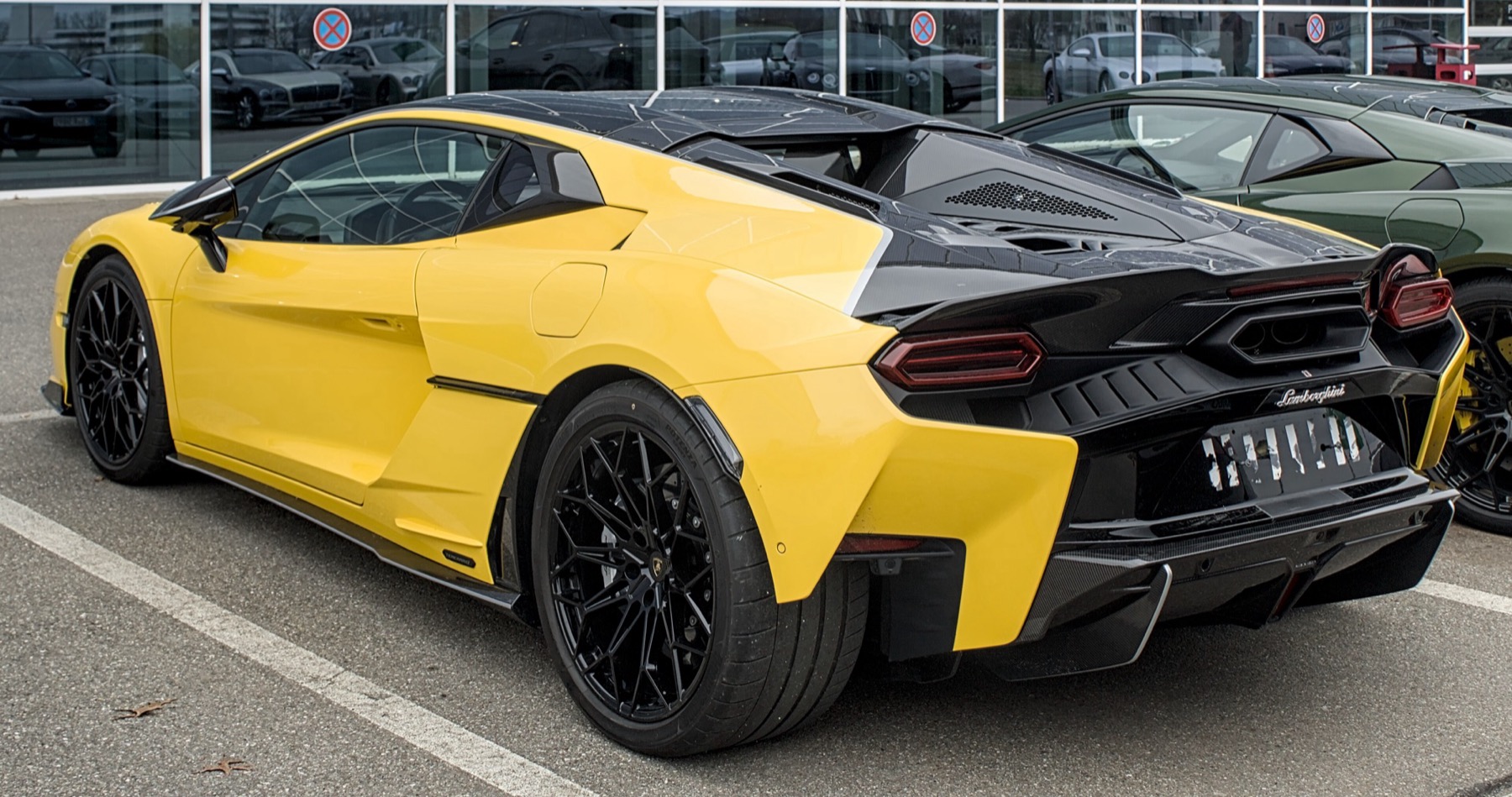
Succession
is the hardest commercial problem a marque faces. The replacement has to carry the volume, the margin, and the emotional argument of the car it displaces, and it usually has to do so on an architecture the existing owner base never asked for.That is the position the Lamborghini Temerario now occupies. It follows the Huracán, the best-selling model in the marque's history, and it arrives with a twin-turbo hybrid V8 where a naturally-aspirated V10 used to sit.
The engineering debate will be settled elsewhere. The buying question is more immediate — first-cycle cars, meaning the earliest allocation rounds after a launch, behave differently in the market than the same model will three years from now, and a purchase made in this window has to be built around that difference.
What The Temerario Replaces
The Huracán was never a halo car. It was Lamborghini's volume model, the working inventory of the dealer network, and the profit base that funded the V12 program above it.
Lamborghini has reported Huracán production past 20,000 units across its run, against company-reported global deliveries in the ten-thousand-unit range in recent years. A car built at that volume is allocated on entirely different logic than a limited series, and buyers who learned their allocation etiquette from special-series cars routinely misread it.
The consequence is that early scarcity here is a production-ramp artifact rather than a structural cap. Before pricing an early car as though supply were permanently limited, read our used Huracán market analysis — the outgoing car's residual behavior is the closest available proxy.
The Powertrain, Stated Plainly
Lamborghini's published specification is precise enough to reason from, and it is worth separating from the commentary that has accumulated around it. Here is what the marque states:
- The combustion engine. A 4.0-liter twin-turbo V8 in a hot-V layout, rated at 789 hp and revving to 10,000 rpm — a redline Lamborghini positions as the highest of any production turbocharged V8.
- The electric side. Three motors, two of them axial-flux units on the front axle and one oil-cooled motor sited between the engine and the eight-speed dual-clutch, fed by a 3.8 kWh lithium-ion pack.
- Combined output. 907 hp of system output, with a claimed 0–62 mph time of 2.7 seconds and a stated top speed of 343 km/h, or 213 mph.
- Chassis and weight. An aluminum spaceframe with a claimed dry weight of 1,690 kg, plus an optional Alleggerita lightweight package that Lamborghini says removes up to 25 kg.
- Drivetrain detail. The transmission carries no mechanical reverse gear; as on the Revuelto, reversing is handled by the front electric motors.
Every figure above is a manufacturer specification, quoted as published rather than independently verified. Homologated electric-only range, EPA fuel-economy ratings, and instrumented road-test numbers are separate data, and none of them should be assumed from the press material.
The V10 Question, And Who It Actually Affects
There is a genuine constituency that wanted another naturally-aspirated V10, and it is worth being direct about what that group is buying instead. In practice they are buying late Huracán cars — Tecnica, STO, and the final Sterrato run — which is a large part of why those variants have held up better than an ordinary end-of-cycle model would.
That dynamic cuts both ways. The V10 holdouts were rarely the incremental buyer for a new car anyway, and the marque has already shown with the Revuelto's V12 hybrid architecture that its client base will absorb electrification when the performance case is unambiguous.
What has genuinely changed is the competitive set. The Temerario now argues against hybrid rivals on their own terms rather than on engine configuration, and our Artura versus 296 GTB comparison covers how that segment settled — a useful counterweight to the non-hybrid case still made by the McLaren 750S.
How First-Cycle Allocation Actually Works
The most common mistake first-cycle buyers make is treating allocation as a queue. It is not a queue, and deposit order is close to irrelevant at a well-run Lamborghini dealer.
Allocation is a quantity of build slots the factory assigns to each dealer for a given model year, and the dealer decides who receives them. That decision is made against a client list the dealer already has, which is why the first cars almost always go to people who bought the previous ones.
Our broader allocation reality analysis covers the mechanics across marques, and the parallel Porsche 911 allocation piece is instructive because Porsche's system rewards a slightly different set of behaviors. The Lamborghini network is smaller, which concentrates the effect rather than diluting it.
What Dealer Loyalty Weighting Looks Like In Practice
Dealers rarely publish their criteria, but the inputs are consistent across the network and reasonably well understood by anyone who has sat on a list. The weighting generally includes:
- Purchase history. How many cars you have bought from this specific store, and whether any of them were harder-to-place inventory rather than only the desirable specs.
- Retention. How long you kept each car. A buyer who flipped an allocation inside twelve months is materially disadvantaged on the next one.
- Service and parts relationship. Whether the cars came back to that store for maintenance, tires, and warranty work, which is real margin to the dealer.
- Spec cooperation. Whether you were willing to take a dealer-influenced specification when the factory required it, rather than holding out for a configuration that delayed the slot.
- Event participation. Attendance at track days, Ad Personam sessions, and marque events, which the dealer reports upward and which reads as a durable relationship.
None of this can be manufactured in a single transaction, which is the honest answer for a first-time Lamborghini buyer. What can be built is the first entry in that record, and a dealer-ordered car is worth more on that ledger than any secondary-market purchase.
Launch-Spec Premiums And What They Are Worth
Early cars on a new Lamborghini frequently trade above MSRP, sometimes well above, and the honest framing of that premium matters more than its size. It is money paid for calendar position, not for the car.
A launch-year premium is a cost of entry, not a floor under your residual.
These premiums compress as allocation catches up with demand, and they compress fastest on high-volume models — which the Temerario is designed to be. Any specific figure quoted to you should be checked against actual transaction data from KBB, Edmunds, or Hagerty rather than against asking prices on listing sites, where unsold aspiration is indistinguishable from a market.
Early Spec Strategy
Specification on a first-cycle car carries more weight than it does later in a model run, because the early build population is small and unusually visible. The cars ordered in the first two model years are the ones that define what a well-specified Temerario looks like, and the market is unforgiving toward the ones that got it wrong.
Color, And The Ad Personam Question
Lamborghini's Ad Personam program supports effectively unlimited paint, and the temptation on a first-cycle car is to use all of it. The specifications that travel best are historic Lamborghini colors and documented Ad Personam finishes, both of which are verifiable on the build sheet and legible to the next buyer.
A one-off color chosen purely to be unrepeatable narrows the resale pool rather than widening it. Keep in mind that the second owner is buying a car they did not configure, and legibility is what makes that transaction easy.
Carbon And Structural Options
Options that cannot be retrofitted are the ones that hold. Carbon structural components, the higher-specification brake package, and any factory aero or chassis content fall into that category, because a later buyer cannot add them without a rebuild.
Cosmetic content that a specialist can replicate — interior trim swaps, wheel finishes, badging — is close to value-neutral at resale. Order it because you want it, not because you expect it back.
The Alleggerita Package
The wider point is that factory-fitted lightweight packages read as intent. A car ordered by someone who understood the model tends to find its next owner faster than an identically-priced car specified from the middle of the option list.
Interior Restraint
The interior is where first-cycle cars most often lose money. Contrast stitching in a color that dates, printed carbon across every surface, and heavily personalized headrests all narrow the audience without adding to the case.
A restrained cabin in a durable leather-and-Alcantara combination costs less and sells more easily. That is a repeatable pattern across the segment, not a Lamborghini-specific one.
Buying An Early Car Second-Hand
Some buyers will skip the allocation question entirely and take an early car off the secondary market at twelve to twenty-four months. That is a defensible strategy, provided the diligence is done properly.
First-model-year cars of any hybrid architecture attract software and calibration campaigns, and those records are the single most useful document in the file. A car with a complete authorized-dealer history and a clean campaign record is worth a premium over an otherwise identical example with gaps.
Editorial Recommendation
For a buyer entering the Temerario cycle now, the following is where we would put the money:
- Order through a dealer rather than buying an early flip. The relationship is the asset, and it compounds into every future allocation.
- Take the Alleggerita package. It cannot be added later, and factory lightweight content has historically widened rather than narrowed the resale audience.
- Specify a historic Lamborghini color or a documented Ad Personam finish. Verifiable and legible beats unrepeatable.
- Buy the non-retrofittable options and skip the cosmetic ones. Carbon structure and the upgraded brake package hold; trim finishes do not.
- Treat any over-MSRP adjustment as a consumed cost. Price the car as though that money is gone, because at resale it generally is.
- Verify every number before you transact. Manufacturer specifications, KBB, Edmunds, and Hagerty transaction data — not listing asks.
Where To Start
If you are approaching this without an existing dealer relationship, metro market dynamics matter more than most buyers expect, and our Lamborghini in Los Angeles guide covers how allocation behaves in a high-density market where several stores compete for the same clients. Start the relationship before you need it, and be candid with the dealer about what you will actually keep.
The Temerario is going to be built in volume, and volume is a buyer's friend on a two-year horizon. The cars worth owning out of this first cycle will be the ones specified with a second owner in mind.
— The Marque Editors