Buying a Lamborghini in Los Angeles: Dealer Dynamics, Allocation, and California Registration Costs
Los Angeles
registers more Lamborghinis than almost any other American city, and that density quietly reshapes how the car is bought here. Allocation, dealer leverage, and the state's tax math all bend around one fact: local demand runs deep while supply stays deliberately thin.That reality rewards the prepared buyer and penalizes the one who expects to name a color and drive away the same afternoon. What follows is a city-specific playbook — how allocation works in practice, how to earn a build slot, and the California costs first-time owners routinely underestimate.
Why Los Angeles Changes the Lamborghini Equation
Automobili Lamborghini builds roughly 10,000 cars a year globally (company delivery figures), and the United States is its largest single market. Southern California absorbs a large share of that American volume, concentrated across a small number of stores.
The consequence is direct. When a marque caps build numbers and one metro concentrates the buyers, the dealer — not the customer — sets the terms of the sale.
Several authorized dealers serve the greater LA basin, from Beverly Hills down through Orange County. That looks like leverage for the buyer, but the strongest allocation for limited models flows to the clients each store already knows.
How Allocation Actually Works Here
Allocation is the number of cars a manufacturer assigns a dealer for a given model over a set period, often quarter by quarter. It is not generic supply, and it is the single most misunderstood part of buying a modern Lamborghini.
For the plug-in hybrid Revuelto, which starts above $600,000 before options (manufacturer MSRP), the queue at a busy LA store can span model years. The car is not sold out because production stopped; the slots are simply spoken for.
Anyone who has worked through Porsche's allocation system for its special models will recognize the mechanics. Priority follows purchase history, spec discipline, and the dealer's read on whether a buyer intends to flip the car.
Established Urus and Huracán owners move up the queue. A first-time buyer with no history starts at the back — which is exactly where the relationship work begins.
Allocation also moves. A slot can open when another client's deal collapses, and the dealer fills it from a short list of trusted buyers, not from a walk-in.
Building the Dealer Relationship
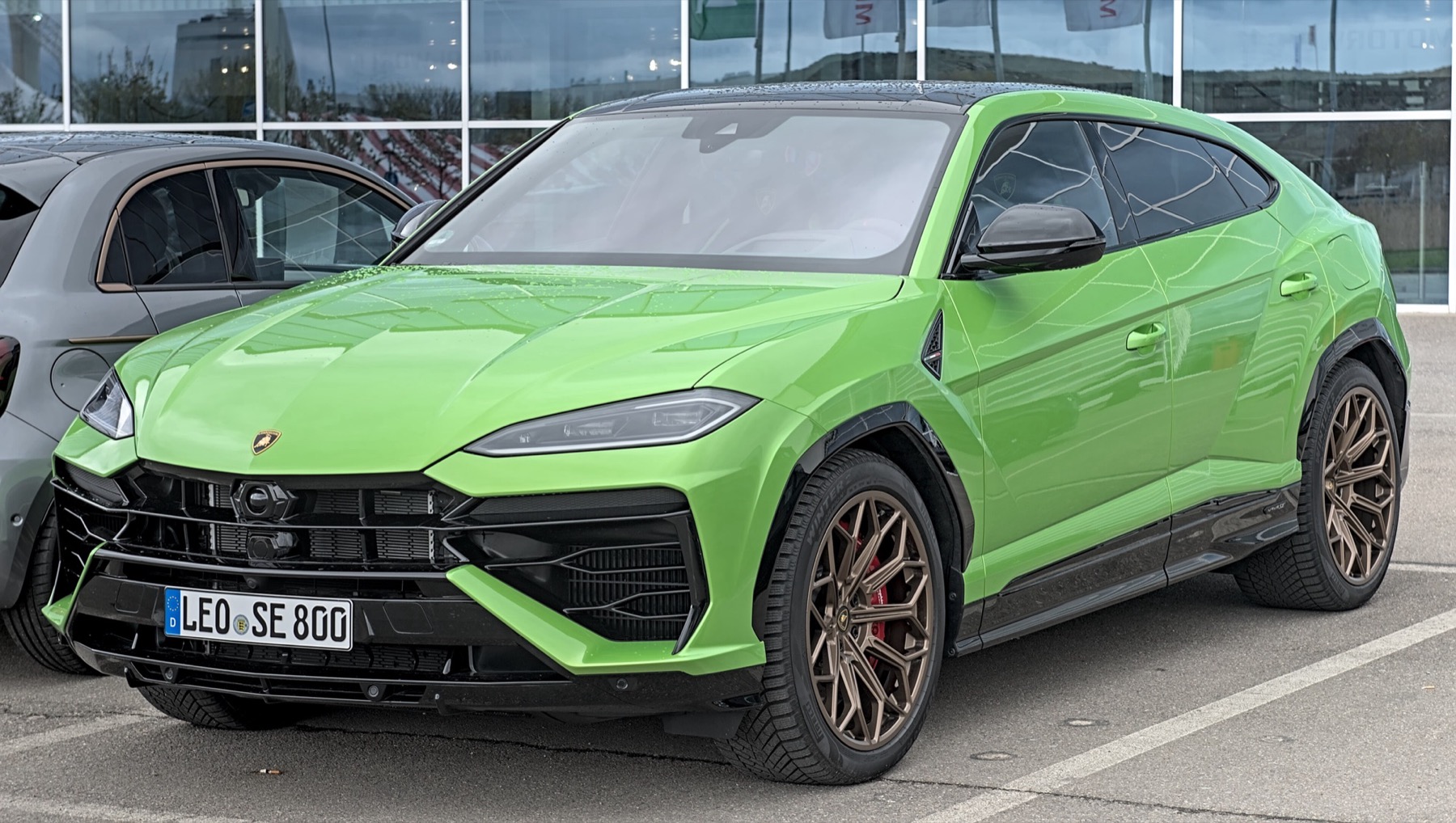
The entry point for most new LA buyers is not the halo car. It is a well-specified Urus, which opens in the low-to-mid $200,000s (manufacturer MSRP) and serves as the marque's volume model.
Buying the SUV first is not a consolation prize. It establishes the purchase history that makes a later coupe allocation plausible.
Dealers watch for signal. A client who takes delivery, keeps the car, services it at the store, and does not immediately list it on the secondary market earns priority on the next, scarcer build.
The reverse is equally true. A reputation for flipping allocation cars for quick profit quietly moves a buyer to the bottom of every list in a market this interconnected.
Spec, Waitlists, and the Options Game
Specification is where LA buyers gain or lose ground. Ad Personam, Lamborghini's bespoke commissioning program, can add tens of thousands to a build — and a decisive, coherent commission signals a serious client.
Hard-to-resell specifications can work against you. Dealers weigh whether a build will be easy to place if a deal falls through, so a tasteful spec is both an aesthetic and a strategic decision.
The used Huracán market is the pressure-release valve for buyers unwilling to wait. It trades the allocation game for immediate availability, usually at or near original MSRP for the more desirable variants.
Waitlist times are not published and vary by model, spec, and how a store values the client. Treat any promised timeline as an estimate, never a contract.
The California Registration and Tax Math Buyers Underestimate
This is where the six-figure surprise lives. California layers sales or use tax, a vehicle license fee, and registration charges on top of the purchase price — and none of it is trivial on a car priced like this.
California's statewide base sales-tax rate is 7.25%, but district taxes push the effective rate across most of LA County to roughly 9.5%–10.25% (California Department of Tax and Fee Administration).
On a $600,000 Revuelto, a 9.5% rate implies about $57,000 in sales or use tax alone — before any other fee (example calculation at the CDTFA rate).
The vehicle license fee adds to that. The VLF is 0.65% of the purchase price and depreciates on a set schedule in later years (California DMV), roughly $3,900 in year one on that same car.
| Cost line | Basis | Estimated on a $600,000 car | |---|---|---| | Sales / use tax | ~9.5%–10.25%, LA County (CDTFA) | ~$57,000–$61,500 | | Vehicle license fee, year 1 | 0.65% of price (DMV) | ~$3,900 | | Registration + CHP + transportation fee | DMV fee schedule (highest tier over $60,000) | Several hundred dollars |
The figures above are estimates built from published state rates, not a quote — confirm against current CDTFA and DMV schedules before any transaction.
The Out-of-State Registration Temptation
Buyers routinely ask whether a Montana LLC or an out-of-state address can sidestep California tax. On a $600,000 car, the apparent savings are large enough to tempt otherwise careful people.
California generally presumes a vehicle purchased out of state and brought in within 12 months is subject to use tax (CDTFA). Enforcement of Montana-registration schemes has real consequences, including back taxes and penalties.
The disciplined move is to budget the California number honestly rather than engineer around it. The tax is a cost of ownership in this state, not an optional line.
Ownership Costs Beyond the Sticker
Insurance in dense urban ZIP codes runs high, and specialist coverage for a six-figure car is its own line item. Secure a binding quote before purchase, not after.
Service intervals, tires, and consumables scale with the car. These costs are predictable but not small, and they compound on top of the registration math, a pattern broader supercar ownership economics show clearly.
Editorial Recommendation
For a first Lamborghini in Los Angeles, the disciplined path is clear.
- Start with a Urus to build purchase history — ideally specified thoughtfully and kept, not flipped.
- Commit early on a coherent spec; tasteful, resaleable Ad Personam commissions earn dealer trust and allocation priority.
- Budget the full California number, not the MSRP: add roughly 10% in tax, plus the VLF and DMV fees, before you sign.
- If you will not wait, buy used — the Huracán trades allocation politics for availability at a market premium.
The city that makes allocation hardest also rewards the buyer who treats the relationship as the actual product. For model-by-model context, explore the Lamborghini marque hub and our Los Angeles city guide, and see how Miami's Ferrari market compares for another city's version of the same game.