The Lamborghini Huracán on the Used Market: Where V10 Values Settle as the Temerario Arrives
Every
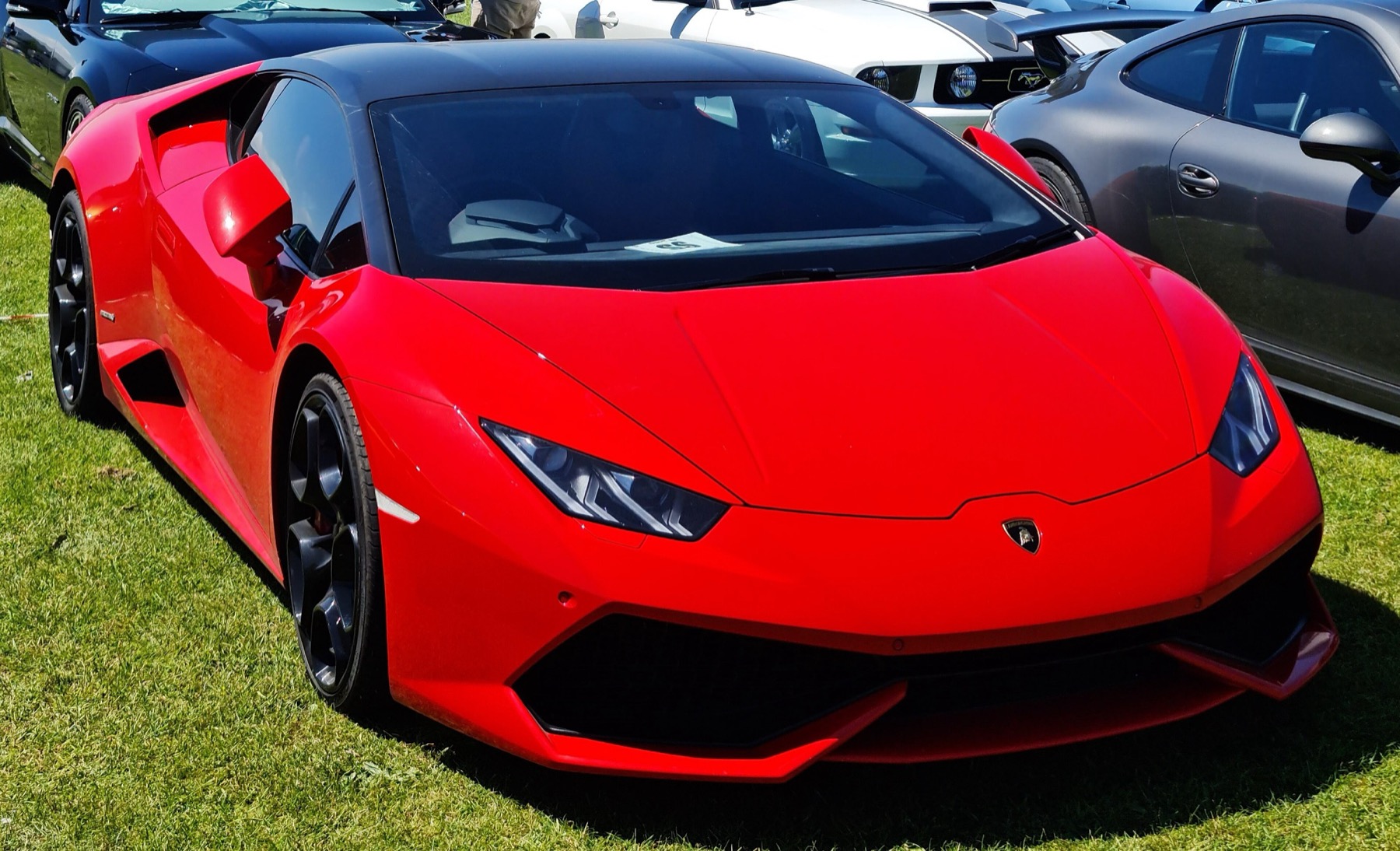
Lamborghini eventually becomes a period piece, defined as much by what powered it as by how it looked. The Huracán is now one of those cars — the last naturally-aspirated V10 the marque will build, closed out by the arrival of the hybrid Temerario.Lamborghini revealed the Temerario at Monterey Car Week in August 2024, pairing a flat-plane-crank twin-turbo V8 with three electric motors for a combined output the company estimates near 907 horsepower. That single decision rewrote the residual logic for every Huracán now sitting on the used market.
What the Temerario Actually Changes
For a decade the Huracán's 5.2-litre V10 was simply the engine you bought a baby Lamborghini to hear. The Temerario does not replace that sound so much as retire it, trading natural aspiration for turbochargers and electrification.
That matters because supercar values increasingly turn on what a car represents, not only how it drives. The Huracán now closes a lineage that runs back through the Gallardo to Lamborghini's first volume V10 — and the market reads "last of" as a floor under depreciation.
Keep in mind that this premium is uneven. It accrues to the cars enthusiasts already prize — the limited and track-bred variants — far more than to a high-mileage Spyder.
How the Temerario's Arrival Frames Used Pricing
The Temerario's existence does more than retire the V10 — it resets the reference point new-car shoppers use. As the hybrid successor commands its own estimated six-figure premium and a multi-year allocation queue, the used Huracán becomes the only way to buy into current-era baby-Lamborghini engineering without the wait.
It is also, now, the only way to buy the V10 at all. That exclusivity is the single most important variable in every valuation that follows.
How Far Has the Base Huracán Fallen?
The entry point into V10 ownership is the early LP 610-4 coupé, launched at an estimated $237,000 in the US for the 2015 model year before options. Clean examples now trade well below that, which is the natural arc of any decade-old supercar.
Depreciation on a car like this is front-loaded. The steepest losses land in the first three to four years, after which the curve bends toward flat as the surviving examples concentrate in enthusiast hands.
iSeeCars depreciation studies have consistently placed exotic-badged supercars among the slowest-depreciating vehicle segments over a five-year horizon. The Huracán fits that pattern — it falls, but more gently than a mainstream luxury sedan, and a 2015–2017 coupé has already absorbed the early hit.
That said, the base coupé and the open-top Spyders carry the softest residuals in the range. They were built in the greatest numbers, and the market rewards rarity.
Mileage discipline matters more here than on a daily-driven luxury car. A Huracán with genuinely low, well-documented miles can sit a clear tier above an otherwise identical car with heavy use, because buyers at this price treat mileage as a proxy for how the car was kept.
Which Variants Hold and Which Still Fall
The Huracán is not one car but a family, and residual posture varies sharply across it. The table below sorts the principal US-market variants by how firmly each is holding, using estimated posture rather than point prices — always confirm against live Hagerty valuation tiers and iSeeCars or Cars.com listing data before you transact.
| Variant | Years (approx.) | Drivetrain | Residual posture (estimated) | |---|---|---|---| | LP 610-4 Coupé | 2015–2019 | AWD | Softest — deepest discount off MSRP | | LP 610-4 / EVO Spyder | 2016–2024 | AWD | Soft — Spyders trail coupés | | LP 580-2 | 2016–2018 | RWD | Mixed — enthusiast-favoured rear drive | | EVO / EVO RWD | 2019–2024 | AWD / RWD | Moderate — the volume modern car | | Performante | 2017–2019 | AWD | Firm — special-series floor | | Tecnica | 2022–2024 | RWD | Firm — late, driver-focused | | Sterrato | 2023–2024 | AWD | Firm — low volume, novelty value | | STO | 2021–2024 | RWD | Firmest — limited, track-bred |
The Performante, with its ALA active aerodynamics and a one-time Nürburgring production-car lap record, established the pattern. It set a special-series floor that the later STO, Tecnica and Sterrato have each defended in their own way.
The LP 580-2 deserves a specific note. As the first rear-drive Huracán it drew a particular following, and the rear-drive cars across the range — the 580-2, the EVO RWD, the Tecnica and the STO — increasingly carry a desirability the all-wheel-drive volume cars do not.
The STO sits at the top of that order. As a road-legal interpretation of Lamborghini's Super Trofeo race cars, built in limited numbers and closing out the rear-drive track line, it is the variant most likely to hold at or near its estimated $327,000-plus MSRP.
Why the Naturally-Aspirated Premium Is Real
There is a reason the V10's retirement reads as a value event rather than a footnote. The same engine architecture powered the Audi R8 on the used market, and both cars now trade on scarcity of a configuration no manufacturer will build again at this price.
Of course, sentiment alone does not set a floor — supply does. Lamborghini built the Huracán in far greater numbers than any single limited variant, so the premium concentrates where production was deliberately constrained.
What Drives Price Variation Within a Variant
Two Huracáns of the same model year can sit thousands of dollars apart, and the gap is rarely about the engine. Mileage, colour, options and history do most of the work.
Paint-to-sample and desirable factory colours command a premium, as does a documented service record with books and tools present. A pre-purchase inspection by a marque-literate specialist is non-negotiable at this level — the cost is trivial against the downside of an undocumented clutch or suspension history.
Be aware that the open-top tax runs both ways. Spyders cost more new but generally trail equivalent coupés used, so the configuration that flattered the original buyer can work in a second owner's favour.
Ownership Economics Beyond the Purchase Price
The transaction price is the beginning of the math, not the end. Service intervals, consumables and insurance all scale with the badge, and we cover the full picture in our guide to supercar ownership costs.
Tyres, brakes and annual servicing on a V10 Lamborghini are exotic-grade expenses, and a major service can run into five figures depending on what it includes. Factor a realistic annual ownership budget before you fixate on the headline discount.
Insurance is the line item buyers most often underestimate. Agreed-value exotic coverage on a six-figure Lamborghini varies widely by driver profile, storage and annual use, and it is worth quoting before purchase rather than after.
Editorial Recommendation
For most buyers, the Huracán's appeal is the V10 itself, and the smart approach is to match the variant to intent rather than chase the lowest sticker.
- The value play: a 2015–2017 LP 610-4 coupé, under-average mileage, full history, desirable colour. This is the cheapest honest way into the naturally-aspirated V10, and the curve here is already flat.
- The driver's keeper: an EVO RWD or Tecnica. The rear-drive cars deliver the engine with the least mass and the most engagement, and residuals are holding.
- The hold-or-appreciate play: Performante or STO, bought on documented provenance and condition. These are the variants the "last V10" narrative protects most directly.
- Spec to chase: paint-to-sample or a strong factory colour, complete service records, books and tools, single-digit-thousand mileage.
- Spec to approach with caution: high-mileage Spyders without history, and any car declined a pre-purchase inspection.
The Huracán's stablemate at the top of the range, the V12 hybrid Revuelto, shows where Lamborghini is headed, and the Lamborghini marque hub tracks the rest of the lineup. For a parallel read on how exotic residuals settle, our used Ferrari depreciation analysis applies the same range-not-point method to Maranello.
The naturally-aspirated era is over, and the used market has not finished pricing that in. Buy the variant that matches how you intend to use the car, document everything, and the V10's second-owner economics are among the more rational in this corner of the market.
Frequently asked questions
Is the Lamborghini Huracán the last naturally-aspirated V10?
Yes. The Huracán is the final naturally-aspirated V10 Lamborghini, succeeded in 2024 by the Temerario, which pairs a twin-turbo V8 with three electric motors for an estimated 907 hp combined.
Which Huracán variant depreciates the most?
The base LP 610-4 coupé and the Spyders carry the softest residuals as the highest-volume cars in the range. Early 2015–2017 coupés sit at the deepest discount off original MSRP.
Is the Huracán STO a good investment?
The STO holds firmest of the range as a limited, track-bred rear-drive special closing out the V10 era. It is most likely to hold near its estimated $327,000-plus MSRP, but verify against live comps.
How much does it cost to own a Huracán?
Beyond purchase, expect exotic-grade tyres, brakes and servicing, with a major service potentially reaching five figures. Agreed-value insurance varies widely; quote it before buying, not after.
Should I buy a coupé or a Spyder Huracán?
Spyders cost more new but generally trail equivalent coupés on the used market. For value and resale firmness the coupé is the stronger buy; the Spyder suits buyers who want open-air driving above all.