The Best Year to Buy a Used Rolls-Royce Phantom VIII: 2018 Launch Cars, the Series II Update and the Extended Wheelbase Premium
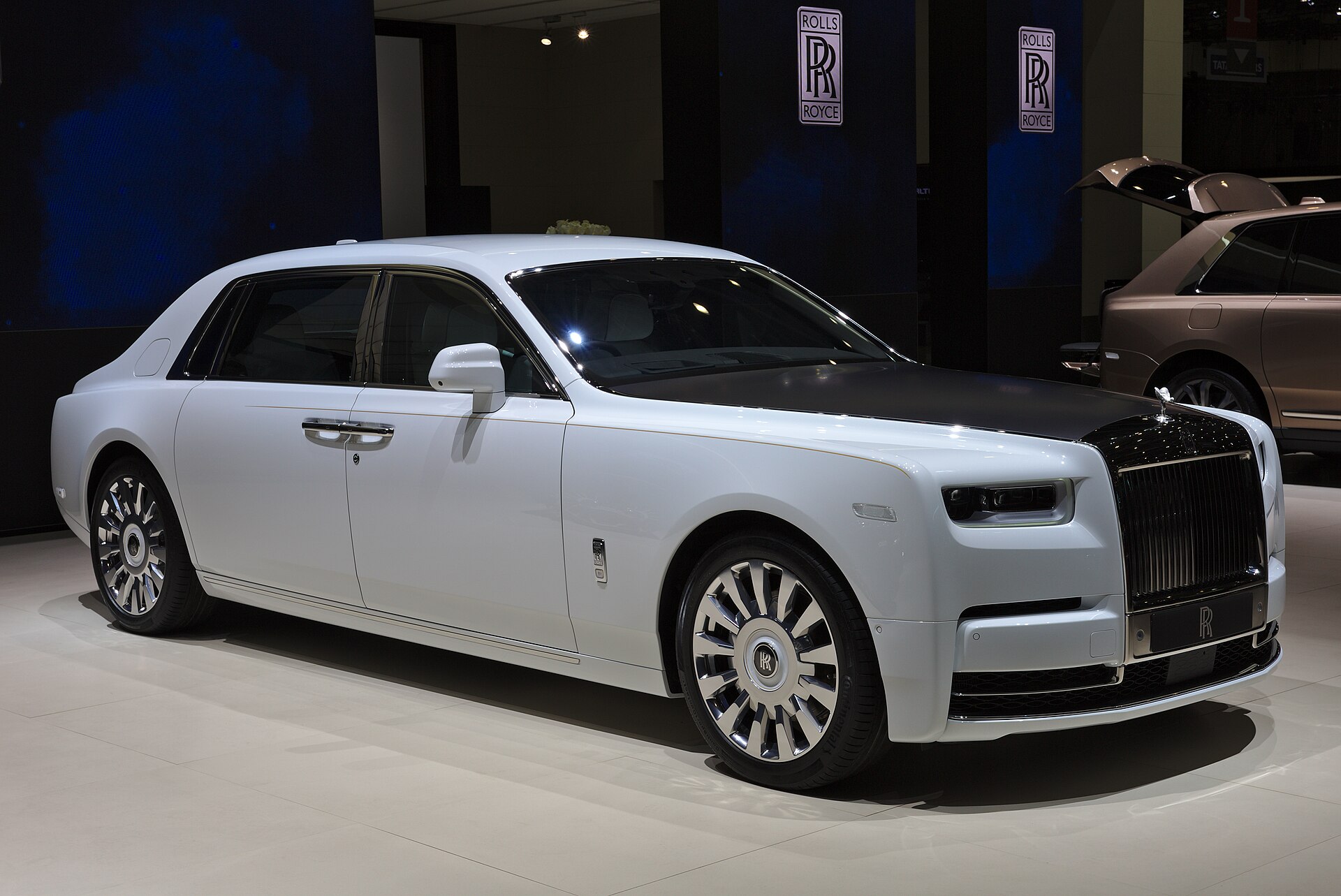
Few
automobiles carry the weight of a nameplate the way the Phantom does, and the eighth generation was the first Rolls-Royce built on the aluminum Architecture of Luxury spaceframe. That platform was later shared with the Cullinan, the current Ghost and the Spectre, which makes the Phantom VIII the foundation of the modern marque.That said, the Phantom VIII has spent its first years doing what flagship sedans almost always do: losing a large share of its original sticker. For a second owner, that curve is the opportunity — and the model year, wheelbase and Series II question decide how much of it you actually capture.
Where the Phantom VIII Sits in the Rolls-Royce Lineup
The Phantom sits at the chauffeur-grade summit of the Rolls-Royce lineup, above the Ghost in price, presence and wheelbase. Its 6.75-liter twin-turbocharged V12 produces 563 horsepower in every 2018 trim, according to Kelley Blue Book, and power is delivered with the deliberate calm the marque has long cultivated.
For buyers cross-shopping the family, the distinctions matter. Our analysis of the best year to buy a used Rolls-Royce Ghost covers the owner-driver sedan, while the used Rolls-Royce Cullinan guide addresses the SUV that shares the Phantom's architecture.
The Phantom is the car for the buyer who wants the flagship specifically. In addition, it offers the Gallery — a glass-covered fascia panel designed to display commissioned art — which remains a Phantom signature.
What the Phantom VIII Cost New
Understanding the original sticker is the first step in reading the used market. Cars.com's launch coverage reported that the 2018 Phantom started at $450,000 for the standard wheelbase, with the Extended Wheelbase starting at no less than $530,000.
Keep in mind that almost no Phantom leaves Goodwood at its base price. Bespoke paint, Starlight Headliner, Gallery commissions and rear-seat specification can add a substantial sum, which is why two cars of the same year can sit far apart on the used market.
By the 2023 model year, Cars.com lists the Series II at $493,000 for the standard sedan and $573,000 for the Extended Wheelbase. Note that sources disagree here: Kelley Blue Book and dealer estimates show different figures, so confirm the exact sticker against the original window sticker or build sheet. For broader context on how flagship pricing is set, see our explainer on luxury car MSRP.
Where the Depreciation Curve Settles
The Phantom VIII follows a steep-then-flattening curve that is typical of flagship sedans. According to iSeeCars, a new Phantom depreciates approximately 46.1% over five years, close to the 46.5% average iSeeCars reports for the exotic large car category.
What's more, the used-market references line up with that estimate. The table below collects the figures we could source; every number is a snapshot, so verify current values before you negotiate.
| Model year | Original MSRP (standard / EWB) | Used-market reference | Source | | --- | --- | --- | --- | | 2018 (launch) | $450,000 / from $530,000 | Fair market price listed near $300,000–$310,000 | Cars.com (MSRP); KBB (fair market) | | 2019 | Launch-era pricing | Used listings ranging $278,800–$446,503 | iSeeCars | | 2023 (Series II) | $493,000 / $573,000 | Verify against current comparable listings | Cars.com (MSRP) | | Five-year estimate | — | Approximately 46.1% depreciation | iSeeCars |
The width of the 2019 range is the key insight. A spread of roughly $168,000 within a single model year reflects specification, mileage profile and condition far more than calendar age.
2018 Launch Cars: The Value Entry
The 2018 cars offer the lowest entry point into the Phantom VIII. Kelley Blue Book's fair market figures for a 2018 Phantom have been listed near $300,000–$310,000, which represents a meaningful discount from the $450,000 base sticker even before accounting for options.
However, the launch year carries trade-offs that a careful buyer should weigh. These include but are not limited to:
- Warranty exposure. Rolls-Royce's four-year, unlimited-mileage new-car warranty has expired on every 2018 car, so post-warranty repair costs fall entirely on the owner.
- First-year production. Launch-year cars of any all-new platform can carry early software and electronics calibrations, so confirm that dealer-performed updates and campaigns appear in the service record.
- Specification variance. Early allocations went to first-wave clients, and their specifications range from restrained to highly personal, which can narrow the resale audience.
All of these factors make the 2018 car a strong buy for the right owner. Accordingly, it rewards a buyer who prioritizes entry price and is prepared to budget for out-of-warranty ownership.
2019–2022: The Sweet Spot
The middle years of the first series are where we see the strongest balance of value and maturity. These cars received running specification changes rather than a mechanical redesign, so a 2021 Phantom drives much like a 2018 car while generally carrying a fresher service history.
In addition, the iSeeCars range for used 2019 cars — $278,800 to $446,503 — shows that an attentive buyer can choose among a deep pool of specifications. The lower half of that range is where a well-documented, sensibly specified car tends to represent the clearest value.
This is because the depreciation curve has already absorbed its steepest early losses by this point. As a result, a second owner pays for the car's remaining life rather than the first owner's privilege of specifying it.
Series II (2023 Onward): Paying for the Update
Rolls-Royce revealed the Phantom Series II in May 2022 for the 2023 model year. The update was evolutionary: an illuminated Pantheon grille, revised headlamp detailing, new wheel designs and updated connected services, with the 6.75-liter twin-turbo V12 carried over.
That said, the Series II carries a higher sticker. Cars.com lists the 2023 standard sedan at $493,000 against the 2018 car's $450,000 — a difference of $43,000 at list before options, for changes that are largely visual and digital.
For some buyers, those details matter enough to justify the premium. For others, a late first-series car delivers the same powertrain, the same Architecture of Luxury and the same Gallery for meaningfully less.
The Series II refines the Phantom rather than reinventing it, so the question is whether the illuminated grille and updated connectivity are worth the price gap to you.
The Extended Wheelbase Premium
The Extended Wheelbase adds rear legroom: Kelley Blue Book lists a 148.5-inch wheelbase for the EWB versus 139.8 inches for the standard car. Moreover, Cars.com's figures show the same $80,000 EWB premium at list in both 2018 ($450,000 versus $530,000) and 2023 ($493,000 versus $573,000).
In the used market, the calculation changes. The EWB serves a narrower, largely chauffeur-driven buyer pool, so we recommend treating any asking-price premium as negotiable and pricing it against comparable EWB listings rather than assuming the new-car gap carries over intact.
Keep in mind that the right choice depends on how the car will be used. If you will be driven, the EWB is the authentic Phantom experience; if you will drive yourself, the standard wheelbase is the more natural fit and usually the easier car to resell.
Reading Hagerty, KBB and iSeeCars
Each valuation source measures something slightly different, and a disciplined buyer reads all three. Here's how they fit together:
- Kelley Blue Book. KBB publishes fair market price estimates by model year and trim, which are useful as a baseline but do not capture the value of bespoke specification.
- iSeeCars. iSeeCars aggregates used-listing data and publishes depreciation estimates, including the 46.1% five-year figure for the Phantom and listing ranges by model year.
- Hagerty. Where Hagerty publishes values for a given model year, its condition tiers — from concours to fair — offer a framework for separating exceptional examples from driver-quality cars.
Overall, the sources agree on direction even when they differ on specifics. Remember that every figure is a snapshot, so check each tool at the time of your transaction.
Buying Playbook: Inspection, Warranty and Provenance
A Phantom VIII is a complex automobile, and the purchase process should reflect that. Here's a list of the steps we recommend before committing:
- Commission an independent inspection. Our pre-purchase inspection guide explains what a PPI should cover; on a Phantom, prioritize the air suspension, the V12, the electrical systems and the Gallery fascia.
- Verify the service record. Confirm that scheduled maintenance was performed at an authorized Rolls-Royce dealer and that software updates and campaigns are documented.
- Confirm warranty and Provenance status. Ask the selling dealer for remaining factory coverage and the terms of any Rolls-Royce Provenance certified pre-owned coverage in writing.
- Request the build sheet. The original specification explains pricing variance and confirms that bespoke features are factory items rather than aftermarket additions.
If you are financing the purchase, our overview of exotic car financing covers how lenders approach six-figure used flagships. Buyers in major metros may also find our guides to buying a Rolls-Royce in New York and a Rolls-Royce in Miami useful for regional dealer context.
Editorial Recommendation
After weighing the depreciation data, specification spread and the Series II update, our recommendations break down as follows:
- Best overall value: 2020–2022 standard-wheelbase Phantom. Same mechanicals as the launch car, a fresher service history and the deepest pool of sensibly specified examples.
- Lowest entry point: 2018 launch car. Strongest discount from MSRP, best suited to a buyer with a post-warranty repair budget and a clean PPI.
- For the chauffeur-driven owner: 2019–2022 Extended Wheelbase. The authentic rear-seat Phantom experience, with the EWB premium negotiated against comparable listings.
- For the buyer who wants the latest: 2023-onward Series II. Choose it for the illuminated grille and updated connectivity, understanding that you are paying for refinement rather than a new powertrain.
The Phantom VIII rewards patience and documentation more than haste. If you are also considering the marque's electric coupe, our Rolls-Royce Spectre coverage is the natural next read — and the Rolls-Royce marque hub gathers our full coverage in one place.