Buying a Rolls-Royce Spectre in 2026: Configurator Reality, Charging Logistics, and the Bespoke Surcharge Curve
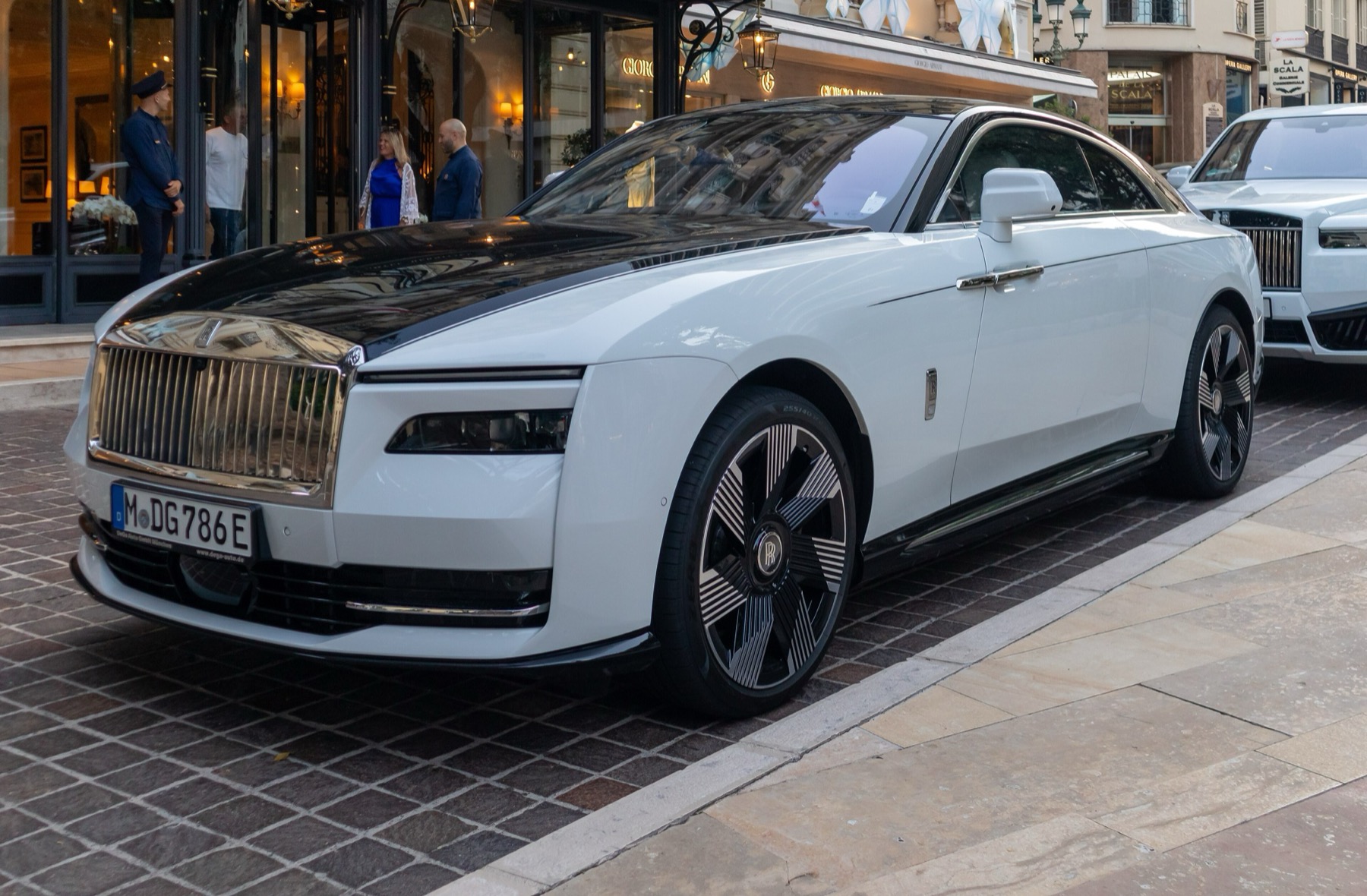
Electric
luxury arrived in stages, and for most of the last decade the open question was whether a battery-electric drivetrain could carry the weight of a true grand-tourer without diluting what made the segment worth paying for. The Rolls-Royce Spectre was the marque's formal answer, and after a full year of cars in private hands, that answer can finally be read against data rather than press-launch optimism.Buyers signing a 2026 commission are operating with information the early adopters simply did not have — real charging behaviour, early residual signals, and a clearer picture of how Bespoke spending compounds. That information gap is the most valuable thing to understand before the configurator session begins.
What the First Full Ownership Year Revealed
The Spectre entered customer hands in late 2023, which means 2025 was the first calendar year with a meaningful population of cars accumulating mileage, service visits, and resale listings. That population remains small, but it is no longer hypothetical.
What it confirmed is unremarkable in the best sense. The Spectre behaves like a Rolls-Royce that happens to be electric, not like an electric car wearing the Pantheon grille — owners consistently report the drivetrain as the least interesting part of the experience, which was precisely the brief.
What it complicated is the resale picture, and that is where 2026 buyers need to slow down. The early cars are now teaching the market how a $400,000-plus electric Rolls-Royce actually moves on the secondary market, and the lesson is more nuanced than the launch coverage suggested.
Configurator Reality — Where the Price Actually Lands
The Spectre's US base price sits at approximately $420,000 (manufacturer MSRP, estimated; confirm against a current dealer quote before commissioning). That figure is, in practice, a starting point that very few finished cars actually honour.
Rolls-Royce does not sell a "standard" Spectre in any meaningful volume — the configurator is the product. Paint-to-sample work, Bespoke wood and leather, the Starlight Headliner and illuminated Doors, and commissioned detailing routinely move a delivered car well into the high-$400,000s and beyond.
The practical consequence is that the number on the configurator's opening screen is not the number you should budget against. A realistic delivered figure for a thoughtfully specified car should be the planning baseline, with genuine headroom above it for the commissions that tend to reveal themselves mid-process.
Charging Logistics for a 6,500-Pound Grand-Tourer
The Spectre carries a battery of roughly 102 kWh and an EPA-rated range of approximately 266 miles (estimated; verify against the current EPA listing). For a car of this mass and purpose, range was never going to be the headline — the usage pattern is.
First-year data points to a clear and consistent behaviour. Spectre owners overwhelmingly charge at home on Level 2 equipment, and treat public DC fast charging as an exception rather than a routine.
That reframes the car honestly. The Spectre is, in practice, a metropolitan and regional grand-tourer — a car for the daily 40 miles and the considered weekend drive, not a cross-country tourer asked to live on the highway network.
This matters acutely for the buyer without dedicated garage charging. A Spectre without a home Level 2 installation is a meaningfully more compromised car than the specification sheet implies, and that single piece of household infrastructure should be treated as part of the purchase, not an afterthought.
The Bespoke Surcharge Curve
Here is the part of Spectre ownership the configurator does not explain. Bespoke spending and resale value do not move together — and the gap between them is the single most important number a 2026 buyer can internalise.
A commissioned car costs more to buy and, on the secondary market, recovers only a fraction of that premium. The first wave of used Spectre listings suggests Bespoke content is appreciated by the second buyer but rarely paid for in full.
This is not unique to the Spectre, and it is not a flaw — it is simply how personalisation works across the ultra-luxury field. The same dynamic shapes Bentley Continental GT ownership economics, where specification choices that delight the first owner are quietly discounted by the second.
The useful way to think about it is to separate two budgets. There is the money spent on broadly appealing quality — strong paint, coherent materials, the features most buyers want — and the money spent on deeply personal expression, which should be understood as consumption rather than investment.
Residual Logic and the Early-Adopter Gap
Rolls-Royce models have historically depreciated more gently than most ultra-luxury cars, but "gently" is not "not at all". The Spectre's earliest examples have already absorbed the steepest part of the curve.
Cars from the first delivery wave are now surfacing as low-mileage used examples, and they establish a reference point that 2026 buyers should use deliberately. A lightly used Spectre that has already taken its first-year hit can represent firmer value than a fresh commission — provided its specification suits a broad audience.
The early adopters paid for the privilege of going first. 2026 buyers can let that data work for them.
This is the same value logic that governs the used Ferrari depreciation sweet spot — the most rational entry point is often a year or two after launch, once the initial depreciation is someone else's expense. The Spectre is now old enough for that window to exist.
It is worth noting how differently this reads from the combustion-era allocation game. Where Porsche 911 allocation reality can push a determined buyer toward a new car at any cost, the Spectre's used market is becoming a genuine and unpressured alternative.
Editorial Recommendation
For the buyer commissioning new, specify with the second owner partly in mind. A coherent, restrained palette — strong paint-to-sample work and disciplined Bespoke content — protects residual value far better than maximal personalisation.
For the buyer open to a used car, a 2024 Spectre with broad-appeal specification and complete service history is the current value position in the range. Insist on a pre-purchase inspection and full documentation of the charging equipment and battery health.
Either way, treat home Level 2 charging as a prerequisite rather than an accessory. The Spectre rewards the owner who has matched the car to a realistic usage pattern, and punishes the one who has not.
For buyers still weighing the Spectre against the marque's other modern direction, our comparison of the Bentayga, Cullinan, Urus and Purosangue and our broader Rolls-Royce marque overview are the logical next stops. The Spectre's case is strongest for the buyer who wants an electric grand-tourer on its own terms — and 2026 is the first year that case can be made with evidence.