Buying a Rolls-Royce in New York: Manhattan Dealer Reality, Garaging, and the Registration Math
N
ew York is one of the few American markets where the car is not the most expensive decision in the transaction. The dealer relationship, the storage arrangement, and the tax jurisdiction you register in will each shape the ownership experience as much as the specification sheet does.This is the Rolls-Royce companion to our buying a Bentley in New York piece, written for the marque with the deeper hub demand and the longer Bespoke lead times. The mechanics rhyme; the numbers do not.
Where You Actually Buy: The New York Metro Dealer Picture
Rolls-Royce Motor Cars operates through a small, deliberately constrained network of authorized dealers, and the New York metro is served by a handful of stores rather than a dense retail footprint. Because the network changes — stores are added, relocated, and occasionally re-franchised — the only authoritative list is the manufacturer's own dealer locator, and you should verify against it before you make a call.
What matters more than the count is the character of each store. Rolls-Royce dealers are not volume operations, and the person who controls your outcome is usually a single Bespoke-trained sales manager rather than a floor of rotating salespeople.
That has a practical consequence for New York buyers. The relationship you build at one store does not transfer to another, and walking in cold at a second dealer after eight months of conversation at the first rarely improves your position.
The Manhattan Showroom Versus the Suburban Store
Manhattan showrooms carry the highest foot traffic and the most demanding client base in the country, which means their demonstrator inventory moves quickly and their service bays operate under real estate constraints that suburban stores do not face. Suburban and Long Island stores frequently have more physical service capacity and more patience with a first-time Rolls-Royce client.
Neither is categorically better. The question is whether you value proximity to a showroom you will visit three times, or proximity to a service department you will visit annually for the next decade.
How Allocation Works at a Rolls-Royce Store
Allocation at Rolls-Royce behaves differently than it does at Ferrari or Porsche, and conflating the three is the most common error we see in New York buyers arriving from other marques. Our allocation reality piece covers the cross-marque mechanics; the Rolls-Royce version is narrower.
Standard-specification Cullinan and Ghost orders are generally build-slot constrained rather than relationship-gated. You are queuing for production capacity, not auditioning for a privilege.
The picture changes at the top of the range. Coachbuild programs, Droptail-class projects, and heavily commissioned Phantom builds are genuinely discretionary, and the dealer's recommendation to Goodwood carries weight.
What a Bespoke Commission Adds to the Timeline
A Bespoke commission is the reason most Rolls-Royce lead times stretch well beyond what a comparable Bentley or Mercedes-Maybach order requires. Every non-catalogue paint, every unusual hide, and every marquetry or starlight variation adds approval steps between the dealer, Goodwood, and the client.
The practical effect is that the specification conversation, not the order date, sets your delivery window. New York buyers who finalize a commission quickly and resist mid-build changes consistently take delivery months ahead of buyers who iterate.
Here are the commission decisions that most often move a delivery date:
- Paint-to-sample and bespoke exterior finishes. Non-catalogue colors require sample approval and, in some cases, a physical panel sign-off before the body enters the paint process.
- Hide selection outside the standard palette. Custom leather requires sourcing and color-matching across every trimmed surface, including areas the client never specified.
- Marquetry, embroidery, and gallery commissions. These are artisan-hours, not assembly-line hours, and they queue independently of vehicle production.
- Starlight headliner variations. Constellation patterns, shooting stars, and bespoke motifs each add design and validation time.
- Late-stage changes. A change requested after a build enters a locked stage typically resets that stage rather than amending it.
All of the above compounds. A commission with four bespoke elements does not take four times as long as a standard order, but it does introduce four independent points at which the timeline can slip.
Garaging a Cullinan in Manhattan
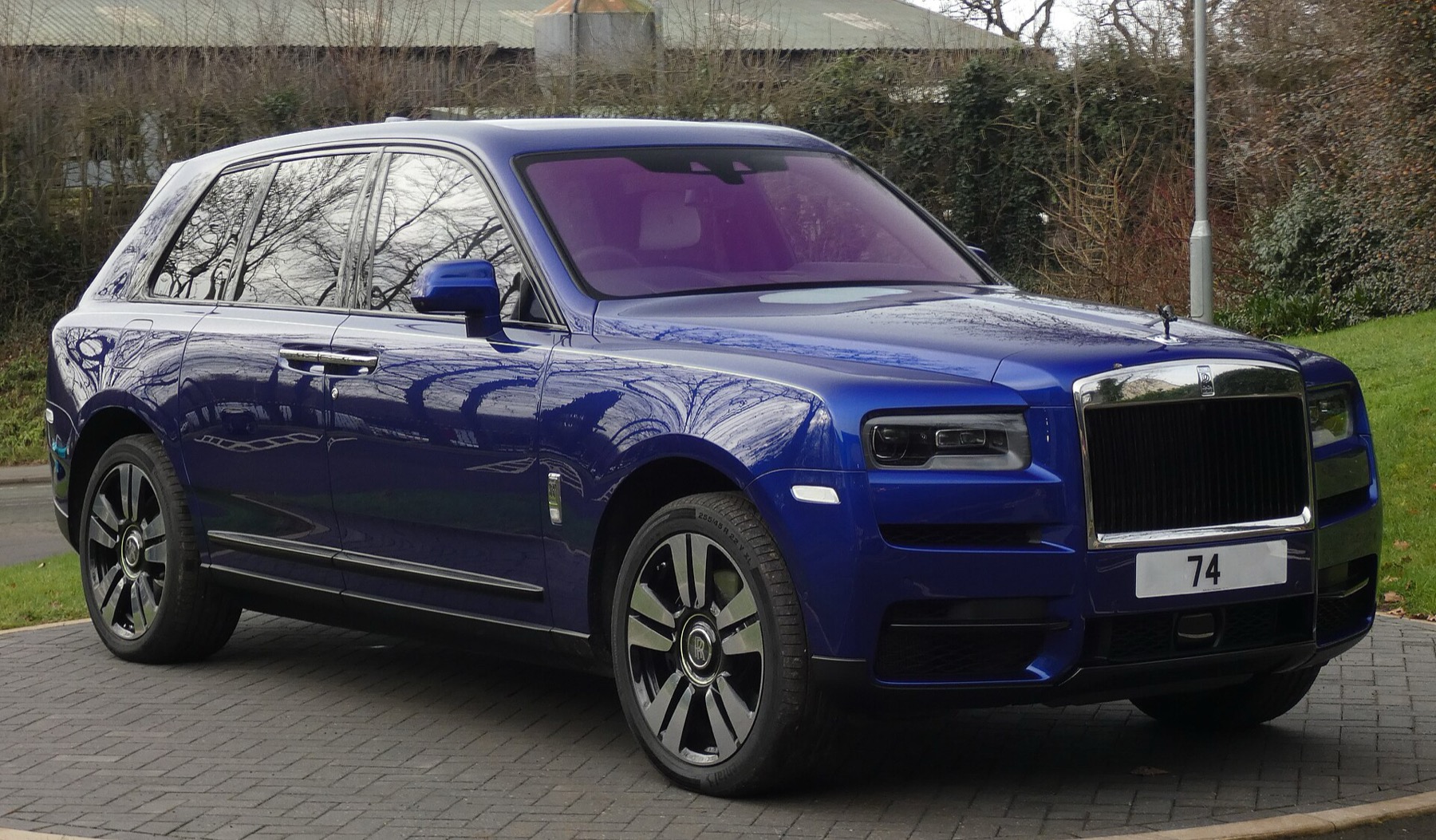
This is where New York ownership diverges most sharply from Miami, Dallas, or Scottsdale. A Cullinan measures well over 17 feet long and stands tall enough that plenty of Manhattan garages simply cannot take it, regardless of what the monthly rate card says.
The binding constraints in Manhattan are ceiling height, ramp geometry, and turning radius — not price. Before you commit to a garage, measure the entry clearance and drive the ramp in something similar; a Ghost that fits a standard bay may still scrape on the transition at the top of a helix ramp.
What Monthly Parking Actually Costs
Manhattan monthly parking rates vary enormously by neighborhood and by building, and any single figure quoted without a source is not worth acting on. Rate data from the NYC Department of Consumer and Worker Protection's licensed garage listings, and from commercial aggregators such as SpotHero, Icon Parking, and ParkWhiz, is the right starting point for a current quote.
What we can say structurally is that oversized-vehicle surcharges are near-universal for a Cullinan-sized car, and that valet-stacked garages — the Manhattan norm — carry risk a Rolls-Royce owner should weigh separately from price. Self-park spaces cost meaningfully more and are far scarcer.
The Attended-Garage Problem
Most Manhattan garages are attended, which means an attendant you have never met will move your car in tight quarters several times a week. For a vehicle with coach doors, a Spirit of Ecstasy that retracts, and paintwork that may represent a five-figure bespoke commission, this is a genuine ownership consideration.
Some owners solve it with a self-park space at a premium. Others solve it by garaging outside the city entirely, which leads directly to the next section.
In Manhattan, the garage is not a line item. It is a design constraint on which car you can reasonably own.
The New York Registration and Tax Math
New York charges state and local sales tax on motor vehicle purchases based on the jurisdiction where the vehicle is registered — that is, where the owner resides — not where the dealer sits. Buying in New Jersey or Connecticut does not avoid New York tax if the car comes home to a New York address.
The combined rate in New York City is 8.875%, composed of the 4% state rate, the 4.5% New York City local rate, and the 0.375% Metropolitan Commuter Transportation District surcharge. Rates by jurisdiction are published by the New York State Department of Taxation and Finance in Publication 718, which is the document to verify against before you sign.
A Worked Example on a $400,000 Car
The figures below use a $400,000 purchase price as an illustrative round number, not a quoted MSRP for any specific model. Verify current Rolls-Royce US pricing with the manufacturer and your dealer, and verify all tax and fee figures with NYS DTF and the DMV.
| Line item | Basis | Illustrative amount | | --- | --- | --- | | Vehicle purchase price | Illustrative | $400,000 | | NYS + NYC + MCTD sales tax | 8.875% (NYS DTF Pub. 718) | $35,500 | | Title certificate fee | NYS DMV fee schedule | $50 | | Registration (passenger, by weight) | NYS DMV — weight-based, 2-year term | Verify by curb weight | | Plate fees | NYS DMV fee schedule | Verify current | | Approximate delivered tax burden | Sales tax only | ~$35,500 |
The registration fee itself is modest and nearly irrelevant at this price point. The sales tax is the number that matters, and at 8.875% it exceeds the entire transaction price of most new cars sold in America.
Insurance and the Garaging Address
Insurers rate on garaging address, and a Manhattan garaging address is among the most expensive in the country for a high-value vehicle. Two otherwise identical Cullinan policies can differ substantially between a Manhattan ZIP code and a Westchester or Fairfield County one.
This is legitimate only when the garaging address is truthful. Misstating where a car is kept is insurance fraud, and on a claim involving a $400,000 vehicle it is the kind of discrepancy a carrier will investigate.
The Long Island and Connecticut Alternatives
A meaningful share of New York metro Rolls-Royce owners do not garage their cars in Manhattan at all. The common patterns are a Long Island residence with a private garage, a Westchester or Fairfield County property, or a Hamptons house that serves as the car's actual home for most of the year.
Each changes the math. Nassau and Suffolk counties carry their own combined sales tax rates published in NYS DTF Publication 718, and a genuine Connecticut residence puts the transaction under Connecticut's motor vehicle tax regime entirely — including its luxury-rate treatment of higher-value vehicles.
None of this is a tax strategy you should build backward from. Residence is a factual question, and the relevant authorities treat it as one.
Where This Leaves the Practical Buyer
If you live in Manhattan and want a Cullinan, plan for a self-park space or a garage you have physically measured, and price the oversized-vehicle surcharge into your annual cost before you order. If you have a suburban property, the car is dramatically easier to own and the delivered cost is usually lower.
If you are weighing the Cullinan against its direct competitors before committing to any of this, our Bentayga, Cullinan, Urus, and Purosangue comparison is the better place to start.
Buying Used Instead
The used market changes the tax math only in magnitude, not in structure — New York assesses sales tax on used vehicle purchases the same way. What it changes is the entry price and the allocation question, which disappears entirely.
For buyers considering a pre-owned Ghost, our best year used Rolls-Royce Ghost analysis covers generation-by-generation residual logic and the specification details that drive price variation. A used purchase also removes the Bespoke timeline problem, at the cost of accepting someone else's commission.
Keep in mind that a Manhattan-garaged used car carries a history worth investigating. Attended-garage life leaves marks, and a thorough pre-purchase inspection on a city-kept example should include a careful look at wheel faces, lower bodywork, and coach-door edges.
Editorial Recommendation
- If you garage in Manhattan: Ghost over Cullinan, unless you have confirmed a self-park space with measured clearance. The Ghost is the more livable car in the city's physical constraints.
- If you garage outside the city: Cullinan without hesitation. The suburban and Hamptons use case is exactly what the car was designed around.
- On Bespoke: Finalize the commission fully before the order goes in. Mid-build changes are the single largest controllable cause of delayed delivery.
- On the dealer: Choose for the service department, not the showroom. You will see one three times and the other for a decade.
- On tax: Budget the full 8.875% at NYC rates from the outset and verify your own jurisdiction against NYS DTF Publication 718 before signing anything.
Every numeric figure in this piece should be verified against the cited source before you transact. Tax rates, DMV fee schedules, parking rates, and manufacturer pricing all change, and a Rolls-Royce purchase is not a transaction where an approximation is good enough.