The Best Year to Buy a Used Ferrari 812 Superfast: Early Cars, the GTS Effect, and Where the V12 Curve Settles After the 12Cilindri
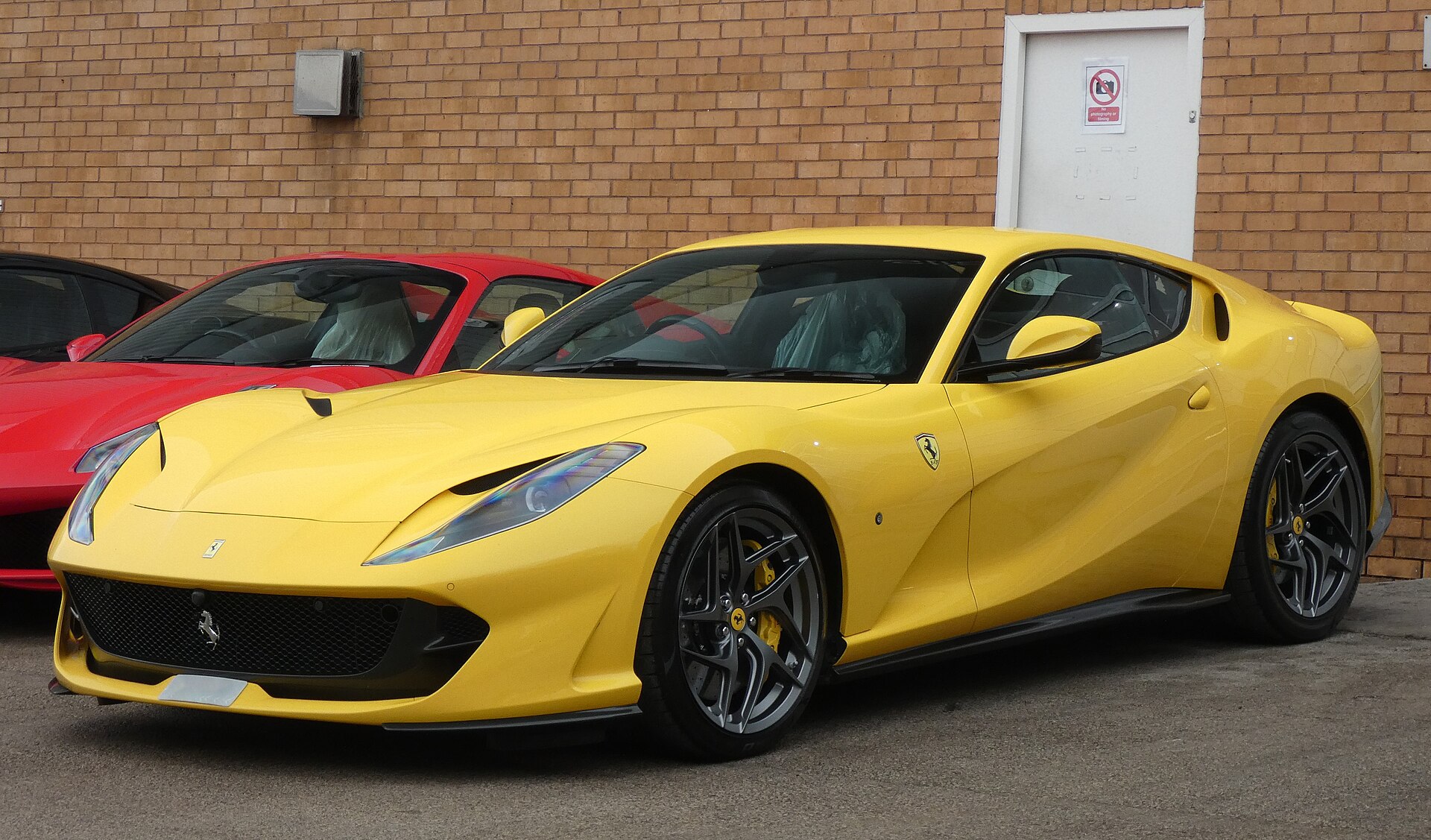
Few
formulas in the motoring world have proved as durable as a naturally aspirated V12 mounted ahead of the driver and sending its output to the rear wheels. That said, the arrival of the Ferrari 12Cilindri in 2024 changed how the market reads its predecessor — and for a buyer who wants that formula without an allocation conversation, the 812 Superfast and 812 GTS now sit at an unusually legible point on the curve.What follows is a model-year reading of the 812 family, the pricing pressure the GTS places on the coupe, and where The Marque Editors believe the most sensible entry sits in late 2026. Keep in mind that every value range below is marked as an estimate, and any transaction should be checked against current Hagerty, Edmunds, and KBB data before a deposit changes hands.
The 812 In Context
Ferrari unveiled the 812 Superfast at the Geneva Motor Show in March 2017 as the successor to the F12berlinetta, and US deliveries began with the 2018 model year. Ferrari rates its 6.5-liter F140 V12 at 800 cv (789 hp) at 8,500 rpm with 718 Nm (529 lb-ft) of torque, and pairs it with a seven-speed dual-clutch transmission.
What's more, the car brought electric power steering to a Ferrari for the first time and paired it with the second generation of the Virtual Short Wheelbase rear-steer system. Ferrari quoted 0-62 mph in 2.9 seconds and a top speed above 211 mph, figures that remain competitive with nearly every front-engine grand-tourer sold since.
The 812 Family At A Glance
The 812 line comprises three distinct propositions, and each is priced on its own logic. The table below summarizes each car's launch positioning. Launch MSRPs are approximate base figures from contemporary US reporting (Car and Driver, manufacturer press materials) and exclude options, which on these cars routinely add a substantial sum.
| Variant | US model years | Approx. base MSRP at launch | Production | Market posture (estimated) | |---|---|---|---|---| | 812 Superfast | 2018–2022 | ~$335,000 | Series production, no fixed cap | Depreciating toward a floor | | 812 GTS | 2021–2023 | ~$400,000 | Series production, no fixed cap | Holds nearer original sticker | | 812 Competizione / A | 2022–2023 | ~$600,000+ (reported) | 999 coupes / 599 Aperta (Ferrari) | Collector pricing, above sticker |
Note that US model-year coverage varies slightly by source and by how the dealer registered the car. Verify the model year on the title and the build date on the car itself before relying on either.
How The 812 Superfast Has Depreciated
The coupe followed a familiar Ferrari V12 pattern: a firm early market while allocation was tight, then a steady softening once supply caught up and the successor was announced. Accordingly, the Superfast is the variant where time has done the most work for a second owner.
Based on asking-price surveys and valuation-guide ranges, The Marque Editors estimate that clean, well-specified 2018–2020 Superfast coupes trade at roughly 75–95% of their original window sticker, with mileage, specification, and documentation driving the spread. This is an estimated range rather than a quoted figure, and Hagerty's valuation tools remain the reference point for condition-tier pricing.
For broader context on how this pattern repeats across the marque, our used Ferrari depreciation sweet-spot analysis tracks the same curve for the V8 and V12 lines. The 812 behaves much like its predecessors — although, as we discuss below, the GTS has partly rewritten the rules for the coupe.
Model Year By Model Year
The 812 Superfast received no mid-cycle facelift, which simplifies the model-year decision considerably. Therefore, build date, maintenance-plan status, and specification matter far more than hardware revisions.
2018: The Earliest US Cars
First-year cars carry the lowest entry price in the family and, in many cases, the highest mileage. Be aware that Ferrari's seven-year Genuine Maintenance program runs from the date of first registration, so 2018 cars have now aged out of factory-covered scheduled service.
That does not disqualify a 2018 car — it simply shifts the ownership math onto the buyer. A 2018 example with complete dealer records and a clean pre-purchase inspection can be the lowest-cost way into the formula.
2019: The Middle Ground
The 2019 cars share the specification of 2018 examples but typically benefit from a slightly later build and, in some cases, lower mileage. Depending on the registration date, Genuine Maintenance coverage on most 2019 cars has either lapsed or will lapse in 2026.
2020: The Recommended Coupe Year
For most buyers, the 2020 Superfast is the most balanced proposition. It sits close to the early-car price band while often retaining the tail end of factory scheduled-maintenance coverage — and remember that the plan transfers with the car to subsequent owners.
2021–2022: Late Superfast Coupes
Late coupes are scarcer in the US, as the GTS absorbed a meaningful share of demand once it arrived. As a result, late Superfasts often command a premium for remaining maintenance coverage and lower mileage — a premium worth weighing against what the same sum buys in a GTS.
The GTS Effect
According to Ferrari, the 812 GTS, unveiled in September 2019, was its first series-production front-engine V12 spider since the 365 GTS/4 of 1969. Its retractable hard top operates in 14 seconds at speeds up to 28 mph, and it retains the coupe's 789-hp V12.
This matters to coupe buyers because the GTS absorbed much of the emotional demand for the 812 platform. Naturally, the open car has held its value more firmly: The Marque Editors estimate that well-specified GTS examples trade much nearer their original window sticker than comparable coupes, a gap that verified Hagerty and Edmunds data should confirm for any specific car.
For the coupe buyer, the consequence is straightforward. With so much of the platform's enthusiasm concentrated in the GTS and the Competizione, the standard Superfast has become the rational choice for the driver who puts the engine and chassis ahead of the roofline.
Where The Curve Settles After The 12Cilindri
Revealed in May 2024, the 12Cilindri carries forward a naturally aspirated 6.5-liter V12, now rated by Ferrari at 830 cv, beneath a new body and interior, with US pricing reported at launch in the low-$400,000 range before options. In fact, its arrival means the 812 is no longer the newest expression of the formula, which is exactly what makes it more approachable.
Successor launches tend to soften the outgoing model before prices stabilize, as the market separates buyers who want the newest car from buyers who want the formula. The Marque Editors expect the Superfast coupe to settle into a relatively flat band once the remaining late-build cars have changed hands, although no one can guarantee a floor, and this remains an estimate rather than a forecast.
The 12Cilindri did not end the 812 story. It repriced it, and the coupe is the principal beneficiary for a second owner.
Of course, the 12Cilindri also caps what an 812 can sensibly cost. When a late GTS asks nearly as much as a new 12Cilindri Spider with options, a new-car allocation (if your dealer relationship can secure one) becomes the more sensible conversation.
The Competizione Question
The 812 Competizione and Competizione A sit outside this analysis entirely. Ferrari limited production to 999 coupes and 599 Aperta examples, raised output to 830 cv, and offered them to established clients, which places them in Ferrari Special Series territory rather than the used-market sweet spot.
Accordingly, Competizione pricing follows allocation scarcity and collector demand rather than depreciation logic. Buyers considering one should work from auction records and dealer comps directly rather than extrapolating from standard 812 values.
Ownership Economics
The purchase price is only part of the equation for a front-engine V12. Service intervals, tires, the health of the dual-clutch transmission, and insurance all carry real weight, and our Ferrari service costs by model guide breaks those costs down with sourced estimates.
Once Genuine Maintenance lapses, Ferrari's Power15 extended warranty program can cover eligible cars up to 15 years from first registration, subject to a dealer inspection. Additionally, premiums vary widely by garage location and driving record, so a quote from a specialist carrier (see our supercar insurance guide) belongs in the budget before purchase.
What To Inspect Before Buying
On any 812, a pre-purchase inspection by an authorized Ferrari dealer or a respected independent specialist is non-negotiable. Areas that deserve specific attention include but are not limited to:
- Service documentation. Confirm that every scheduled service was performed at an authorized dealer, and ask for the dealer's own service history rather than a summary.
- Transmission data. Request a diagnostic readout of the dual-clutch unit, including clutch wear values, as these reveal far more than the odometer alone.
- Paint and panels. A paint-meter reading across every panel will reveal refinishing, and paint-to-sample finishes should be verified against the original build sheet.
- Recall and campaign status. Check the VIN against NHTSA's recall database, and confirm with a Ferrari dealer that all factory campaigns have been completed.
All of these checks protect resale as much as they protect the purchase. After all, a well-documented 812 remains far easier to sell than an otherwise identical car with gaps in its history.
Specification That Moves Price
Ferrari's options list for the 812 is extensive, and the market does not reward every line equally. Carbon-fiber exterior and interior packages, the passenger display, front-axle lift, and desirable color combinations tend to support value, while polarizing paint-to-sample choices can narrow the pool of buyers.
Remember that original window stickers vary considerably from car to car. For this reason, comparing asking prices without the build sheet can mislead, and a Monroney label or Ferrari build sheet should accompany any serious listing.
Editorial Recommendation
For a buyer seeking the most sensible entry into a naturally aspirated front-engine Ferrari V12 in late 2026, The Marque Editors recommend the following:
- Best value entry. A 2019–2020 812 Superfast coupe with complete dealer service records, front-axle lift, and carbon-fiber interior trim, inspected before purchase.
- Best for coverage. A 2020 Superfast with Genuine Maintenance still in force, bought with a plan to enroll in Power15 when that coverage lapses.
- Best open-top choice. An early-build 812 GTS in a conservative color with documented history, bought for the experience rather than as an appreciating asset.
- Consider a new car instead. If a late GTS asks nearly as much as a new 12Cilindri Spider with options, pursue a 12Cilindri allocation through your dealer relationship.
Overall, the 812 Superfast coupe is the clearest value in the family today. To compare it with a mid-engine contemporary, see our best year to buy a used McLaren 720S analysis, and for structuring the purchase itself, our exotic car financing guide covers the options available to US buyers.
Research Before You Commit
A used 812 is a considered purchase, and the right example rewards patience more than haste. Explore the full range of the marque in our Ferrari brand hub, and consult an authorized Ferrari dealer before committing to any single car.