Buying a Ferrari 12Cilindri: Allocation Reality, the Naturally Aspirated V12's Last Stand, and Spec Strategy
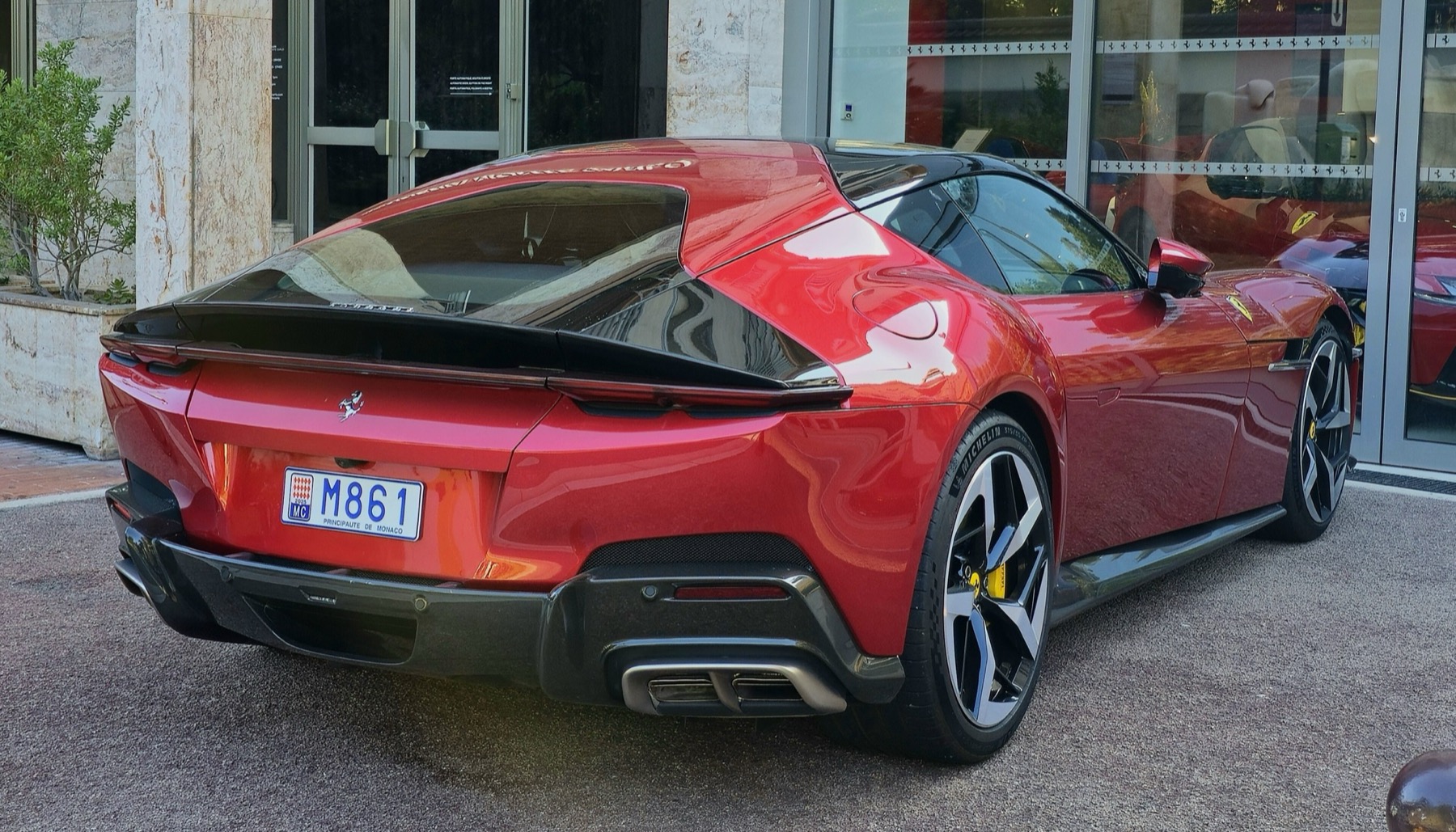
For more than half a century, the naturally aspirated V12 was the natural order of things at Maranello — the configuration a front-engined Ferrari was expected to carry, and the sound a buyer at this level came to associate with the marque itself. That order is now the exception rather than the rule, legislated toward the margins by emissions and efficiency standards that reward downsizing, forced induction, and electrification.
The Ferrari 12Cilindri is Maranello's answer to whether that engine still has a future, and the answer it gives is deliberate: a 6.5-litre V12 with no turbochargers and no hybrid system, in a front-mid-engined grand tourer built to top the road-car range. For a buyer, the more useful questions are quieter ones — whether an allocation is realistic, how to specify the car, and where it belongs relative to the Roma one showroom tier below.
The Naturally Aspirated V12's Last Stand
Every major manufacturer that once built large-displacement V12s has either retired the configuration or wrapped it in hybrid assistance to meet fleet emissions targets. Ferrari's own most powerful road cars — the SF90 and the 296 — pair smaller engines with electric motors, which makes the 12Cilindri's purity a position rather than an accident of timing.
Indeed, what Ferrari has signalled is that the V12 will continue in unelectrified form only for as long as regulation and demand allow. Production will run as a normal series model, yet the engine inside it is effectively on borrowed time — and that is the whole of the buying thesis.
Keep in mind that the distinction here is between an engine engineered for a number on a spec sheet and one engineered for how it delivers that number. The naturally aspirated V12 revs toward 9,500 rpm and builds its output linearly, a behaviour that turbocharging and electrification flatten in exchange for low-end torque.
What The 12Cilindri Actually Is
The 12Cilindri — Italian for twelve cylinders, pronounced dodici cilindri — is a front-mid-engined, rear-drive grand tourer that succeeds the 812 Superfast in Ferrari's range. Its 6.5-litre V12 is a development of the F140 family, quoted here at approximately 819 hp (830 PS) at 9,250 rpm according to Ferrari's published figures.
Drive reaches the rear wheels through an eight-speed dual-clutch transaxle, with rear-wheel steering and brake-by-wire among the chassis systems. Ferrari quotes 0–100 km/h in around 2.9 seconds and a top speed above 340 km/h (211 mph); a manual gearbox is not offered.
Two body styles are sold: the coupé and the 12Cilindri Spider, the latter using a retractable hardtop. The design references the 365 GTB/4 Daytona through its full-width black front visor — a decision that has divided opinion and is worth seeing in person before committing.
Where It Sits Above The Roma
The clearest way to place the 12Cilindri in the range is against the Ferrari Roma, the marque's front-engined V8 grand tourer. The Roma runs a 3.9-litre twin-turbo V8 of roughly 612 hp and carries an estimated US base price in the mid-$240,000s before options.
The 12Cilindri sits a full tier above it, in cylinder count and in price alike: US MSRP is $472,000 for the 2025 coupé before options and $515,000 for the Spider (KBB). Treat both as starting points — Ferrari US pricing is confirmed at order, and options routinely add twenty to thirty percent.
Of course, the two cars answer different questions. The Roma is the entry into front-engined Ferrari grand touring and the more rational daily proposition, while the 12Cilindri is the range-topping V12 statement, bought as much for the engine as for the car around it.
Allocation Reality
Ferrari sells its cars by allocation, and the 12Cilindri is not a car a first-time Ferrari buyer should expect to be offered at launch. Allocation for a front-engined V12 flagship follows purchase history — clients with a record of buying, keeping, and not flipping earlier Ferraris are served first.
The editorial myth is that money alone secures the car; the reality is that the dealer relationship does. A buyer walking in without history will typically be guided toward a Roma or Purosangue first, with a V12 allocation positioned as something earned over time.
This is the same dynamic we cover in our reading of Porsche 911 allocation, though Ferrari enforces it more strictly at the V12 tier. For a buyer serious about a 12Cilindri, the practical move is to establish a genuine relationship with an authorised dealer early, rather than chasing a car already spoken for.
Spec Strategy
Specification is where a 12Cilindri is either protected or compromised as a future asset, and the guiding principle is restraint a later buyer will read as tasteful. Paint-to-sample and heritage-adjacent colours tend to hold interest better than trend-driven finishes, and a classic specification ages more gracefully than a loud one.
The options that matter most for residual logic are the ones difficult or impossible to add later. For instance, the desirable wheel forging, the carbon and interior packages, and any factory personalisation through Tailor Made all fall into this category, as does front-axle lift, which is close to mandatory for usability on US roads.
That said, restraint is worth exercising on colour-and-trim combinations that read as personal rather than universal. A specification built entirely to one owner's taste can be the very thing that lengthens time-on-market when the car sells.
Coupé Or Spider
Both body styles will find buyers, but they serve different priorities and their residual behaviour differs. The coupé is the purist's choice and the structurally simpler car; the Spider adds open-top usability at a $43,000 price premium (2025 MSRP, KBB) and a modest weight penalty.
| Consideration | 12Cilindri Coupé | 12Cilindri Spider | |---|---|---| | Roof | Fixed | Retractable hardtop | | US MSRP (2025, KBB) | $472,000 before options | $515,000 before options | | Character | Purist, lighter | Open-air grand tourer | | Likely demand | Broad collector base | Warm-climate, open-top buyers |
Naturally, climate and use pattern should drive the choice more than resale theory. A buyer in a warm metro who will actually drop the roof has a real case for the Spider; a collector prioritising purity and long-term hold has an equally real case for the coupé.
Ownership And Residual Logic
Front-engined Ferrari V12 flagships have historically resisted the steep first-owner depreciation that defines much of the segment, though outcomes vary by specification and market timing. The 12Cilindri's standing as the last unelectrified V12 grand tourer of its era is the kind of narrative that supports residual strength, but it is not a guarantee.
Be aware that current values should be checked against Hagerty, Chrono24-style listings, and auction results rather than assumed. Ownership costs, meanwhile, sit where a V12 Ferrari's always have — scheduled maintenance, consumables, and insurance appropriate to a mid-six-figure car.
Our broader breakdown of supercar ownership costs applies directly here. The depreciation framing in our used Ferrari sweet-spot analysis is the right lens for anyone weighing a new allocation against a lightly used example later.
Editorial Recommendation
For a buyer weighing a 12Cilindri now, the priorities order themselves clearly. The following is where we would put the emphasis.
- Buy the coupé if the engine is the point. It is the purist configuration and the broader collector proposition; choose the Spider only if you will genuinely use the roof.
- Specify with restraint. Heritage-adjacent paint and a universal interior will read as tasteful to the next owner and shorten time-on-market.
- Order the non-retrofittable options. Front-axle lift, the desirable wheel forging, and carbon packages cannot be added later and protect residual logic.
- Build the dealer relationship before chasing the allocation. At the V12 tier, purchase history secures the car more reliably than a deposit does.
- Treat every price here as estimated. Ferrari confirms US MSRP at order, and options routinely move the transaction figure twenty to thirty percent.
For buyers cross-shopping the range, our Ferrari coverage sets the 12Cilindri against the Roma, Purosangue, and the mid-engined cars it shares a showroom with. The car's case rests on a single, unrepeatable fact — that it may be among the last of its kind — and that case is best tested in person, on a drive, before an allocation conversation begins.