The Mercedes-Benz SLS AMG on the Used Market: Why Gullwing Coupé and Roadster Values Have Diverged
F
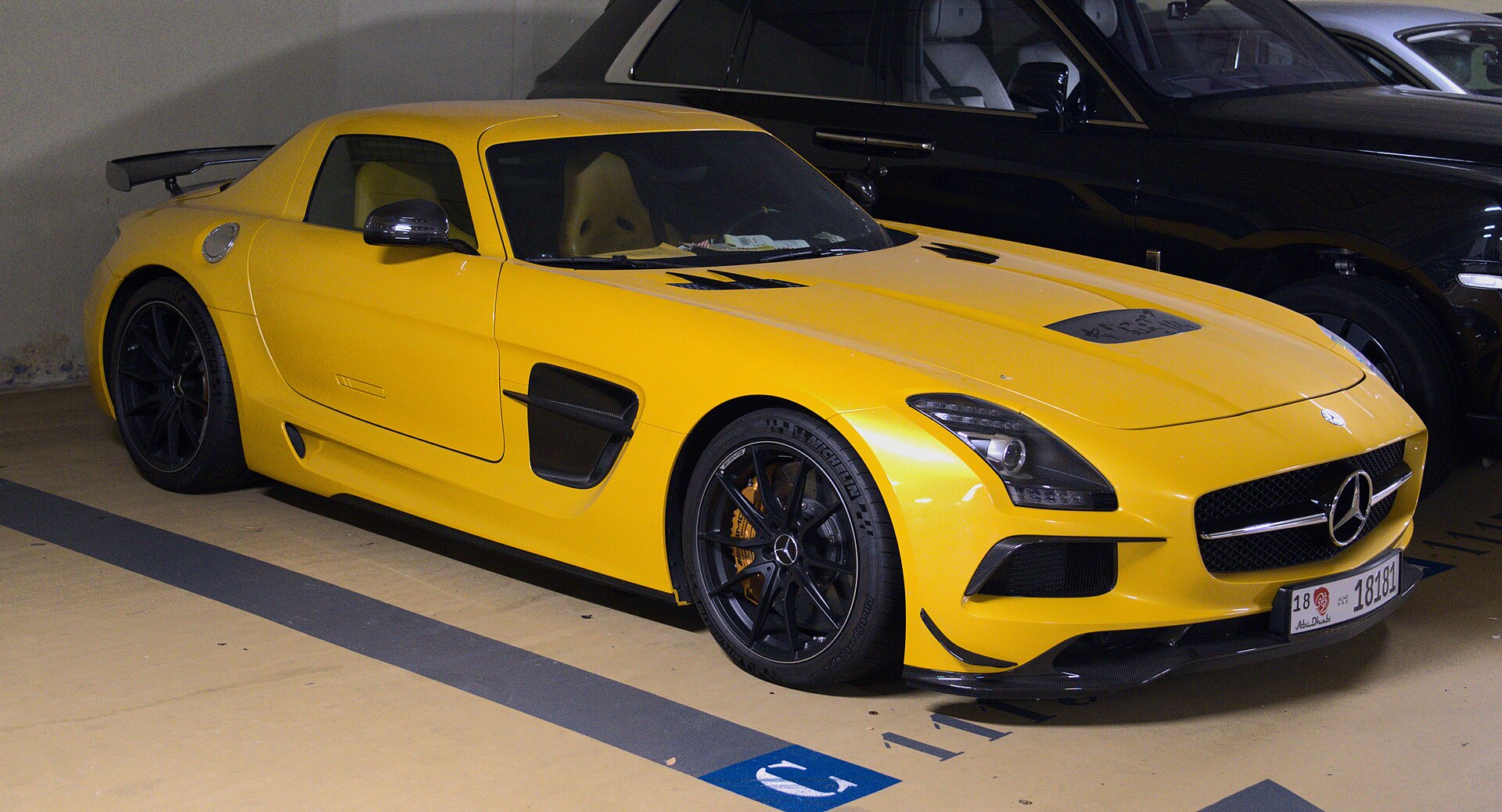
ew modern Mercedes-Benz models carry as much of the marque's history as the SLS AMG, which revived the roof-hinged gullwing door more than half a century after the 300 SL made it famous. That lineage, along with a naturally-aspirated 6.2-liter V8 that AMG developed in-house, is why the SLS remains one of the most closely watched Mercedes-AMG products on the secondary market.That said, the market has never priced the SLS as a single car. Over the past several auction seasons, the gullwing coupé and the roadster have settled into distinctly separate price bands — and the GT and Black Series variants have pulled that gap wider.
The question usually starts when a roadster listing comes in well below the coupé a buyer priced first. This analysis follows why the two body styles separated, where each variant sits, and how a buyer can read Hagerty and auction data without being misled by it.
The SLS AMG Production Timeline
Understanding the split starts with the order in which the variants arrived. Here is how the US lineup unfolded, based on Mercedes-Benz USA model-year specifications:
- SLS AMG Coupé (2011 model year). The launch car paired the M159 6.2-liter V8, rated at 563 hp, with a seven-speed dual-clutch transaxle mounted at the rear axle. Its roof-hinged gullwing doors were the defining design choice.
- SLS AMG Roadster (2012 model year). The open car arrived a year later with conventional front-hinged doors and a power-operated fabric soft top. Mechanically, it shared the coupé's drivetrain and front-mid-engine layout.
- SLS AMG GT Coupé and Roadster (2014 model year). Output rose to 583 hp, and AMG revised the transmission calibration and suspension tuning. The GT designation applied to both body styles for the final model year.
- SLS AMG Black Series (2014 model year). Built only as a coupé, the Black Series raised output to 622 hp and added extensive carbon-fiber bodywork and a fixed rear wing. It remains the top of the SLS hierarchy.
Production concluded in 2014, with the AMG GT taking over as the brand's in-house sports car. Keep in mind that exact build counts by body style and market have not been published in a single consolidated source, so any production figure you encounter should be treated as estimated and verified before a transaction.
Why The Coupé And Roadster Have Diverged
The price gap is not an accident of timing. Several forces work in the same direction, and together they explain most of the spread a buyer will see in current listings:
- The gullwing doors. The doors are the direct line back to the 1954 300 SL, and collectors pay for that connection. The roadster, however capable, gives up the single feature most buyers associate with the name.
- The Black Series halo. Because the Black Series exists only as a coupé, its auction results anchor the top of the coupé curve. Standard coupés benefit from that proximity in a way roadsters cannot.
- Buyer profile and use. Roadster buyers have historically bought to drive, which tends to show up in mileage profiles and condition tiers. Higher mileage and driver-tier condition pull the roadster's median transaction lower.
- Open-car exposure. A soft top adds seals, drains, and a folding mechanism to the inspection list. Buyers price in that additional exposure, particularly on cars stored outdoors or in humid climates.
All of these factors compound. The result is a coupé market that trades partly on collectibility and a roadster market that trades mostly on use — which is precisely why the roadster can be the better value for the right buyer.
Where The GT Variants Sit
The 2014 GT models occupy a middle ground within each body style. They were sold for a single model year, carry the more developed 583-hp tune, and represent the final evolution of the standard car before the Black Series.
For coupés, the GT generally commands a premium over earlier cars in comparable condition, though the Black Series overshadows it. For roadsters, the dynamic is different — with no Black Series roadster above it, the GT Roadster is the most collectible open SLS and tends to draw the strongest interest within the roadster market.
Note that a GT premium only holds when the car is documented as a GT. Verify the model designation against the window sticker, the VIN decode, and dealer records rather than badging alone.
The Black Series Trades In Its Own Market
The Black Series is best understood as a separate asset rather than the top trim of the SLS. Its buyers compare it against other track-derived limited models — the logic resembles the one we trace in our analysis of Ferrari's Special Series cars — rather than against standard coupés.
Accordingly, Black Series values move on individual auction results, and each result depends heavily on mileage, options, and provenance. For that reason, a single headline sale tells you less than a comp set of several documented lots.
Be aware that there is no factory Black Series roadster. Any open car presented with Black Series components is a modified standard or GT Roadster and should be valued as one.
How To Read Hagerty And Auction Data
The site visitors who contact us usually arrive with one number — a Hagerty value or a single auction result. Both are useful, but only when read in context.
Hagerty Valuation Tools lists the SLS by body style and variant, with values across four condition tiers from #1 Concours to #4 Fair. Most cars that change hands fall in the #2 Excellent or #3 Good tiers, so comparing a #3 roadster against a #1 coupé value will overstate the gap considerably.
Auction data requires similar discipline. When you build a comp set, include the following for every lot:
- The auction house and lot record. Results from Bring a Trailer, RM Sotheby's, Gooding & Company, and Mecum are publicly archived; cite the lot, not a secondhand summary.
- Whether the car sold or was bid to a reserve. A high bid that did not meet reserve is a data point about demand, not a transaction price.
- Mileage, service history, and options. Two cars with identical badges can differ meaningfully once carbon ceramic brakes, the Bang & Olufsen sound system, or designo paint enter the picture.
- Date of sale. SLS values move with each auction season, so a result more than a year old should be weighted accordingly.
We deliberately do not publish a single point estimate here. A figure printed today would mislead a buyer transacting next quarter — current Hagerty values and a fresh comp set are the right tools, and our concierge desk can help assemble both.
What Moves Price Within Each Body Style
Beyond body style and variant, a handful of variables account for most of the spread between otherwise similar cars. These include but are not limited to:
- Mileage profile. Low-mileage cars command the strongest results, though very low mileage on a car that has sat unused can raise its own questions about seals and fluids.
- Service history. A complete record from a Mercedes-Benz dealer or a recognized AMG specialist, including dual-clutch transmission service, supports value in both body styles.
- Options. AMG Carbon Ceramic brakes, carbon-fiber interior and exterior packages, and the Bang & Olufsen system are the options buyers ask about most.
- Color and paint. Matte designo finishes and less common colors attract a specific buyer. Any paint correction or respray history should be disclosed and verified with a paint-depth meter.
- Originality. Aftermarket wheels, exhausts, or tunes generally narrow the buyer pool. Original components included with the sale help recover value.
- Books and tools. Original manuals, both keys, the car cover, and the window sticker round out a well-documented example.
Overall, a documented driver-tier coupé can trade near a lightly used roadster. This is why a comp set matters more than body style alone.
Pre-Purchase Inspection Priorities
A pre-purchase inspection (PPI) should be performed by a Mercedes-AMG-experienced dealer or independent specialist, regardless of body style. Here is what that inspection should prioritize:
- Coupé: the gullwing door struts, hinges, and seals, along with evidence of water intrusion at the roofline.
- Roadster: full operation of the soft top through several cycles, the condition of the fabric and seals, and clear drain channels.
- Both: transaxle and dual-clutch fluid service, brake condition (carbon ceramic rotors are costly to replace), tire date codes, suspension bushings, and a paint-depth reading across every panel.
Ownership costs follow a similar logic to other front-engine grand tourers and supercars. For a broader picture of insurance, consumables, and service budgets, see our guide to supercar ownership costs.
How The SLS Compares To Its Successors And Rivals
Buyers who find the SLS coupé beyond their budget often cross-shop the car that replaced it. Our used AMG GT analysis covers that model's twin-turbocharged 4.0-liter V8 and its lower entry point on the secondary market.
The SLS also shares a buyer pool with other naturally-aspirated cars of the same era. The Audi R8 used-market guide and our look at Lexus LFA values show how engine character and production scarcity shape residuals in adjacent segments.
Editorial Recommendation
Based on how the market has separated, our recommendations by buyer profile are as follows:
- For the collector: a Black Series or a 2014 GT Coupé with low mileage, complete dealer service history, and books and tools. Build a comp set of documented auction lots before bidding.
- For the buyer who wants the gullwing experience: a 2011 or 2012 coupé in #2 or #3 condition with documented dual-clutch service. It delivers the defining feature of the car without the premium of the final-year variants.
- For open-air driving value: a 2012 or 2013 roadster with carbon ceramic brakes and a clean PPI. It offers the same drivetrain at the roadster's lower collector premium.
- For the roadster buyer thinking about residuals: the 2014 GT Roadster, the top of the open-car hierarchy.
In each case, verify current Hagerty values and recent auction results against the specific car before you commit. To explore the rest of the marque's lineup, visit our Mercedes-Benz marque hub, and for the broader decision of buying new or pre-owned at this level, see our analysis of new versus used luxury cars.