The Mercedes-AMG GT on the Used Market: Where the Depreciation Curve Levels Off
T
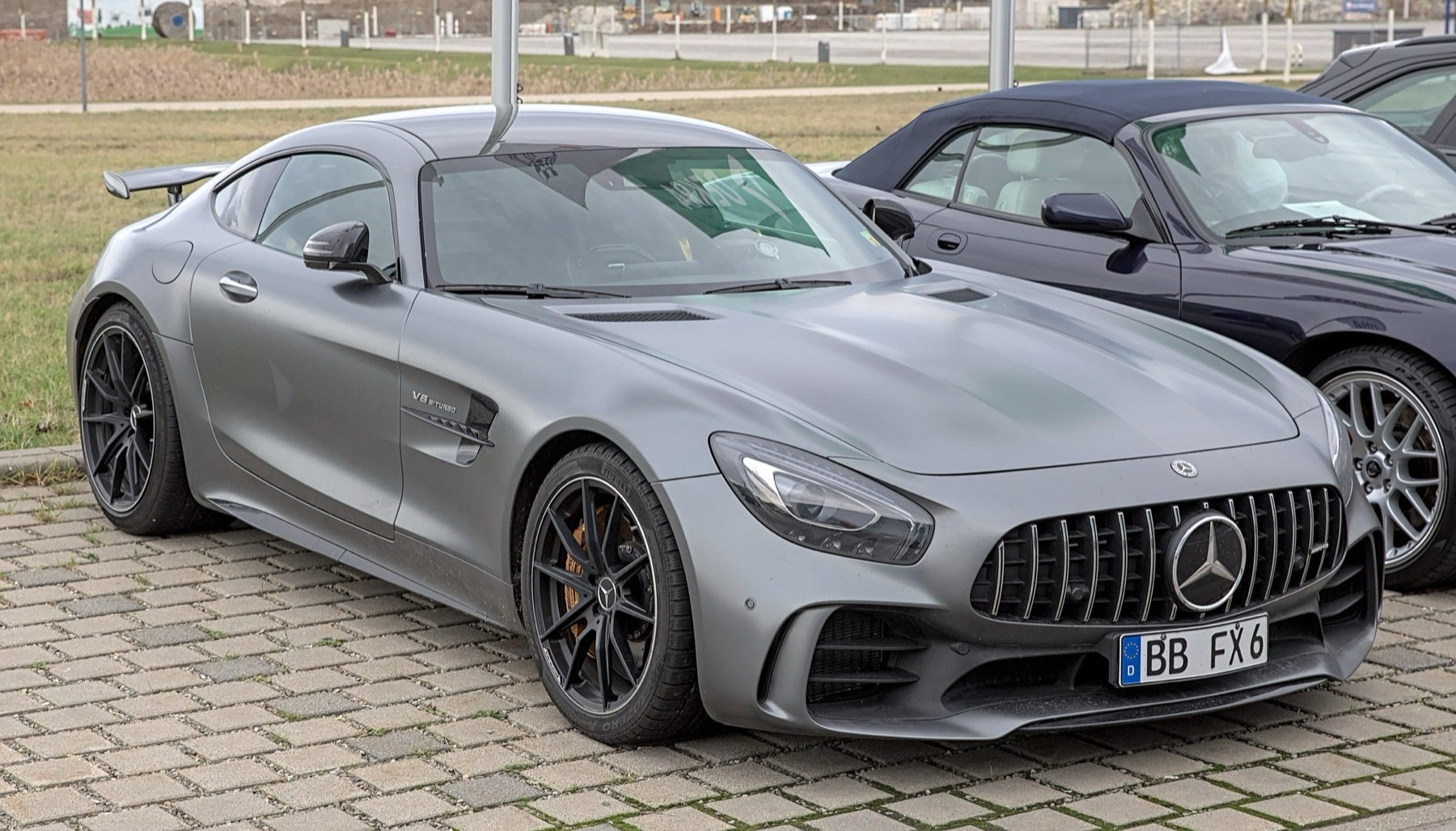
he Mercedes-AMG GT occupies an unusual position in the used market. It is one of the few front-mid-engine, hand-assembled V8 grand tourers built in this era, yet it depreciates on the same general arc as a high-spec German sports coupe — at least until it doesn't.That inflection point is what this analysis is about. The C190-generation GT (2016–2021 in the US market) is now old enough that the early years have shed most of their original MSRP, and recent transaction data from Hagerty and iSeeCars suggests the curve is beginning to level off on specific configurations.
Why the AMG GT Depreciates Differently Than a 911
The AMG GT was never a volume car. Affalterbach hand-assembles the M178 4.0-liter twin-turbo V8 under the one-engine-one-builder protocol, and US allocation across the C190 run was modest compared with the Porsche 911 it was cross-shopped against.
Lower production should, in theory, support residuals. In practice, the GT shed value faster than a 911 Turbo S over the first four years of ownership, primarily because Mercedes-Benz dealer networks discount aggressively on aging inventory and because the GT lacks the 911's reflexive collector demand.
The C190 Generation, Briefly
Mercedes-AMG launched the GT for the 2016 US model year as the successor to the SLS AMG, dropping the gullwing doors and repositioning the car as a more conventional grand-touring coupe. The lineup expanded through the run to include GT, GT S, GT C, GT R, and the homologation-grade GT Black Series.
US production wound down with the 2021 model year on the coupe, with the Roadster variants tapering shortly after. The C192 successor — a 2+2 platform shared with the SL — arrived for the 2024 model year and is a structurally different car, which matters when reading used-market comps.
Where the Curve Levels Off
The C190 depreciation profile, traced through Hagerty Valuation Tools and corroborated against iSeeCars listing data, follows a recognizable luxury-performance pattern: a steep first-three-year drop, a softer fourth-and-fifth-year decline, and a plateau that begins to form somewhere around year six to seven.
For the 2017–2019 GT S and GT C, that plateau is now visible in the data. Clean, well-specified examples are transacting in a band that has narrowed rather than continued to fall, which is the signature of a depreciation floor forming rather than a continued slide.
The GT R Is a Different Conversation
The GT R sits on a separate curve. Its track-focused hardware — rear-axle steering, nine-stage traction control, the lightweight bonded-aluminum bodyshell, and the more aggressive 577-horsepower tune of the M178 — has kept residuals materially higher than the broader GT range across every model year.
Hagerty's condition-tier valuations have tracked GT R values flatter than GT S values for several years now, and recent auction results at Bring a Trailer confirm the gap. Buyers shopping the GT R should expect to pay a premium that does not narrow with age, particularly on Pro variants and the limited-production GT R Roadster.
What Drives Price Variation Within a Model Year
Within any given C190 model year, price dispersion is wider than you might expect for a low-volume car. Three factors drive most of the spread: mileage, condition tier, and specification.
Mileage matters less than it would on a daily-driver coupe, because most GTs were specified as second or third cars and accumulated modest annual miles. Condition tier — Hagerty's #2 (Excellent) versus #3 (Good) — accounts for a larger share of the variance than odometer alone, particularly on examples with full Mercedes-Benz dealer service history.
Specification is the third lever. Cars optioned with the AMG Dynamic Plus package, the carbon-ceramic brake package, the Burmester High-End 3D surround system, and a non-flip exterior color (anything other than Selenite Grey or Obsidian Black) consistently trade at the top of the band.
The Service-History Question
The M178 V8 is a robust engine, but it is not inexpensive to service. The 20,000-mile interval includes spark plugs, air filters, and a full fluid service, and the rear-mounted seven-speed dual-clutch transaxle has its own service schedule that some independent shops handle poorly.
A pre-purchase inspection at a Mercedes-AMG dealer or a recognized AMG specialist is non-negotiable on a car at this price point. The PPI should include a transaxle scan, a check of the dry-sump oil system, and verification that any open service campaigns have been completed.
Comparing the Sweet Spot Against Adjacent Marques
The AMG GT's sweet-spot pricing puts it in direct cross-shop range with several adjacent options. A 2017–2019 GT S sits roughly where a higher-mileage 991.2-generation 911 Turbo trades, and slightly below the entry point for a used Ferrari from the depreciation sweet spot.
It also overlaps with the early years of the Bentley Continental GT — a different car philosophically, but a frequent cross-shop for buyers prioritizing grand-touring usability over track capability.
The C190 AMG GT is now old enough to be evaluated on its own terms rather than against its original sticker.
Editorial Recommendation
For a buyer entering the AMG GT market at the flattest part of the curve, the configuration that consistently surfaces as the strongest combination of residual stability and driving character is a 2018 or 2019 GT C Coupe.
The GT C splits the difference between the GT S and the GT R: it carries the wider rear track and active rear-axle steering of the GT R, the 550-horsepower tune of the M178, and a chassis calibration that remains usable on public roads. Specified with the AMG Dynamic Plus package, carbon-ceramic brakes, and a documented dealer service history, it is the variant where the depreciation curve is currently flattest.
- Year: 2018 or 2019
- Variant: GT C Coupe (Roadster acceptable, slightly thinner market)
- Mileage target: Under 25,000 miles, Hagerty condition #2
- Required options: AMG Dynamic Plus, carbon-ceramic brakes, Burmester audio
- Color discipline: Avoid Selenite Grey and Obsidian Black if resale matters; designo finishes carry a documented premium
What to Avoid
The entry-level GT (non-S, non-C) from the 2016 and 2017 model years is the variant where depreciation has been steepest and where the floor is least visible. The 462-horsepower tune is the least sought-after configuration, and the residual gap against the GT S is wider than the original MSRP gap would suggest.
Project-tier cars — Hagerty condition #4 or below, missing service history, or with aftermarket exhaust and tune work — should be approached only with a comprehensive PPI and a clear understanding that the cost-to-correct can exceed the price-to-acquire.
The C192 Question
The new C192-generation AMG GT, launched for 2024, is depreciating on its own early-curve arc and is not yet a used-market consideration in the same sense as the C190. Buyers cross-shopping the two generations should treat them as distinct cars: the C192's 2+2 layout, electronic architecture, and shared platform with the SL place it in a different segment than the strictly two-seat C190.
For research on adjacent segments, see our luxury SUV comparison hub and the broader Mercedes-AMG brand coverage.
Closing Note on Data Sources
Valuation ranges in this analysis are drawn from Hagerty Valuation Tools and iSeeCars used-market data as of 2025, cross-checked against recent transaction results on Bring a Trailer and Cars.com listing data. Specific transaction prices vary by region, condition tier, and specification; verify against current comps before any transaction.
Production figures and original MSRPs reference Mercedes-AMG factory documentation. All figures should be treated as directional rather than precise, and a pre-purchase inspection remains the only reliable way to confirm the condition and specification of any individual car.