The Aston Martin DB11 on the Used Market: Where the V12 GT Settles as the DB12 Matures
The
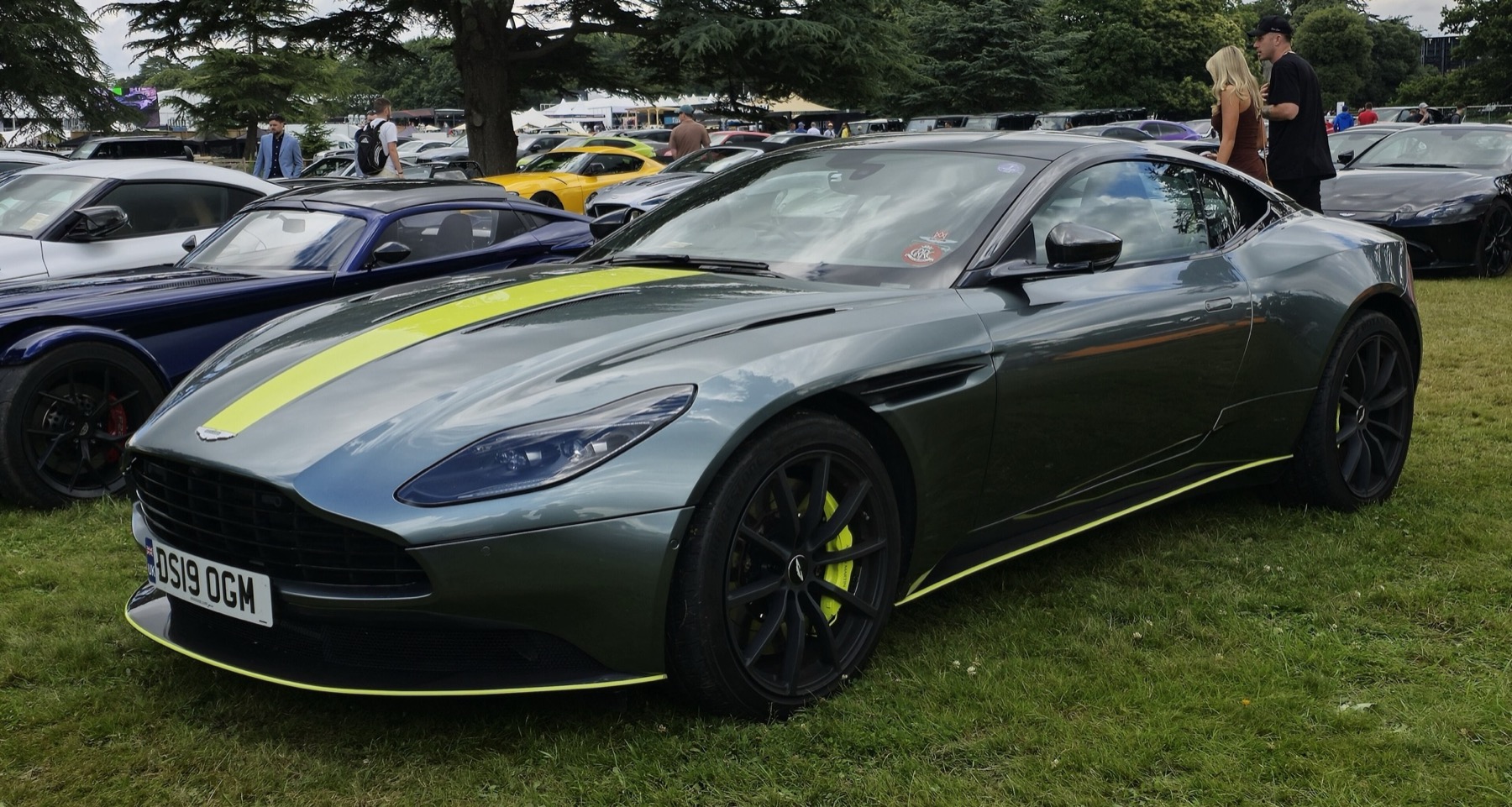
front-engined V12 grand tourer occupies a narrowing corner of the market, pressed from below by turbocharged V8s that post comparable numbers and from above by hybridized flagships that make a twelve-cylinder engine look almost old-fashioned. That said, the Aston Martin DB11 remains one of the few modern cars to pair that layout with a usable 2+2 cabin, a 5.2-liter twin-turbo V12, and the long-legged composure the DB badge has traded on for six decades.With the DB12 now several model years into its run and second-hand DB11 supply widening, the car has reached the stage where depreciation slows and the value question is worth asking with care. What follows is a read on where the DB11 settles, spec by spec, as its successor matures.
Where The DB11 Sits In Aston Martin's Recent History
The DB11 arrived at the 2016 Geneva show as the first all-new car of Aston Martin's Second Century plan, launching in the US for the 2017 model year with a 5.2-liter twin-turbo V12 rated at approximately 600 hp. A 4.0-liter twin-turbo V8, sourced from Mercedes-AMG, joined in 2018 and brought a lighter nose and a lower entry price.
For 2019 the base V12 gave way to the DB11 AMR, which lifted output to roughly 630 hp and became the definitive twelve-cylinder version. The Volante convertible, offered with the V8, widened the range further.
Across the range the DB11 uses an eight-speed ZF automatic and rear-wheel drive over a bonded-aluminum structure, with the V12 reaching 60 mph in roughly 3.6 seconds and the V8 a few tenths behind — figures to treat as approximate and specification-dependent.
Original US pricing sat around $211,000 for the launch V12 and roughly $198,000 for the V8, before options and destination — figures worth confirming against period manufacturer data, since specification swung real transaction prices considerably. Production wound down as the DB12 was revealed in May 2023.
How The Depreciation Curve Reads In 2026
The DB11 followed the shape common to six-figure grand tourers: a steep first-owner loss, then a flattening as the car ages into its used life. Independent depreciation studies from iSeeCars and valuation data from Hagerty are the right anchors for any specific figure, and both should be checked at the moment of purchase rather than taken from a static estimate.
Two forces explain the early drop. These are heavily optioned cars whose original stickers rarely reflect resale, and the factory warranty cliff at the three-year mark tends to concentrate a wave of first-owner sales — both of which the used buyer can turn to advantage.
As a working estimate, clean and well-specified V8 coupes several years out tend to trade in the region of 45–55% of their original MSRP, with V12 and AMR cars holding a modest premium in dollar terms. Keep in mind that this is an estimate offered for orientation, not a quote — mileage, service history, and paint specification move individual cars well outside any band.
The two engines also age differently in the eyes of the market. The V8 sells on running costs and breadth of choice, while the V12 and AMR sell on rarity and the character of the bespoke engine — a split that widens as the DB12 defines the modern V8 GT above them.
V12, AMR, Or V8 — Which Curve Are You Buying?
The DB11 is not one used car but several, and the residual logic differs by drivetrain. Here is how the main variants separate:
- DB11 V8 (2018–2023). The Mercedes-AMG engine, lighter front end, and broadest supply make this the pragmatic choice and the easiest to own; in absolute dollars it also sits at the lower end of the range.
- DB11 V12 (2017–2018). The original 600-hp twin-turbo twelve, built in smaller numbers once the V8 arrived, carries the appeal of the bespoke Aston engine rather than the shared AMG unit.
- DB11 AMR (2019–2023). At roughly 630 hp, this is the definitive V12 DB11 and, as the last V12-powered DB before the DB12 went V8-only, the variant most likely to firm up over time.
- DB11 Volante. Offered with the V8, the convertible draws a different demand pool and typically commands a premium over the equivalent coupe.
What The DB12's Arrival Does To DB11 Values
The DB12, revealed in 2023, is more powerful than any standard DB11 — a 4.0-liter twin-turbo V8 making approximately 671 hp — and it repositioned the line as a self-described Super Tourer at a higher entry price: $249,000 for the 2025 car (MSRP, KBB). A newer, quicker, dearer successor does the predictable thing to the outgoing model: it pulls used DB11 values down in the near term.
The DB12 going V8-only quietly makes the DB11 AMR the last V12 in the DB line.
However, there is a countervailing detail. Because the DB12 dropped the V12 entirely, the AMR now stands as the final twelve-cylinder car to wear the DB name, and that scarcity is the kind of thing that firms residuals for the right example over a longer horizon.
It is also worth noting where the V12 went. Aston moved its twelve-cylinder engine upmarket into the revived Vanquish rather than the DB line, which reinforces the DB11 AMR's standing as the last V12 to wear the DB badge. Our DB12 versus Continental GT comparison covers where the successor lands against its natural rival.
Ownership Economics Beyond The Purchase Price
The purchase price is the smaller half of the decision on any Aston of this era. Running costs track other V12 and V8 grand tourers: annual servicing, premium tires, and brakes that are neither small nor inexpensive.
Plan on annual servicing, typically at roughly 10,000-mile intervals (estimated and subject to the car's own schedule), with tires and brakes priced to match the performance. Insurance on an agreed-value or specialist policy is worth quoting before purchase rather than after.
The V8 cars hold a quiet advantage here, since the Mercedes-AMG engine shares parts and service familiarity that the bespoke V12 does not. Aston Martin's certified pre-owned program, Timeless, can extend factory-backed coverage on eligible cars and is worth seeking out on a purchase near the end of its original warranty.
For a broader view of what these cars cost to keep, our guide to supercar ownership costs breaks down the recurring line items, and the same discipline that governs a used Ferrari depreciation sweet spot applies here.
Specification Details That Move A DB11's Price
On a car this configurable, specification is a genuine value lever rather than a footnote. Carbon-ceramic brakes where fitted, and desirable paint-to-sample colors, can support a car's price, while tired or unpopular combinations soften it.
The reverse also holds. A high-mileage car in a difficult color with an incomplete history will lag the estimated bands above, regardless of how strong the underlying model looks.
Common Pitfalls And What A Pre-Purchase Inspection Should Catch
A marque-specialist pre-purchase inspection is not optional on a car of this value. The infotainment on earlier cars uses an older Mercedes-derived system that feels its age, so set expectations accordingly rather than reading it as a fault.
Electrical niggles are the usual talking point on this generation, so confirm that every convenience feature, the climate system, and the parking sensors work on the test drive. None of this should deter a buyer on a well-kept example — it simply sets the bar the inspection has to clear.
Beyond that, a proper PPI should confirm complete service history, the presence of books and tools, tire age and brake wear, and any evidence of accident repair or non-original paint. Paint-to-sample and rare specification can add value, but only where documented.
Editorial Recommendation
The DB11's price is now driven more by condition and specification than by age alone, which is what makes this a buyer's moment rather than a seller's. Named to spec:
- For easiest ownership: a V8 coupe, 2019–2021, ideally with remaining CPO coverage or a documented specialist service record.
- For the V12 with the best long-term hold: a DB11 AMR with low-to-moderate mileage and complete history.
- For open-top touring: a V8 Volante, accepting the convertible's premium over the coupe.
- To skip: early cars with gaps in history, no books and tools, or a seller unwilling to allow a PPI.
For where the DB11 fits in the wider marque, start with the Aston Martin brand hub and our grand tourer category, then cross-reference current numbers against Hagerty and iSeeCars before you transact.