The US$150K Grand Tourer: Which Used Continental GT, DB11, AMG GT and California T Model Years Have Reached the Value Floor
The
grand tourer holds a particular place in the luxury market: it is built to cover long distances quickly and in comfort, with the finish of a flagship and the pace of a sports car. That same mix of complexity and expense is why the category depreciates so steeply in its first years, and why a fixed budget eventually buys far more car than it once could.A US$150,000 ceiling now reaches four of the most capable GTs of the last decade: the Bentley Continental GT, the Aston Martin DB11, the Mercedes-AMG GT and the Ferrari California T. The more useful question for a disciplined buyer is which model years have stopped falling and which are still on the steep part of the curve.
Our concierge desk works through exactly this comparison, and the read below pins it to a single budget across all four marques. Each model has its own deep-dive in the journal, and this piece sits above them as the cross-marque view.
What A Value Floor Means For A Grand Tourer
A value floor is the point on a depreciation curve where annual losses shrink to a small fraction of what they were in the first three years. Past that point, condition, mileage and service history move the price more than the calendar does.
For grand tourers, the steepest losses typically arrive in the first three to five years, when lease returns and first-owner trade-ins reach the market together. iSeeCars publishes recurring five-year depreciation studies in which high-end luxury models frequently appear among the steepest losses, which is consistent with the pattern this piece tracks.
Keep in mind that a floor describes a flattening slope and offers no guarantee. A flattening curve can still dip in a soft market, and a well-specified, low-mileage example can trade above the band while a neglected one trades well below it.
How We Read KBB, Hagerty And iSeeCars Together
No single source answers the floor question cleanly, so we read three side by side. Each measures something slightly different, and those differences matter at this price point.
Here is how each source fits into the read:
- Kelley Blue Book. KBB's fair purchase price reflects recent transactions for a given model year, trim and mileage. It is the most useful baseline for late-model cars that still trade in volume.
- Hagerty. Where Hagerty publishes values for a model, it grades cars by condition tier, from concours (#1) through fair (#4). That condition-tier view becomes more meaningful as a model ages into enthusiast territory, which is why it matters most here for the California T and the AMG GT.
- iSeeCars. iSeeCars aggregates listing data and publishes depreciation and time-on-market studies. Its listing history is a practical check on whether asking prices for a given model year are still sliding month over month.
All three sources should be pulled on the same day and for the same specification before any offer is made. The ranges and floor calls in this piece are editorial estimates built from that method, and they are no substitute for a live, specification-matched quote.
Bentley Continental GT: The Third Generation Approaches The Floor
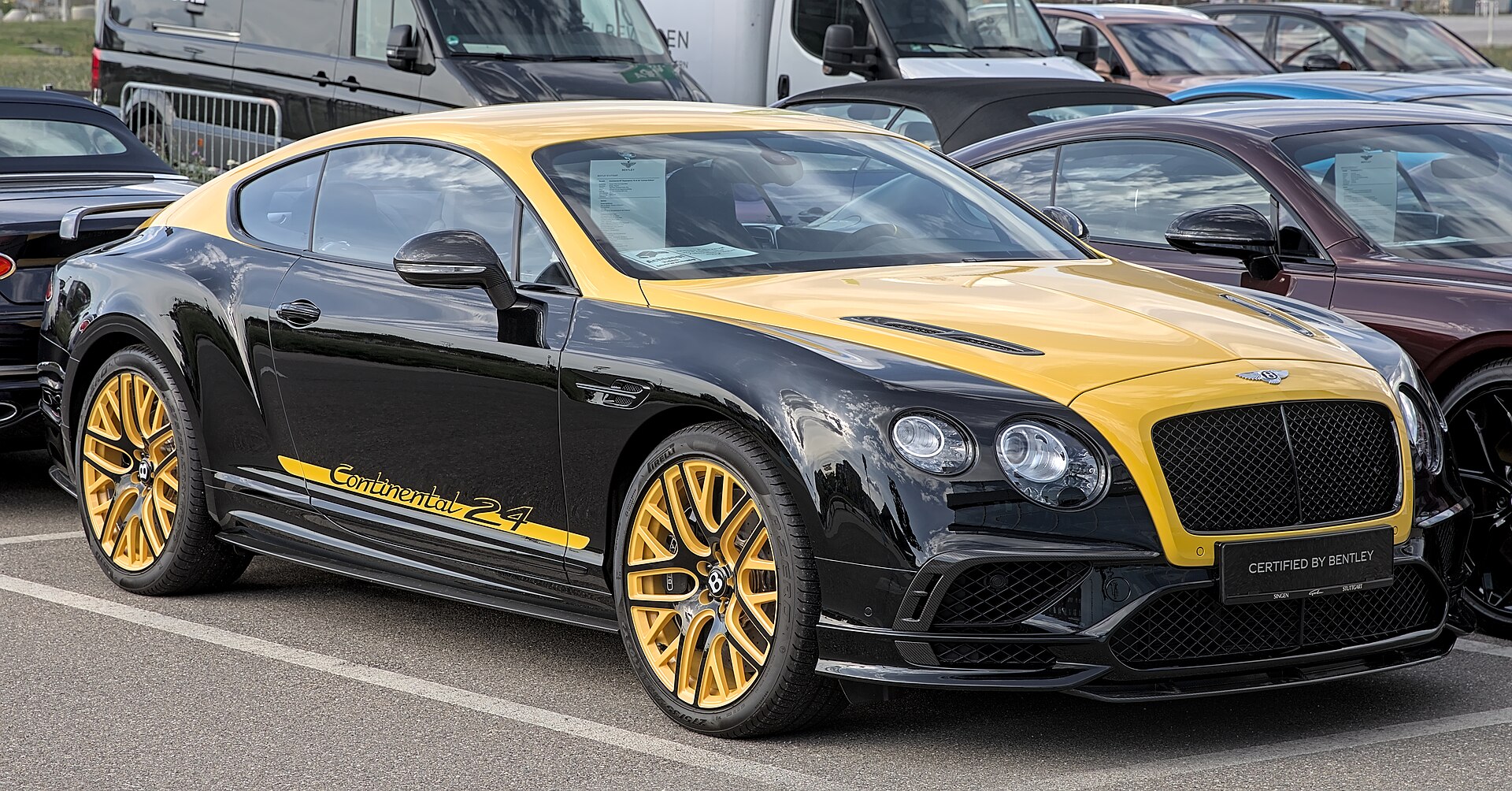
The third-generation Continental GT arrived in the US for the 2019 model year with the 6.0-liter W12, at approximately $214,000 before destination per Bentley's launch pricing. The 4.0-liter twin-turbo V8 followed for 2020 at a lower entry price.
At a $150,000 ceiling, early third-generation cars are within reach, but by our estimate they sit on the lower shoulder of the curve rather than on the flat. Annual losses on 2019–2021 cars are slowing, yet each additional year of age still moves the price more than it does for the other three GTs in this piece.
The second-generation car, sold through the 2018 model year, flattened long ago. Those cars trade well below this budget, which leaves room for a generous maintenance reserve.
Remember that the W12 and V8 behave differently on the used market. By our read of listing data, V8 cars draw the deeper buyer pool, and the W12's added complexity and running costs weigh on its resale.
For model-year specifics, see our analysis of the best year for a used Bentley Continental GT. Buyers weighing the Bentley against the current Aston Martin will find the DB12 versus Continental GT comparison useful context.
Aston Martin DB11: The Early Cars Are Already There
The DB11 launched for the 2017 model year with a 5.2-liter twin-turbo V12, at a US price just over $210,000 per Aston Martin's launch pricing. A Mercedes-AMG-sourced 4.0-liter V8 arrived for 2018, and the V12 car became the DB11 AMR for 2019.
Of the four cars here, the DB11 shows the clearest flattening at this budget. By our estimate, 2017–2019 cars of either engine trade comfortably inside $150,000, and the year-over-year gap between them has narrowed considerably.
That said, the DB11's floor is shaped partly by its successor. The DB12 reset the model line's positioning, and early DB11s now compete on value, which tends to steady their pricing.
Be aware that early cars benefit most from a documented software and infotainment update history. A specialist pre-purchase inspection (PPI) is essential on any V12 example, particularly one with gaps in its service records.
Our used Aston Martin DB11 market guide covers specification-level residual logic in more depth.
Mercedes-AMG GT: Two Floors, Depending On The Badge
The AMG GT reached the US for the 2016 model year as the GT S, at approximately $130,000 per Mercedes-Benz launch pricing. That launch price already sat under this piece's budget, which means a $150,000 ceiling opens up far more than the entry car.
By our estimate, GT and GT S coupes from 2016 through 2019 have reached their floor and trade well below $150,000. The track-oriented GT R sits on a different, shallower curve, because enthusiast demand for the more focused variant has tended to support its values.
Moreover, the limited Pro and Black Series cars should be treated as a separate market entirely. Those models trade on rarity and track pedigree, and they fall outside both this budget and the value-floor logic.
Keep in mind that the AMG GT's front-mid-engine, rear-transaxle layout rewards a specialist inspection of the driveline and dry-sump V8. Its predecessor, the SLS AMG, has followed a very different, collector-driven curve.
For generation and option detail, see our used Mercedes-AMG GT buying guide.
Ferrari California T: A Floor Set By Its Successor
The California T was sold in the US for the 2015 through 2017 model years with a 3.9-liter twin-turbo V8, at a launch price just under $200,000 per Ferrari. The optional Handling Speciale package, offered from 2016, added firmer suspension calibration and a revised exhaust.
The Portofino replaced it, and that succession has largely set the California T's floor. By our estimate, clean 2015–2017 cars now sit comfortably within this budget, with year-over-year movement driven mainly by mileage, specification and service records.
Note that every California T has now aged out of Ferrari's seven-year Genuine Maintenance program, which runs from first registration. Ferrari's Power15 program can extend warranty coverage on eligible cars up to 15 years from first registration, subject to inspection, and that cost belongs in any offer.
Our used Ferrari California T guide covers specification in detail, and Ferrari service costs by model sets out what to budget once the factory program has lapsed. Buyers willing to stretch toward the successor should read our used Ferrari Portofino analysis.
The Four GTs Side By Side
The table below summarizes our editorial read as of November 2026. Launch prices are approximate manufacturer US pricing, and floor status is an estimate to be verified against same-day KBB, Hagerty and iSeeCars data.
| Model | Years | Launch price (approx., manufacturer) | Floor status at $150K (estimated) | |---|---|---|---| | Bentley Continental GT | 2019–2021, third gen | approx. $214,000 (W12, 2019) | Approaching; still sliding | | Aston Martin DB11 | 2017–2019, V12 and V8 | just over $210,000 (V12, 2017) | At floor | | Mercedes-AMG GT | 2016–2019, GT and GT S | approx. $130,000 (GT S, 2016) | At floor | | Mercedes-AMG GT R | GT R only | Above GT S | Shallower curve; holds better | | Ferrari California T | 2015–2017 | just under $200,000 (2015) | At floor |
Overall, three of the four have flattened at this budget, and the Continental GT is the one still in motion. That makes the Bentley the natural candidate for buyers willing to wait, and the DB11 or California T the stronger candidates for buyers who want to stop the depreciation clock now.
Ownership Costs Below The Floor
Reaching the floor shifts the cost of ownership from depreciation to maintenance. A car that has stopped losing value can still cost a meaningful sum each year to keep in show- or driver-tier condition.
Before committing to any of the four, budget for the following:
- Pre-purchase inspection. A marque-specialist PPI is the single most valuable spend in this segment. It should include a fault-code scan, a review of the service records and an inspection of suspension, brakes and tires.
- Extended warranty. Factory CPO coverage, where still available, or a manufacturer-backed extension such as Ferrari's Power15 is the safest route. Third-party contracts vary widely, so read the exclusions carefully.
- Consumables. Tires, brakes and air-suspension components add up quickly on heavier GTs such as the Continental GT. Ask for receipts showing when each was last replaced.
- Financing structure. Interest on a $150,000 car is a real line item, and lenders treat older luxury cars differently. Our guide to exotic car financing covers how terms change with age.
All of these costs belong in the budget before the purchase price does. In practice, a $150,000 ceiling works better as a total first-year figure than as a sticker number.
Editorial Recommendation
For a buyer with US$150,000 and a preference for a car that has already stopped falling, our recommendations are as follows:
- Strongest floor: Ferrari California T, 2016–2017 with Handling Speciale. The curve has flattened, the Portofino has fixed its position, and Power15 eligibility offers a path to long-term coverage. The budget still leaves room for a specialist PPI and first-year service.
- Best value per dollar: Aston Martin DB11 V8, 2018–2019. The V8 cars sit at the floor with lower running costs than the V12, by our estimate. The early V12 remains the choice for buyers who prioritize the engine over the ledger.
- Most car for the money: Mercedes-AMG GT S, 2017–2019. A floor reached well below budget leaves room for warranty and consumables. A GT R may fit the budget, but it sits on a different curve and is best bought for its character.
- Wait and watch: Bentley Continental GT V8, 2020–2021. The third-generation car is close to the floor but, by our estimate, still sliding. Buyers who can wait a year or two may see the same specification at a lower figure.
The floor is a useful signal, but the individual car always outranks the curve. For a comparable read on a different segment, see our analysis of the used Porsche 911 depreciation floor, and if you would like a second opinion on a specific listing or comp set, our concierge desk works through exactly this kind of cross-marque comparison.
Frequently asked questions
What did the 2016 Mercedes-AMG GT S cost new in the US?
Mercedes-Benz priced the 2016 AMG GT S at approximately $130,000 at US launch. That put it below a $150,000 budget even when new, so used examples leave meaningful room for warranty and maintenance reserves.
Do used Ferrari California T models still have factory maintenance coverage?
No. Ferrari's seven-year Genuine Maintenance runs from first registration, so every 2015–2017 California T has aged out. Ferrari's Power15 program can extend warranty coverage on eligible cars to 15 years, subject to inspection.
Should I buy a V8 or W12 used Bentley Continental GT?
For most buyers, the V8. It arrived for the 2020 model year at a lower entry price, and by our estimate it carries lower running costs than the W12, which matters most once depreciation has slowed.
When did the Aston Martin DB11 V12 become the DB11 AMR?
Aston Martin replaced the standard DB11 V12 with the DB11 AMR for the 2019 model year. The AMR added power and revised chassis tuning, so 2017–2018 V12 cars form their own segment on the used market.
Which pricing source matters most for an older grand tourer?
Use all three. KBB anchors late-model transaction values, iSeeCars shows whether asking prices are still sliding, and Hagerty's condition tiers matter most as a model ages into enthusiast territory.