The Best Year to Buy a Used Ferrari California T: Turbo Launch Cars, the Handling Speciale Package and Where Values Settle After the Portofino
The
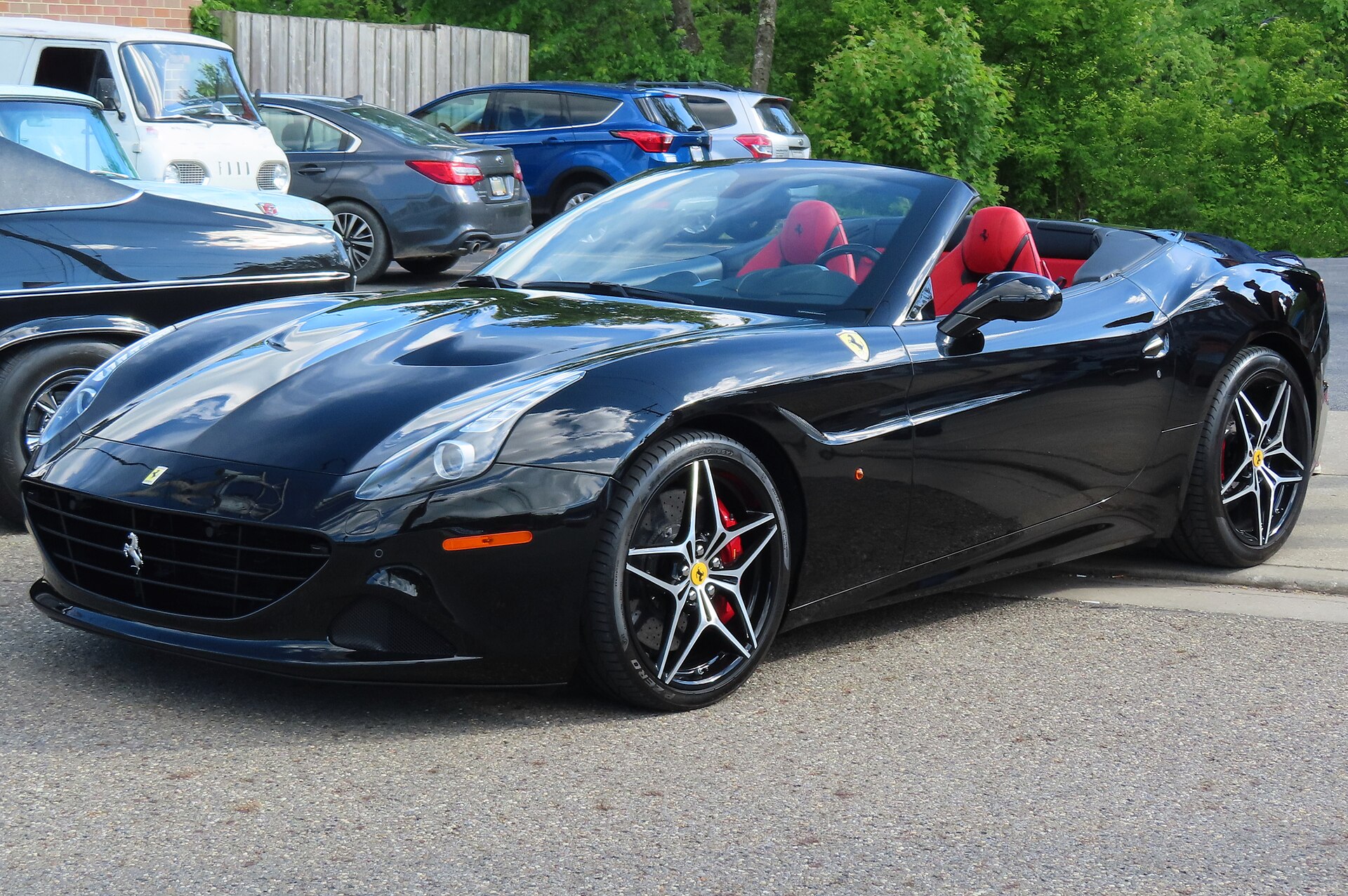
arrival of turbocharging at Maranello was one of the more consequential decisions in the marque's modern history, and it reshaped how Ferrari's V8 cars deliver power, sound and efficiency. That said, the first series-production Ferrari to carry the change since the F40 was a front-engine convertible grand-tourer with occasional rear seats: the California T.If you admire the Portofino but find its used prices out of reach, the California T is the most accessible route into a turbocharged front-engine Ferrari. Three things decide which example deserves your money: the model-year changes, the Handling Speciale premium and the current value picture.
Where The California T Sits In The Used-Ferrari Series
The California T occupies a narrow band in the used-Ferrari series. It is priced below the Portofino yet built around the same 3.9-liter twin-turbo V8 family that powers much of the current lineup.
Accordingly, buyers moving up from a used Porsche 911 Turbo S or a used Bentley Continental GT frequently weigh it when they want a Ferrari with a folding hard top. In fact, it pairs grand-touring comfort with a performance envelope that remains serious by any current measure.
Keep in mind that it sits between two very different used Ferraris: the naturally-aspirated California that preceded it and the lighter, more powerful Portofino that replaced it. If you are still deciding where in the range to start, our Ferrari depreciation sweet-spot analysis maps the broader curve, and the Ferrari marque hub gathers every model we cover.
Model-Year Changes, 2015 Through 2017
Ferrari unveiled the California T at the Geneva Motor Show in March 2014, and US deliveries began as 2015 model-year cars. Production ran through 2017, and the Portofino debuted at Frankfurt that September as its replacement.
Across that span the mechanical package stayed largely consistent, which means condition and specification move price more than model year does. Here is how the three US model years break down:
- 2015. The launch year introduced the F154 twin-turbo V8, rated by Ferrari at 553 hp and 557 lb-ft, paired with a seven-speed dual-clutch gearbox. These are now the oldest examples and the ones most likely to show deferred maintenance, so documentation carries extra weight.
- 2016. The standard car carried over largely unchanged, with the Handling Speciale package announced at Geneva in March 2016 and phased into production afterward. Early 2016 cars will not carry it, so confirm the specification through the build sheet and the dedicated plaque.
- 2017. The final model year is where Handling Speciale examples are most concentrated, and occasional 70th-anniversary Tailor Made specifications also surface. Late build also tends to mean the newest components and, in many cases, the lowest mileage.
All of this adds up to a simple rule. Within the California T, model year is a tiebreaker, while service history, mileage profile and the HS package are the deciding factors.
What's more, the powertrain calibration is consistent across all three years. Ferrari's Variable Boost Management meters torque progressively through the gears, with peak torque reserved for seventh, and the factory quoted 0–62 mph in 3.6 seconds and a top speed of 196 mph at launch.
The Handling Speciale Package
The Handling Speciale package is the one option that materially changes how a California T drives. It is also the specification that dealers tend to highlight first in their listings.
According to Ferrari's 2016 Geneva announcement, the package includes the following changes:
- Stiffer springs. Ferrari specified spring rates approximately 16% stiffer at the front and 19% stiffer at the rear, which reduces body roll without turning the car into a track tool.
- Recalibrated magnetorheological dampers. The SCM-E damping was retuned for quicker response, sharpening turn-in on a winding road.
- Quicker gearshift mapping. Ferrari revised the dual-clutch software in Sport mode for faster upshifts and more assertive downshifts.
- Revised exhaust. A new system with matte black tailpipes gives a fuller note, addressing a common criticism of the standard turbo car's sound.
- Visual details. Matte grey grille and rear diffuser finishes, plus a dedicated interior plaque, identify genuine HS cars.
Taken together, these changes bring the California T closer to a more focused grand-tourer. Moreover, the ride stays civil enough for regular use, which is why the package rarely deters buyers at resale.
US pricing for the package varied by dealer and order date, so treat any original figure you see quoted as estimated. On the used market, HS examples typically command an estimated $5,000–$15,000 premium over comparable standard cars, based on asking-price spreads rather than a published guide value.
Where Values Settle After The Portofino
The California T launched in the US at just under $200,000 before options and destination, according to launch-period coverage from Car and Driver and Edmunds; verify any specific car against its window sticker. Of course, few cars left the factory at base price, and individually optioned examples commonly stickered well above that figure.
Today's market is a function of age, mileage and, increasingly, the Portofino's own depreciation. As early Portofino prices soften, they compress the California T from above, which tends to keep the older car's values drifting rather than flattening.
The ranges below are estimated asking prices for clean, documented US-market examples with roughly 20,000 miles or fewer. Verify against current KBB, Hagerty and Edmunds data before you negotiate:
| Model | Model years | Estimated asking range (2026) | Notes | |---|---|---|---| | California T | 2015 | $95,000–$120,000 | Oldest cars; documentation drives price | | California T | 2016 | $100,000–$130,000 | Confirm HS on the build sheet | | California T | 2017 | $110,000–$140,000 | Final year; most HS supply | | California T Handling Speciale | 2016–2017 | +$5,000–$15,000 | Over a comparable standard car | | Portofino | 2019–2020 | $150,000–$195,000 | Successor; newer chassis and EPS |
Measured against a typically optioned original price, those ranges imply an estimated 40–60% retained value for most examples. Expect the lower end for high-mileage 2015 cars and the upper end for low-mileage 2017 Handling Speciale examples.
For context, our used Ferrari Portofino analysis covers how the successor's values are settling, and the gap between the two cars is the core of this decision. The Portofino adds output, electric power steering and a lighter chassis per Ferrari's specifications, yet the California T delivers much of the same experience for an estimated $40,000–$70,000 less.
Keep in mind that convertible grand-tourers follow their own curve, separate from the mid-engine berlinettas. Our convertible depreciation analysis explains why folding-roof cars tend to settle differently from their coupe counterparts.
Ownership Costs Outside The Maintenance Window
Ferrari's seven-year Genuine Maintenance program runs from the date of first registration, so every California T has now aged out of factory-paid scheduled service. As a result, the buyer carries the full cost of annual service, fluids, brakes and tires.
Because the F154 uses chain-driven camshafts, the periodic belt service that weighed on 355 and 360-era ownership does not apply. That said, the turbocharged V8 places more demand on cooling hoses, intercoolers and oil quality, so service intervals deserve close attention.
Ferrari Power, the factory extended warranty, can still be purchased on eligible cars after a Ferrari dealer inspection, with eligibility now extending up to 15 years from first registration. For estimated annual service and repair figures across the range, see our Ferrari service costs by model breakdown.
If you plan to finance, lender terms on a car of this age differ from those on a new allocation. Our exotic car financing guide explains how terms, down payments and age limits typically apply.
What To Inspect Before You Buy
A pre-purchase inspection (PPI) at a Ferrari dealer or an established independent specialist is essential on any California T, particularly on 2015 cars that may have passed through several owners. Here is what that inspection should cover, including but not limited to:
- Roof operation. Cycle the retractable hard top several times and listen for hesitation, noise or warning messages, since hydraulic and sensor faults can be costly to diagnose.
- Dual-clutch health. Ask for a diagnostic readout of clutch wear and any stored transmission faults.
- Turbocharger and cooling system. Inspect for oil seepage, boost leaks and coolant loss around the intercoolers and hoses.
- Service and warranty history. Confirm records through the dealer network and ask whether the car has ever been enrolled in Ferrari Power.
- Paint and panels. A paint-depth reading identifies resprays, which matter more on a car whose value already rests on condition.
Overall, a clean PPI is worth more at resale than any single option. Remember that a seller unwilling to allow one is giving you useful information.
Editorial Recommendation
Weighing specification, age and the Portofino's influence on pricing, our recommendation is as follows:
- Best overall. A 2017 California T with the Handling Speciale package, under 15,000 miles, full dealer service history and a clean PPI.
- Best value. A well-documented 2016 standard car, which delivers the turbo V8 and folding hard top at an estimated discount to the final year.
- Proceed with care. High-mileage 2015 cars with gaps in service history, where the lower price rarely offsets the cost of catching up deferred work.
- Spend more instead. If electric power steering, the additional output and a newer chassis matter to you, stretch to an early Portofino rather than paying top dollar for a California T.
The California T rewards the buyer who prioritizes provenance over the lowest asking price. For more on how specification shapes resale across the marque, see our trim-level depreciation analysis, or return to the Ferrari marque hub for every model we cover.
Frequently asked questions
What does the Handling Speciale package change on the California T?
Per Ferrari's 2016 Geneva release, it adds springs roughly 16% stiffer front and 19% rear, recalibrated magnetorheological dampers, quicker gearshift mapping and a revised exhaust with matte black tailpipes.
Does the California T need timing belt service like older Ferraris?
No. The F154 twin-turbo V8 uses chain-driven camshafts, so the periodic belt service of 355 and 360-era ownership does not apply. Fluids, filters, brakes and cooling-system checks form the routine schedule.
How does the California T differ mechanically from the Portofino?
Both use a twin-turbo 3.9-liter V8, but the Portofino makes 591 hp versus 553 hp and adds electric power steering and a lighter chassis, per Ferrari specifications. Its used values sit an estimated $40,000–$70,000 higher.
What should a pre-purchase inspection on a California T include?
A Ferrari-dealer or specialist PPI should cover repeated roof cycles, a dual-clutch wear readout, turbo and intercooler checks for leaks, paint-depth readings, and service records confirmed through the dealer network.
Which options help a used California T hold its value?
Handling Speciale, carbon-fiber interior trim, a front suspension lifter where fitted, and a desirable non-black color tend to ease resale. Option premiums are estimated from asking prices, not published by valuation guides.