The Best Year to Buy a Used Ferrari GTC4Lusso: V12 Versus T, the 2020 Run-Out and Where Values Settle After the Purosangue
A Four-Seat Ferrari, Reconsidered
F
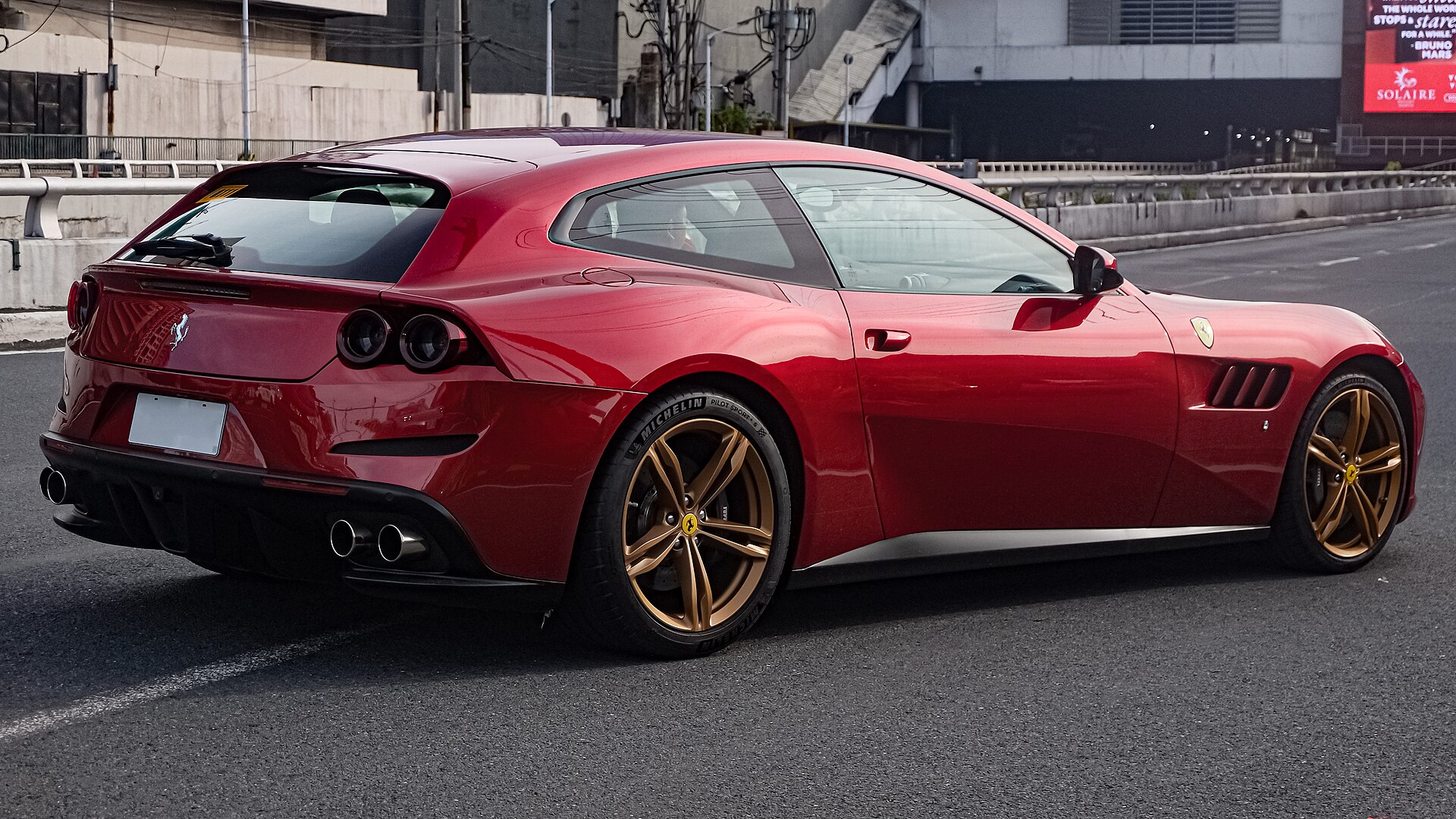
errari has built four-seat cars for most of its history, and the best of them have always asked the owner to give up very little in exchange for the rear seats. That said, the GTC4Lusso is a distinct case: a long-roof shooting brake with a front-mid V12, all-wheel drive and a usable luggage bay, built from 2016 through the 2020 run-out.The arrival of the Ferrari Purosangue has changed how the used market reads this car. Buyers who once had no other four-door-adjacent V12 Ferrari now have a newer one. As a result, the GTC4Lusso is settling into a role as a value proposition for the informed driver rather than the default family Ferrari.
This piece extends our best-year-to-buy series, which begins with the broader used Ferrari depreciation sweet spot analysis. Here we narrow that logic to one model, two engines and five model years.
The Two Cars Sold Under One Name
The GTC4Lusso replaced the FF at the 2016 Geneva Motor Show, and Ferrari added the GTC4Lusso T later that year at the Paris Motor Show. Keep in mind that the two share a body and an interior but differ meaningfully in drivetrain, character and running costs.
The core specifications, per Ferrari's published launch figures, break down as follows:
| | GTC4Lusso (V12) | GTC4Lusso T (V8) | |---|---|---| | Engine | 6.3-liter naturally-aspirated V12 | 3.9-liter twin-turbo V8 | | Output (Ferrari, cv) | 690 cv at 8,000 rpm | 610 cv at 7,500 rpm | | Torque (Ferrari) | 697 Nm | 760 Nm | | Driven wheels | All-wheel drive (4RM-S) with four-wheel steering | Rear-wheel drive with four-wheel steering | | Gearbox | 7-speed F1 dual-clutch | 7-speed F1 dual-clutch | | Launch US base MSRP | Approximately $298,000 (launch-era reporting; verify) | Approximately $250,000 (launch-era reporting; verify) |
All of these figures matter for a used purchase, although not equally. The engine choice drives residual behavior, while the drivetrain choice drives what your pre-purchase inspection needs to cover.
The V12: The Car That Defines the Line
The V12 is the reason the GTC4Lusso exists in collector conversation. It pairs a high-revving naturally-aspirated twelve with the 4RM-S system, which uses a compact front power transfer unit (PTU) driven off the nose of the engine to send torque forward when the rear axle needs help.
What's more, Ferrari has since moved its V12 into the front-mid 12Cilindri and the 812 Superfast lineage, neither of which seats four. For buyers who want a naturally-aspirated Ferrari V12, all-wheel drive and real rear seats in one car, the GTC4Lusso and the Purosangue are the only answers in the marque's modern catalog.
The T: Lighter, Rear-Drive and Easier to Live With
The T trades the V12 and front axle drive for the twin-turbo V8 family shared, in different tunes, with cars such as the Ferrari Portofino. Ferrari positioned it as the more urban, lighter-feeling variant, and the removal of the PTU simplifies the drivetrain considerably.
In practice, the T's turbocharged torque arrives low in the rev range, which suits daily use. However, it lacks the all-weather traction that drew many northern-state buyers to the V12 in the first place.
Early Cars Versus the 2020 Run-Out
Model year is a quieter variable on the GTC4Lusso than on many Ferraris, because the car received no mid-cycle refresh of consequence. Accordingly, the year you choose is largely a proxy for two things: remaining factory coverage and accumulated mileage.
Why the Warranty Clock Matters
Ferrari's Genuine Maintenance program covers scheduled maintenance for seven years from the original registration date, and it transfers to subsequent owners. Remember that the clock starts at first registration, not at the model year printed on the window sticker.
The practical arithmetic looks like this:
- 2016–2017 cars. Genuine Maintenance coverage has expired on essentially every example, so every scheduled service is now an owner cost.
- 2018 cars. Most have rolled off coverage by now; late-registered examples may retain a few months, so verify the start date with an authorized dealer.
- 2019–2020 cars. These are the only GTC4Lusso examples likely to retain any factory scheduled maintenance, with late 2020 registrations potentially covered into 2027.
All of the above is why the run-out years command a premium beyond their age alone. A buyer is effectively purchasing a few years of prepaid servicing, which our Ferrari service costs by model breakdown helps quantify.
Power15 and the Extended Horizon
In addition, Ferrari's Power15 program can extend powertrain coverage up to the car's fifteenth year from registration, subject to an inspection and annual renewal. Be aware that eligibility depends on the car's condition and dealer service history, so a lapsed or independent-only service record can close that door.
Where Values Settle After the Purosangue
The Purosangue began reaching US customers in 2023, and it reframed demand for every four-seat Ferrari before it. Of course, the two cars are not direct substitutes; the Purosangue is newer, taller, allocation-controlled and priced at a different tier entirely.
That said, the Purosangue absorbed a portion of the buyers who previously had only the GTC4Lusso as a practical V12 Ferrari. For a wider view of that segment, see our Bentayga, Cullinan, Urus and Purosangue comparison.
What the Data Shows, and What It Does Not
The GTC4Lusso is a relatively low-volume car in the US, and its public transaction record is thin. Accordingly, we treat any single depreciation percentage with caution, a discipline we lay out in our note on thin-data depreciation.
Based on listing and auction-result patterns visible on Hagerty valuation tools, Cars.com and iSeeCars, our working read is as follows. These are Marque estimates, not quoted index values, and they should be verified against current comps before any transaction:
- V12, clean and well-specified. Estimated to trade in the range of roughly 40–55% of original MSRP, with low-mileage 2019–2020 cars at the upper end.
- V12, higher mileage or patchy history. Estimated below that range, with the discount widening sharply where PTU or gearbox records are missing.
- T, clean examples. Estimated at a similar or slightly lower share of a lower original MSRP, which makes it the lowest absolute entry point to the model.
Overall, the curve appears to be flattening for the best V12 examples, which is consistent with the pattern we have documented for other naturally-aspirated Ferraris such as the 458 Italia. However, flattening is not appreciation, and mid-mileage cars with ordinary specifications continue to drift.
The Specification That Moves Residuals
On a car with a long and varied option list, specification can move value as much as mileage. Naturally, the options that matter most are the ones a second owner can see, use or cannot easily retrofit.
The specifications we see buyers rewarding most consistently include but are not limited to:
- Passenger display. The dashboard screen for the front passenger is a signature GTC4Lusso feature, and cars without it read as under-specified.
- Panoramic glass roof. It brightens a long cabin considerably and is a frequent request in the secondary market.
- Considered exterior colors. Historic or paint-to-sample hues tend to hold attention better than common silvers, provided the documentation confirms them.
- Carbon-ceramic brakes in good condition. Rotor and pad wear should be measured, since replacement is a significant expense.
- Front suspension lift. On a long-nosed car, it protects the splitter and makes ownership in steep-driveway neighborhoods far easier.
In fact, a well-optioned 2017 V12 with a complete file can be a better purchase than a sparsely-optioned 2020 car. This is because the option delta compounds at resale, while the warranty delta expires.
Pre-Purchase Inspection: The V12 Asks for More
Every Ferrari deserves a pre-purchase inspection (PPI) by an authorized dealer or a recognized marque specialist. The V12's all-wheel-drive system, however, adds items that a generic exotic-car inspection may skip.
Here's a list of what we would insist on before committing:
- Front PTU. Ask for the service history of the power transfer unit, and have the inspector check for leaks, noise and fault codes; the FF that preceded the GTC4Lusso made this component a known topic in owner circles.
- F1 dual-clutch health. Request a diagnostic readout of clutch wear and adaptation values, rather than relying on a test drive alone.
- Rear-wheel steering. Confirm the system operates without warnings, since the actuators are specialized parts.
- Infotainment and displays. Test the center screen and passenger display thoroughly, because electronic faults in these units are expensive to resolve.
- Documentation. Verify the books, keys, service stamps and any recall work, which our provenance and history files guide covers in detail.
Once that inspection is in hand, you have real leverage. Missing PTU or gearbox records are a legitimate reason to renegotiate, or to walk away.
Ownership Economics in Brief
Beyond the purchase price, the GTC4Lusso carries the running costs of a twelve-cylinder grand-tourer. Tires, brakes, insurance and annual service all scale with that character, and our supercar ownership costs analysis sets out the categories in full.
For buyers weighing how to structure the purchase, our exotic car financing guide covers lender appetite for cars of this age. Note that some lenders shorten terms on vehicles past a set age threshold, which favors the 2019–2020 run-out cars.
Buy the service file first and the model year second; on this car, the paperwork carries the value.
Editorial Recommendation
Our view rests on the documented structure of Ferrari's maintenance programs, the specification patterns above and the estimated value ranges we have described. With that in mind, here is how we would approach the purchase:
- Best overall: 2019–2020 GTC4Lusso V12. Remaining Genuine Maintenance, the defining naturally-aspirated V12 and the strongest case for a flattening value curve, provided the PTU and gearbox records are complete.
- Best value: 2018–2020 GTC4Lusso T. The lowest entry point, a simpler rear-drive drivetrain and turbocharged torque that suits daily use, for buyers in climates where all-wheel drive is optional.
- Best for the patient specialist: a 2017 V12 with an exceptional file. Choose a well-optioned, single-owner car with dealer history, priced to reflect its expired coverage, and budget for servicing from day one.
- Approach with caution: any V12 without PTU documentation. The discount is rarely large enough to offset the uncertainty.
The GTC4Lusso rewards the buyer who values a four-seat V12 Ferrari for what it is, rather than as a stand-in for the Purosangue. For more of the marque's used-market picture, our Ferrari brand coverage brings the series together in one place.
Frequently asked questions
Does Ferrari's Genuine Maintenance program transfer to a used GTC4Lusso buyer?
Yes. Ferrari's seven-year Genuine Maintenance program runs from the original registration date and transfers to later owners, so a late 2020 car may retain scheduled-service coverage into 2027. Verify the start date with a dealer.
Is the GTC4Lusso T all-wheel drive like the V12?
No. The T pairs a 3.9-liter twin-turbo V8 rated by Ferrari at 610 cv with rear-wheel drive and four-wheel steering. Only the V12 carries the 4RM-S all-wheel-drive system and its front power transfer unit.
How did the Purosangue affect GTC4Lusso demand?
It gave buyers a newer four-door V12 Ferrari, which pressured mid-mileage GTC4Lusso asking prices while low-mileage V12s held better. Treat any precise figure for that effect as estimated until Hagerty data confirms it.
What should a GTC4Lusso pre-purchase inspection include?
A Ferrari dealer PPI should cover the front PTU, a clutch-wear readout for the F1 dual-clutch, rear-wheel steering function, carbon-ceramic brake wear, the passenger display and a complete, stamped service history.
Can a GTC4Lusso qualify for Ferrari Power15 coverage?
Ferrari's Power15 program can extend powertrain coverage up to the car's 15th year from registration, subject to an inspection and annual renewal. Eligibility rules change, so confirm with an authorized Ferrari dealer before purchase.