Why Some Marques Have No Depreciation Curve: Low-Volume Production, Thin Transaction Data and How to Value a Car the Tables Skip
A depreciation curve is one of the most useful tools a luxury buyer has, turning thousands of recorded sales into a single line that shows where a model loses value and where it eventually settles. That said, a curve is only as reliable as the transactions beneath it — and for a small group of marques and models, there are simply not enough of them to draw one.
Our concierge desk works through this question with buyers regularly, usually after a search returns a complete residual table for one car and an empty space for the next. The empty space still tells you something about the market, and the cars it describes are valued through a different, slower discipline.
How A Depreciation Curve Is Built
Consumer valuation guides such as KBB and Edmunds build residual estimates from large pools of dealer transactions, wholesale auction-lane data, and retail listings. When a model sells in volume, every model year, mileage band, and trim level collects enough sales that a single unusual result barely moves the line.
What's more, volume luxury models tend to follow a familiar shape: a steep decline in the early years of ownership, a gradual flattening, and eventually a depreciation floor. Our review of the luxury depreciation leaders relies on exactly this kind of density, and it is why those figures can be presented as ranges with reasonable confidence.
Keep in mind that the curve method quietly assumes cars are interchangeable within a band. Two examples of the same year, trim, and mileage are treated as roughly equivalent — an assumption that holds for a volume grand-tourer and collapses once total production falls into the hundreds.
Three Reasons The Tables Skip A Car
Several conditions, often in combination, leave a model without a usable curve. The most common include but are not limited to the following.
Low-Volume Production
When the entire global population of a model numbers in the hundreds, only a fraction of those cars are US-market examples, and fewer still come up for sale in any given year. As a result, a single quarter may produce no comparable transactions at all.
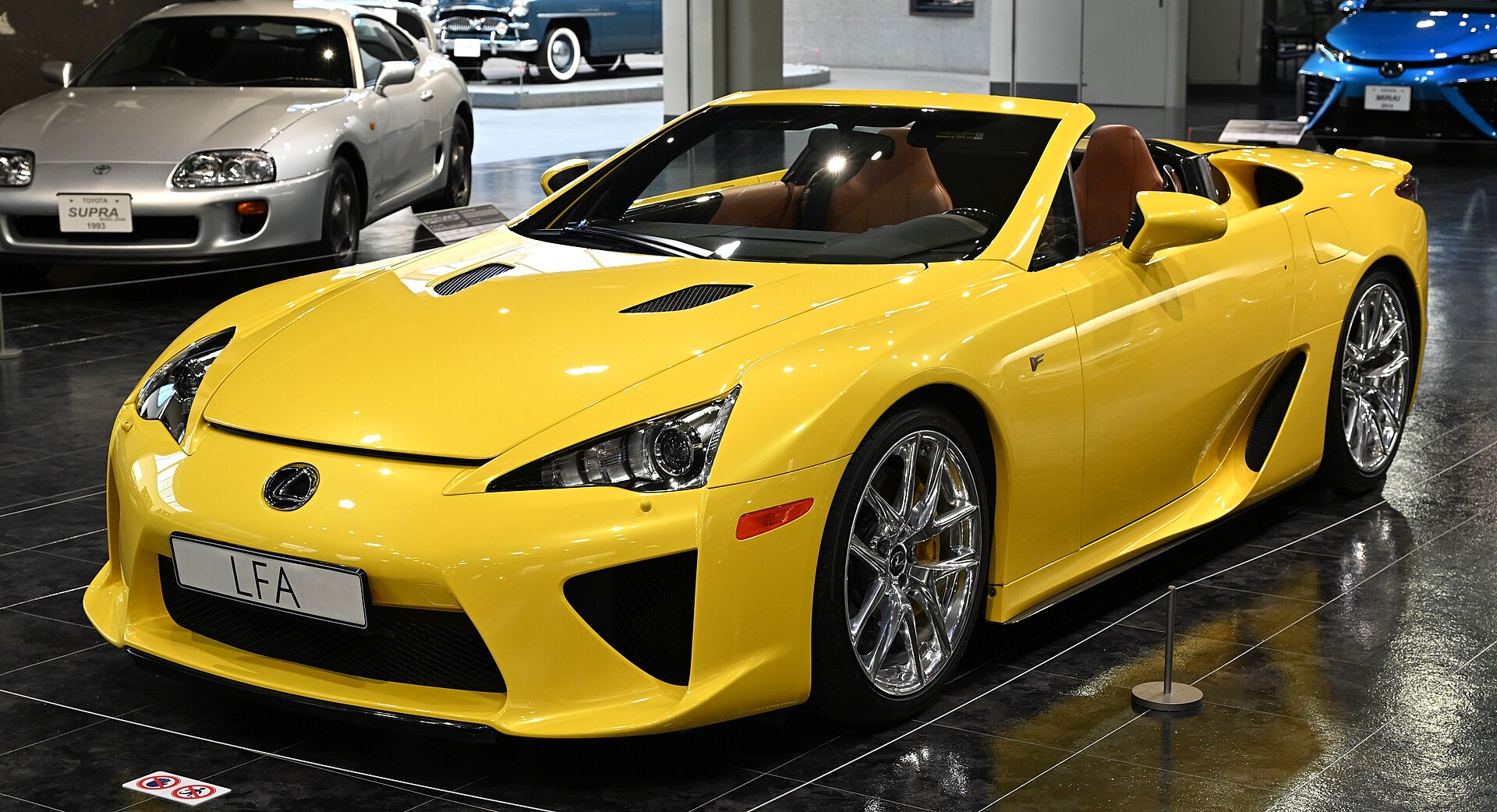
The Lexus LFA is a clear case. Lexus built 500 examples between 2010 and 2012, and our analysis of Lexus LFA values shows how each recorded sale carries far more weight than any single sale of a volume model ever could.
Private And Off-Market Sales
A meaningful share of rare cars change hands broker-to-broker, through a selling dealer's client list, or between private collectors who know one another. These transactions rarely publish a final price, so they never reach the data aggregators that power valuation tables.
Auction-Only Markets
For many collector cars, public auctions — RM Sotheby's, Bonhams, and online platforms such as Bring a Trailer — are the only place a price is ever recorded. These results are visible and verifiable, which makes them valuable, yet they are also episodic.
Each hammer price reflects one car, one room, and one day. Two or three results a year can establish a reference point, but they cannot describe a trend with the confidence a curve implies.
What A Missing Curve Does And Does Not Tell You
The most frequent misreading of a blank residual table is that the car must be holding its value. In fact, a missing curve only means the market has not produced enough recorded sales to measure direction with any confidence.
Values for a thin-data model may be rising, flat, or softening, and the honest answer is often that nobody can say precisely. Moreover, the spread between individual examples tends to be far wider than it is for volume cars, because specification, mileage profile, and history matter more when there are fewer substitutes.
Liquidity deserves equal attention. A car with few buyers can take considerably longer to sell, and the cost of selling — auction commissions, transport, and preparation — eats into whatever value the car has retained.
How Serious Buyers Value The Cars The Tables Skip
In the absence of a curve, experienced buyers assemble a valuation from several narrower sources. Here is how that process typically unfolds:
- Build a comp set. Collect every documented public sale of the model over a sensible window, with a link to each lot record. Note the date, mileage, specification, and condition of each, and keep unverified broker figures in a separate column.
- Grade condition consistently. Hagerty's valuation tools use four condition tiers, from #1 Concours to #4 Fair. Adjusting every comp to the same tier before comparing prices keeps a small data set from pulling the estimate in the wrong direction.
- Weigh provenance and documentation. Service history, books and tools, the ownership chain, and original window stickers all move value on a rare car. Our guide to provenance and history files covers what a complete file should contain.
- Read the specification closely. Factory options, paint-to-sample, and special packages can separate two examples of the same model by a wide margin. The logic we apply to trim-level depreciation matters even more when only a handful of cars trade.
- Account for liquidity. Estimate realistic time-on-market and the full cost of a future sale. A car that is expensive to exit is worth less to its next owner, regardless of what the last auction result says.
- Commission a specialist PPI. A pre-purchase inspection from a marque specialist confirms that the car in front of you matches the comps you are relying on.
All of these steps take longer than reading a residual table. However, they produce a figure you can defend in negotiation, which matters most when the seller is working from the same thin evidence.
Where Thin Data Shows Up Most Often
Certain categories of car are far more likely to fall outside the valuation tables. Here's how the pattern tends to appear across the market:
- Halo and limited-series models. Low-production flagships such as the LFA and Ferrari's Special Series and Icona cars trade too rarely for a curve. Our look at homologation specials explains why these cars behave differently from the models they are based on.
- Hypercar and boutique marques. Small-volume makers such as Pagani produce so few cars that nearly every sale is an individual event. The Pagani Huayra buying guide walks through how specification and history drive price on cars of this kind.
- Allocation-controlled models in their early years. When a new model is sold only through manufacturer allocation, the first resales often happen privately and above MSRP, leaving little public data. Our piece on allocation reality explains how that market works.
- Rare variants of volume models. A manual-gearbox or limited-edition version of an otherwise common car can have its own thin market, even when the base model has a well-established curve.
In each case, the general table for the marque may exist while the specific car you are considering sits outside it. This is why the exact variant, not just the model name, should drive your research.
Questions To Ask Before Buying A Car Without A Curve
Before committing, it is worth working through a short set of questions with your advisor or specialist. They include:
- How many documented public sales exist for this model in recent years, and can each one be linked to a lot record?
- How does this example's condition tier, mileage, and specification compare with those sales?
- Is the history file complete, and has the chain of ownership been independently verified?
- What would it realistically cost — in time and in fees — to sell this car again?
If the answers are thin, the price should reflect that uncertainty. After all, a buyer who cannot verify value is taking on risk the seller would otherwise carry.
Editorial Recommendation
For buyers considering a car the valuation tables skip, our recommendations are consistent:
- Treat a blank curve as unmeasured value. Do not assume stability or appreciation without linked comps to support it.
- Insist on lot links. Every price used in negotiation should trace to a published, verifiable sale.
- Grade before you compare. Normalize every comp to one condition tier and mileage profile first.
- Price in the exit. Factor time-on-market and selling costs into what you are willing to pay today.
- Budget for a specialist PPI. On a car with few substitutes, the inspection is the most important data point you will collect.
A missing curve asks more of the buyer, and the buyers who do that work tend to pay closer to what the car is actually worth. Should you be weighing a specific low-volume model, our concierge desk can help you assemble the comp set and ask the right questions before you commit.