Buying a Ferrari Purosangue: The Two-Car Rule, Allocation Reality, and Spec Strategy for the V12 SUV
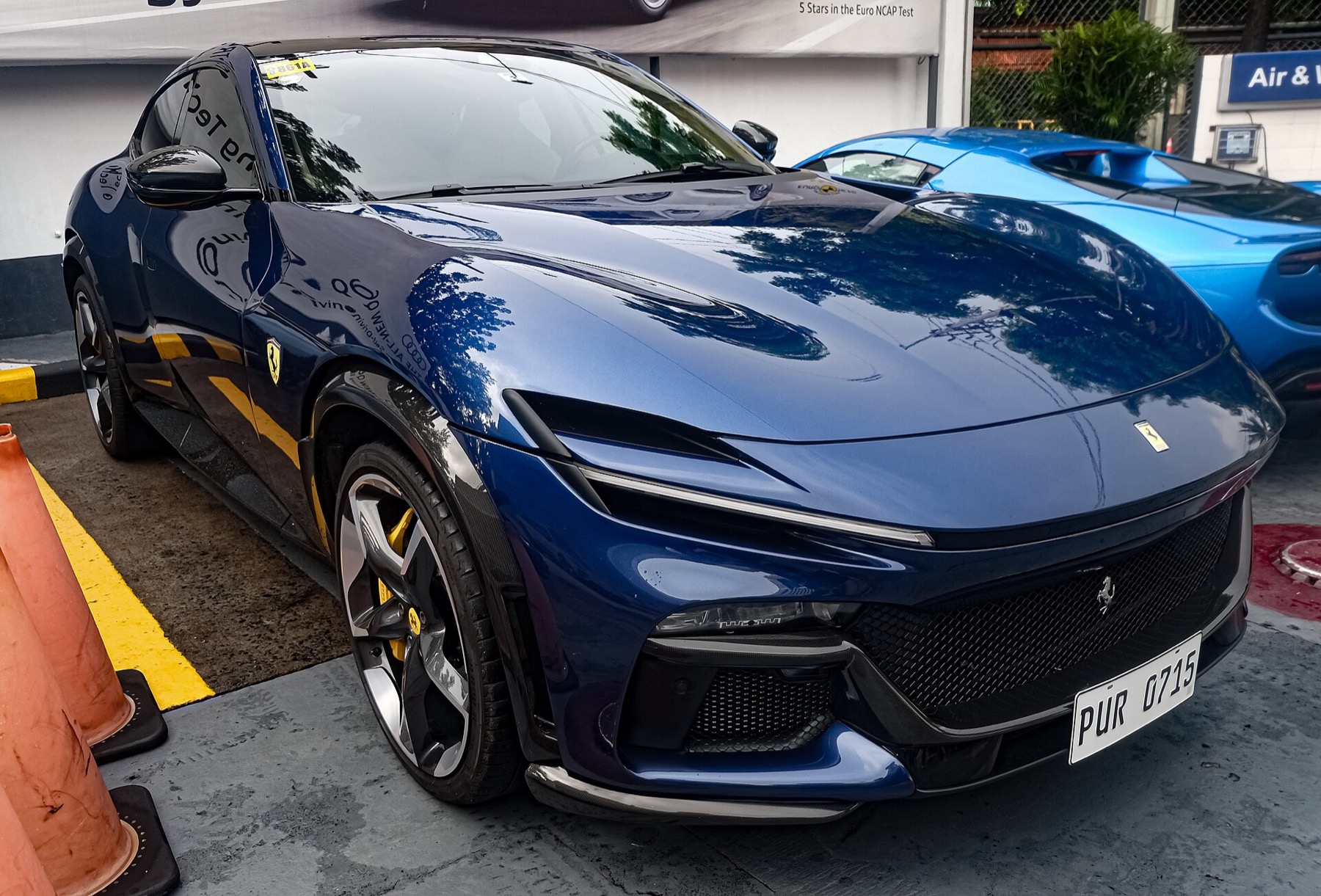
F
errari announced the Purosangue in September 2022 with an unusual piece of self-restraint attached: the company stated it would cap the model at roughly 20 percent of total annual production. For a marque that shipped 13,752 units in 2023 and 13,752 again in 2024 per Ferrari's own annual results, that cap is the single most important number in this guide.Everything else — the two-year order book, the informal ownership expectation, the premium early cars commanded — descends from that one policy decision. Understanding it is the difference between waiting eighteen months for an allocation and waiting indefinitely for a call that never comes.
Why Ferrari Capped Its Own Best-Selling Opportunity
The commercial logic runs against instinct. Every competitor in the segment — Lamborghini with the Urus, Bentley with the Bentayga, Rolls-Royce with the Cullinan — let the high-riding model become the volume backbone of the business, and each was rewarded with record deliveries.
Ferrari looked at the same opportunity and declined it. The stated reasoning, repeated by then-CEO Benedetto Vigna and by commercial leadership across launch-period interviews, is that the Purosangue must not dilute the marque's identity or its residual structure.
That is not sentiment. It is residual engineering, and it is the mechanism that makes this car behave differently on the used market than any other object in its class — a dynamic we traced across the segment in our luxury performance SUV comparison.
What the Cap Means in Practice
An estimated 2,700 to 2,800 cars per year, spread across every market Ferrari serves, is a genuinely small number for a four-door. North America is Ferrari's largest single region by deliveries, which concentrates a meaningful share of that allocation in US dealerships.
Divided across the roughly forty-odd US Ferrari dealers, individual store allocations land in the low double digits annually — an estimate, since Ferrari does not publish store-level allocation. The consequence is that your dealer is rationing a scarce object among a client list that is longer than the object supply.
The Two-Car Rule Is Not a Rule
The most persistent piece of folklore around this car is that Ferrari requires two prior Ferraris before it will sell you a Purosangue. No such written policy exists, and any dealer who tells you it does is describing their own client-ranking practice rather than a factory mandate.
What is real is the informal expectation. Allocation for a constrained model flows to established clients first, and "established" in Ferrari's vocabulary means a purchase history, a service relationship, and demonstrated behavior around resale.
How Dealers Actually Rank the List
The ranking inputs are consistent across stores, even though the weighting is not. Dealers look at how many cars you have bought from that specific store, whether you service there, whether you have taken a less-desirable allocation when asked, and whether you have flipped a car.
That last input carries disproportionate weight. Ferrari's anti-flip posture has hardened considerably in recent years, and clients who resold a constrained car inside the retention window have found subsequent allocations quietly unavailable — the mechanics of which we cover in our analysis of exotic car anti-flip agreements.
The Path In Without a Ferrari History
Buying a used Ferrari from a franchised dealer does register, though it counts for less than a new-car purchase. A certified pre-owned Ferrari under the Approved program bought from the store where you want the allocation is the most efficient entry point for a client with no history.
The realistic sequence is a used purchase, then a new car from current inventory, then a request for the constrained model. That is a two-to-three-year runway before a Purosangue allocation becomes plausible, which is the honest answer most buyers do not want.
Allocation is not a transaction you win with money. It is a position you build with time, and Ferrari is patient in a way that buyers rarely are.
Pricing and the Order-to-Delivery Reality
Ferrari's US launch pricing put the Purosangue at approximately $398,350 including destination, per manufacturer figures reported at US market introduction. That is the base figure, and almost no car leaves the configurator near it.
Optioned cars routinely clear $450,000 and well-specified examples land above $500,000, based on published dealer listings and window-sticker documentation circulating in the market. Treat any single figure as directional rather than exact, since Ferrari adjusts pricing by model year.
The Order Book
Ferrari confirmed publicly that the Purosangue order book was effectively full into 2026 within months of the model's reveal, and closed new orders for a period to protect delivery timelines. Order-to-delivery for a client who secures an allocation today runs an estimated twelve to twenty-four months depending on specification complexity.
Paint-to-sample and extensive Tailor Made content extend that window. A client who configures within standard catalogue options will see the shorter end of the range; a client who commissions a bespoke colour will see the longer end, and should plan accordingly.
Spec Strategy: What Protects Value and What Does Not
This is where most of the money is made or lost, and where the difference between an informed buyer and an enthusiastic one is measured in six figures at resale. Ferrari's option list rewards discipline in a specific and predictable pattern.
| Option | Resale effect | Editorial read | |---|---|---| | Carbon fibre exterior package | Strong | Broadly desired; hard to retrofit; consistently requested by second buyers | | Carbon fibre interior trim | Strong | Same logic; the single most reliably value-protective interior box | | Daytona-style seats | Strong | The signature seat of the era; cars without them read as under-specified | | Lift system (front axle) | Strong | Practical necessity in US markets; near-universal expectation | | Passenger display | Moderate | Widely fitted; absence is noticed more than presence is rewarded | | Restrained exterior colour | Moderate to strong | Rosso, Blu, Grigio, Nero broaden the buyer pool | | Paint-to-sample, polarising | Variable | Can add or subtract materially; depends entirely on the shade | | Bespoke stitching and monograms | Weak | Personal to the first owner; rarely recovered | | Coloured brake calipers, niche | Weak | Inexpensive to change; no residual credit |
The governing principle is that options a second buyer cannot add later hold value, and options that express the first owner's personality do not. Carbon content, the seats, and the lift system are structural to the car; a monogrammed headrest is not.
The Colour Question
Particularly if you intend to sell within five years, exterior colour deserves more thought than any other single box. The conventional Ferrari palette — Rosso Corsa, Blu Tour de France, Grigio Silverstone, Nero Daytona — sells to the widest pool and sells fastest.
Paint-to-sample is the genuine variable. A well-judged historical shade can command a premium and shorten time-on-market; a shade that reads as a personal experiment narrows your buyer pool to a handful of people, and narrow pools produce soft prices.
What Early Cars Are Trading At
The Purosangue's secondary-market history follows a recognisable arc for a supply-constrained Ferrari. At launch, with deliveries barely started and the order book closed, early US cars appeared on the secondary market at substantial premiums over window sticker — listings well into the $500,000s and beyond for cars with delivery miles.
As Ferrari worked through the backlog and more cars reached owners, that premium compressed. Current dealer listings and auction results should be your reference point rather than any figure quoted here, because this is exactly the kind of number that moves quarter to quarter.
How to Verify Before You Transact
Check three sources before agreeing to any number on a used example. Live franchised-dealer and broker listings establish the asking market; recent auction results from a house that publishes lot records establish what actually cleared; and Hagerty or a comparable valuation service establishes the trend line.
Asking prices are not transaction prices. The gap between them widens as a car's scarcity premium decays, and on a model transitioning out of its constrained phase that gap can be substantial.
Pre-Purchase Diligence on a Used Example
A Purosangue bought second-hand carries the same diligence requirements as any modern Ferrari, plus one specific to this model. The V12 is a known, well-documented unit; the active suspension system is newer, more complex, and the component you most want documented.
Commission a pre-purchase inspection at a franchised dealer, not an independent generalist. Confirm the service history is complete under Ferrari's maintenance programme, verify the original window sticker against the car's actual specification, and confirm the car is not subject to an unexpired retention agreement.
The Documentation Set
Books, tools, and the original build documentation matter more on a car this new than buyers expect. A complete set signals an owner who treated the car as an asset, and incomplete documentation on a three-year-old car invites questions you will pay for at resale.
For context on how Ferrari's constrained models behave over a longer horizon, our coverage of Ferrari Special Series allocation and values and the Ferrari brand hub both trace the pattern across model generations.
Editorial Recommendation
- Build the relationship before you need it. A CPO purchase and a service relationship at your target store, initiated two years before you want the allocation, is the highest-return action available to a client without Ferrari history.
- Specify carbon, Daytona seats, and the lift system. These three are the non-negotiables for a car you intend to sell. Everything else is preference.
- Stay near the conventional palette unless you have conviction. Paint-to-sample rewards judgement and punishes whim, and the punishment shows up as time-on-market.
- Buy used only with a franchised-dealer PPI and complete documentation. The active suspension is the system to have inspected and documented.
- Verify every price against live listings and published auction records on the day you transact. This model's pricing is still finding its floor.
A Closing Note on Patience
The Purosangue rewards the buyer who treats acquisition as a multi-year project rather than a purchase. Ferrari has structured the model so that scarcity is deliberate and permanent, and deliberate scarcity is not something a buyer can out-spend.
If you are early in the relationship, the honest advice is to start it now with a car you actually want to own, and let the allocation follow. Browse the broader segment in our luxury SUV coverage, or read our standing analysis of how allocation actually works across the exotic marques before you have your first conversation with a dealer.